Hundreds of New Outlets Signal a Shift in Korean Dining
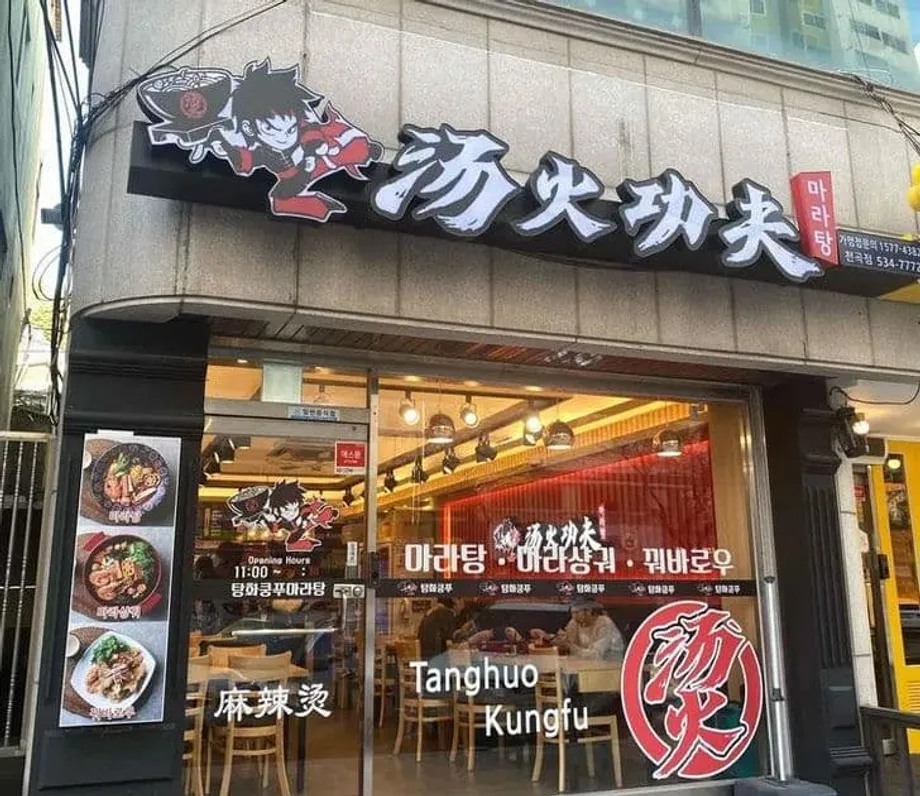
Tanghuo Kungfu Malatang has grown from a single franchise in Suwon in 2012 to more than 560 locations across South Korea. Haidilao, with just ten Korean restaurants, recorded 78.1 billion won in sales in 2024. Now Chinese tea chain Chagee plans to open three Seoul stores by the end of June 2026, adding another competitor to a country where coffee has long dominated the drinks market.
Contents
- Hundreds of New Outlets Signal a Shift in Korean Dining
- Malatang Expansion Combines Scale With Franchise Incentives
- Haidilao Builds Sales Around the Restaurant Experience
- Chinese Tea Chains Enter a Market Led by Coffee
- Travel Introduces Customers to Brands Before They Arrive
- Korean Chicken Chains Rebuild Their Chinese Networks
- Politics and Local Incentives Shape the Return
- Chinese Brands Compete on Design as Well as Price
- Food Trade and Factory Investment Deepen the Connection
- Key Points
As of March 31, 2026, the expansion stretches across some of Seoul's busiest shopping, tourism and dining districts, including Gangnam Station, Myeong-dong, Hongdae, Seongsu and Daehangno. Chinese brands are bringing different kinds of food, service and store experiences, from mala hot pot to grilled fish, barbecued skewers and fragrant milk tea.
Korean companies are moving in the opposite direction. BBQ and Kyochon Chicken are rebuilding their presence in China, while manufacturers including Samyang Foods and Orion are investing in production there. The movement reflects both consumer interest in neighboring countries' food and pressure on businesses to find customers beyond their home markets.
Travel, changing tastes and commercial policy are helping connect the two markets. Korean visitors encounter Chinese brands abroad before those businesses arrive in Seoul. Young Chinese consumers continue to seek Korean food, even after years of unofficial restrictions following South Korea's deployment of the THAAD missile defense system in 2017.
The changes extend beyond restaurants. Chinese cosmetics are attracting Korean buyers at prices above some domestic alternatives, while Korean instant noodles hold premium positions in China's enormous noodle market. Together, these developments show how competition increasingly depends on a brand's products and customer experience as well as its price.
Malatang Expansion Combines Scale With Franchise Incentives
Tanghuo Kungfu Malatang's growth shows how quickly a Chinese dining concept can spread through Korea. Malatang is a spicy soup associated with the numbing and hot flavors of mala seasoning. The chain now operates more than 560 locations, placing it in major commercial areas as well as neighborhoods across the country.
Tanghuo Kungfu recorded 22.2 billion won in sales in 2024, compared with 18.3 billion won in 2023. Those figures represent an increase of about 21.3 percent. Operating profit rose much faster, from 943 million won to 10.5 billion won, or more than eleven times the previous year's amount. Operating profit is the money left after the costs of running the business, before some other financial expenses and taxes.
The company is seeking further expansion by waiving franchise, training and royalty fees for new franchisees. It is also providing food serving bowls free of charge. A franchise allows a local operator to run a business under an established brand, usually with fees and rules set by that brand.
A Tanghuo Kungfu Korea official expressed hope that local restaurateurs would participate actively and help lead growth in the malatang market. The incentives lower some of the initial charges associated with joining the chain, while giving the company a way to extend its reach through local business owners.
Haidilao Builds Sales Around the Restaurant Experience
Haidilao has a much smaller Korean footprint than Tanghuo Kungfu, but its reported sales are substantially higher. Its ten locations generated 78.1 billion won in 2024, up from 13.9 billion won in 2020. That is roughly 5.6 times the earlier figure.
Haidilao's 2024 sales were also described with an approximate figure of 100 billion won, alongside the more precise 78.1 billion won figure. Industry estimates put its sales above 100 billion won in 2025. The precise figure for 2024 and the estimate for 2025 provide the clearest dated measures of its recent growth.
Haidilao makes waiting part of the restaurant experience. Customers can receive free nail art, eat snacks or play board games before a table becomes available. These services give the chain a point of difference beyond the hot pot itself, especially when busy restaurants have queues.
Other Chinese dining businesses are also expanding. Bantianyao Grilled Fish has reached six Korean locations since entering the country in 2020. Haihai Kaochuan, a barbecued skewer brand operated by Haidilao, opened its first outlet in Myeong-dong in January 2026. Their arrival broadens the range of Chinese restaurant concepts competing for Korean diners.
Chinese Tea Chains Enter a Market Led by Coffee
Chagee plans to open three Seoul locations by the end of June 2026. The premium milk tea brand draws on traditional Chinese culture and operates more than 7,300 teahouses worldwide. Its Korean launch will be its first expansion into East Asia outside China, following a substantial presence in Southeast Asia.
Chabaido already operates approximately 20 Korean stores. HeyTea has six, while Mixue has fourteen. Mixue's domestic scale is far larger, with nearly 53,000 locations in China alone. That extensive network helps explain the size of the businesses now looking for customers overseas.
Gong Cha provides an established competitor. The Taiwanese brand entered Seoul in 2012, became Korean owned in 2017 and now operates 836 outlets nationwide. For years it dominated Korea's milk tea market, giving newer Chinese entrants a market with an existing customer base but also a large incumbent.
China's tea market is growing more slowly than before. Annual growth was 44 percent in 2023, compared with a projected 12.4 percent for 2025. The lower projection represents a sharp slowdown, creating pressure for brands to seek growth outside an increasingly crowded domestic market.
Korea offers a nearby destination with demanding consumers and rapidly changing tastes. The opportunity is substantial, but the competition comes from both established tea chains and the country's much broader coffee culture.
Travel Introduces Customers to Brands Before They Arrive
Visa free travel policies have made it easier for Koreans to visit China and encounter local products firsthand. For a restaurant or beverage brand, that means some potential customers already know its name and taste before its first Korean store opens.
Choi Yong-hee, a graduate student in Seoul's Sinchon district, first tried Chagee during a family trip to Shanghai in October 2025. He described the drink's fragrance and relatively mild taste as reasons he wanted access to it in Korea.
What I liked about Chagee was that the milk tea was not too strong and was fragrant, making it easy to enjoy. I have not been able to find milk tea like this in Korea,
Google Trends data shows searches for "Chagee tea" in Korea rose 110 percent over the preceding three months. The increase means search interest more than doubled over that period, illustrating the attention surrounding the brand ahead of its planned Seoul openings.
Choi's experience connects travel with demand at home. A product first encountered on a family holiday can become something a customer seeks locally, giving an arriving brand recognition before it begins serving Korean customers.
Korean Chicken Chains Rebuild Their Chinese Networks
BBQ is pursuing a renewed expansion in China through master franchise agreements covering eight regions, including Beijing, Qingdao and Jinan. A master franchise agreement gives a partner responsibility for developing a brand across a defined territory, allowing expansion beyond stores managed directly by the parent company.
BBQ first entered China in 2003 and once operated more than 400 locations there. It now aims to expand beyond 1,000 stores after establishing a directly managed flagship in Chengdu. The flagship and regional agreements combine a company operated presence with a broader network of local partners.
Kyochon Chicken has resumed expansion by establishing a corporate entity in Shenzhen and opening a store in the Qianhai MixC shopping mall. The company currently operates 18 locations in China and plans to move from major cities into provincial capitals.
Kyochon is targeting Chinese consumers with distinctly Korean flavors built on three decades of sauce expertise. BHC Group is also considering entry into mainland China, starting from its presence in Hong Kong. Tous Les Jours already maintains about 200 franchised locations across China.
These plans come as Korean companies face limited growth at home. Domestic economic stagnation and consumer sentiment below neutral levels are encouraging businesses to look abroad. A reading below neutral indicates that consumers are more pessimistic than optimistic, a difficult setting for companies seeking stronger spending.
Politics and Local Incentives Shape the Return
The renewed Korean push follows years of unofficial restrictions on Korean cultural exports after the 2017 deployment of the THAAD missile defense system. That political backdrop forms part of the commercial history facing brands that want to rebuild their Chinese businesses.
Kang Jun-young, a professor at Hankuk University of Foreign Studies, said demand for Korean food remains strong among young Chinese consumers. He also observed that Beijing's approach had softened since 2025, helping explain renewed corporate interest in the market.
China is promoting a "first-launch economy" policy that offers subsidies to companies debuting new products or locations. In practical terms, the policy seeks to attract business openings and product launches by providing financial support.
The expansion has developed over many years rather than in a single wave. Several dates show how earlier entries, political disruption and current plans fit together:
- 2003: BBQ first entered China, where its network later grew beyond 400 locations.
- 2012: Tanghuo Kungfu opened its first Korean franchise in Suwon, and Gong Cha entered Seoul.
- 2017: The THAAD deployment was followed by unofficial restrictions on Korean cultural exports; Gong Cha became Korean owned that year.
- 2020: Bantianyao Grilled Fish entered Korea, and Haidilao's Korean sales stood at 13.9 billion won.
- 2025: Choi Yong-hee tried Chagee in Shanghai in October, while Korean food businesses renewed their interest in China.
- January 2026: Haihai Kaochuan opened in Myeong-dong, and Korea and China signed memoranda covering food safety and aquatic product trade.
- By the end of June 2026: Chagee plans to open three Seoul locations.
Chinese Brands Compete on Design as Well as Price
Flower Knows entered Korean retail stores in March 2026, bringing ornate packaging inspired by princess imagery to cosmetics shoppers. Its arrival illustrates a change from viewing Chinese goods mainly as inexpensive alternatives to buying them for design, product quality and brand appeal.
The Flower Knows Bunny Garden 6-Color Makeup Palette sells for 37,000 won, compared with 27,000 won for similar products from Korean brand Clio. The difference is 10,000 won, making the Flower Knows product about 37 percent more expensive in that comparison.
Lee Ga-hyeon, a 29-year-old consumer from Incheon, previously bought Flower Knows products through overseas direct purchases. She welcomed being able to examine them in a Korean store before buying and explained why the higher price had not stopped her interest.
The products are not cheap, but the pigmentation and application are good, and the design is very pretty and different from Korean cosmetics.
Chinese companies are increasingly seeking brand value comparable to established global luxury markers. Flower Knows offers a concrete example of that effort: its appeal rests on how the cosmetics perform and look, rather than a lower price than Korean competitors.
Jung Yeon-sung, a professor of business administration at Dankook University, noted that Korea attracts attention because of its cultural influence and demanding customers. For Chinese companies seeking international recognition, success there can help them refine products before entering wider markets. Korea's fast moving consumer trends make it a place to test whether a brand can win buyers beyond China.
Food Trade and Factory Investment Deepen the Connection
Korean instant noodle exports to China rose 266 percent between 2017 and 2025. That increase means the export value reached 3.66 times its 2017 level. China is the world's largest consumer of instant noodles, with annual consumption of 43.8 billion servings, giving Korean brands access to an exceptionally large market.
Korean noodles occupy premium positions within that market. Buldak Original and its carbonara variant ranked eighth and ninth respectively on Taobao's bestseller list, while Nongshim's Shin Ramyun ranked seventeenth. Their positions show the commercial reach of Korean packaged food alongside restaurant expansion.
South Korean seafood exports to China increased 18 percent in 2025, with total seafood exports reaching $3.33 billion. In January 2026, the two countries signed memoranda on food safety and aquatic product trade, streamlining export procedures and waiving certain sanitary assessments. Those assessments concern whether products meet health and hygiene requirements.
China remains South Korea's largest trading partner. Bilateral trade reached $298.9 billion in the first eleven months of 2025, while bilateral food trade totaled $9.01 billion in 2024. Food businesses are expanding within a much larger commercial relationship.
Samyang Foods is building its first overseas factory in China's Zhejiang province. Orion has increased utilization at its five Chinese factories, meaning it is using more of their production capacity, and invested 25 billion won in new lines for jelly and potato flakes.
Restaurants, drinks, packaged food and cosmetics are moving across the border through different business models, but their commercial aims are closely connected. Chinese companies seek growth and international recognition in Korea, while Korean companies pursue Chinese demand for their food and brands. The next scheduled development is Chagee's planned Seoul opening by the end of June.
Key Points
- Tanghuo Kungfu Malatang operates more than 560 Korean locations and recorded 22.2 billion won in sales in 2024.
- Haidilao's ten Korean restaurants generated 78.1 billion won in 2024; industry estimates put 2025 sales above 100 billion won.
- Chagee plans three Seoul stores by the end of June 2026, joining Chabaido, HeyTea and Mixue.
- Gong Cha operates 836 Korean outlets, providing an established competitor in milk tea.
- BBQ aims to exceed 1,000 Chinese stores, while Kyochon has 18 locations and plans further expansion.
- Flower Knows is attracting Korean customers with design and quality at prices above some domestic alternatives.
- Korean instant noodle exports to China increased 266 percent between 2017 and 2025.
- Bilateral food trade reached $9.01 billion in 2024, and total bilateral trade reached $298.9 billion in the first eleven months of 2025.