The Rise of a New Industrial Titan
Shenzhen has cemented its status as China’s preeminent economic powerhouse, officially surpassing Shanghai and Beijing in industrial output and trade volume while positioning itself at the center of the nation’s technological sovereignty efforts. The southern metropolis announced that its gross domestic product reached 3.87 trillion yuan ($560 billion) in 2025, driven by a 5.5 percent growth rate that outpaced both the national average and the country’s traditional economic centers.
Mayor Qin Weizhong delivered this assessment during his annual work report to the local people’s congress on February 9, revealing that the city had leapfrogged its northern rivals in manufacturing might and import-export value. The announcement comes as Shenzhen prepares to host the Asia-Pacific Economic Cooperation (APEC) summit in November, a platform city officials intend to use to showcase their economic model to global leaders.
The city’s rise represents a dramatic shift in China’s economic geography. While Shanghai maintains its status as a financial hub and Beijing retains its political centrality, Shenzhen has evolved from a fishing village into the world’s most dynamic manufacturing center within four decades. Its economy expanded from 2.83 trillion yuan in 2020 to the current figure, maintaining an annualized growth rate that defies broader national trends toward slower expansion.
Breaking Down the Numbers
The statistics underlying Shenzhen’s claim to industrial supremacy reveal a city operating at exceptional scale. With a growth rate of 5.5 percent for 2025 alone, Shenzhen edged ahead of Beijing and Shanghai, which both reported 5.4 percent growth. This performance also exceeded the national average of 5 percent, as reported by the National Bureau of Statistics, and contrasted sharply with manufacturing contraction elsewhere in the country.
Perhaps more significant than the headline GDP figure is the city’s industrial output and trade dominance. Shenzhen’s Nanshan district, a technology hub home to giants including Huawei, Tencent, and DJI, achieved a historic milestone by becoming the first prefecture-level district in China to exceed 1 trillion yuan in GDP. Nanshan’s economic output, which surpasses that of some European nations, reached this threshold after growing at an average annual rate exceeding 5.8 percent since 2020.
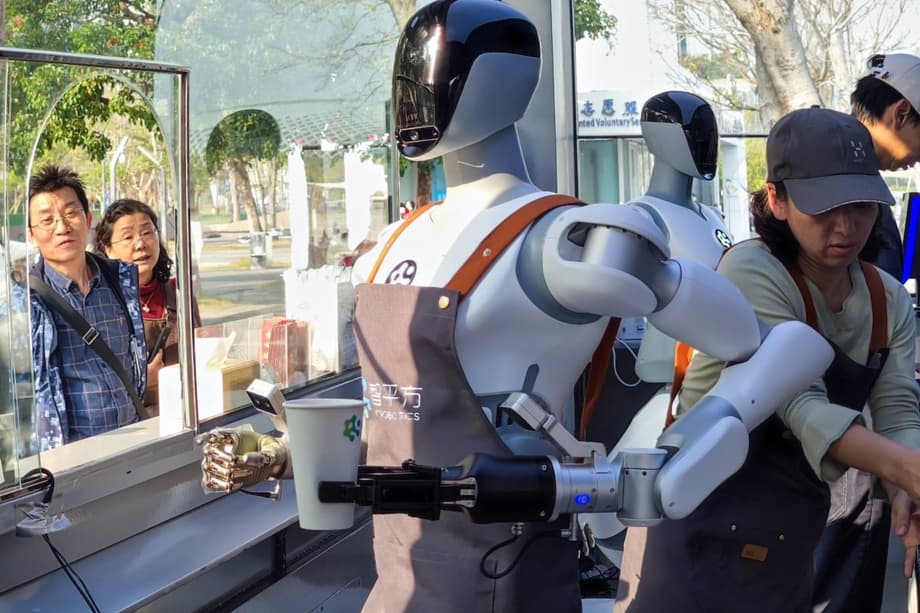
The district’s industrial output from large enterprises topped 900 billion yuan, while foreign trade reached 941.9 billion yuan with exports leading all districts in Shenzhen. These figures place Nanshan alone on par with major global economies, illustrating the concentrated power of Shenzhen’s technology corridor. Value added from strategic emerging industries accounted for about 60 percent of Nanshan’s GDP, driven by artificial intelligence, robotics, and low-altitude economy initiatives.
The Chip War Battleground
Beneath the surface of these trade statistics lies a secretive technological breakthrough that could reshape global supply chains. In a secure Shenzhen laboratory, Chinese scientists have completed a working prototype of an extreme ultraviolet (EUV) lithography machine, the sophisticated equipment necessary for producing the most advanced artificial intelligence chips and smartphones.
The aim is for China to eventually be able to make advanced chips on machines that are entirely China-made,
one source familiar with the project told Reuters, speaking on condition of anonymity due to the confidentiality of the work.
EUV machines use beams of extreme ultraviolet light to etch circuits thousands of times thinner than a human hair onto silicon wafers. Currently, only ASML of the Netherlands possesses this capability commercially, with its machines costing approximately $250 million and forming the bottleneck for advanced chip production worldwide. Washington has spent years trying to prevent China from acquiring this technology, imposing sweeping export controls designed to cut off access to advanced semiconductor manufacturing equipment.
The Shenzhen prototype, described by sources as China’s version of the Manhattan Project, successfully generates extreme ultraviolet light but has not yet produced working chips. The project operates under strict secrecy, with recruited engineers reportedly using false identities and working in isolation to prevent detection. Huawei plays a central coordinating role, deploying employees across fabrication plants and research centers nationwide.
This lithography initiative falls under President Xi Jinping’s broader directive to achieve semiconductor self-sufficiency. The existence of a working prototype in Shenzhen suggests China may achieve independence years earlier than analysts predicted, potentially by 2030 rather than the decade previously anticipated, despite remaining challenges in replicating precision optical systems from Western suppliers.
Innovation at Density
Shenzhen’s industrial dominance rests upon a foundation of research intensity that Mayor Qin claims represents the highest density among mainland Chinese cities. From 2020 to 2024, the city’s total research and development investment grew from 151.08 billion yuan to 245.31 billion yuan, representing an average annual growth of 12.9 percent. This investment intensity aligns with China’s entry into the top 10 of the World Intellectual Property Organization’s Global Innovation Index 2025.
This investment translates into tangible infrastructure advantages. The city now operates over 300 low-altitude logistics routes for unmanned aerial vehicles, establishing itself as the leading manufacturing base for drones with 70 percent of China’s consumer drone production and 50 percent of industrial drone output. The low-altitude economy, recognized as a strategic growth driver, connects research resources across the Guangdong-Hong Kong-Macao Greater Bay Area.
The computing power of Shenzhen’s branch of the National Supercomputing Centre ranks among the world’s best, supporting the city’s artificial intelligence ambitions. Huawei, the telecommunications giant based in Shenzhen, plans to double production of its 910C Ascend AI chips to 600,000 units annually in 2026, capturing market share as geopolitical pressures constrain foreign competitors. The company aims to increase total Ascend output to 1.6 million dies, representing a technical breakthrough for China’s semiconductor independence efforts.
Contrasting Fortunes
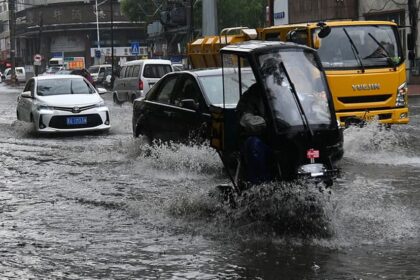
Shenzhen’s exceptional performance stands in sharp relief against broader economic headwinds facing China. While the southern metropolis expanded its manufacturing base, national industrial indicators have shown contraction. China’s official manufacturing Purchasing Managers’ Index remained below the 50 threshold indicating expansion for multiple consecutive months during 2025, with July recording 49.3 amid extreme weather and trade uncertainty.
National industrial output growth slowed to 5.8 percent in May 2025, the slowest pace since November 2024, while fixed-asset investment lagged expectations. The property sector continued its downturn, with investment falling sharply and new home prices tumbling at the fastest monthly pace in eight months during June. Economists warn that deflation remains a key threat to the national economy, with producer prices falling 3.3 percent annually.
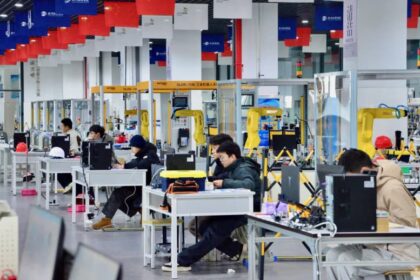
Against this backdrop, Shenzhen’s ability to maintain acceleration suggests a divergence in China’s economy operating at different velocities. While traditional manufacturing regions struggle with overcapacity and weak demand, the Pearl River Delta hub has successfully pivoted toward advanced production and export diversification. Chinese shipments to the United States dropped 29 percent annualized in November, yet overall exports grew 5.9 percent as manufacturers rerouted trade toward Southeast Asia, Europe, and Australia. Shenzhen’s trade surplus reflects this strategic reorientation away from American markets.
Global Stagecraft
The upcoming APEC summit positions Shenzhen to translate its economic might into geopolitical influence. Hosting the summit in November provides the city with a global platform to highlight its technological advancements and defend globalization amid intensifying competition. China intends to use the gathering to showcase an alternative model of technological development that resists Western decoupling efforts.
Shenzhen’s rise occurs within Guangdong Province’s broader economic dominance. The province has led China in GDP for 36 consecutive years and in foreign trade volume for 39 years, accounting for 38.7 percent of national trade growth. Within this ecosystem, Shenzhen functions as the primary engine, contributing disproportionately to the province’s 9.11 trillion yuan in total foreign trade.
Nanshan’s experience shows how technological innovation can overcome resource constraints and power new quality productive forces, offering a window onto China’s broader growth potential,
said Guo Wanda, executive vice president of the Shenzhen-based China Development Institute. The city’s ecosystem of over 600,000 operating entities in Nanshan alone demonstrates the density of commercial activity driving this expansion, serving as a hub for technology start-ups from Hong Kong, Macao, and across the mainland.
Key Points
- Shenzhen’s GDP reached 3.87 trillion yuan ($560 billion) in 2025 with 5.5% growth, surpassing Beijing and Shanghai’s 5.4% and the national 5% average
- The city leads China in industrial output and import-export value, with Nanshan district alone exceeding 1 trillion yuan GDP
- A secretive EUV lithography prototype developed in Shenzhen suggests China could achieve advanced semiconductor independence by 2030, years ahead of predictions
- Shenzhen operates over 300 low-altitude logistics routes and produces 70% of China’s consumer drones, while Huawei plans to double AI chip production
- The city hosts the APEC summit in November, planning to showcase its economic model amid global trade tensions and technological competition
- Shenzhen’s manufacturing growth contrasts with national industrial contraction, highlighting an economy operating at different velocities across China