A Family Detour Becomes a Regional Travel Shift
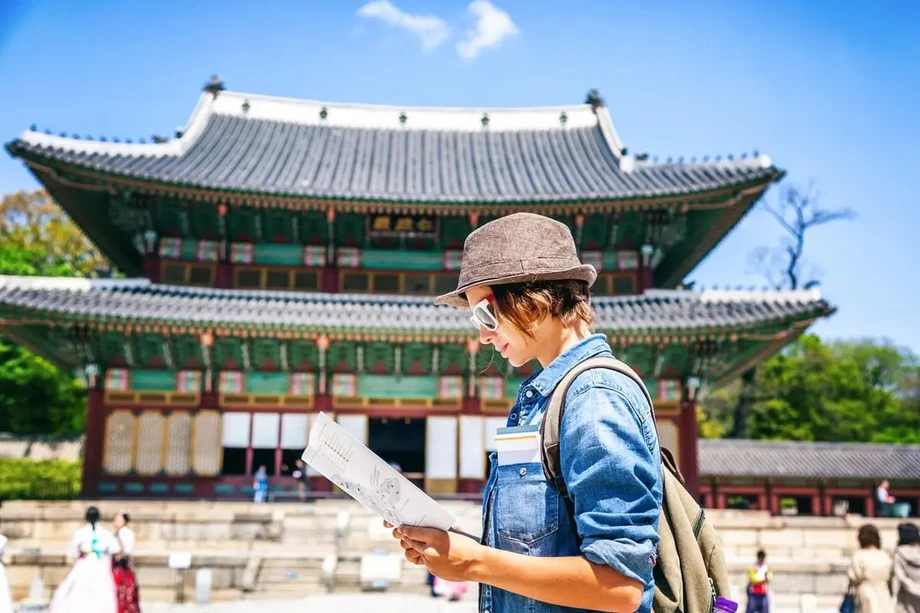
South Korea was expected to welcome between 230,000 and 250,000 visitors from mainland China during the nine day Lunar New Year holiday beginning February 15, 2026, according to travel marketing and analytics firm China Trading Desk. That would represent a 52% increase from the previous year's celebration, while Japan faced an estimated 60% fall in Chinese arrivals over the same holiday.
Contents
- A Family Detour Becomes a Regional Travel Shift
- How the Dispute Reached Travelers
- Flights and Hotels Show the Scale
- A Cheaper Won and Easier Group Entry
- Culture and Short Flights Reinforce the Appeal
- Cruise Ships Turn Toward Korean Ports
- Japan Loses Visitors and a Major Spending Market
- How Long Could Japan's Downturn Last?
- Seoul's Gains Come With Diplomatic Choices
- What Chinese Travelers Now Prioritize
- Key Points
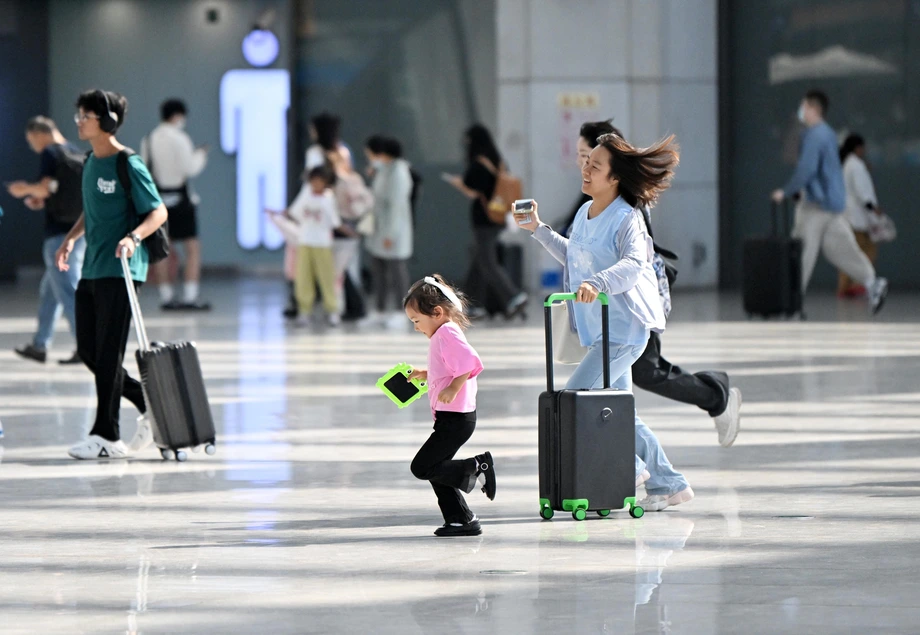
By February 25, the change was visible across airline schedules, hotel reservations and cruise routes. Scheduled flights between mainland China and South Korea had risen nearly 25% from a year earlier for the holiday period. Flights between China and Japan had fallen 48%. Diplomatic tensions had helped redirect demand toward a nearby destination already benefiting from a weaker currency and easier entry for Chinese tour groups.
Tang Junjie, a 22-year-old traveler from Sichuan province, experienced that redirection firsthand. He had visited Japan three times alone and booked flights months ahead to show his family Tokyo's neon streets and Kyoto's ancient temples during China's record breaking holiday. In February, however, the family arrived at Incheon International Airport and stayed in South Korea instead.
Tang explained how Seoul changed from a connection point into the family's destination:
The original plan was to transit through Seoul on our way to Japan. But the airline could not refund the tickets at the time, so we decided to stay in Seoul and not continue on to Japan.
His family joined thousands of Chinese tourists turning disrupted Japan plans into visits to South Korea. Their decision brought together the forces reshaping travel in Northeast Asia: government warnings, ticket arrangements, prices and the practical question of where a family could still take its holiday.
How the Dispute Reached Travelers
Japanese Prime Minister Sanae Takaichi set off the diplomatic dispute in November 2025 with remarks in parliament about a potential conflict involving Taiwan. She suggested that such a conflict could become a "survival-threatening situation," opening the possibility of a Japanese military response. Beijing reacted fiercely to that position.
China's Ministry of Culture and Tourism urged citizens to avoid traveling to Japan "for the time being." The Ministry of Education issued a parallel warning for students considering study arrangements there. Together, the advisories extended the dispute beyond diplomacy into decisions about holidays and education.
Mao Ning, a spokesperson for China's Foreign Ministry, described Beijing's objection to Takaichi's comments:
wrongful remarks
Mao said those remarks had damaged the conditions for exchanges between the two countries:
seriously hurt the feelings of the Chinese people and poisoned the atmosphere for people-to-people exchange between China and Japan.
Air China, China Eastern, China Southern, Hainan Airlines, Xiamen Airlines, Spring Airlines and Sichuan Airlines announced special arrangements allowing free changes and refunds for flights to Japan. Those policies offered travelers relief while also making it easier to abandon itineraries prepared months earlier. Tang's experience showed that a refund was not available to every traveler at the moment a decision had to be made.
The shift developed across several months:
- November 2025: Takaichi's Taiwan remarks prompted Chinese travel and education warnings, followed by special airline ticket policies.
- November 15-16: South Korea overtook Japan in Chinese outbound flight ticket volume on Qunar.
- Late November: Tongcheng Travel recorded a sharp rise in Seoul hotel reservations.
- Early January 2026: Weekly flights between China and South Korea reached 1,012.
- January 2026: Japan recorded 385,300 visitors from mainland China, down 61% from a year earlier.
- February 15: China's nine day Lunar New Year holiday began, bringing the travel shift into a major holiday season.
- Through March 2026: Chinese airline policies extended free cancellation arrangements for Japan travel.
Flights and Hotels Show the Scale
Qunar's booking figures supplied an early sign of the reversal. During the November 15-16 weekend, South Korea became the leading outbound destination for Chinese travelers by flight ticket volume, displacing Japan for the first time in months. Seoul also consistently ranked first in flight search volume during the period.
Cirium, an aviation analytics firm, recorded more than 1,330 scheduled flights between mainland China and South Korea for the Lunar New Year holiday, nearly 25% more than a year earlier. China to Japan services fell 48% to just over 800. Airlines were therefore providing considerably more scheduled services to South Korea than to Japan during a period when Japan had previously been a leading choice.
Flight Master recorded 1,012 weekly flights on China to South Korea routes by early January 2026. That was 97.2% of the 2019 level, the highest recovery rate among major international routes. The figure showed how close those services had come to their level before the pandemic.
Tongcheng Travel reported that Seoul hotel reservations rose more than 240% from a year earlier in late November. Demand for rooms during the New Year holiday period increased threefold compared with 2025. Flight searches, ticket purchases and hotel bookings all pointed toward stronger demand, although they measured different stages of planning a trip.
South Korea was already enjoying a broader tourism recovery. The Korea National Tourism Organization recorded 17.42 million foreign visitors between January and November 2025, up 15.4% from the same period a year earlier. Mainland Chinese visitors accounted for nearly 30% of that total, making them a major part of the country's visitor economy before the Lunar New Year surge.
China Trading Desk's estimate of 230,000 to 250,000 Chinese holiday visitors and the expected 60% decline for Japan remained projections as of February 25. Final arrival totals for the holiday were not given.
A Cheaper Won and Easier Group Entry
The Korean won helped make the change of destination financially attractive. It had become Asia's worst performing currency in recent months, under pressure from differences between Korean and United States interest rates and from money leaving the equity market. Between July and December 2025, the Chinese yuan gained 9.4% against the won.
Chinese visitors could therefore exchange their money for more won than before, improving the affordability of spending in South Korea. That price advantage arrived just as official warnings made Japan a more difficult destination to choose.
Subramania Bhatt, chief executive of China Trading Desk, described the combination:
The weaker won has made South Korea a better-value destination for Chinese travellers at the same time Japan has become politically 'expensive'.
South Korea also extended arrangements allowing Chinese tourists traveling in groups to enter without visas. Japan required visas for most Chinese tourists. For eligible groups, avoiding a visa application removed a practical step from organizing a replacement holiday.
Wu Liyun, a professor at Beijing International Studies University, described the policy effect as "decisive" in pushing tourism between China and South Korea into a new phase. The entry arrangements applied to group tourists, while calls for broader bilateral access without visas remained part of the discussion about sustaining growth.
Culture and Short Flights Reinforce the Appeal
South Korea offered familiar attractions alongside lower prices and simpler group entry. Korean television dramas and K-pop had built what industry observers called "cultural resonance," encouraging travelers to visit and return. For a family replacing a Japan trip, that familiarity helped make South Korea an appealing destination in its own right.
Seoul's location also mattered. Travelers from northern and eastern China could reach it on a shorter flight than Tokyo, with little difference in time zones. Shorter journeys made it easier to preserve a holiday after the original itinerary changed.
South Korean President Lee Jae-myung described growing travel in the other direction at a recent business forum:
finishing work on Friday and flying to China is becoming a new trend among young Koreans,
Zhangjiajie in Hunan province remained popular with Korean visitors. The celebrity of the giant panda Fu Bao in Sichuan also created interest in travel to China. Those attractions gave the tourism revival a reciprocal dimension, with people in both countries finding reasons to cross the border.
South Korea's advantage came from this combination rather than a single attraction. Easier entry for tour groups, a favorable exchange rate, popular culture and short flights made it a practical alternative at a moment when many Chinese travelers were reconsidering Japan.
Cruise Ships Turn Toward Korean Ports
Cruise operators also changed course as the China and Japan dispute intensified. Vessels departing mainland China that traditionally visited Japanese ports shifted toward Busan, Jeju Island and Incheon. Industry participants called 2026 the "Korea Season," reflecting the concentration of ships on Korean itineraries.
Cruise lines sailing from mainland China turned almost exclusively to South Korean destinations. That created a dense field of similar journeys lasting four to six nights, increasing the importance of what passengers could do aboard each ship.
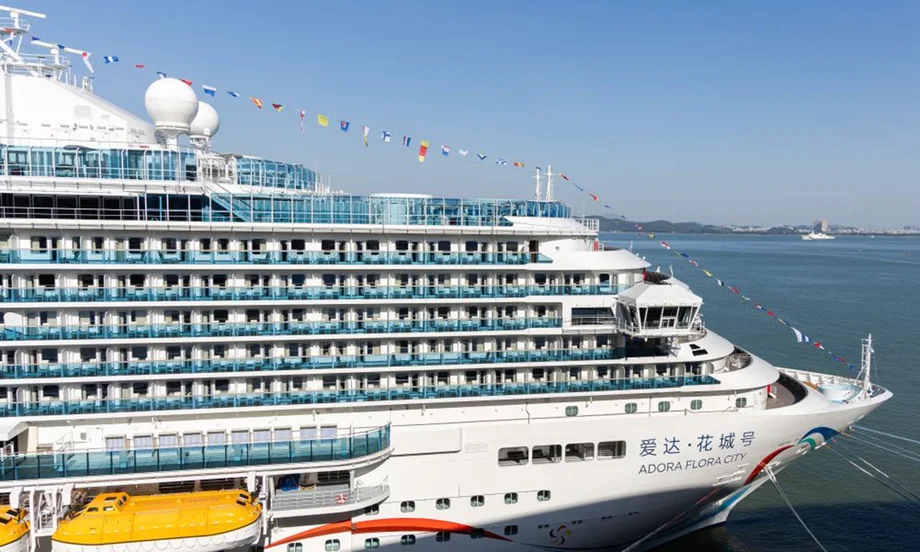
Royal Caribbean International redirected Spectrum of the Seas and highlighted entertainment such as amphitheater shows and robotic bartenders. MSC Cruises promoted pastry chef partnerships and LEGO experiences aboard MSC Bellissima. Adora Cruises moved its deployment entirely to South Korea for the first quarter of 2026.
Demand during Lunar New Year was strong. Family cabins sold quickly, and fares reached seasonal peaks. The holiday gave cruise companies a way to keep selling trips while avoiding Japanese ports.
March and April pricing showed a more difficult market beyond the holiday. Interior cabins on some mainstream ships had fallen to about CNY 1,799 per person, approximately $260. An interior cabin has no outside window, making it one of the cheaper accommodation choices aboard a ship.
The concentration of ships created a commercial risk: many vessels were selling similar trips while relying on limited Korean port capacity. Strong holiday bookings offered immediate relief, but lower spring fares suggested that keeping all those ships filled could become harder once peak demand passed.
Japan Loses Visitors and a Major Spending Market
Japan National Tourism Organization figures showed that foreign visitor arrivals fell 4.9% in January 2026 compared with a year earlier. It was the first decline from a year earlier since January 2022, interrupting the country's tourism recovery after the pandemic.
Mainland Chinese arrivals fell 61% to 385,300, accounting for almost all of the decline. The January result preceded the main Lunar New Year period in 2026 and showed that the disruption was already affecting visitor numbers.
Chinese tourists represented 21.2% of Japan's total inbound tourism spending in 2025, the largest share by nationality. Their retreat therefore affected more than arrival statistics. Retailers, hotels and other businesses faced the loss of a customer group responsible for more than one fifth of spending by overseas visitors.
Shoji Imai, who manages a kimono rental shop in Tokyo's Asakusa district, had noticed fewer Chinese customers. He said visitors from other countries were helping his business maintain sales:
We still have customers from countries like Thailand and Singapore so overall sales have not changed much,
Japan Tourism Agency Commissioner Shigeki Murata acknowledged cancellations by Chinese tourists during the New Year period. He maintained that visitors from other countries were offsetting the losses. Imai's experience illustrated how that replacement demand could help an individual business even as national arrivals fell.
How Long Could Japan's Downturn Last?
Masato Koike, senior economist at Sompo Institute Plus, expected the decline in Chinese visitors to continue. He compared the situation with the diplomatic chill between China and Japan in 2012, when recovery took 15 months.
Koike warned about the economic cost of a lengthy dispute:
If this situation drags on, the impact on the Japanese economy could be substantial.
JTB, a major travel agency, forecast that Japan would receive 41.4 million foreign visitors in 2026, down 2.8%. That would be the first annual decline in foreign tourist arrivals since the pandemic recovery began.
The holiday calendar also affected the comparison. Lunar New Year fell in mid February in 2026 rather than late January as in 2025, compressing the traditional peak season. January figures therefore covered different holiday timing in the two years, while the February travel shift brought its own pressure on Japanese businesses.
Chinese airlines extended free cancellation policies through March 2026, giving travelers more time to withdraw from Japan trips during the first quarter. The combination of continuing ticket flexibility, official warnings and reduced flight schedules suggested that the disruption would extend beyond the holiday itself.
Seoul's Gains Come With Diplomatic Choices
President Lee Jae-myung pursued closer relations with Beijing while South Korea benefited from redirected tourism. He met Chinese President Xi Jinping twice in approximately two months, including a visit to Beijing that was the first by a South Korean leader since 2019.
China also made an unusual diplomatic gesture over the Dokdo islets dispute between South Korea and Japan. Foreign Ministry spokesperson Mao Ning publicly criticized Japan, effectively supporting Seoul's position. Beijing had previously avoided direct comments on the sensitive issue.
Kang Jun-young, a China expert at Hankuk University of Foreign Studies, interpreted that gesture as part of Beijing's effort to bring Seoul closer:
By publicly criticizing Japan over the Dokdo issue, Beijing appears to be signaling subtle support for Seoul's position. China is expected to continue making similar gestures to draw Korea closer, as it worries that prolonged tensions with Japan could undermine its influence in East Asia.
Analysts viewed China's moves as an effort to prevent security cooperation among South Korea, the United States and Japan from advancing too far. Seoul therefore faced competing priorities: economic ties with Beijing, security cooperation involving Tokyo and Washington, and the need to avoid appearing to exploit Japan's difficulties.
Yang Ki-ho, a professor of Japanese studies at Sungkonghoe University, warned that the dispute could spread from tourism into trade and other economic issues. He expected both governments to prepare for a lengthy confrontation:
Boosted by strong approval ratings early in her term, Takaichi is unlikely to back down. Both countries appear to be preparing for a prolonged standoff.
South Korea's tourism gains consequently arrived alongside a delicate diplomatic task. Seoul sought to benefit from stronger travel demand while keeping room to work with China, Japan and the United States.
What Chinese Travelers Now Prioritize
Dragon Trail Research surveys of mainland Chinese travel agents placed safety, access to visas and direct flights at the center of destination decisions. Those practical concerns had overtaken traditional motivations such as sightseeing, shopping and cultural appeal.
Nearly four in five agents said safety had an "extreme impact" on customer choices. More than half cited entry policies that removed visa requirements or made visas easier to obtain. The findings described a market more alert to risk, shaped by diplomatic uncertainty and shorter booking windows.
South Korea was not the only destination attracting interest. Thailand continued to draw Chinese visitors with entry without visas, although safety concerns following recent incidents had tempered growth. Russia introduced entry without visas for stays of up to 30 days, followed by sharp increases in flight bookings.
Germany and Spain also recorded hotel booking increases exceeding 300% compared with a year earlier. Those gains showed travelers considering a wider geographic range rather than simply replacing Japan with its nearest alternatives.
South Korea's next task was to turn demand redirected by the dispute into repeat visits. Industry experts called for bilateral arrangements allowing travel without visas over a longer period and beyond current group tour limits, closer regional cooperation, and better promotion of cultural heritage through modern marketing channels.
Wu Liyun, the Beijing International Studies University professor, described what would be needed to sustain the increase:
Further policy coordination and product innovation would be key to sustaining the momentum.
By February 25, airlines, hotels and cruise companies had already adjusted to a different pattern of demand. South Korea's ability to retain those visitors depended on diplomatic developments as well as the prices, entry arrangements and travel experiences that had made it an attractive alternative.
Key Points
- China Trading Desk projected 230,000 to 250,000 mainland Chinese visitors to South Korea during the nine day Lunar New Year holiday, up 52% from a year earlier.
- Japan faced an estimated 60% fall in Chinese holiday arrivals. Its January arrivals from mainland China had already dropped 61% to 385,300.
- Takaichi's November 2025 remarks about a potential Taiwan conflict triggered Chinese travel warnings and airline refund and change arrangements.
- Holiday flights between mainland China and South Korea rose nearly 25% to more than 1,330, while China to Japan flights fell 48% to just over 800.
- The yuan gained 9.4% against the won between July and December 2025. South Korea also extended entry without visas for Chinese tour groups.
- Cruise operators redirected ships toward Busan, Jeju Island and Incheon, with strong holiday demand followed by cheaper fares for some spring departures.
- Chinese visitors accounted for 21.2% of Japan's inbound tourism spending in 2025. JTB forecast a 2.8% fall in total foreign arrivals in 2026 to 41.4 million.
- South Korea sought to retain its tourism gains while balancing relations with China and security cooperation involving Japan and the United States.