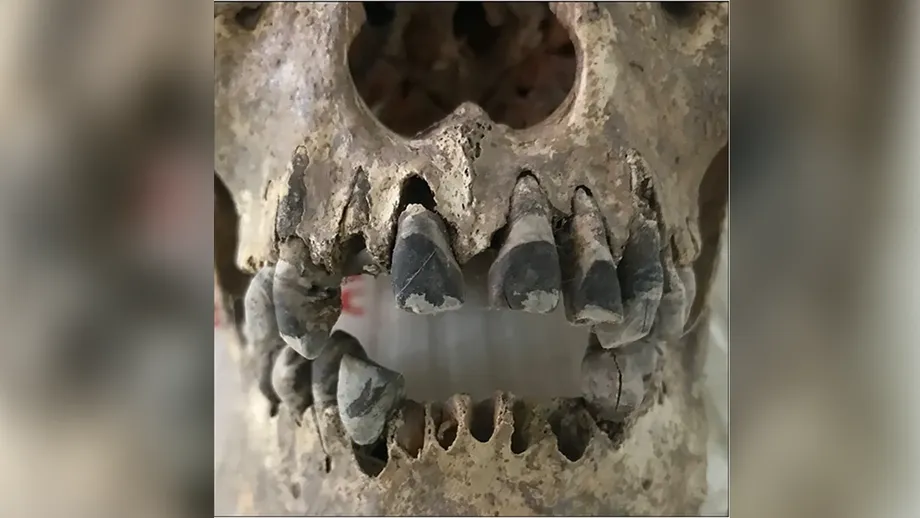
Iron Age Teeth Reveal a Lasting Beauty Tradition
At Dong Xa, a cemetery roughly 70 kilometers from Hanoi, teeth buried about 2,000 years ago retain evidence of a carefully created black coating. Researchers from the Australian National University and collaborating institutions found chemical traces showing that people in northern Vietnam's Red River delta deliberately darkened their teeth with iron salts and plant extracts.
Contents
- Iron Age Teeth Reveal a Lasting Beauty Tradition
- A Cemetery Found During Canal Construction
- How Scientists Examined the Black Coating
- Iron and Sulfur Identify the Treatment
- Plant Extracts Turned Iron into Black Pigment
- A Treatment That Could Take Twenty Days
- Blackened Teeth Marked Belonging and Adulthood
- From Tooth Removal to Tooth Coloring
- A Long Tradition Under Changing Beauty Standards
- What Dong Xa Adds to the Historical Record
- Key Points
The Iron Age remains date to between 2157 and 1830 years before present. Their stained teeth provide the earliest direct scientific evidence connecting this ancient dental modification with a cultural practice documented in Vietnam into the early 20th century. A tooth from approximately the 17th century helped researchers compare the chemistry across widely separated periods.
Modern beauty campaigns promote white smiles through bleaching strips and whitening toothpaste. The people buried at Dong Xa pursued a different ideal: deep, glossy black teeth. Achieving that appearance involved more than chewing a plant that happened to stain the mouth. Chemical analysis and experiments point to a deliberate treatment whose basic principles remained consistent across millennia.
Blackened teeth also carried meanings beyond appearance. Historical and anthropological accounts associate the practice with adulthood, community identity and beliefs about the differences between humans, animals and supernatural beings. The discovery brings those traditions into the study of the Dong Son people, whose bronze drums and metalworking have long attracted attention.
The central scientific problem was to explain how the color got there. Burial soil, food and cosmetic treatments can all discolor teeth. Researchers examined the elements on the enamel and compared them with an experimentally blackened tooth to identify the process behind the ancient coating.
A Cemetery Found During Canal Construction
Dong Xa came to archaeological attention between 1994 and 1997, when agricultural canal construction exposed a large cemetery containing log coffins. Vietnamese and Australian teams conducted formal excavations in 2001 and 2004, recovering 72 human remains. Many had teeth with discoloration ranging from deep black to reddish brown.
The settlement belonged to the late Dong Son cultural period. Dong Son culture flourished between 500 BCE and 50 CE in northern Vietnam, during a time of technological innovation and growing social complexity. Its communities developed advanced metalworking and became known for large bronze drums, now iconic symbols of ancient Vietnamese culture.
Weapons, tools and elaborate objects placed in graves also reveal differences in social standing. At Dong Xa, burial goods included cord marked pottery, lacquered winged cups and Wuzhu coins dating to 118 BCE. These finds helped establish the chronological setting of the cemetery and its human remains.
Researchers selected three tooth specimens for detailed examination. Two, identified as 04DXD1K2 and 04DXUI2, came from Iron Age burials. The third, 04DXMPK, dated to approximately the 17th century. The specimens included molars and a canine, with black staining still firmly attached to their enamel after centuries underground.
Preservation differed between the samples. The tooth from the 17th century retained a distinct black pigment coating resembling that produced by the more recently documented practice. On the Iron Age specimens, researchers had to select enamel areas free from sediment contamination so that their measurements would reflect the tooth surface.
How Scientists Examined the Black Coating
Iron in burial soil can enter human remains over time. Plants containing tannins can also stain teeth during ordinary consumption. Betel nut chewing, widespread across the Asia Pacific region, produces characteristic reddish brown staining on teeth and gums. Incidental dietary staining generally creates uneven brownish coloration, unlike the deep, glossy black associated with deliberate Vietnamese tooth blackening.
The team used two complementary methods to investigate these possibilities without damaging the specimens. Scanning electron microscopy combined with energy dispersive spectrometry, abbreviated SEM EDS, directs electrons at microscopic areas of enamel. The interaction generates X rays characteristic of particular elements, allowing researchers to identify what is present.
Portable X ray fluorescence, or p XRF, supplied further measurements. This method exposes a sample to high energy radiation and detects the fluorescent X rays that it emits. Together, the techniques allowed the researchers to examine the chemical composition of the colored enamel while preserving the archaeological teeth.
Calcium, phosphorus and oxygen dominated the measurements across all three specimens. Those elements are expected in hydroxyapatite, the mineral that forms natural tooth enamel. The colored areas, however, also contained conspicuous amounts of iron and sulfur.
Iron concentrations ranged from 2.37% to 3.95% in targeted areas, while sulfur ranged from 1.11% to 1.75%. One Iron Age specimen had iron oxide concentrations reaching 25% of the analyzed surface composition. The measurements exceeded levels attributed to soil contamination or ordinary dietary accumulation, supporting repeated application of substances containing iron.
Iron and Sulfur Identify the Treatment
Yue Zhang, the study's lead author and an archaeologist at the Australian National University, explained why the combination of iron and sulfur mattered to the investigation:
We believe that the combined presence of Fe and S signals is a strong indicator of the involvement of iron salts.
Fe is the chemical symbol for iron, and S is the symbol for sulfur. Their presence together suggests iron sulfate compounds, represented by the formulas FeSO4 and Fe2(SO4)3. Such substances can form when iron reacts with materials containing sulfur or in acidic environments.
The combination gave researchers a chemical fingerprint for intentional blackening. Its appearance in specimens separated by many centuries connected the Iron Age teeth with the later example, despite differences in their preservation.
The team then tested the proposed explanation through experimental archaeology, recreating a possible ancient process and comparing the result with the excavated material. Researchers applied iron gall ink to modern animal teeth. This historical pigment contains iron salts and tannins and produces a deep black color through the chemical reaction proposed for Dong Xa.
The experimental tooth produced chemical spectra nearly identical to those of the archaeological specimens. Spectra are patterns in the measurements that help identify the elements present. The elevated iron and sulfur signals in the experimental coating matched those detected on the ancient teeth.
Plant Extracts Turned Iron into Black Pigment
Tannic acid, a natural plant compound belonging to a group called polyphenols, helps explain how the treatment worked. Under heated or acidic conditions, tannins bind iron ions through a process called chelation. The resulting iron and plant compound complexes become a stable black pigment as they oxidize through exposure to air.
The pigment is known as iron tannate. The same chemical principles appear in medieval iron gall ink recipes and Chinese textile dyeing traditions from the 14th century. These comparisons help explain how plant materials and iron could produce a durable color rather than a temporary stain.
The stability of the compounds accounts for blackening that could remain throughout a person's life and survive burial for two millennia. The experimental match supported the conclusion that ancient Vietnamese communities were using a deliberate and chemically sophisticated treatment.
One Iron Age tooth contained enough iron oxide to suggest a substantial buildup on its enamel. That pattern was consistent with repeated application of a paste. Soil staining and betel nut chewing produce different chemical and visual patterns. Zhang also noted that betel nut chewing creates brownish black discoloration, rather than the deep black observed in the Vietnamese specimens.
The experiments explain the reaction responsible for the pigment. Historical descriptions from the 19th and early 20th centuries supply the detailed sequence of preparation, dyeing and polishing used by later Vietnamese practitioners.
A Treatment That Could Take Twenty Days
Vietnamese tooth blackening required sustained effort. Ethnographic records describe a process lasting up to twenty days, with some accounts extending longer. Practitioners prepared the enamel, built up a reddish layer, applied the blackening mixture and polished the finished surface.
The initial sanitization stage lasted approximately three days. Lime juice or vinegar roughened the enamel, sometimes with abrasive materials such as charcoal or powdered glass. This etching created microscopic irregularities that helped the dye attach to the surface.
Red dyeing followed. Strips of leaves coated with heated pastes containing tannins were held against the teeth overnight for eight to fifteen days. Ingredients included stick lac, pomegranate rind and other botanical materials rich in tannic acid. The treatment created a reddish base layer for the next stage.
Black dyeing introduced the iron. Practitioners used powdered vitriol, meaning iron sulfates, or heated plant extracts on iron utensils to draw metallic compounds into the mixture. Honey or glutinous rice helped the paste adhere, while cinnamon and star anise supplied flavoring.
The iron and plant compounds reacted to create the deep black color. This stage lasted between two and eight days, depending on the desired intensity. The recorded durations show how much work the process could require and why some accounts describe a treatment longer than twenty days.
Burnt coconut shell powder or tar provided the final polish, producing a glossy finish resembling a mirror. Once established, the coloration remained stable throughout life, with minor touch ups every two to three years to maintain its luster. The finished teeth were deep black rather than the reddish brown associated with betel use, visibly marking completion of the treatment and attainment of adult status.
Blackened Teeth Marked Belonging and Adulthood
Dong Son communities practiced tooth blackening during a period when ironworking spread across northern Vietnam and exchanges with southern China intensified. The decorated mouth could communicate identity in an era of increasing contact, migration and technological change.
Chinese texts from the Eastern Han dynasty, which lasted from 25 to 220 CE, describe a "kingdom of blackened teeth" in central Vietnam. Those written descriptions correspond closely in time with the archaeological evidence from Dong Xa. Later accounts from the Tang and Ming dynasties record the practice in southwestern China and northern Vietnam.
Anthropological research identifies several social functions for blackened teeth. In some traditions, they distinguished humans from animals and supernatural entities, including "humanoid demons" mentioned in oral histories. Blackening could also serve as a rite of passage, visibly marking the move from childhood into adulthood.
Community membership was another part of its meaning. The appearance distinguished insiders from outsiders and from people abducted by foreign invaders. A shared and recognizable bodily feature helped maintain a sense of belonging as communities encountered other populations.
These roles explain why a demanding cosmetic procedure could matter so deeply. The black smile expressed a beauty preference while also carrying messages about maturity, identity and a person's place within a community.
From Tooth Removal to Tooth Coloring
Earlier Southeast Asian communities often modified their mouths in a more physically drastic way. During the Neolithic period, many practiced tooth ablation, the ritual removal of healthy front teeth. Like blackening, the change created a visible sign of identity.
Statistical analysis suggests that by the Iron Age, the probability of finding evidence of blackened teeth rather than extracted teeth had increased twenty two fold. That change points to a shift in how communities used dental modification to communicate belonging.
Blackening offered a visible marker without the permanent loss of teeth or the health risks associated with removal. It could perform comparable social functions while preserving dental function. The practice may have developed to make the visual effects of betel nut consumption more striking or to imitate the appearance of ablation while retaining the teeth.
The proposed shift connects cosmetic practice with the broader changes taking place during the Iron Age. Communities developing new metalworking skills also had access to materials that could transform the appearance of enamel through controlled chemical reactions.
A Long Tradition Under Changing Beauty Standards
From the Iron Age through the 19th century, the fundamental chemistry of Vietnamese tooth blackening remained consistent even as particular techniques evolved. By the early 20th century, the practice had become ubiquitous across Vietnam's majority ethnic groups and numerous minority communities, regardless of gender or social class.
Paintings from Japan's Edo period depict women with similarly blackened teeth. Their appearance suggests either cultural diffusion or parallel development using the same chemical principles. The wider regional history places Vietnam's tradition within a broader pattern of deliberately darkening teeth.
French colonial writers in the late 1800s judged the Vietnamese practice through beauty standards favoring white teeth. They described the appearance in disparaging terms:
an absolute dark abyss in the mouth
The description reveals the cultural bias with which those observers approached a practice that held positive meaning for its participants. Colonial pressure and Western cultural influence during the 20th century gradually displaced tooth blackening, although it persists in some remote Southeast Asian communities today.
Ancient genomic data from Nui Nap, another Dong Son cultural site, show genetic affinities between ancient populations and modern Vietnamese groups known as Kinh, as well as Dai populations in Yunnan, China. Tooth blackening also existed historically among the Dai. These genetic and cultural connections reflect the extensive regional interactions of Iron Age Southeast Asia.
What Dong Xa Adds to the Historical Record
The discovery links surviving human remains with written descriptions and later cultural practices. It provides physical evidence for the kind of deliberate blackening recorded in accounts of a "kingdom of blackened teeth," giving archaeological substance to those historical observations.
The sequence spans several important periods:
- 500 BCE to 50 CE: Dong Son culture flourished in northern Vietnam.
- 2157 to 1830 years before present: The Iron Age remains examined at Dong Xa date to this range.
- Approximately the 17th century: The later tooth specimen used for comparison dates to this period.
- 1994 to 1997: Agricultural canal construction exposed the Dong Xa cemetery.
- 2001 and 2004: Vietnamese and Australian teams excavated the site and recovered 72 human remains.
Dong Xa also expands the picture of people better known for bronze drums, weapons and other artifacts. Their teeth preserve evidence of chemical knowledge, demanding beauty routines and cultural identities expressed through the body.
Further studies may examine burials elsewhere in Southeast Asia to trace when and how the practice spread. The current findings connect an intimate form of decoration with traditions lasting two millennia, while showing how differently societies can define an attractive smile.
Key Points
- Teeth from Dong Xa, roughly 70 kilometers from Hanoi, provide direct evidence of deliberate blackening about 2,000 years ago.
- Researchers examined two Iron Age specimens and one dating to approximately the 17th century.
- Iron and sulfur measurements, supported by an experiment using iron gall ink, point to treatments combining iron salts and plant tannins.
- Historical Vietnamese procedures involved enamel preparation, red dyeing, black dyeing and polishing, sometimes taking longer than twenty days.
- Blackened teeth expressed beauty, adulthood and community identity, and in some traditions distinguished humans from supernatural beings.
- The practice declined under colonial and Western cultural pressure but persists in some remote Southeast Asian communities.