A Hanoi Meeting Brings a Regional Research Plan Into Focus
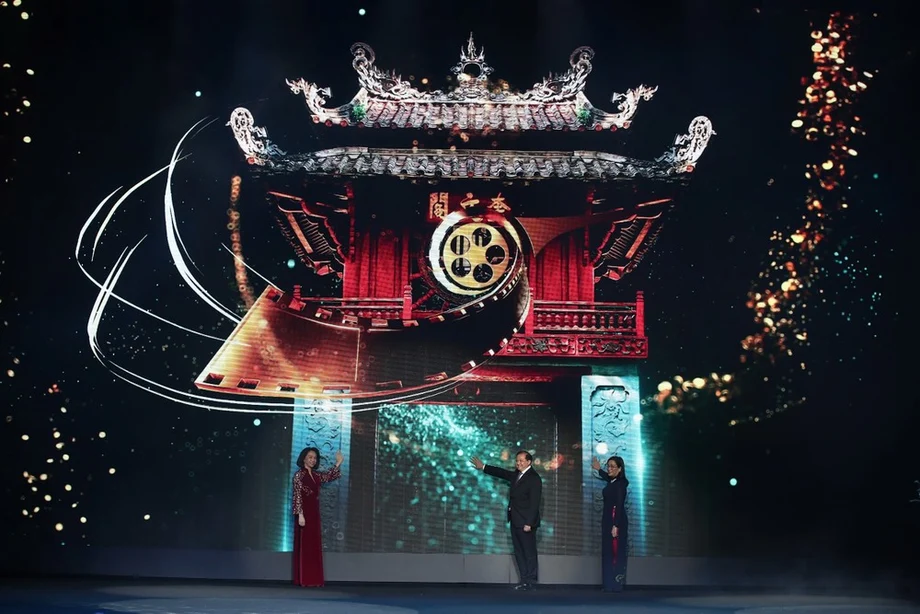
Vietnam has placed itself at the center of a new effort to connect mathematical research across Asia and the Pacific. The Vietnam Institute for Advanced Study in Mathematics (VIASM) announced on November 26 that 12 institutes and centers were joining the Asia Pacific Mathematical Network (APMN), an initiative of Fields Medalist Ngo Bao Chau. Senior representatives were due to meet in Hanoi on November 27 and 28 for a forum on mathematical research and its applications.
Contents
- A Hanoi Meeting Brings a Regional Research Plan Into Focus
- Which Institutes Are in the Founding Group?
- What Will APMN Do Beyond Holding Meetings?
- Why VIASM Is Changing Course After 15 Years
- A Talent Strategy Without a Large Permanent Payroll
- Why Artificial Intelligence Is on the Hanoi Agenda
- APMN and AsianMU Are Separate Initiatives
- The Dates and Decisions to Watch
- What the Network Means for Vietnamese Mathematics
- Key Points
Partner institutions were scheduled to sign a memorandum of understanding in Hanoi in late November. Such an agreement sets out their intention to cooperate and provides a basis for joint programs. The plans extend well beyond an annual conference: participating institutes want to exchange researchers, organize small collaborations, train younger mathematicians and develop closer ties with industry.
VIASM said the network responds to a practical weakness. Asia has become an increasingly important center for mathematics, with large academic communities and growing capacity for research and training, yet cooperation remains scattered. Institutes often collaborate through individual relationships or particular events without a regular mechanism connecting their work. APMN is intended to share resources and turn those separate relationships into a durable regional research environment.
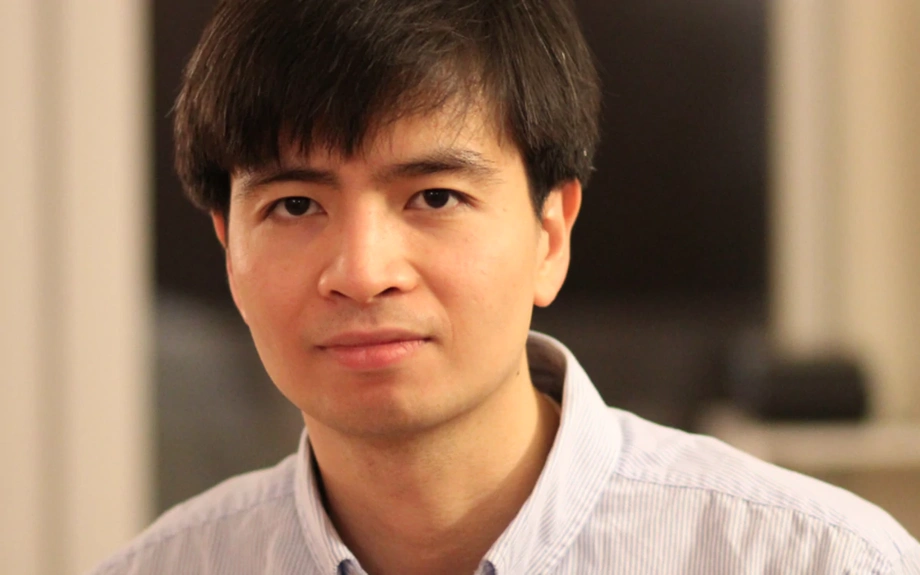
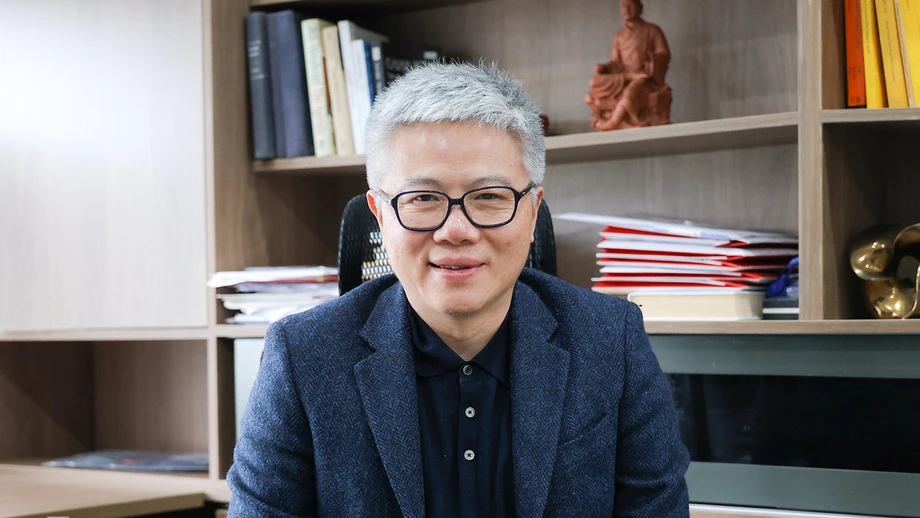
Chau is VIASM's scientific director and a professor at the University of Hong Kong. He was the first Vietnamese mathematician to receive the Fields Medal, an honor often described as the equivalent of a Nobel Prize for mathematics. The network also reflects his broader ambition for Vietnam to organize international partnerships rather than simply receive expertise from abroad.
Which Institutes Are in the Founding Group?
The announced membership brings together specialized mathematical institutes, university research centers and national research organizations. VIASM listed the following 12 participants:
- Chennai Mathematical Institute in India.
- Chern Institute of Mathematics at Nankai University in China.
- Feishu Institute in China.
- Institute for Advanced Study in Mathematics at the Harbin Institute of Technology in China.
- Institute of Mathematics for Industry at Kyushu University in Japan.
- Institute of Mathematical Research at the University of Hong Kong.
- Institute for Mathematical Sciences at the National University of Singapore.
- National Center for Theoretical Sciences in Taiwan.
- Shenzhen International Center for Mathematics at the Southern University of Science and Technology in China.
- Sydney Mathematical Research Institute at the University of Sydney in Australia.
- School of Mathematics at the Korea Institute for Advanced Study (KIAS) in South Korea.
- Vietnam Institute for Advanced Study in Mathematics.
The Kavli Institute for the Physics and Mathematics of the Universe at the University of Tokyo is expected to join later. Its work connects mathematics with fundamental questions about the universe, illustrating the breadth of research that the network could encompass. No date was given for its accession.
The initial group also fits within a larger plan outlined by Chau. He has proposed an Asian mathematics alliance of 12 to 15 regional institutes, accompanied by several European partners, to train young researchers and build competitive research clusters. The 12 named APMN participants therefore sit at the lower end of that range, leaving room for as many as three additional regional institutions under the proposal.
What Will APMN Do Beyond Holding Meetings?
VIASM has set out a program built around repeated scientific contact. Annual events would examine unanswered research questions and emerging trends, while specialized conferences would allow researchers in particular fields to spend more time on common problems. Small research groups would give collaborators a more focused setting than a large international meeting.
Planned exchanges include research opportunities for postdoctoral scholars, meaning researchers who have completed a doctorate and are developing their work before taking a permanent academic position. International summer schools would give students and early career mathematicians concentrated instruction, contact with visiting specialists and exposure to work underway at other institutes.
The network's intended activities include:
- Annual scientific meetings on open problems and new research directions.
- Research exchanges for postdoctoral scholars.
- Cooperation among small groups of researchers.
- Specialized conferences and international summer schools.
- Training, academic connections and exchanges for young mathematicians.
- Programs that spread mathematical knowledge and competitions for university students in different countries.
Industry and public policy are also part of the design. APMN aims to connect mathematical research with industrial needs and provide expert advice for policies governing mathematics development in the region. That gives applied research centers, such as Kyushu University's Institute of Mathematics for Industry, a clear place alongside institutions devoted primarily to fundamental mathematics.
For a student or researcher, the practical value would come from access to a wider circuit of teachers, collaborators and research visits. A problem that one institute lacks the people or equipment to pursue alone could instead become the subject of a joint group. The announcement did not provide a budget or a date for the first annual APMN scientific event.
Why VIASM Is Changing Course After 15 Years
VIASM was founded in 2010 with an open structure and no permanent body of resident scholars. Vietnamese and foreign academics instead take part through rotating fellowships, short research visits and temporary assignments. Researchers remain attached to their home institutions while spending time working with others through the institute.
Its original mission was to revive mathematical research and improve mathematics education in Vietnam. Chau said both research output and education had advanced considerably during the intervening 15 years, prompting him to propose three changes during a September 13 working session attended by Science and Technology Minister Vu Hai Quan.
The first change is a move from broad support toward deeper specialization. VIASM initially acted as a shared resource for university mathematics faculties across Vietnam. Chau now wants more of its resources directed toward pioneering work and research that can rank among the strongest in Asia.
The second change concerns Vietnam's international position. Vietnamese mathematics previously relied heavily on support from visiting foreign scholars. Chau now wants VIASM to initiate and lead partnerships, at least within the region. The Hanoi memorandum and the creation of APMN are central examples of that approach.
The third change concerns staffing. VIASM still plans to draw on visiting academics, but Chau said it also needs a core group of permanent researchers to develop fields in which Vietnam can lead. Specialized groups would give the institute continuity, allowing a research program to survive beyond an individual fellowship or visit.
A Talent Strategy Without a Large Permanent Payroll
Private businesses and mathematics supporters were approached during the preceding year to finance a scholar fellowship initiative. VIASM said the effort had attracted six to seven leading international scientists. Chau hopes the Ministry of Science and Technology will help turn the fellowship arrangement into a government program.
Minister Vu Hai Quan backed a flexible model rather than a large permanent payroll. He described the institute's strength as its ability to bring brilliant minds under one roof. His support covered visiting fellows, joint appointments and rotating scholars, with the aim of making their expertise available to Vietnamese research teams.
Quan said leading researchers did not necessarily need to relocate permanently to Vietnam. Visiting academics could direct research groups, supervise doctoral candidates, help develop a recognizable Vietnamese school of mathematical thought and train successive generations of scholars. Their contribution would be measured by the research and capacity built in Vietnam, rather than by whether every participant became a permanent employee.
Over the next five to 10 years, Quan wants VIASM to establish specialized research groups and academic tracks that make Vietnam's particular expertise readily identifiable to international mathematicians. He also pledged stronger funding for human resources through science and technology initiatives proposed by VIASM, together with sustained investment in fundamental mathematical research. No funding figure was announced.
The two parts of the strategy are complementary. A small permanent core can define research priorities and maintain continuity, while fellows and joint appointments bring in additional knowledge. APMN widens the pool of institutions from which those visitors, collaborators and students can come.
Why Artificial Intelligence Is on the Hanoi Agenda
Three invited speakers were named for the Hanoi forum: Ngo Bao Chau, Sang-hyun Kim of South Korea and Ngaiming Mok of Hong Kong. Their program includes a discussion of the relationship between mathematics and artificial intelligence (AI), with attention to strategic choices facing mathematical research as AI develops rapidly.
Mathematics supplies foundations for several core areas of AI. Statistics helps researchers draw conclusions from data, optimization concerns finding the best available solution under given constraints, and machine learning uses mathematical methods to identify patterns and improve performance. Data processing also depends on formal techniques for organizing and interpreting information.
The relationship runs in the other direction as well. VIASM said advances in AI are raising fresh questions about how mathematicians conduct research, whether machines can help address complex problems and what role people will retain in scientific discovery. The Hanoi discussion is intended to examine both the opportunities AI creates for mathematics and the challenges it presents to established research methods.
APMN gives that discussion an institutional setting. Summer schools could introduce young researchers to new methods, specialized meetings could examine their use in particular fields, and joint groups could compare results across institutions. Those are potential applications of the planned programs; the announcement did not prescribe common AI research rules or name a specific joint AI project.
APMN and AsianMU Are Separate Initiatives
A second regional organization, the Asian Mathematical Union (AsianMU), was established in Hong Kong during the same month of November. Its six founding countries were China, Russia, India, Japan, South Korea and Iran. Vietnam was among the countries that expressed interest in joining.
The two initiatives have different structures. AsianMU is directed toward mathematical cooperation on a continental scale, while APMN is building a network among individual research institutes and centers in Asia and the Pacific. APMN's announced work focuses on specific activities such as research exchanges, small collaborations, conferences and summer schools.
Vietnam can therefore express interest in AsianMU while hosting a separate institute based initiative through VIASM. Membership in one would not amount to membership in the other, and the Hanoi network has its own proposed memorandum and program of activities.
The Dates and Decisions to Watch
The development of VIASM's strategy and the new network can be followed through several milestones:
- 2010: VIASM was founded with an open structure and rotating participation by researchers.
- September 13: Chau presented his three proposed strategic changes during discussions with Minister Vu Hai Quan.
- November: AsianMU was established in Hong Kong with six founding countries.
- November 26: VIASM announced APMN and named its 12 participating institutes and centers.
- November 27 and 28: Hanoi was scheduled to host the forum and the partnership discussions, including AI and the future of mathematics.
- The next five to 10 years: VIASM aims to develop specialized research groups and recognizable areas of expertise.
The immediate institutional step was the planned signing of the Hanoi memorandum. Later indicators will include the first exchange programs, the first annual scientific event, the participation of additional institutes and the University of Tokyo's expected accession through its Kavli institute.
What the Network Means for Vietnamese Mathematics
VIASM gains a platform for organizing cooperation at a regional scale while retaining the visiting scholar model that has shaped it since 2010. The strategy connects international partnerships with domestic capacity: visiting researchers are expected to mentor doctoral students and guide teams, while a core of permanent researchers develops fields that Vietnam can sustain.
Young mathematicians stand to encounter more routes into international research if the proposed exchanges, summer schools and student competitions are carried out. Vietnamese universities could also benefit from specialized groups whose work continues between visits, rather than depending entirely on isolated lectures or short conferences.
The government's funding pledge and Chau's search for private fellowship support show that the plan depends on more than scientific enthusiasm. Money for researchers, administrative arrangements and a regular calendar will determine how quickly APMN moves from its 12 institute announcement to recurring joint work.
Key Points
- VIASM announced APMN on November 26, with a Hanoi forum scheduled for November 27 and 28.
- Twelve mathematical institutes and centers from across Asia and the Pacific were named as participants.
- Ngo Bao Chau initiated the network as part of Vietnam's effort to lead regional research partnerships.
- Planned activities include researcher exchanges, small collaborations, annual events, summer schools and student competitions.
- The Hanoi program also examines how mathematics supports AI and how AI may change mathematical research.
- VIASM aims to combine a core of permanent researchers with visiting fellows, joint appointments and rotating scholars.
- A fellowship initiative has attracted six to seven leading international scientists, with Minister Vu Hai Quan pledging support for research talent and fundamental mathematics.
- APMN is separate from AsianMU, which was founded in Hong Kong by six countries during the same month.