More Babies, but a Population Still Shrinking
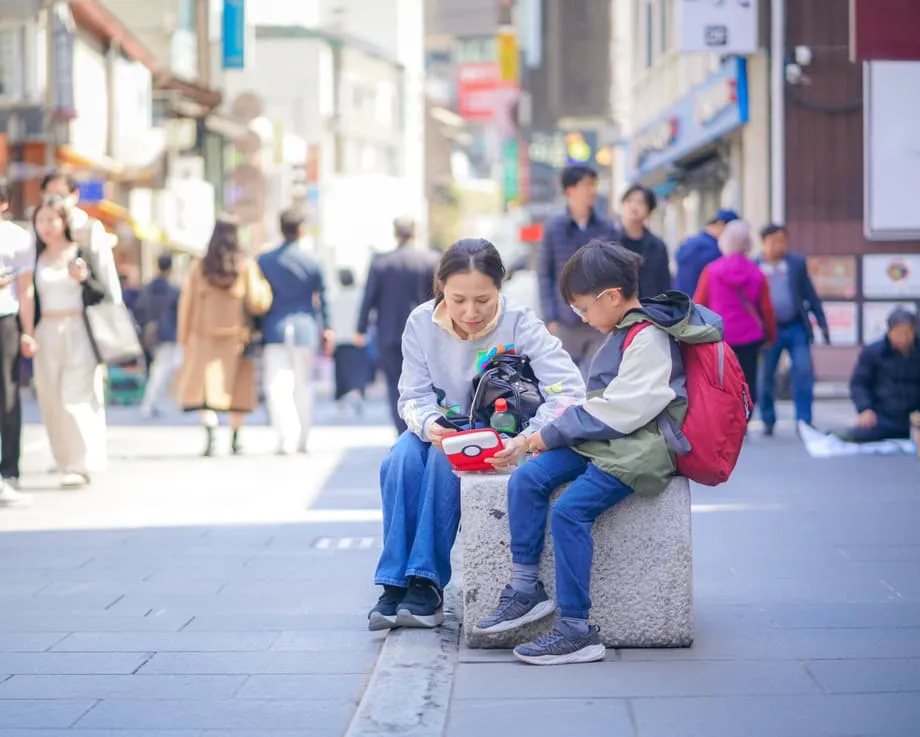
South Korea recorded 254,500 births in 2025, an increase of 6.8 percent and its largest annual rise since 2010, according to provisional figures from the Ministry of Data and Statistics. The figures, released by February 25, 2026, show a second consecutive year of growth in a country long associated with demographic decline.
Contents
- More Babies, but a Population Still Shrinking
- A Large Generation Reaches Childbearing Age
- Delayed Weddings Feed the Birth Recovery
- Changing Decisions Matter Alongside Population Size
- Why Some Couples Are Choosing Two Children
- Cash, Housing and Leave Are Part of the Policy Response
- Housing, Education and Work Still Shape Family Choices
- More Demand Meets Fewer Medical Services
- A Brief Respite Within a Much Longer Decline
- Key Points
The total fertility rate rose from 0.75 in 2024 to 0.80 in 2025, returning to the 0.8 range for the first time since 2021. This measure describes the average number of children a woman would be expected to have during her lifetime under current birth patterns. South Korea remains the only member of the Organisation for Economic Co-operation and Development (OECD) with a rate below 1.0, and its rate is still the lowest among those countries.
Deaths nevertheless exceeded births by 108,900 in 2025. South Korea therefore recorded a sixth consecutive year of natural population decline, meaning more people died than were born. A rise in births can slow that loss while the population continues to shrink through this balance.
The United Nations classifies South Korea as a country with ultra low fertility and estimates a probability of just 0.1 percent that its fertility rate will recover to 2.1 over the coming decades. That is the replacement level, the number of children per woman needed for successive generations to replace themselves.
The rebound brings together several developments: a large generation reaching the age when many Koreans marry and have children, weddings delayed during COVID-19, improving attitudes toward parenthood, and support that some families say has made raising children easier. Housing costs, work pressures and gaps in medical services remain part of the same story.
A Large Generation Reaches Childbearing Age
Approximately 3.6 million South Koreans were born between 1991 and 1995. Known as echo boomers, they are the children of the country's postwar baby boomers and belong to a temporary expansion in births that occurred when the government effectively ended its family planning policy.
Those born during that period are now entering their early thirties, the peak age for marriage and childbirth in contemporary South Korea. A larger number of people reaching that stage creates more opportunities for births, even when families remain small.
The population of women in their early thirties reached approximately 1.7 million in 2025, about 9 percent above its level in 2020. Statistics Korea figures put the number of women aged 30 to 34 at 1.51 million in 2020 and 1.65 million by the middle of 2025.
Park Hyun-jung, director of the population trends division at the Ministry of Data and Statistics, described the combination of population changes, delayed weddings and attitudes behind the increase:
The increase reflected the demographic effect, alongside sustained growth in marriages as Covid-era delays unwound and improving attitudes toward having children.
Park also cautioned that this demographic advantage has a limited duration. Smaller generations born after 1996 will begin moving into their thirties around 2027, when the boost from the echo boomers is expected to fade. The current increase therefore comes during a temporary window when more potential parents are at the ages most closely associated with childbirth.
Delayed Weddings Feed the Birth Recovery
Approximately 240,000 couples married in 2025, an increase of 8.1 percent from the previous year. It was the third consecutive annual increase in marriages, following a jump of 14.8 percent in 2024, as couples moved ahead with weddings delayed by the COVID-19 pandemic.
Marriage registrations increased for 21 consecutive months from April 2024 through December 2025. In September 2025, marriages rose 20.1 percent compared with September 2024, reaching the highest September figure since 2015.
Marriage and childbirth remain closely connected in South Korea, where single parenthood carries substantial social stigma and fewer than 2 percent of births occur outside marriage. More weddings consequently create a pipeline of potential births in the following months and years.
Births within two years of marriage increased by 10.2 percent in 2025. That continued a recovery that began in 2024 after more than a decade of decline. The pattern suggests that couples marrying later in life are shortening the time between marriage and parenthood.
The main developments unfolded across several years:
- 2020: Women aged 30 to 34 numbered 1.51 million.
- 2024: Births began recovering, marriages rose 14.8 percent, and births within two years of marriage also started to recover.
- April 2024 to December 2025: Marriage registrations rose for 21 consecutive months.
- 2025: Births reached 254,500, marriages reached approximately 240,000, and the fertility rate rose to 0.80.
- Around 2027: Smaller generations born after 1996 are expected to begin reducing the demographic boost as they enter their thirties.
Changing Decisions Matter Alongside Population Size
The Korea Institute for Health and Social Affairs found that the birth rebound in 2024 was driven mainly by changes in behavior, rather than simply by an increase in the number of women of childbearing age.
Among women in their thirties, births increased by 10,924. The institute attributed 3.2 percent of that increase to population growth within the age group and 96.8 percent to higher birth rates among those women. In simple terms, most of the increase came from women in that group having children at a higher rate.
The 2024 research adds a different dimension to the explanation for the 2025 rebound. The size of the echo boomer generation helps explain why there are more potential parents, while the institute's findings show that decisions about having children also changed during the earlier recovery.
A survey of women who gave birth in 2024 found that their own desire to have children and their spouse's willingness were the most important factors in their decision. Considerations about age followed. The institute's research suggests that financial incentives help, while deeper barriers to starting and expanding families persist.
Government surveys also recorded more positive attitudes. The share of respondents intending to have children after marriage rose 3.1 percent between 2022 and 2024. A survey by the Presidential Committee on Ageing Society and Population Policy found that 62.6 percent of unmarried men and women viewed marriage positively, up 6.7 percentage points from March 2024.
Why Some Couples Are Choosing Two Children
Researchers have identified an emerging pattern described as a zero or two mentality: couples increasingly choose either to remain childless or to have two children in quick succession, instead of settling on a family with one child.
Second births accounted for a larger share of the increase than first births in 2024, a pattern researchers described as unprecedented in South Korean demographic history. The number of second births had fallen from about 166,000 in 2015 to 74,000 in 2023 before rising to 76,000 in 2024.
The increase of about 2,000 second births in 2024 was modest beside the earlier fall of about 92,000 between 2015 and 2023. Those figures show both the new movement toward larger families among some parents and the depth of the preceding decline.
Lee Soo Min, who was expecting her second child after six years of marriage, described improvements in parental leave. Her husband had already used one year of leave, and she said the availability of up to six years of leave in total had made parenting feel less burdensome.
Another mother, identified by the surname Kim, pointed to practical help when she became pregnant with her second child. Her first child received priority admission to daycare centers, and cash vouchers worth 2 million won, approximately $1,380, reduced the perceived burden of expanding the family.
These experiences connect the statistical increase in second births with everyday decisions. Time away from work, a daycare place for an older child and financial support were among the changes these mothers described when explaining their plans.
Cash, Housing and Leave Are Part of the Policy Response
South Korea has spent hundreds of billions of dollars over two decades on policies intended to encourage births. Support includes cash payments, housing subsidies for newlyweds, higher parental leave allowances and comprehensive childcare assistance.
Some companies offer benefits reaching 100 million won per birth, approximately £51,500 or $66,000. Such corporate benefits sit alongside government measures aimed at reducing the financial and practical demands of raising children.
President Lee Jae Myung's administration has announced plans for a policy roadmap covering five years to address demographic changes. The plans include expanded childbirth support and measures to attract skilled foreign workers.
Lee has proposed loans of 100 million won for all newlywed couples, with debt forgiveness tied to the number of children they have. His proposals also include extending child allowances to age 18 and introducing tax reforms supportive of families, modeled on France's family quotient system.
Park Hyun-jung acknowledged that officials cannot clearly analyze the correlation between specific policies and the increase in births. The proposed measures and existing benefits are part of the response, while the contribution of each individual policy to the rebound remains uncertain.
Housing, Education and Work Still Shape Family Choices
High housing costs in major metropolitan areas, particularly Seoul, continue to delay marriage and childbirth. Young adults also face stagnant employment rates, adding pressure to decisions about when to establish a household and whether to have children.
South Korea's spending on private education and its intensely competitive academic environment create further financial pressure for families. Parents must consider the costs of raising a child over many years, alongside immediate expenses around pregnancy and birth.
Workplace stigma against parents, particularly mothers, remains another obstacle. Better leave arrangements have helped some families, as Lee Soo Min's experience illustrates, while the wider working environment continues to influence family formation.
The average age of mothers at childbirth reached 33.8 years in 2025, the highest among OECD countries. The OECD average was 30.9 years, a difference of 2.9 years. South Korean mothers are therefore having children considerably later than the average across that group of countries.
Cho Young Tae, a professor at Seoul National University's Graduate School of Public Health, observed that marriage no longer leads to childbirth as directly as it once did. He stressed the need for social conditions and policies that support people who want to raise children, particularly while echo boomers are passing through their prime childbearing years.
More Demand Meets Fewer Medical Services
Seoul has seen crowds gather outside popular obstetrics and gynecology clinics before opening on frigid January mornings. Locals call them open run OB GYNs, borrowing a term for stores where customers line up before the doors open.
The queues reflect demand at particular clinics while South Korea's infrastructure for childbirth and children's healthcare has weakened after years of very low births. Pediatric clinics are closing faster than new ones open, and many municipalities lack adequate delivery facilities.
Many regions consequently lack enough facilities to serve even the current modest number of births. A national increase in babies brings this practical problem into sharper focus: families need access to pregnancy care, somewhere to give birth and medical services for their children.
The medical shortages sit alongside the housing, education and workplace pressures described by researchers. More couples may be willing to have children, while the services needed to support those decisions remain unevenly available.
A Brief Respite Within a Much Longer Decline
South Korea's population is expected to fall from 51.8 million to 36.2 million by 2072. That is a projected reduction of 15.6 million people, even as the recent rise in births offers a temporary respite.
The economic pressures extend to retirement funding and public spending. The public pension fund, the world's third largest with approximately $1 trillion in assets, is projected to run out by 2071. Credit ratings agencies have warned that welfare expenditure will place growing strain on public finances.
The central bank estimates that potential economic growth, currently around 2 percent annually, could decline to 0.6 percent during 2045-2049. Potential growth describes the pace an economy can sustain over time; the projection points to a much slower rate as demographic pressures deepen.
Lee has proposed regional cooperation, including a possible Asia Pacific Economic Cooperation population policy forum and collaboration with China and Japan on aging populations. During January visits to those countries, he agreed with Chinese President Xi Jinping and Japanese Prime Minister Sanae Takaichi to seek cooperation on population aging.
Demographers regard the birth recovery as a temporary reprieve rather than a fundamental reversal. Without substantial changes to housing affordability, education competition and workplace culture, they expect births to decline again once the echo boomer generation moves beyond peak childbearing age.
The 2025 figures therefore capture two developments at once: more families are having babies, and deaths still outnumber births by a large margin. The immediate opportunity lies in supporting people who want children while the larger generation is still at the center of family formation.
Key Points
- South Korea recorded 254,500 births in 2025, up 6.8 percent, its largest annual increase in 15 years.
- The fertility rate rose from 0.75 to 0.80, remaining the lowest in the OECD and below the replacement level of 2.1.
- Deaths exceeded births by 108,900, marking a sixth consecutive year of natural population decline.
- The roughly 3.6 million people born between 1991 and 1995 are reaching peak ages for marriage and childbirth.
- About 240,000 couples married in 2025, up 8.1 percent; births within two years of marriage increased 10.2 percent.
- Research attributed 96.8 percent of the 2024 birth increase among women in their thirties to higher birth rates within that group.
- Second births rose from about 74,000 in 2023 to 76,000 in 2024, alongside an emerging preference among some couples for either no children or two.
- The demographic boost is expected to fade around 2027 as smaller generations enter their thirties.
- Housing costs, education expenses, workplace pressures and shortages of medical services continue to constrain family choices.
- The population is projected to decline from 51.8 million to 36.2 million by 2072.