A 3.87 Trillion Yuan Economy Moves Into the Spotlight
Shenzhen recorded gross domestic product of 3.87 trillion yuan ($560 billion) in 2025, growing by 5.5 percent as the southern Chinese metropolis claimed the national lead in industrial output and import-export value. Mayor Qin Weizhong presented the figures to the local people's congress on February 9, placing manufacturing and technological development at the center of the city's economic story.
Contents
- A 3.87 Trillion Yuan Economy Moves Into the Spotlight
- Nanshan Crosses the Trillion Yuan Threshold
- Research Spending Supports the Manufacturing Push
- A Secretive Project Targets Advanced Chip Equipment
- Domestic Chip Production Has Separate Goals
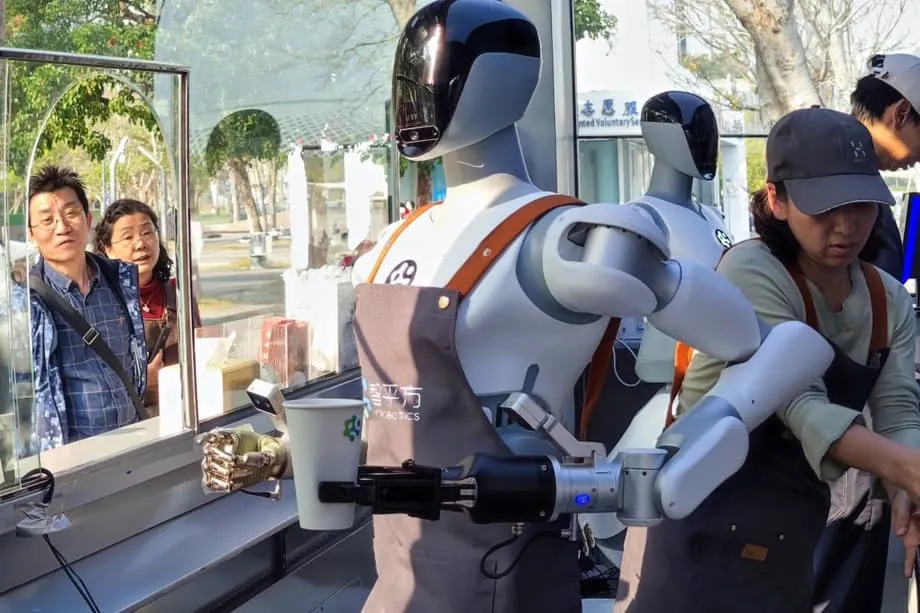
- Drones Turn Factory Strength Into Daily Services
- National Weakness Makes Shenzhen's Growth Stand Out
- Trade Shifts Beyond the United States
- November's APEC Summit Gives Shenzhen a Global Platform
- Key Points
The growth rate edged ahead of the 5.4 percent recorded by both Shanghai and Beijing and exceeded China's national rate of 5 percent, reported by the National Bureau of Statistics. Shenzhen's claim to have overtaken those cities concerns industrial output and trade volume. Shanghai continues to serve as a financial hub, while Beijing retains its role as the country's political center.
Shenzhen is also preparing to host the Asia-Pacific Economic Cooperation (APEC) summit in November. City officials intend to use that gathering to present their economic model to global leaders, with advanced manufacturing, research and international trade forming the main parts of the showcase.
The city's economy has grown from 2.83 trillion yuan in 2020 to 3.87 trillion yuan in 2025. Its transformation from a fishing village into a major manufacturing center within four decades illustrates a shift in China's economic geography: a city once known for its rapid industrial expansion now occupies a central position in the country's efforts to develop its own advanced technologies.
Shenzhen's performance brings together two connected ambitions. One is to keep factories, exports and investment growing despite a difficult national economic environment. The other is to reduce dependence on foreign technology, particularly the equipment and components needed to produce advanced semiconductors.
Nanshan Crosses the Trillion Yuan Threshold
Nanshan, Shenzhen's technology district and home to companies including Huawei, Tencent and DJI, became the first prefecture-level district in China to exceed 1 trillion yuan in GDP. Its economy has grown at an average annual rate of more than 5.8 percent since 2020.
The district's economic output now exceeds that of some European nations. Its industrial output from large enterprises topped 900 billion yuan, while foreign trade reached 941.9 billion yuan. Nanshan also led Shenzhen's districts in exports, showing how much manufacturing and international commerce are concentrated within this technology corridor.
GDP, industrial output and foreign trade describe different parts of that activity. GDP measures the value created in the economy. Industrial output describes production, while foreign trade records goods moving into and out of overseas markets. Together, the figures show a district with substantial production capacity and extensive connections to customers and suppliers beyond China.
Strategic emerging industries account for about 60 percent of Nanshan's GDP. Artificial intelligence, robotics and activities associated with the low-altitude economy are among the drivers. The latter includes drone services, which connect Shenzhen's manufacturing capabilities with new uses for unmanned aircraft.
Nanshan also has more than 600,000 operating entities. That concentration of commercial activity supports its role as a hub for technology start-ups from Hong Kong, Macao and across mainland China. The district's scale helps explain why Shenzhen's industrial story extends beyond a few large companies: it also depends on a dense network of businesses working around them.
Research Spending Supports the Manufacturing Push
Mayor Qin says Shenzhen has the highest density of research and development activity among mainland Chinese cities. Between 2020 and 2024, the city's total research and development investment rose from 151.08 billion yuan to 245.31 billion yuan, representing average annual growth of 12.9 percent.
Research and development spending pays for the work needed to create and improve technologies before they can become commercial products. In Shenzhen, that investment sits alongside factories and technology businesses, linking the development of new ideas with the capacity to manufacture them.
The increase coincides with China's entry into the top 10 of the World Intellectual Property Organization's Global Innovation Index 2025. Shenzhen's research expansion is part of that wider national drive, while its concentration of companies gives the city a prominent place within it.
The computing power of Shenzhen's branch of the National Supercomputing Centre ranks among the world's best, supporting the city's artificial intelligence ambitions. Powerful computing systems provide another part of the infrastructure behind its technology industries, alongside research investment, manufacturing facilities and commercial networks.
A Secretive Project Targets Advanced Chip Equipment
Scientists working in a secure Shenzhen laboratory have completed a working prototype of an extreme ultraviolet (EUV) lithography machine. The equipment is needed to make the most advanced chips used in artificial intelligence systems and smartphones, placing the project at the center of China's attempt to develop domestic semiconductor capabilities.
EUV machines use beams of extreme ultraviolet light to etch circuits thousands of times thinner than a human hair onto silicon wafers. The process creates the exceptionally small features required for advanced chips. The difficulty lies in making the light, directing it precisely and using it reliably during production.
ASML of the Netherlands is currently the only company with this capability commercially. Its machines cost approximately $250 million each and form a bottleneck for advanced chip production worldwide. Access to this equipment therefore carries consequences for the companies and countries trying to manufacture the most sophisticated semiconductors.
A source familiar with the Shenzhen project, speaking anonymously because of the confidentiality of the work, described the objective:
The aim is for China to eventually be able to make advanced chips on machines that are entirely China-made,
The prototype successfully generates extreme ultraviolet light, but it has not yet produced working chips. That leaves the project with further technical work before its intended output can be achieved, including challenges in replicating precision optical systems supplied by Western companies.
Sources familiar with the initiative have described it as China's version of the Manhattan Project. It operates under strict secrecy, with recruited engineers reportedly using false identities and working in isolation to prevent detection. Huawei plays a central coordinating role, deploying employees across fabrication plants and research centers nationwide.
The effort falls under President Xi Jinping's broader directive to achieve semiconductor self-sufficiency. Washington has spent years seeking to prevent China from acquiring advanced semiconductor manufacturing technology, using sweeping export controls to restrict access to equipment.
Domestic Chip Production Has Separate Goals
The Shenzhen EUV prototype has raised the possibility that China could achieve independence in advanced semiconductor production by 2030, earlier than predictions that the process would take another decade. The precision optics challenge and the work needed to produce functioning chips remain central to that timetable.
Huawei is also pursuing a more immediate increase in artificial intelligence chip production. The Shenzhen telecommunications company plans to double annual production of its 910C Ascend AI chips to 600,000 units in 2026, while aiming to increase total Ascend output to 1.6 million dies.
A die is an individual semiconductor component produced on a silicon wafer. Huawei's targets therefore describe both a particular chip product and the wider output of its Ascend range. The expansion represents a technical advance in China's effort to build greater independence in semiconductor production.
Geopolitical pressure is constraining foreign competitors, giving Huawei an opportunity to capture market share. Its production plans and its coordinating role in the lithography initiative place the company within both the commercial expansion of China's AI industry and the longer effort to develop domestic manufacturing equipment.
Shenzhen's semiconductor ambitions consequently operate on different schedules. Huawei's production increase is planned for 2026, while the EUV project is working toward the much harder task of enabling advanced chips to be made using equipment produced entirely in China.
Drones Turn Factory Strength Into Daily Services
Shenzhen operates more than 300 low-altitude logistics routes for unmanned aerial vehicles. Those routes show how its drone industry extends from making aircraft to using them for transport services.
The city produces 70 percent of China's consumer drones and 50 percent of its industrial drones, making it the country's leading manufacturing base for the technology. Consumer drones and industrial drones serve different markets, but both draw on Shenzhen's production networks and research capabilities.
The low-altitude economy has been identified as a strategic growth driver. In Shenzhen, it also connects research resources across the Guangdong-Hong Kong-Macao Greater Bay Area, bringing the city's manufacturing strengths into a wider regional technology network.
Nanshan's investment in artificial intelligence, robotics and low-altitude activities reflects that connection between production and services. Shenzhen's industrial expansion includes the manufacture of equipment and the development of new uses for it, with drone logistics providing a concrete example.
National Weakness Makes Shenzhen's Growth Stand Out
China's national manufacturing indicators showed a more difficult picture during 2025. The official manufacturing Purchasing Managers' Index stayed below 50 for several consecutive months, with July recording 49.3 amid extreme weather and trade uncertainty.
The index is a survey measure of manufacturing conditions. A reading below 50 indicates contraction, while a reading above 50 indicates expansion. Shenzhen's annual GDP growth and the national monthly survey describe different measures and periods, giving readers two views of an economy with uneven performance.
National industrial output growth slowed to 5.8 percent in May 2025, its weakest pace since November 2024. Output was still growing, but more slowly. Fixed-asset investment also lagged expectations, adding to the pressure on economic activity.
The property sector continued its downturn. Investment fell sharply, and new home prices in June dropped at their fastest monthly pace in eight months. Producer prices fell 3.3 percent from a year earlier, while economists warned that deflation remained a key threat to the national economy. Deflation means falling prices, a concern when weak demand makes it harder for businesses to sustain revenue.
Traditional manufacturing regions have faced overcapacity and weak demand. Overcapacity means producers can make more goods than buyers are ready to purchase. Shenzhen, meanwhile, has continued its shift toward advanced production and a broader range of export markets, allowing it to maintain growth despite those pressures.
Trade Shifts Beyond the United States
Chinese shipments to the United States fell 29 percent from a year earlier in November, yet total exports grew 5.9 percent. Manufacturers redirected trade toward Southeast Asia, Europe and Australia, helping sustain export growth despite the decline in sales to the American market.
Shenzhen's trade surplus reflects that reorientation. Its position as China's leader in import-export value places the city within a wider effort to maintain international commerce while reducing reliance on any single destination.
Guangdong provides the broader setting for Shenzhen's performance. The province has led China in GDP for 36 consecutive years and in foreign trade volume for 39 years. Its total foreign trade reached 9.11 trillion yuan, and it accounted for 38.7 percent of national trade growth.
Shenzhen serves as a primary engine within that provincial economy, contributing disproportionately to Guangdong's trade. Nanshan's 941.9 billion yuan in foreign trade illustrates how a technology district within the city participates in commercial networks extending across the province and overseas.
November's APEC Summit Gives Shenzhen a Global Platform
Shenzhen's November APEC summit will give city officials a platform to present their technology and manufacturing achievements to global leaders. China intends to use the gathering to defend globalization and showcase a model of technological development that resists Western efforts to separate economic and technology networks.
The summit brings together the city's industrial position, its international trade relationships and its role in the push for technological independence. Its factories and exports connect it to global markets, while its semiconductor initiatives seek greater control over the equipment needed to compete in those markets.
Guo Wanda, executive vice president of the Shenzhen-based China Development Institute, described Nanshan as an example of how innovation can support economic growth despite resource limits:
Nanshan's experience shows how technological innovation can overcome resource constraints and power new quality productive forces, offering a window onto China's broader growth potential,
The phrase new quality productive forces refers here to growth driven by technological advances and newer industries. Nanshan's concentration of companies, research activity and emerging sectors provides the local example behind Guo's assessment.
The key dates and milestones show how Shenzhen's economic rise and its technology ambitions are developing together:
- 2020: Shenzhen's GDP stood at 2.83 trillion yuan, and research and development investment totaled 151.08 billion yuan.
- 2024: Research and development investment reached 245.31 billion yuan.
- 2025: GDP reached 3.87 trillion yuan with growth of 5.5 percent, while Nanshan crossed 1 trillion yuan in GDP.
- February 9, 2026: Mayor Qin Weizhong presented the city's economic assessment to the local people's congress.
- 2026: Huawei plans annual production of 600,000 units of its 910C Ascend AI chips and total Ascend output of 1.6 million dies.
- November 2026: Shenzhen is scheduled to host the APEC summit.
- 2030: Advanced semiconductor independence is a possible timetable associated with progress on the EUV project.
Key Points
- Shenzhen's GDP reached 3.87 trillion yuan ($560 billion) in 2025, with growth of 5.5 percent, ahead of Beijing and Shanghai at 5.4 percent and China at 5 percent.
- The city leads China in industrial output and import-export value. Nanshan alone exceeded 1 trillion yuan in GDP.
- Research and development investment rose from 151.08 billion yuan in 2020 to 245.31 billion yuan in 2024.
- A Shenzhen EUV prototype generates extreme ultraviolet light but has yet to produce working chips.
- Huawei plans to double annual 910C Ascend AI chip production to 600,000 units in 2026.
- Shenzhen operates more than 300 drone logistics routes and produces 70 percent of China's consumer drones and 50 percent of its industrial drones.
- National manufacturing and property pressures contrast with Shenzhen's growth and expansion into advanced industries.
- The November APEC summit will provide a global platform for the city's economic and technology ambitions.