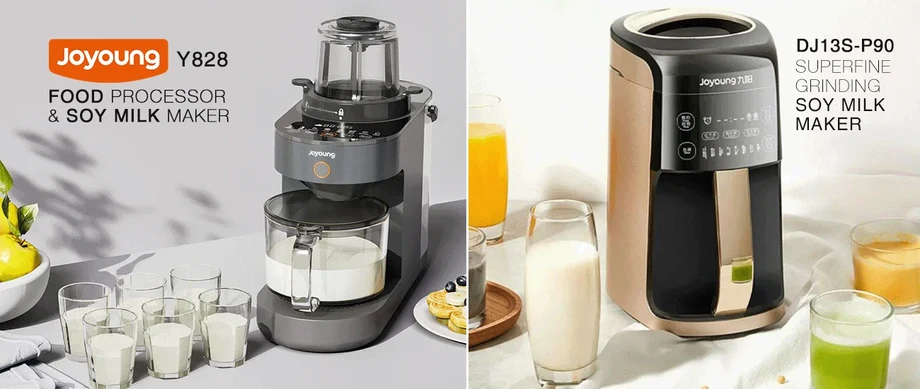
A Kitchen Appliance Becomes the A Share Leader
On Nov 27, 2026, Joyoung Co Ltd (002242.SZ) closed at 42.15 yuan, up 0.60 percent on the day and 317.46 percent for the year. That put the soy milk machine maker at the top of the A share gainers list, ahead of Xingyun Technology at 315.96 percent. Jiuzhou Yigui, Aiai Precision and Kexiang Shares followed in third to fifth place, while five other stocks in the top ten had gains above 200 percent.
Contents
- A Kitchen Appliance Becomes the A Share Leader
- What Investors Were Buying
- The Rally in Dates and Numbers
- Six Warnings and a String of Keywords
- The Family Story Behind the Ticker
- Where the Business Lines Really Meet
- The AI and Robot Threads
- Hami Soy Milk, Space Kitchens and the Goat Sound
- The Kitchen Business Under Pressure
- Why a 400 Times Multiple Raised Alarms
- What the Share Structure Made Possible
- What Other Meme Stocks Show
- Key Points
The day itself showed how sharp the trading had become. Joyoung hit an intraday record of 45.54 yuan after five straight sessions higher, then fell to 37.80 yuan in the afternoon, just 0.09 yuan above the 37.71 yuan daily limit down price. It closed higher after a late recovery. Turnover exceeded 6.2 billion yuan, with a turnover rate of 19.49 percent.
Data on the exchange Dragon Tiger List, a public record of unusually active broker seats, showed the Shenzhen Stock Connect seat bought 682 million yuan of the stock and sold 336 million yuan. Three institutional seats recorded net purchases of 253 million yuan. Those figures show heavy two way trading, not a quiet drift upward.
The market value had moved from 7.165 billion yuan at the Sept 24 close of 9.39 yuan to about 32.16 billion yuan on Nov 27. Investors had added roughly 25 billion yuan to the company in about two months while the company's latest earnings were falling.
What Investors Were Buying
Soy Milk GPU began as a joke that became a trading story. A GPU is a graphics processor, the chip used to handle heavy computing tasks such as artificial intelligence. A semiconductor process node such as 3nm refers to the tiny scale of chip manufacturing. A kitchen blender that crushes soybeans belongs to a completely different field.
An investor using the Shenzhen Stock Exchange interactive platform pushed the joke furthest on Nov 20. The question treated a kitchen appliance as if it were a chip tool and asked the listed company to confirm a fictitious road map.
At a time when the global semiconductor industry is struggling with the 2nm process, domestic technology has achieved a leapfrog breakthrough. With its self developed high speed blending technology, the company has taken the lead in breaking through the 3nm technological barrier and crushing soybeans to nanoscale, making its technology globally leading. Soy Milk GPU, or Grain Processing Unit, has already achieved commercial deployment at 3nm, 2nm blending technology is expected to accelerate, and the company may even be the first to achieve 1nm soybean processing. Is this true?
Joyoung's investor relations team answered on the same platform. The reply was a direct attempt to separate food machines from chip manufacturing.
The company's blending technology is used in food processing small appliances. It is not the same concept as process nodes in semiconductors and cannot be compared. The company has not made statements about 3nm, 2nm or 1nm soybean processes or nanoscale soybean grinding on any official channel. Those claims do not match the company's actual technology. The company does not engage in semiconductor business. Please identify information rationally and pay attention to investment risks.
The company also answered a separate question about whether Joyoung lithography machines were in mass production. It said there was no lithography business and no semiconductor business. Those answers did not end the rally. Instead, each denial repeated the keywords for more traders to see.
The Rally in Dates and Numbers
China's main board stocks generally have a daily price limit, meaning the share price cannot rise or fall beyond a set percentage in one session. Several limit ups in a row create a powerful signal in a market where short term资金 often chases momentum. Joyoung's run had enough limit ups to become a public spectacle.
- Nov 2025: Hami mung bean soy milk became a social media hit. The drink was made by Hangzhou Joyoung Bean, a company with no equity link to the listed company.
- Sept 24, 2026: Joyoung closed at 9.39 yuan with a market value of 7.165 billion yuan.
- Sept 28 and 29: closing price gain deviations totalled 23.65 percent, triggering an abnormal trading notice. Six straight limit ups began on Sept 28.
- Sept 30 to Nov 25: the company issued six abnormal trading notices on Sept 30, Oct 9, Oct 12, Oct 21, Nov 17 and Nov 25.
- Oct 26: controlling shareholder Shanghai Lihong sold 14.4726 million shares, or 1.90 percent of the company, at an average 21.36 yuan.
- Nov 20: investors asked about lithography machines, 3nm soybean processes and Soy Milk GPU on the interactive platform.
- Nov 23 to Nov 25: Joyoung posted three straight limit ups. closing price gain deviations for Nov 24 and 25 reached 24.70 percent.
- Nov 26: the stock closed at 41.90 yuan after touching 42.42 yuan, with a market value near 32 billion yuan.
- Nov 27: the stock reached 45.54 yuan, fell close to the daily limit down price, then closed at 42.15 yuan and took the year to date lead.
By Nov 27, the two month run included 13 limit ups. Through Nov 25, the count was 12, with three consecutive boards in the final days of that period. From the Sept 24 close to the Nov 27 close, the rise was about 349 percent. Intraday highs and three month windows produced figures above 350 percent and above 400 percent.
The year to date figures also changed with the calendar. At the Nov 26 close, Joyoung was up 306.80 percent, while other closing calculations put the gain above 311 percent. The Nov 27 close settled the ranking at 317.46 percent.
Six Warnings and a String of Keywords
Joyoung's Nov 25 filing, numbered 2026-044, was the sixth abnormal trading notice since late September. It was also the second document in the run specifically labelled as a risk warning. The company said its operating situation and external conditions had not changed in a way that explained the share price move.
The notices denied one popular theme after another. The pattern gave the market a rolling list of names to attach to the stock.
- JS Global Life and SharkNinja: the company said the two platforms were independent and that there was no undisclosed asset injection, share purchase or business restructuring. It committed to no such plan within three months.
- Huawei: the company said there was no strategic cooperation. The connection was that both sides held stakes in Deep Thought AI Robot.
- Hami soy milk: the company said it had no equity relationship with Hangzhou Joyoung Bean and did not consolidate its results.
- Space kitchen: the company said space related technology existed, but there was no separate space business segment or separate revenue.
- AI and robots: the company said its stakes were small, financial and not material to revenue or profit.
- Semiconductors: the company said blending technology could not be compared with chip process nodes.
Old appliances, new concepts, family ties and social media jokes kept appearing together. The company's warnings were detailed, but traders kept using the denied themes as evidence that something unseen might still happen.
The Family Story Behind the Ticker
Wang Xuning built the first fully automatic home soy milk machine in 1994, according to the company's history. He was born in 1969 and had taught electrical machinery at a Jinan railway technical school. He used his training in electric locomotives, quit his job and started Joyoung with 300,000 yuan. The company listed in Shenzhen in 2008.
Wang then built a second kitchen business overseas. In 2017, Shanghai Lihong, which he controlled, and a CDH entity acquired 70 percent of SharkNinja's parent. JS Global Life was set up and restructured in 2018 and listed in Hong Kong in December 2019. SharkNinja's non Asia Pacific business was spun off and listed on the New York Stock Exchange in 2023.
The result was a three market map. Joyoung remained in Shenzhen, JS Global Life stayed in Hong Kong and SharkNinja traded in New York. Market values at the time put SharkNinja at 33.3 billion dollars, Joyoung at 29.4 billion yuan and JS Global Life at 5.4 billion Hong Kong dollars, totaling 256.6 billion yuan. Wang's paper wealth was estimated above 100 billion yuan.
Inside the A share company, Wang remained the actual controller but held no position during the reporting period. Daily operations were led by a professional management team headed by chairman Yang Ningning. That structure helped investors imagine links between the three listed platforms while the companies kept separate business boundaries.
Where the Business Lines Really Meet
Joyoung and the overseas platforms are connected, but they are not one company. The clearest link is manufacturing. Joyoung told investors in September 2026 that its export business mainly supplied ODM services to SharkNinja. ODM means a company designs and makes products that another brand sells.
The financial scale of that link was shrinking. Joyoung's 2025 annual report showed sales of goods and services to SharkNinja of about 640 million yuan, down from about 1.364 billion yuan in 2024, a fall of more than half. The company attributed the drop to changes in international trade, exchange rates, slower product updates and SharkNinja's move to diversify its global supply chain. SharkNinja and JS Global Life both appeared among Joyoung's top five customers in 2025.
In October, Joyoung said in its 2027 related transaction estimate announcement that it planned to continue selling goods and providing services to SharkNinja, JS Global Life and their subsidiaries. Business would continue, but the company repeatedly said there was no undisclosed asset injection, share purchase or restructuring. No timetable was given for any broader deal because the company said no deal was planned.
The AI and Robot Threads
Joyoung's AI connection is real but small. The company bought a 10 percent stake in Deep Thought AI Robot for 9.5 million yuan in the first half of 2016. After later changes in capital and shareholders, Joyoung held 7.92 percent and was the second largest shareholder. Huawei's Hubble unit invested in 2019 and held 3.31 percent.
Joyoung's filings described the Deep Thought stake as a financial investment. It was not consolidated into Joyoung's accounts, Deep Thought was still loss making, and the investment had no material effect on Joyoung's main business or results. The company also said there was no strategic cooperation with Huawei beyond both sides holding stakes in Deep Thought. Joyoung said it did not influence Deep Thought's financing decisions or daily operations and that no substantial business coordination had been put in place.
Deep Thought, the AI company at the centre of that link, said it was not involved in Joyoung's share price story. Its statement was direct.
We are not clear about the recent share price fluctuations of Joyoung, and Joyoung has not participated in Deep Thought's daily operations or decision making.
The robot thread ran through Xiangke Intelligent. Joyoung's wholly owned Hangzhou Joyoung Small Appliances unit joined the company's angel round in April 2023 and held 5.70 percent, making it the fifth largest shareholder. Xiangke focused on robots for commercial settings such as restaurants and hotels. It announced a 150 million yuan Series A round led by Ninebot in April, bringing total funding above 250 million yuan. Some of its robot systems had entered overseas deployment at hundred unit scale in commercial kitchens, including fried chicken restaurants.
Joyoung classified the Xiangke stake as a financial investment and said the robot business was still at an early stage. No revenue or profit contribution was reported from it.
Hami Soy Milk, Space Kitchens and the Goat Sound
Hami mung bean soy milk gave the rally a second identity. The drink's name was close to Joyoung's brand, so many traders linked the listed company to the viral product. The producer was Hangzhou Joyoung Bean. Joyoung and Wang Xuning had once been founding shareholders, but Joyoung sold its 25.5 percent stake in October 2023 to Solar Blue, which Wang controlled. After that sale, Joyoung no longer held the company and no longer consolidated it. Financial disclosures still listed the bean company among assets controlled by a related party, which kept the name connection visible.
Another thread was what traders called the goat sound theme. China's Lunar Year of the Goat falls in 2027, and some investors grouped stocks with names pronounced yang, a sound shared by words connected with sunlight, oceans, goats and praise. Joyoung's name included that sound. The theme did not depend on what the company sold, but it helped make the stock easy to spot for short term traders.
Space kitchens had a firmer base. Joyoung said its space kitchen equipment had been used in projects connected with China's space station. Related technology had also been applied to heated water purifiers, zero coating rice cookers and low purine soy milk machines. The company said there was no independent space kitchen business segment and no separate revenue from it.
Macro themes were also tested. Older appliance trade in subsidies covered six categories, including refrigerators, washing machines, televisions, air conditioners, computers and water heaters. Joyoung's main small appliances were not covered. The company said overseas revenue was 307 million yuan in the first half of 2026, or 8.79 percent of total revenue, so tariff changes had limited effect.
The Kitchen Business Under Pressure
Joyoung's first three quarters of 2026 showed a company under strain. Revenue was 5.052 billion yuan, down 9.55 percent. Net profit attributable to shareholders was 71.9895 million yuan, down 41.75 percent. Net profit excluding one off items was 76.7137 million yuan, down 60.14 percent. Operating cash flow was negative 148 million yuan, compared with positive 347 million yuan a year earlier, meaning more cash left the business through operations than came in.
The third quarter was the weakest point. Revenue was 1.563 billion yuan, down 2.21 percent, while net profit attributable to shareholders was only 216,300 yuan, down 74.69 percent. Home appliances accounted for 98.84 percent of first half revenue, leaving little cushion from other lines.
The longer trend was also downward. From 2021 to 2025, revenue fell from 10.54 billion yuan to 8.21 billion yuan, while net profit fell from 746 million yuan to 118 million yuan. Joyoung's 2025 profit was 87.49 percent below its 2020 peak, following five straight annual declines.
Product figures showed where the pressure sat. In 2025, food processing machine revenue grew 3.64 percent, but nutrition pot revenue fell 15.62 percent and western appliance revenue fell 9.47 percent. In the first half of 2026, food processing machines fell 18.57 percent to 1.191 billion yuan, while nutrition pots fell 18.84 percent to 1.283 billion yuan. Those two lines made up about 70 percent of revenue. Industry data showed China's kitchen small appliance retail sales fell 4.8 percent to 30.26 billion yuan in the first half, retail volume fell 14.6 percent to about 116 million units, and average price rose 11.5 percent to 260 yuan.
Why a 400 Times Multiple Raised Alarms
A price to earnings ratio, or P/E, tells investors how many years of current company earnings are reflected in the share price. A higher P/E can mean investors expect strong growth. It can also mean the price has moved far ahead of profit.
Joyoung's Nov 25 risk notice used figures from Nov 24. The rolling P/E was 404.9 times, the static P/E was 227.32 times and the price to book ratio was 8.3 times. The electrical machinery and equipment industry, category C38, had a rolling P/E of 18.63 times, a static P/E of 17.69 times and a price to book ratio of 2.31 times. Joyoung's rolling P/E was about 22 times the industry figure.
Later market calculations put the rolling P/E at 484.04 times on Nov 26 and 486.92 times by the afternoon of Nov 27. A closing figure of 335.06 times was also given for Nov 27. The dates and calculation methods differed, but every figure placed the stock far above a traditional appliance maker's normal range.
No earnings forecast was given that would explain the gap, and no date was given for when minority AI or robot stakes could become material revenue. Joyoung's practical tasks were more specific: keep food processing machines growing, stop declines in nutrition pots and western appliances, repair offline channels, stabilise overseas ODM orders and turn space kitchen technology into products customers would pay for.
What the Share Structure Made Possible
Joyoung had a tight trading structure. Shanghai Lihong held 50.40 percent before its October sale, JS Global Capital held 17.03 percent and two employee stock plans held about 3.41 percent. More than 70 percent of shares were therefore held by connected or long term holders, leaving free float below 30 percent. Free float is the part of a company's shares available to trade. When it is small, buying pressure can move the price sharply.
Shanghai Lihong sold 14.4726 million shares on Oct 26. Based on the 21.36 yuan average price, the sale raised about 309 million yuan. Wang Xuning's family was estimated to benefit by 136 million yuan. After the sale, Shanghai Lihong held 48.50 percent on its own, and its concert parties controlled 65.53 percent of voting power. The shares came from earlier centralized bidding purchases, so no advance sale plan was required under the relevant rules.
Two natural investors also drew attention. Li Ling and Liu Fengkai entered the list of top ten circulating shareholders during the third quarter, close to the start of the rally. Using the Nov 26 close, their paper gains were estimated at 79.05 million yuan and 58.21 million yuan.
The active broker seat most often linked to investor Zhang Jianping, at Guotai Haitong's Shanghai Jiangsu Road branch, appeared repeatedly on the Dragon Tiger List between Nov 17 and Nov 19. On Nov 17, the stock moved from its daily limit down price to its daily limit up price on turnover of 3.544 billion yuan and a turnover rate of 16.4 percent. The next day it reversed from limit up to limit down on 5.692 billion yuan of turnover and a rate above 23 percent. On Nov 25, turnover reached 3.9 billion yuan and the turnover rate climbed from 8.2 percent to 13.5 percent.
What Other Meme Stocks Show
GameStop offered one comparison. In January 2021, the United States video game retailer saw its share price rise from below 20 dollars to an intraday 483 dollars on Jan 28, driven by online retail investors and a heavy short position. The company's underlying business had not changed at the same pace. The stock then fell more than 80 percent in about a week.
Long Island Iced Tea offered a closer comparison. In December 2017, the New York drink company said it would rename itself Long Blockchain and explore blockchain technology. Its shares rose more than four times before the market opened and closed about 180 percent higher that day. The company had about 5 million dollars in sales over the previous 12 months and was still loss making. The Securities and Exchange Commission suspended trading that week. Nasdaq delisted the company in 2018, and it was removed from the exchange record in 2021. The Securities and Exchange Commission said the blockchain plan was never carried out.
A Chinese comparison came from Liren Technology in May. The electric griddle maker was linked online with semiconductor distribution and electronic cloth themes and rose for nine sessions with eight limit ups. After clarification, the shares fell by the daily limit and later lost more than 60 percent from their high. The company also received a warning letter from the securities regulator over delayed clarification and related party disclosure.
Named market observers described the mechanics without treating the price move as a business upgrade. Qu Fang said the relatively small float and years of shrinking earnings made Joyoung a target for theme trading. Pi Haizhou said stocks that kept rising in a weak market drew trend following money, a different logic from buying for earnings, dividends and long term value. Gao Chengyuan, head of the Wangyuan Influence Research Institute and a news commentator, said the rally was driven by jokes, short term funds and margin money rather than investors buying the company's fundamentals.
Tian Lihui, a finance professor at Nankai University, described the typical life cycle of a zodiac themed rally. He said such trades often pass through quiet positioning, a leading stock ignition, emotional peaks and a fast retreat. He explained the idea of mean reversion, the tendency for extreme prices to move back toward a more normal level once the sentiment fades.
When the sentiment premium runs out, share prices without earnings support will face mean reversion and eventually fall sharply.
Key Points
- Joyoung closed at 42.15 yuan on Nov 27, up 317.46 percent for the year and first on the A share gainers list.
- The stock hit 45.54 yuan intraday, fell close to the daily limit down price, and traded more than 6.2 billion yuan in one session.
- The company denied links to semiconductors, lithography machines, Huawei cooperation, hidden asset injections and the Hami soy milk product.
- Its Deep Thought stake was 7.92 percent, and its Xiangke Intelligent stake was 5.70 percent. Both were treated as financial investments with no material earnings effect.
- First three quarter revenue fell 9.55 percent to 5.052 billion yuan, while net profit fell 41.75 percent to 71.9895 million yuan.
- Third quarter net profit was only 216,300 yuan, and operating cash flow turned to negative 148 million yuan.
- The Nov 24 rolling P/E of 404.9 times was about 22 times the industry figure of 18.63 times.
- Shanghai Lihong sold 1.90 percent of the company in October, raising about 309 million yuan at an average 21.36 yuan per share.