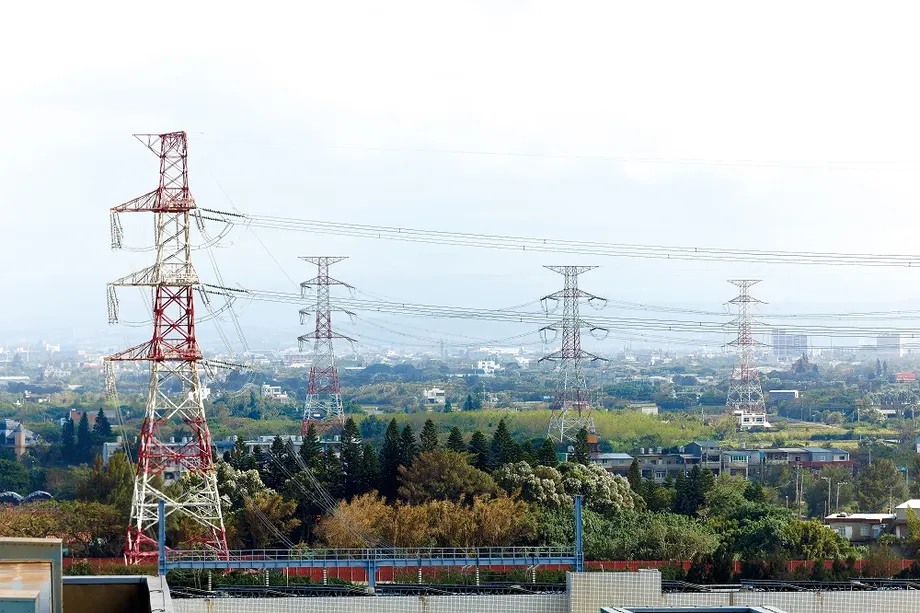
A 60 MW test site gives Taipower's grid warning a physical address
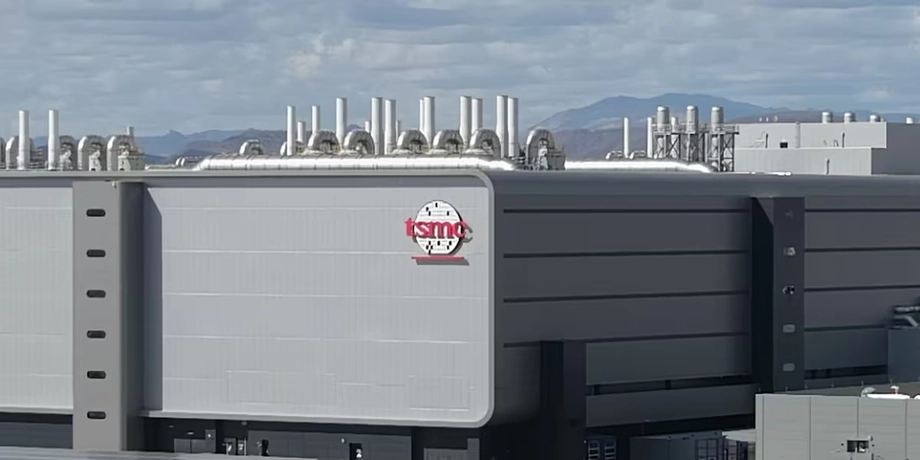
Taiwan Power Co. has chosen a strip of open land in Changhua County to test a simple answer to a complicated problem: instead of carrying vast amounts of electricity to AI equipment in crowded cities, bring the equipment closer to the electricity. The proposed demonstration site would provide 60 MW of capacity and space for at least 50 containers measuring 40 feet, allowing companies to deliver server racks, run demanding tests and send the resulting data away through fiber optic cables.
Contents
- A 60 MW test site gives Taipower's grid warning a physical address
- Why moving data can be easier than moving electricity
- Approved capacity is not the same as operating capacity
- A Taoyuan hillside shows what the new geography looks like
- Semiconductors still determine the size of the power challenge
- Substations, transformers and land are the real bottleneck
- Central Taiwan projects and optical networks turn policy into business
- The next load could come from homes as well as hyperscale campuses
- Key Points
The site occupies a setback green belt beside the Changgong voltage conversion station. It is close to the Changbin solar power complex and connection points for offshore wind farms. Taipower says short conduits could link it with the nearby Changguang substation in about one year. Building a new substation can take more than ten years, so the difference could determine whether a factory or computing project starts on schedule.
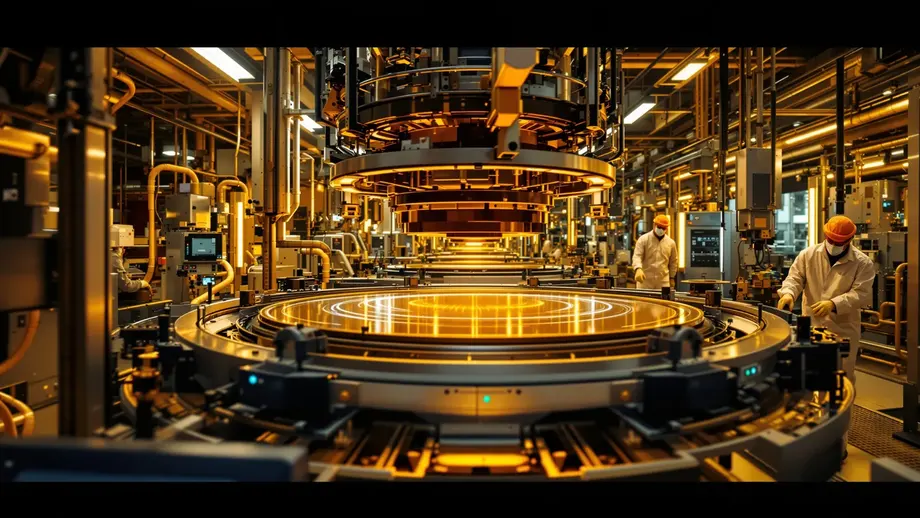
Its first proposed use is burn-in testing, a final production stage for AI server racks. During burn-in, equipment operates for extended periods so that faults appear before shipment. Taipower identifies this as the most electricity-intensive stage of the server packaging process. Containers could therefore bring racks to Changhua, test them using locally available generation and remove a concentrated burden from transmission networks serving factories elsewhere.
The scale explains the urgency. Taipower estimates that a large commercial office building needs about 2 MW, while an AI data center occupying a similar area can require 20 MW to 40 MW. That is ten to twenty times the office building's demand on comparable land, like dropping a lead ball onto a local network. A rack filled with AI processors can also use more than ten times the electricity of a conventional server rack.
Taipower Chairman Tseng Wen-sheng said companies have changed how they choose investment locations because electrical infrastructure often takes longer than preparing land or constructing a factory. Electricity has become an early decision rather than a utility connection arranged near the end.
Five years ago, companies definitely did not think this way.
His point is that choosing the wrong location can now cost years, while choosing a site with available power can accelerate the entire investment.
Why moving data can be easier than moving electricity
Conventional data centers often sit near their users because shorter network routes can reduce latency, the delay between a request and a response. AI training and server testing do not always need that same proximity. Taipower argues that fiber optic cables lose relatively little energy over distance and can carry enormous quantities of data, making it more efficient to extend the data connection than to build a much longer route for bulk electricity.
The utility calls the approach replacing electricity with light. The phrase borrows from semiconductor packaging, where optical components placed close to chips can replace some electrical connections. For an AI facility, servers would still run on electricity. The change is geographical: generation and computing would sit closer together, while information would travel outward through fiber.
Tseng first outlined possible construction standards in December 2025. They included locating large AI data centers within 5 km of a power source, requiring operators to install generation equipment of their own and placing them under a separate electricity pricing structure. His Power Couple strategy would match large consumers with suitable supplies, including renewable generation. Taipower has not announced an effective date for the complete package, so the distance, generation and pricing proposals should be read alongside the demonstration project rather than as rules already governing every site.
Other requirements are already clearer. Since November 2025, the Ministry of Economic Affairs has brought data centers needing more than 5 MW into its Energy Usage Plan review. Power usage effectiveness, or PUE, must be below 1.3 for hyperscale facilities and below 1.4 for colocation centers, which rent space and services to multiple customers. PUE divides all electricity entering a facility by the electricity used by its computing equipment. A lower number means less overhead for cooling and other support systems.
Taipower has also presented a plan to supply seven major science parks directly from five major power plants, with additional substations coordinated with park development. The objective is to decide where electricity and industry should meet before factories and computing centers arrive.
Approved capacity is not the same as operating capacity
Taipower had received 79 applications for AI data center connections totaling about 4,758 MW by November 2025. It approved 40 cases covering roughly 3,033 MW and rejected 39 covering about 1,725 MW. The approved amount was comparable to the demand of 15 wafer fabrication plants, or about 1.6 times the installed capacity of the Maanshan nuclear plant.
Only four approved sites were drawing power in the subsequent tally, with contracted demand of approximately 303.5 MW. Five more were under construction with about 567 MW, producing a combined 870.5 MW. More than 70 percent of the originally approved capacity lapsed because applicants did not begin formal procedures within six months.
That gap reflects speculative positioning as well as genuine construction. International operators can express interest without committing to a development, while landowners and local developers seek an electricity allocation to make a site attractive to global clients. Tseng separately said Taipower had approved 750 MW for AI data centers during 2026 and wanted allocations to reach companies making real investments, rather than parties merely controlling potential sites.
The operating and construction landscape is spread among three groups:
- Global technology companies: Google's Changhua facility opened in 2013 and remains Taiwan's largest. Tseng placed it at roughly 200 MW to 300 MW, while a reconstruction using public records and interviews estimated about 250 MW and Fitch Ratings later used approximately 300 MW. Microsoft opened a 40 MW site in Guishan in 2024 and is building a 50 MW facility in Luzhu. Amazon Web Services launched a Taipei cloud region in 2025, but its location and electrical load have not been disclosed.
- International colocation operators: Vantage has a 25 MW Guishan facility, the Westwood project backed by Keppel and DDSP accounts for 80 MW, and Epoch Digital is developing 32 MW.
- Taiwanese operators: Chunghwa Telecom's Banqiao center has 40 MW, Chief Telecom is developing two facilities of 20 MW each in Neihu and the Central Taiwan Science Park, and Foxconn has started a 27 MW project in Kaohsiung that could expand to 100 MW.
Projects identified as operating or under construction total roughly 800 MW, close to Taipower's combined tally. Yet data centers consumed only about 1.5 billion kilowatt hours in 2025, approximately 0.5 percent of national electricity use. Semiconductors consumed 42.38 billion kilowatt hours, nearly 15 percent. The immediate data center problem is concentration in particular districts, not the islandwide share.
Taipower responded to that concentration by suspending new applications above 5 MW north of Taoyuan in 2024. It is steering projects toward central and southern Taiwan, while allowing for northern construction if network capacity or new generation becomes available. Officials indicated in July 2026 that the restrictions could ease when additional power sources enter service.
A Taoyuan hillside shows what the new geography looks like
On Baoshi Street in Guishan, construction traffic passes apartment buildings before reaching a data center campus spread across more than four hectares of hillside. Vantage operates one completed facility. The larger Westwood project is backed by Singapore-based Keppel and DDSP. Taipower is also installing a transmission line operating at 161 kV to support the development.
Chen Wen-Ching, chief of Xinling Village, said local understanding of the two companies came largely through contact surrounding the project. Residents later toured the Vantage facility and saw the large cooling systems that maintain stable temperatures around its servers.
Chen's account connects that cooling equipment with a much older industrial landscape. The surrounding area once contained the Sande Coal Mine, and Xinling subsequently supported several brick kilns before they closed during the 1980s. Some land became housing, while other plots remained vacant or were used to grow vegetables.
At the peak there were three brick kilns here. My father worked in one of them when he was young.
The Guishan projects have not prompted large public protests. They nevertheless show how AI infrastructure changes land, traffic and transmission requirements even before its national electricity share becomes large. A facility can look modest beside a semiconductor fab while placing an exceptional load on the nearest substation.
The economic stakes are considerable. Taiwanese manufacturers supply nearly 90 percent of the world's AI servers. Fitch affirmed Taiwan's AA sovereign rating with a stable outlook in July 2026 and projected economic growth of 9.4 percent for the year, driven by exports connected with AI. Its assessment identified electricity availability, rather than the ability to manufacture computing hardware, as the main constraint on data center growth within Taiwan.
Semiconductors still determine the size of the power challenge
Taipower President Kuo Tian-ho's latest presentation estimates that semiconductor electricity consumption will rise from about 52 billion kilowatt hours in 2026, or 18 percent of national use, to 80 billion in 2030 and 110 billion in 2035. The final figure would represent roughly 30 percent of Taiwan's consumption. The increase from 2026 to 2035 is 58 billion kilowatt hours, or about 112 percent.
Industry planning is not perfectly aligned with that forecast. Semiconductor companies have estimated consumption of about 93 billion kilowatt hours in 2035, leaving a gap of 17 billion between their figure and Taipower's. Kuo said the utility and the Ministry of Economic Affairs review demand regularly with manufacturers so that factory expansion does not outrun supply planning.
The capacity forecast tells a related story in different units. Taipower expects semiconductor demand to reach 10.7 GW in 2030 and 14.6 GW in 2035. A megawatt or gigawatt measures how much power equipment needs at a particular moment, with 1 GW equal to 1,000 MW. Kilowatt hours measure electricity consumed over time, just as speed and distance describe different aspects of a journey.
Taipower also expects semiconductor and AI expansion to add more than 5 GW of demand during 2026 through 2030. An earlier projection presented to the National Climate Change Committee in 2024 assigned approximately 1.85 GW of the 2030 requirement to AI and 3.24 GW to semiconductors. The ministry's electricity supply and demand assessment forecasts average annual demand growth of about 2.5 percent from 2026 through 2035, while Taipower's latest system presentation uses approximately 2.7 percent.
The tightest period comes before much of the new supply arrives. Taipower expects the reserve margin during the night peak to fall from 12.8 percent in 2026 to 8 percent in 2028 and 7.1 percent in 2029. This margin measures spare generating capacity above demand after solar output has faded. New units are projected to lift it to 15.2 percent in 2030 and 23.1 percent in 2035, provided construction stays on schedule.
The supply plan includes approximately 25,980 MW of capacity burning natural gas between 2026 and 2035. Taipower would own 18.2 GW and private producers 7.8 GW. Five emergency units provide another 2.6 GW for sudden increases in demand, drops in renewable output or failures at large plants. Tseng's earlier presentation described the main program as 26 gas units with about 25 GW of combined capacity.
Taipower is also studying carbon capture and storage, which would trap carbon dioxide from generation and place it in permanent storage, although its participation requires ministry approval. At Maanshan, the Nuclear Safety Commission approved the restart plan on September 24, 2026. Equipment inspections, safety checks and further reviews remain, and no restart date has been set. Taipower is working with original manufacturer Westinghouse Electric on the inspection process.
Substations, transformers and land are the real bottleneck
Kuo compares generation to a water source and the grid to the pipes carrying it. A full reservoir does not help a district whose pipes are too small. Likewise, a new power plant cannot support an AI campus if transformers, substations and transmission routes cannot deliver its output.
Taipower intends to build or expand 43 substations in 15 years, install 1,922 km of lines and add 52,450 MVA of transformer capacity, approximately 52.45 GW. It also plans 12 static synchronous compensators, devices that rapidly correct voltage conditions, with about NT$30 billion assigned to grid stability. Taipei's Songhu substation took more than twenty years to complete; the new program requires an average of about three substations every year.
Equipment supply is slowing that ambition. Transformer delivery times increased from 45 weeks in 2021 to 132 weeks in 2026, nearly three times the earlier wait. Grid capital spending budgets from 2020 through 2028 exceed NT$973 billion. Separately, Taipower's ten-year resilience program assigns NT$564.5 billion to dispersing infrastructure, strengthening facilities and improving their defense against disruption.
Fitch estimates Taipower's annual capital expenditure at between NT$261 billion and NT$442 billion from 2026 through 2029, covering gas capacity and renewable integration as well as network needs. The utility accounts for 67 percent of generation and 98 percent of distribution, leaving it responsible for most of the physical connection between national supply plans and individual projects.
Southern Taiwan Science Park illustrates the coming concentration. Taipower expects its load to exceed 4 GW in 2031, requiring existing and new substations around Guanyuan, Hengshan, Kaohsiung Refinery, Chiayi Science Park and Shalun. The original Changhua proposal therefore extends beyond one testing ground. Taipower wants electrical infrastructure written into national land planning and urban plans before science parks expand or city districts are redeveloped, rather than treated as an engineering problem after demand has arrived.
The main dates in that shift are:
- 2024: New data center applications above 5 MW were frozen north of Taoyuan.
- November 2025: The application queue reached 4,758 MW, and ministry reviews began requiring large facilities to meet PUE limits.
- July 2026: Officials said northern restrictions could ease if new generation entered service.
- September and October 2026: Maanshan's restart plan cleared one review stage, and Taipower set out its program for generation, substations and siting AI facilities closer to supply.
- Second half of 2028: Chief Telecom's new Yunlin data center is scheduled to begin commercial operation.
Central Taiwan projects and optical networks turn policy into business
A November 27 market assessment valued Taiwan's data center cable and wiring market at US$452.40 million in 2025 and forecast US$1.05 billion by 2031. The projected annual growth rate is 15 percent. Demand covers fiber, copper network cabling, electrical feeders, backup power connections, control wiring and fire-resistant cables.
Chief Telecom's project in Huwei, Yunlin County, provides a concrete example outside the established northern cluster. The company broke ground on a 16 MW facility designed to Tier IV standards, representing an investment of approximately NT$3.3 billion. It will have backup generation for 24 hours and support both air cooling and liquid cooling for dense computing loads. Commercial operations are scheduled for the second half of 2028.
Network research is moving in the same direction as Taipower's siting argument. Chunghwa Telecom, Fujitsu and 1Finity agreed in July 2026 to collaborate for two years on a network that keeps signals in optical form, including experiments using Chunghwa Telecom's submarine cable system to connect distributed data centers. In September, the Ministry of Economic Affairs presented a 3.2T silicon photonics optical engine developed by ITRI and industry partners to address the bandwidth limits of copper connections inside AI facilities.
These developments do not remove the need for electrical cables. They change where the largest cable routes may be needed and increase the amount of fiber required within and between computing sites. A project with secured power, a construction schedule and a defined network architecture offers suppliers a clearer opportunity than an application that exists only as an allocation on paper.
The next load could come from homes as well as hyperscale campuses
Tseng used an RTX 5090 graphics card to illustrate a less visible source of demand. He compared its roughly 1 kW draw with a Tatung rice cooker, but noted that the cooker might operate for only 30 minutes while the graphics card could run for 20 hours. He suggested that homework using AI and online gaming could create a new evening peak around 9 p.m., adding pressure to older urban networks.
Taipower President Wang Yao-ting has also identified electric vehicles, drones and robots as sources of computing demand. At the industrial end, AI facilities operate steadily for long periods instead of reducing output at night, stopping for weekends or following ordinary factory cycles. Taipower describes the result as a transition from a mountain-shaped demand curve to a plateau: the bottom rises, leaving higher consumption during both busy and quiet hours.
Solar generation changes the timing as well. It supports daytime consumption, then declines rapidly after sunset while computing, factories and households continue drawing power. This is why the utility is pairing gas capacity and emergency reserves with renewable generation, storage and a network able to move electricity between regions.
Financial constraints remain part of the delivery schedule. Taipower's accumulated losses reached NT$371.2 billion by August 2026, and the government is seeking an energy support package totaling about NT$414.8 billion for Taipower, CPC Corporation and fuel support. Fitch nevertheless rates Taipower AA and AAA(twn), both with stable outlooks, while warning that Taiwan's dependence on imported energy leaves supply security exposed to disruptions.
Investment risk extends beyond Taiwan. The central bank has estimated global data center financing needs at US$3.2 trillion between 2026 and 2028 and warned that construction delays and debt can interact when income arrives later than loan payments. Projects with approved electricity allocations are consequently better positioned than proposals still waiting for a connection.
For Taipower, the Changhua test ground offers a practical way to discover which computing activities can move. Burn-in testing is an immediate candidate; every latency-sensitive cloud service is not. The final siting standards and tariff still need an effective date, northern restrictions depend on new supply, and the substation program depends on land, equipment and permits. The utility's central message is already firm: Taiwan cannot evaluate an AI project solely by asking whether annual generation is sufficient. It must ask exactly where the load will connect and whether the local network can carry it.
Key Points
- Taipower's Changhua demonstration site would offer 60 MW and at least 50 positions for containers measuring 40 feet.
- Server burn-in testing could move near solar and offshore wind connections, with construction taking about one year rather than the decade or more needed for a new substation.
- The 79 applications recorded by November 2025 sought 4,758 MW, but only four approved sites were drawing power and five were under construction in the subsequent tally.
- More than 70 percent of approved capacity lapsed, while new applications above 5 MW have been frozen north of Taoyuan since 2024.
- Data centers used about 0.5 percent of Taiwan's electricity in 2025; semiconductors used nearly 15 percent and could reach 30 percent by 2035.
- Taipower plans 43 substations, 1,922 km of lines and about 25,980 MW of new gas capacity, with 2028 and 2029 expected to be the tightest supply years.
- Chief Telecom's 16 MW Yunlin facility is scheduled to open in the second half of 2028, while new optical network trials support computing spread across multiple locations.
- Final AI siting and pricing rules, the Maanshan restart date and the easing of northern restrictions remain undecided.