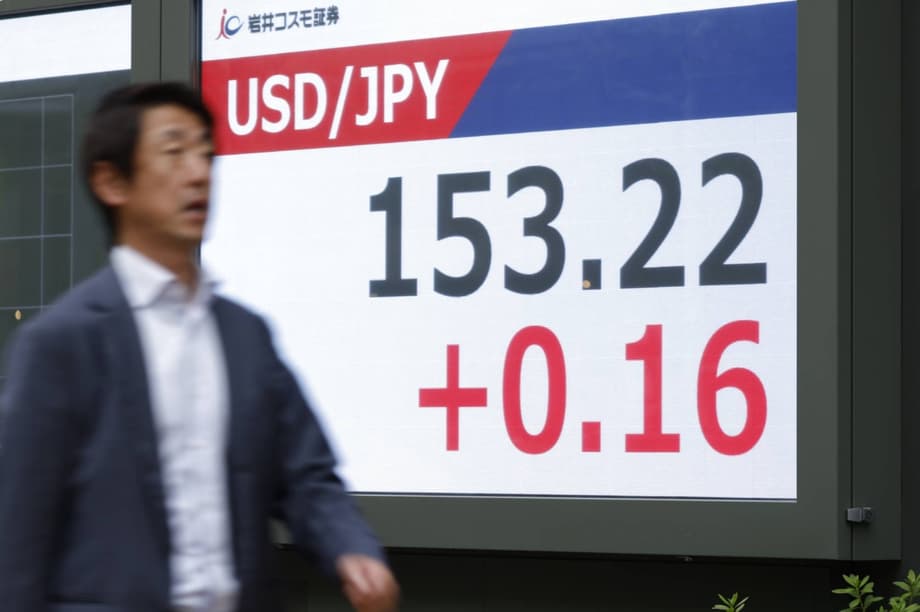
Yen rally loses momentum after official support
The yen has given back about half of the gains produced by a rare joint currency intervention from Japan and the United States, renewing concern that official buying may provide only temporary relief. The currency fell 1% against the dollar on Monday to close at 159.29, the weakest performance among the Group of 10 major currencies.
- Yen rally loses momentum after official support
- Why the intervention effect is fading
- Interest rates remain the central pressure point
- Traders keep the 160 level in view
- How politics and markets shape Japan’s choices
- Other central banks add to the currency picture
- What the yen’s decline means for households and businesses
- What to watch next
- The Bottom Line
The retreat carries a strong psychological meaning for foreign exchange traders. The yen had climbed to a three month high near 155.20 after authorities stepped into the market, yet it has since moved back toward the 160 level. Traders are now watching for signs that Tokyo and Washington could intervene again if the decline accelerates.
The latest move also shows the limits of intervention when the economic forces pushing a currency lower remain in place. Buying yen can reduce the supply of the currency in the market for a time, but it cannot by itself remove the interest rate gap between Japan and the United States or alter investor expectations about future policy.
Why the intervention effect is fading
Japan and the United States intervened after the yen reached 163.99 per dollar, a level associated with the currency’s weakest position in roughly four decades. The operation briefly changed market behavior. Speculators reduced large bets against the yen, and the currency recovered sharply.
That response has now weakened. Traders appear to be testing whether officials are willing to spend more reserves to defend the currency. Currency intervention works best when it is backed by a clear policy shift, coordinated action among major economies, or a change in the interest rate outlook. Without those conditions, investors may treat a rebound as an opportunity to rebuild short yen positions.
Short positions are trades designed to profit when a currency falls. Data from a United States regulator showed that speculators cut their net bearish yen position by $8.865 billion in the week ending August 4, leaving it at $3.604 billion. The scale of the reduction suggests that intervention forced a rapid adjustment, although it does not show that traders have abandoned their longer term view.
Interest rates remain the central pressure point
The yen’s weakness is closely tied to the difference between Japanese and United States interest rates. Investors often borrow in a currency with low funding costs, such as the yen, and buy assets denominated in currencies with higher yields. This strategy, known as a carry trade, can put sustained pressure on the yen.
The Bank of Japan has begun moving away from its long period of extremely loose policy, yet markets remain uncertain about how quickly rates will rise. Traders are pricing in only a little more than a 50% chance of a rate increase at a coming Bank of Japan meeting, according to market data cited in the research.
A rate increase could support the yen by making Japanese assets more attractive and reducing the return from borrowing yen. The effect may be limited if the United States Federal Reserve keeps rates high or if investors doubt that Japanese policy makers can tighten steadily. Political pressure to support Japan’s bond market is also making the Bank of Japan’s decisions more difficult.
Japanese government bond yields and prices affect the cost of borrowing throughout the economy. A rapid rise in yields could strain public finances and raise funding costs for companies and households. That concern may encourage policy makers to move carefully, even when a weaker yen is lifting import costs.
Traders keep the 160 level in view
The yen steadied at about 158.93 per dollar during Tuesday trading in Asia, helped partly by thin activity while Japanese markets were closed for a holiday. The modest recovery did little to repair the damage from Monday’s fall, and the currency remained well below its post intervention high.
Market strategists have warned that a return to 160 this month is a realistic risk, even if the Bank of Japan raises rates later and the Federal Reserve leaves its policy unchanged. A move through that level could increase pressure on Tokyo, especially if the yen’s decline raises the cost of energy, food, and other imported goods.
Intervention also has a cost. Japan must use foreign currency reserves to buy yen, and a large operation can be expensive if the market continues to move against the authorities. Repeated action may lose power if traders conclude that officials are defending a particular exchange rate rather than responding to disorderly conditions.
How politics and markets shape Japan’s choices
Japanese authorities have shown a strong preference for warning markets before returning to direct intervention. Statements from finance officials that they are monitoring the yen closely can discourage speculation without immediately committing public funds. Communication with Washington also matters because joint action carries more weight than an operation conducted by Japan alone.
The United States has historically been cautious about currency intervention, especially when it could be viewed as an attempt to gain a trade advantage. Cooperation therefore signals that the yen’s decline has become a concern for financial stability and inflation, rather than a simple effort to improve Japan’s export position.
Even coordinated action cannot guarantee a lasting reversal. The market will continue to focus on the Bank of Japan’s rate outlook, United States inflation data, Treasury yields, and the strength of the American dollar. Each factor can quickly shift the balance between buying and selling pressure.
Other central banks add to the currency picture
The yen’s slide is taking place alongside fresh attention on other major central banks. The Australian dollar recently reached an eight week high before a policy decision from the Reserve Bank of Australia. The RBA was expected to keep its policy rate unchanged, with investors focused on whether officials would keep open the possibility of another increase if inflation remains high.
Australia’s currency can benefit when markets expect interest rates to stay elevated. It is also sensitive to global risk appetite, commodity prices, and developments in Asia. A firm Australian dollar can make the yen’s weakness appear even sharper when currencies are compared across the G10 group.
The United States dollar has remained broadly steady against major peers as traders assess inflation, energy prices, and geopolitical risk. Investors were also preparing for consumer price, producer price, and retail sales reports, which could influence expectations for the Federal Reserve. Higher United States yields tend to support the dollar against the yen, while signs of cooling inflation may reduce that advantage.
Risk aversion is another factor. Tensions involving the Middle East have encouraged demand for traditional safe assets, including the dollar, gold, and the Swiss franc. The yen can also act as a haven during periods of market stress, although its low interest rates and Japan’s economic exposure to imported energy can weaken that support.
What the yen’s decline means for households and businesses
A weaker yen helps Japanese exporters by increasing the domestic currency value of overseas earnings. It can also make Japanese products more competitive abroad and benefit companies that receive revenue in dollars or euros.
The cost is higher import prices. Japan relies heavily on overseas supplies of fuel, food, industrial materials, and consumer products. When the yen falls, companies often face higher costs, which can pass through to households. That pressure is especially sensitive when wage growth is not keeping pace with living expenses.
For foreign investors, a falling yen can reduce returns from Japanese stocks and bonds once those returns are converted back into dollars or another home currency. Some investors may hedge their currency exposure, while others may reduce positions if they expect further losses.
What to watch next
The next phase of trading will depend on whether the yen stabilizes below 160 or begins another decline toward its recent low. Officials may react to the speed of the move, the level of volatility, and whether trading conditions become disorderly. A gradual fall can be harder to counter than a sudden spike, since it gives investors more time to rebuild positions.
Markets will also monitor signals from the Bank of Japan. A clear commitment to higher rates could give the yen a stronger foundation than intervention alone. A cautious message, particularly one focused on bond market stress, could leave traders expecting the currency to remain under pressure.
United States inflation figures and Federal Reserve communication will be just as important. A rise in Treasury yields would widen the rate gap and may draw more money toward the dollar. Softer data could reduce that support and give Japan’s currency temporary breathing space.
The experience of the past few weeks has reinforced a familiar lesson in foreign exchange markets. Government action can produce a sharp move, yet lasting currency trends usually depend on monetary policy, economic growth, capital flows, and investor confidence. The yen’s retreat shows that traders are again testing those foundations.
The Bottom Line
- The yen fell 1% to 159.29 per dollar, the weakest result among G10 currencies on Monday.
- Japan and the United States intervened after the yen reached 163.99 per dollar.
- The currency has surrendered about half of its intervention driven recovery.
- Speculators sharply reduced bearish yen positions, though traders may rebuild them.
- Markets see only a little more than a 50% chance of a near term Bank of Japan rate increase.
- The 160 level, United States yields, inflation data, and official warnings are key market signals.