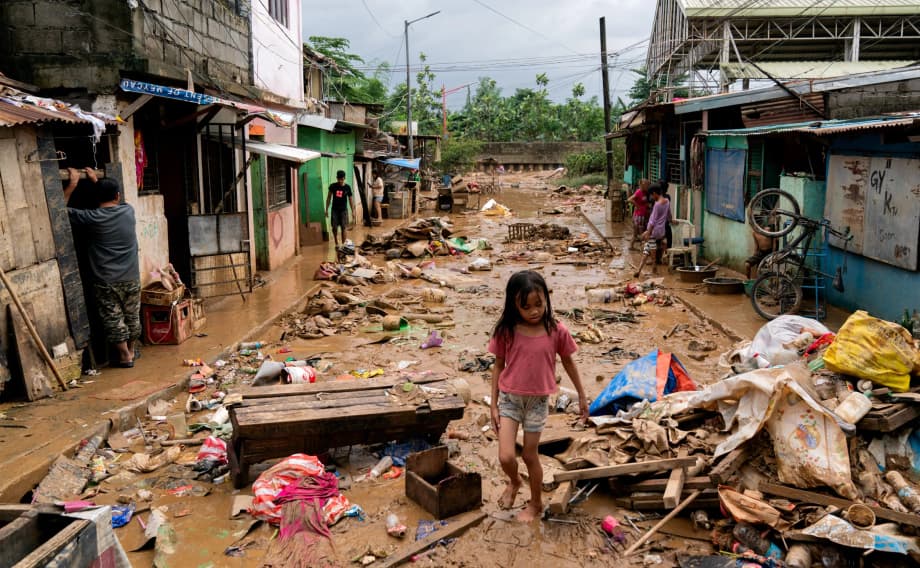
A flood exposes a crisis built over years
When floodwaters receded in parts of Metro Manila last week, they revealed a broad layer of bottles, food containers, plastic bags, silt and other waste. The scene, described as a "sea of garbage," was shocking to many residents, yet it reflected a problem that has been building in streets, canals and rivers for years.
- A flood exposes a crisis built over years
- What the environmental rankings show
- Why garbage makes flooding worse
- From Manila Bay to urban canals
- Why the problem reaches beyond Metro Manila
- What Philippine law already requires
- Plastic, producers and the cost of convenience
- Prevention is cheaper than repeated cleanup
- Environmental performance is a governance test
- Key Points
Dr. Alicor Panao, a data scientist and associate professor at the University of the Philippines, said waste collection, segregation and disposal systems have struggled to keep pace with the volume of rubbish produced in the capital. Rivers and drainage channels have increasingly become informal disposal sites, allowing waste to gather until heavy rain moves it through the urban network.
President Ferdinand Marcos Jr. has described the garbage situation as critical and warned that waste entering waterways is blocking flood control infrastructure. The result is a cycle in which rainfall, poor drainage and unmanaged rubbish combine to turn flooding into a more severe and costly public danger.
The crisis is larger than one flooded channel or one storm. It points to weaknesses in enforcement, local services, waste habits, sewerage and public accountability.
What the environmental rankings show
The Philippines ranked 162nd among 177 countries in the Environmental Performance Index, with a score of 27.87. The figure was 8.97 points below the Asia Pacific average of 36.84, according to data cited by Panao.
Within the Asia Pacific region, the Philippines ranked 21st among 24 countries. It scored higher than Indonesia, Vietnam and Laos, which recorded scores of 26.24, 23.82 and 21.78. Several nearby countries performed better, including Singapore at 46.06, Thailand at 43.74, Malaysia at 39.52, Cambodia at 31.21 and Myanmar at 28.87.
The index measures a range of environmental concerns, including risks to human health, air quality, water resources, climate policy and ecosystem protection. It does not describe every local condition, and rankings can be affected by changes in data and methodology. Still, the Philippines score supports the visible evidence from polluted waterways and unreliable waste services.
Panao said the country’s EPI score fell by 1.35 points over the past decade. During the same period, Malaysia’s score rose by 8.47 points, Thailand’s by 7.31 points and China’s by 10.10 points. The comparison suggests that progress is possible in the region, while the Philippines has struggled to turn environmental laws and public campaigns into consistent results.
Why garbage makes flooding worse
Waste in waterways creates a direct obstruction. Plastic packaging and other materials collect around grates, pumps, culverts and narrow sections of canals. Silt then settles around the rubbish, reducing the space available for water to pass. During intense rain, even a temporary blockage can push water into roads, homes and commercial areas.
About 70 percent of Metro Manila’s drainage systems are reportedly clogged with garbage and silt. That figure helps explain why a storm can produce an extraordinary buildup of waste after floodwater falls. The visible rubbish may have come from many neighborhoods, carried through connected canals and drainage lines.
The Philippine News Agency reported that more than 200 truckloads of garbage had been collected from the Redemptorist Water Channel in Parañaque City after days of continuous rain. Public Works and Highways Secretary Vince Dizon called the situation a garbage crisis, while the president inspected the site.
Rainfall remains a major cause of flooding, especially during stronger monsoon events and periods of changing weather patterns. Waste, however, is a human contribution that can be reduced through regular collection, maintenance and enforcement. Drainage projects cannot work well when channels are treated as dumping grounds.
From Manila Bay to urban canals
Manila Bay has long represented the country’s wider struggle with water pollution. The bay receives waste from a dense urban area through rivers, esteros and drainage outlets. Plastic pollution is easy to see, while sewage contamination presents a less visible threat to health and marine life.
Environmental lawyer Antonio Oposa previously reported that fecal coliform levels in Manila Bay had multiplied since 1999. In 2008, the Supreme Court ordered 13 government agencies to rehabilitate the bay and maintain water quality at safe levels for swimming and other forms of contact. Years later, concerns about pollution, sanitation and enforcement remained.
The bay’s condition cannot be blamed on plastic litter alone. Some communities lack reliable sewerage and wastewater treatment, while informal settlements may have limited access to toilets and collection services. Industrial discharges, runoff and poorly managed household waste add to the pressure.
Repeated cleanup drives can remove waste from the shoreline or surface of the water, yet they do not stop new pollution from entering the bay. A lasting response requires sanitation, collection, treatment, monitoring and penalties that operate every day, rather than only when cameras arrive after a disaster.
Why the problem reaches beyond Metro Manila
The same pressures are appearing in other growing cities. In Davao City, an environmental organization called Interfacing Development Interventions for Sustainability warned of a serious waste management crisis after a landfill slide buried houses and killed residents, with another person reported missing.
The Department of Environment and Natural Resources suspended the landfill’s operation in Barangay New Carmen after the incident. The facility reportedly received about 750 tons of garbage each day. With no final disposal site available, local governments asked residents to keep rubbish at home temporarily. Many households could not manage that arrangement, and bags of waste began to collect at street corners.
The disruption showed how quickly a city can lose basic waste services when a disposal site closes. Uncollected rubbish can create odors, attract pests and expose residents to harmful materials. Heavy rain can then carry it into drains and waterways, adding to flood risks during the southwest monsoon.
Davao’s experience also points to the danger of relying on a single landfill without sufficient backup capacity, waste reduction programs or local processing facilities. A city of about 1.8 million people needs a network of collection, sorting, recycling, composting and safe disposal services that can continue operating when one facility fails.
What Philippine law already requires
Republic Act No. 9003, the Ecological Solid Waste Management Act, already sets out many of the steps needed to address the crisis. The law requires waste segregation at source, proper collection and disposal, and materials recovery facilities at the barangay level.
In practice, implementation varies widely. Some communities separate waste and run recycling or composting programs, while others place mixed rubbish in a single collection stream. Materials recovery facilities may be absent, underused or unable to handle the volume of waste produced by the surrounding population.
Segregation at source means separating food waste, recyclable materials, residual waste and hazardous items where they are discarded. The process reduces the amount sent to landfills and makes recycling or composting more practical. It also helps workers avoid contact with sharp or dangerous materials.
The law cannot succeed through national policy alone. City and municipal governments manage many daily services, while barangays are closest to households and local businesses. National agencies must provide standards, funding and oversight, while local authorities must publish schedules, maintain facilities and act against illegal dumping.
Plastic, producers and the cost of convenience
Single use plastic is a major part of the waste found in canals and flood channels. Sachets, bottles, wrappers and food containers are light, common and easily carried by wind or water. Their low value also means that many waste pickers have little financial reason to recover them.
Extended producer responsibility programs are designed to make companies help manage the packaging they place on the market. Stronger implementation could encourage lighter packaging, reusable systems and better recovery of materials that currently have little resale value.
Consumers also influence the flow of waste, though responsibility cannot rest on households alone. People need convenient collection points, predictable pickup and clear information. Asking families to segregate rubbish without providing separate collection can lead to frustration and mixed waste.
Businesses, schools and public offices can reduce the problem by cutting unnecessary packaging, separating food waste and tracking the amount of rubbish they generate. Research on food service workers in a developing country found that environmental training was linked to better waste management behavior, with environmental awareness helping convert knowledge into daily action. The study was conducted in Pakistan, so its findings cannot be applied directly to every Philippine workplace, yet the basic lesson is relevant: rules work better when workers understand them and have the tools to follow them.
Prevention is cheaper than repeated cleanup
Post flood operations are necessary, yet they are an expensive substitute for prevention. Workers must remove rubbish from waterways, transport it and find a place to store or dispose of it. Communities then face damaged roads, interrupted commerce, closed schools, evacuation costs and greater exposure to disease.
Prevention begins with reliable collection. Households and businesses are less likely to dump waste when services are affordable, frequent and easy to access. Local governments also need enough trucks, trained staff, transfer stations and safe disposal capacity to prevent backlogs.
Trash interception at pumping stations and waterways can reduce the amount of waste that reaches major channels. Regular clearing before the rainy season can also help, though maintenance must continue throughout the year. Illegal dumping requires sustained inspections and penalties, rather than occasional operations that end after public attention fades.
Public access to waste and flood data would make it easier to identify failures. Authorities could publish collection coverage, facility capacity, blocked drainage locations, cleanup costs and enforcement results. Residents would then have a clearer way to assess whether promises are producing cleaner streets and functioning drainage.
Environmental performance is a governance test
The garbage crisis exposes a gap between policy and conditions on the ground. The Philippines has environmental laws, public agencies, community groups and technical expertise. The central weakness is the uneven ability to apply these tools across dense cities and fast growing communities.
Waste management also connects several policy areas that are often handled separately. Flood control depends on drainage maintenance and clean waterways. Public health depends on sanitation and safe disposal. Climate resilience depends on reducing risks in communities already exposed to intense rain. Food businesses and markets affect the volume of organic waste and packaging entering the collection system.
A study of the Philippine food system found low scores for resilience, ecosystem stability, food safety and nutrient adequacy, while waste and loss reduction performed better than some other measures. The findings point to the need for agencies, businesses and local communities to coordinate rather than operate in separate sectors.
Education can support that work. Schools, workplaces and barangays can teach practical habits such as separating food scraps, storing waste securely and reporting illegal dumping. Training is most useful when paired with collection services, visible leadership and feedback about results. Awareness without functioning systems will not clear canals, while infrastructure without public cooperation will quickly face new blockages.
Key Points
- Floodwaters in Metro Manila revealed extensive garbage in channels and drainage areas.
- The Philippines ranked 162nd of 177 countries in the cited Environmental Performance Index, with a score of 27.87.
- Garbage and silt reportedly clog about 70 percent of Metro Manila’s drainage systems.
- More than 200 truckloads of waste were collected from a Parañaque water channel after heavy rain.
- Davao City’s landfill disruption showed the risks of relying on limited disposal capacity.
- Republic Act No. 9003 requires segregation, proper collection and barangay materials recovery facilities.
- Prevention requires reliable services, stronger enforcement, better wastewater systems and public access to data.