Japan's currency slides back toward a closely watched level
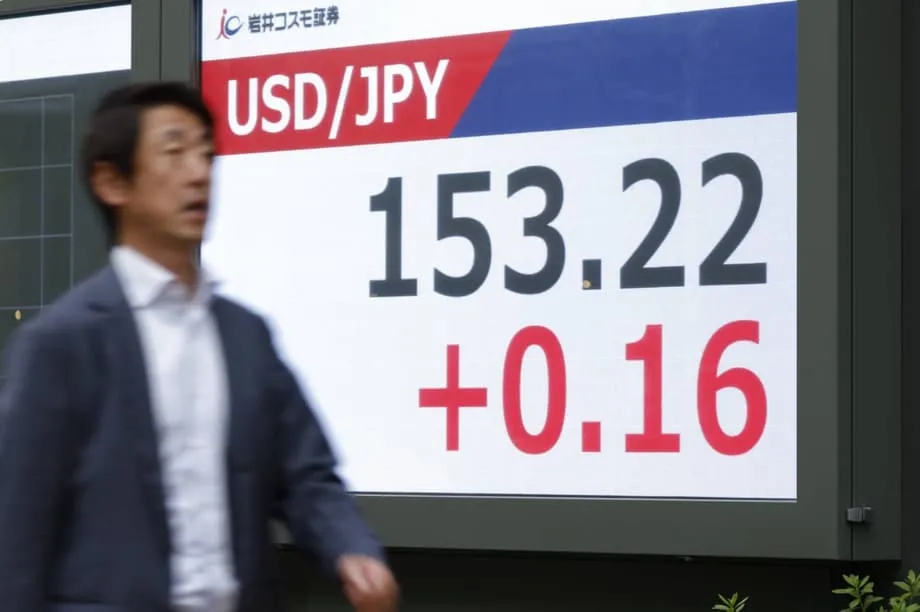
The yen has surrendered about half of the gains sparked by a rare joint currency intervention by Japan and the United States, bringing it back toward 160 per dollar and renewing concern about how long official support can last. On Monday, the yen fell 1% to close at 159.29 per dollar, the weakest performance among the Group of 10 major currencies.
Contents
- Japan's currency slides back toward a closely watched level
- How the rebound developed and then weakened
- Speculators cut their bets against the yen
- Why the interest rate gap matters
- Japan's bond market complicates the decision
- What another intervention would involve
- Australia, US data and geopolitical risk shape trading
- Who gains and who pays when the yen falls
- The next test is policy support and market speed
- The Bottom Line
Japan and the United States stepped into the market after the yen reached 163.99 per dollar, a level associated with its weakest position in roughly four decades. Their action helped drive the currency to a three month high near 155.20. The subsequent retreat has put traders on alert for another intervention if selling gathers speed.
The exchange rate measures how many yen are needed to buy one dollar. A move from 155.20 toward 160 therefore means the yen is weakening: buyers need more Japanese currency for the same dollar. For Japan, that movement matters because it affects import costs, overseas earnings and investment returns.
The yen steadied at about 158.93 per dollar during Tuesday trading in Asia. Thin activity while Japanese markets were closed for a holiday provided some support, but the modest recovery repaired little of Monday's damage. The currency remained well below the strength it reached immediately after intervention.
Official buying can produce a sharp change in the market by temporarily reducing the supply of yen. Keeping that recovery going is harder when the interest rate gap between Japan and the United States, and expectations about future policy, continue to encourage investors to hold dollars.
How the rebound developed and then weakened
The intervention briefly changed traders' behavior. Speculators reduced large bets against the yen, helping the currency recover sharply from 163.99 per dollar. As that response faded, traders appeared to be testing whether authorities were willing to commit more reserves to support it.
The sequence shows how quickly official action can shift prices, followed by a return of the economic pressures that drove the original decline:
- Before intervention, the yen reached 163.99 per dollar, around its weakest position in four decades.
- Following joint action by Japan and the United States, the yen strengthened to a three month high near 155.20.
- In the week ending August 4, speculators sharply reduced their net bearish yen position.
- On Monday, the yen fell 1% and closed at 159.29 per dollar.
- During Tuesday trading in Asia, it steadied at about 158.93 per dollar while Japanese markets were closed for a holiday.
Currency intervention tends to work best when a clear policy shift, cooperation among major economies or a change in the interest rate outlook supports it. Without those conditions, investors may use a rebound to rebuild positions that benefit from a weaker yen.
Tokyo and Washington's joint action gave the recovery an initial push. The return toward 160 has shifted attention back to whether monetary policy can provide more lasting support and whether officials will respond to another bout of selling.
Speculators cut their bets against the yen
Data from a United States regulator showed that speculators reduced their net bearish yen position by $8.865 billion in the week ending August 4, leaving it at $3.604 billion. The scale of the reduction suggests that intervention forced a rapid adjustment in trading positions.
A short position is a trade designed to make money when a currency falls. A net bearish position means that, taken together, the bets on a decline exceed the bets on a rise. Reducing those positions can help a currency recover as traders unwind trades against it.
The remaining $3.604 billion position shows that bearish bets were still present after the adjustment. Traders may rebuild those positions if they continue to expect Japan's low interest rates to weigh on the yen over a longer period.
The market's attention is consequently moving between two forces: the possibility of further government buying and the financial incentive to hold currencies that offer higher returns. An intervention can change the immediate balance of buying and selling, while expectations about borrowing costs continue to shape investment decisions.
Why the interest rate gap matters
Japan's low funding costs are central to the yen's weakness. Investors can borrow in yen and use the money to buy assets in currencies with higher yields. This strategy, known as a carry trade, seeks to profit from the difference between the cost of borrowing and the return on the investment.
Carry trades can put sustained pressure on the yen because investors sell the borrowed Japanese currency to obtain dollars or other currencies. The wider the interest rate gap, the greater the attraction of that strategy, although exchange rate movements can also affect the return.
The Bank of Japan has begun moving away from its long period of extremely loose monetary policy. Markets remain uncertain about how quickly it will raise rates, however. Market pricing cited in the account put the chance of an increase at a coming meeting at only a little more than 50%.
A Japanese rate increase could support the yen in two ways. It could make Japanese assets more attractive, and it could reduce the advantage of borrowing cheaply in yen to invest elsewhere. The effect may be limited if the United States Federal Reserve keeps rates high or investors doubt that Japan can continue tightening policy steadily.
The United States side of the gap matters just as much. Higher Treasury yields tend to support the dollar against the yen, while signs of cooling American inflation may reduce that advantage. Lasting currency support therefore depends on developments in both countries, rather than a Japanese decision alone.
Japan's bond market complicates the decision
The Bank of Japan also faces political pressure to support the country's government bond market. That makes its decisions more difficult at a time when a weaker yen is increasing import costs and creating another reason to consider higher rates.
Government bond prices and yields affect borrowing costs throughout the economy. A rapid rise in yields could strain public finances and increase funding costs for companies and households. Those concerns may encourage policy makers to move carefully even when currency weakness is adding to price pressures.
Japan's authorities are weighing pressures that pull in different directions. Higher rates could help the currency, while a sharp rise in borrowing costs could create problems elsewhere in the economy. A cautious Bank of Japan message, especially one focused on bond market stress, could leave traders expecting continued pressure on the yen.
A clearer commitment to higher rates could give the currency a stronger foundation than intervention alone. Markets will be watching both the next policy decision and the explanation accompanying it for indications of how steadily the central bank intends to proceed.
What another intervention would involve
The 160 per dollar level carries strong psychological weight for foreign exchange traders. Market strategists have warned that a return to that level this month is a realistic risk, even if the Bank of Japan raises rates later and the Federal Reserve leaves its policy unchanged.
A move through 160 could increase pressure on Tokyo, particularly if the decline raises the cost of imported energy, food and other goods. Authorities may also judge the speed of the fall, market volatility and whether trading conditions have become disorderly.
Japan must use foreign currency reserves to buy yen when it intervenes. A large operation can be expensive if the market keeps moving against the authorities. Repeated action may also lose force if traders decide officials are defending a particular exchange rate rather than responding to disorderly trading.
Japanese authorities have shown a strong preference for warning markets before returning to direct intervention. Statements from finance officials that they are monitoring the currency closely can discourage speculation without immediately committing public funds.
Communication with Washington matters because joint action carries more weight than a Japanese operation alone. The United States has historically been cautious about currency intervention, especially when it could be viewed as an effort to gain a trade advantage. Cooperation signals concern about financial stability and inflation, rather than a simple attempt to improve Japan's export position.
No timing for another intervention was given. Even coordinated buying offers no guarantee of a lasting reversal while interest rates and investor expectations continue to favor the dollar.
Australia, US data and geopolitical risk shape trading
The yen's retreat is unfolding alongside attention to other major central banks. The Australian dollar recently reached an eight week high before a Reserve Bank of Australia policy decision. The RBA was expected to leave its policy rate unchanged, with investors watching whether it would keep open the possibility of another increase if inflation stayed high.
Australia's currency can benefit when investors expect interest rates to remain elevated. It is also sensitive to commodity prices, developments in Asia and global risk appetite, meaning investors' willingness to take financial risks. A firm Australian dollar can make the yen's weakness stand out more sharply in comparisons across the G10.
The United States dollar has remained broadly steady against its major peers as traders assess inflation, energy prices and geopolitical risk. Investors were preparing for consumer price, producer price and retail sales reports, all of which could influence expectations for the Federal Reserve.
Consumer price figures track prices paid by households, while producer price figures track prices received by producers. Retail sales provide another view of spending. Together, the releases can affect expectations about American monetary policy and the yields available on dollar assets.
Tensions involving the Middle East have also encouraged demand for traditional safe assets, including the dollar, gold and the Swiss franc. The yen can attract investors seeking safety during market stress, although its low interest rates and Japan's exposure to imported energy can weaken that support.
Who gains and who pays when the yen falls
Japanese exporters can benefit from a weaker yen because overseas earnings become worth more when converted into Japanese currency. The exchange rate can also make Japanese products more competitive abroad and help businesses receiving revenue in dollars or euros.
Japan's importers face the opposite pressure. The country relies heavily on overseas supplies of fuel, food, industrial materials and consumer products. A weaker yen raises the domestic currency cost of those purchases, increasing expenses for companies that depend on imported goods.
Households can feel that pressure when businesses pass higher costs into prices. The effect is especially sensitive when wage growth is failing to keep pace with living expenses. Currency weakness can therefore benefit some companies while making everyday purchases harder to afford.
Foreign investors face another calculation. A falling yen can reduce returns from Japanese stocks and bonds when those returns are converted back into dollars or another home currency. Some investors may hedge their currency exposure, using financial arrangements to manage exchange rate risk. Others may reduce their holdings if they expect further currency losses.
The next test is policy support and market speed
Traders are watching whether the yen stabilizes below 160 per dollar or begins another decline toward its recent low. The pace of any move matters: a sudden fall can draw attention to disorderly conditions, while a gradual decline gives investors more time to rebuild positions and can be harder to counter.
The Bank of Japan's rate outlook will remain central. A commitment to higher rates could support the currency, while caution linked to bond market stress could sustain expectations that borrowing in yen will remain attractive. United States inflation figures and Federal Reserve communication will help determine the other side of that calculation.
A rise in Treasury yields would widen the rate gap and may draw more money toward the dollar. Softer American data could reduce that support and give the yen temporary breathing space. Economic growth, capital flows and investor confidence will also continue to influence the direction of trading.
The yen's retreat captures the limits of official buying when the forces behind a currency decline remain in place. Japan and the United States produced a sharp recovery, but traders are again testing whether monetary policy and economic conditions can sustain it.
The Bottom Line
- The yen fell 1% to 159.29 per dollar on Monday, the weakest performance among G10 currencies.
- Joint intervention followed a decline to 163.99 per dollar and helped lift the yen to near 155.20.
- The currency has given back about half of that recovery and steadied near 158.93 during Tuesday trading in Asia.
- Speculators cut net bearish yen positions by $8.865 billion in the week ending August 4, leaving $3.604 billion.
- Markets priced only a little more than a 50% chance of a rate increase at a coming Bank of Japan meeting.
- The 160 level, Japanese bond market conditions, United States yields and inflation data remain central to trading decisions.
- A weaker yen helps exporters but increases import costs and can reduce returns for foreign investors.