Bigger disaster budget as drought risks spread
The Philippines is proposing a P45.67 billion national disaster fund for 2027 as PAGASA warns that a very strong El Niño could peak before the end of 2026 and persist through the first half of the following year. The money would support preparation, emergency response and recovery across several kinds of disasters, including drought.
Contents
- Bigger disaster budget as drought risks spread
- What PAGASA expects through March 2027
- Where the P45.67 billion would go
- How much emergency money is available now?
- A separate P45 billion agriculture request
- Keeping farms supplied with water and rice
- Local forecasts matter even during a national drought
- Drinking water, electricity and hospital readiness
- How schools would respond to dangerous heat
- Losses and gaps in assistance add urgency
- Key Points
The Department of Budget and Management (DBM), in its 2027 disaster fund proposal, puts the increase at nearly P5.85 billion, or 14.68%, above the P39.82 billion allocated under the 2026 General Appropriations Act. Its account describes the larger amount as part of the proposed National Expenditure Program, the executive branch's spending plan submitted to Congress.
House Minority Leader Marcelino Libanan described Congress as setting aside about P45.6 billion, including an increase of about P5.8 billion over P39.8 billion. DBM places the P39.82 billion baseline in the enacted 2026 budget and the P45.67 billion amount in the proposed 2027 budget. The official budget statement therefore presents the larger fund as a proposal, rather than a completed appropriation.
The threat reaches beyond farms. Less rain can reduce irrigation and drinking water supplies, while hotter conditions increase health risks and electricity demand. The government's response combines the proposed national disaster fund with agricultural assistance, agency emergency funds, water projects and changes to school activities.
DBM Secretary Kim Robert C. De Leon said the country needs to invest before emergencies overwhelm communities:
As one of the world's most disaster-prone countries, investing in resilience is no longer a choice, but a necessity,
What PAGASA expects through March 2027
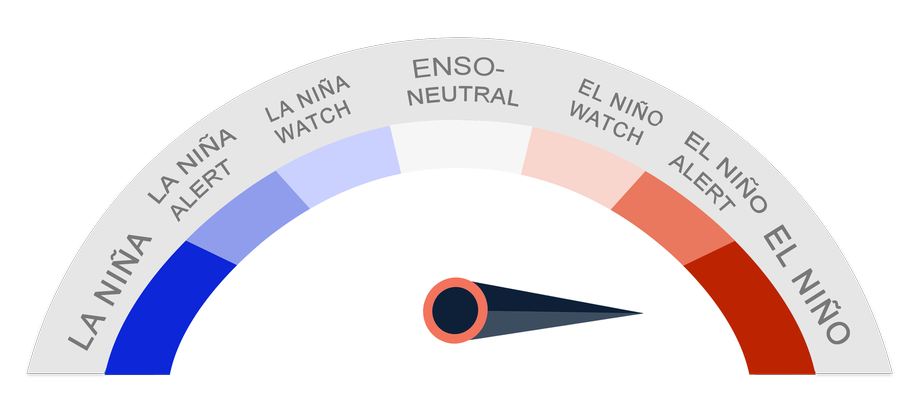
PAGASA's November monitoring update, dated November 4, 2026, says a very strong El Niño is already present in the tropical Pacific. It expects the event to persist through the first half of 2027, potentially reaching its peak by the end of 2026.
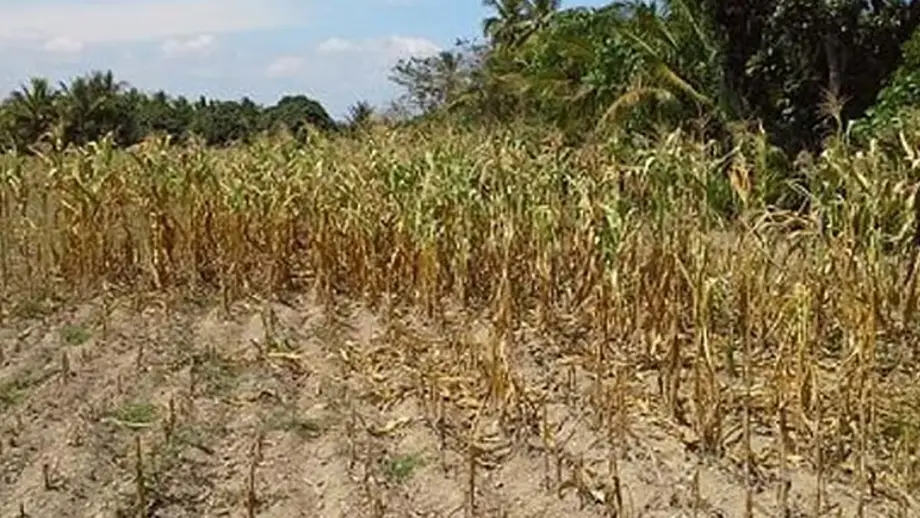
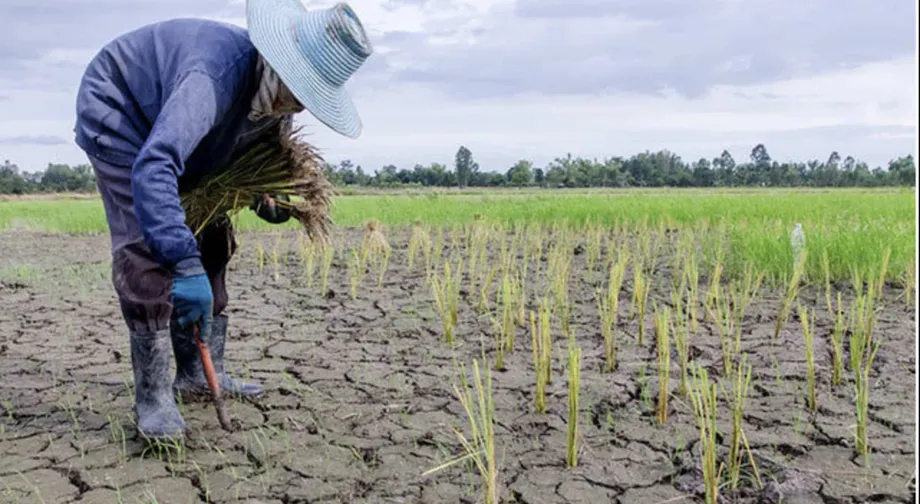
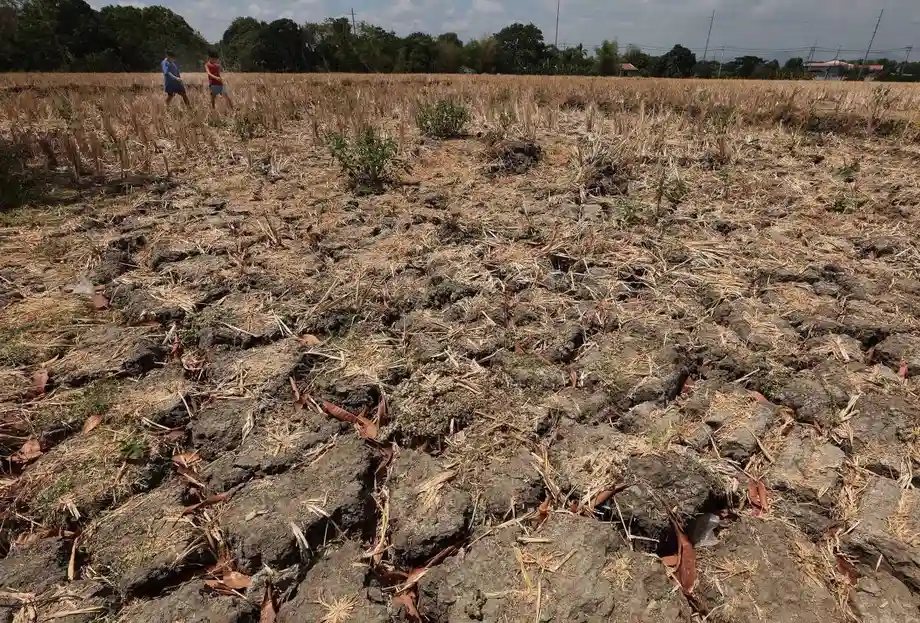
El Niño is a warming of parts of the central and eastern equatorial Pacific Ocean that changes weather patterns. In the Philippines, it generally brings hotter conditions and less rainfall. Drought develops when rainfall shortages continue for months, leaving soil, rivers and reservoirs with less water.
The forecast cited alongside Libanan's budget announcement put Metro Manila and 47 provinces at risk of severe drought before January 2027, expanding to Metro Manila and 82 provinces by the end of March. Figures presented at a PAGASA climate forum projected 54 provinces experiencing drought by year end and 87 provinces and highly urbanized cities by March. Those totals use different geographic groupings; provinces and separately counted cities are not interchangeable.
PAGASA climate monitoring chief Ana Liza S. Solis warned that the event could be the most severe since modern tracking began in 1950. Nine provinces had already experienced drought as of October 19, meaning three consecutive months with rainfall at least 60% below normal.
- September 26, 2026: Drought losses reached P6.87 billion, according to figures later cited by Senator Francis Pangilinan.
- October 19, 2026: PAGASA recorded drought conditions in nine provinces.
- November 4, 2026: PAGASA confirmed a very strong El Niño in the tropical Pacific.
- End of 2026: The event could reach its peak.
- March 2027: Drought is forecast to spread across most of the country.
- First half of 2027: El Niño and its effects are expected to persist.
Where the P45.67 billion would go
DBM divides the proposed National Disaster Risk Reduction and Management Fund into three parts. The largest, P30 billion, would finance the National Disaster Risk Reduction and Management Program, up from P23.49 billion in 2026. That is an increase of P6.51 billion, or about 27.7%.
Another P14.67 billion would go to the Disaster Rehabilitation and Reconstruction Assistance Program for Local Government Units. It would help communities rebuild critical infrastructure and restore essential services. The remaining P1 billion would go to the People's Survival Fund.
The fund covers more than El Niño. Subject to legal conditions, it can support eligible needs arising from natural disasters, epidemics declared by the Department of Health, armed conflict and other major emergencies. Agencies therefore have to prepare for drought while retaining resources for storms, earthquakes and other events.
Republic Act No. 10121, the Philippine Disaster Risk Reduction and Management Act of 2010, also allows spending before a disaster strikes. DBM says eligible activities include prevention, preparedness, training, equipment purchases and capital spending. Communities do not have to wait for crops to fail or infrastructure to break before qualifying preparation can begin.
How much emergency money is available now?
DBM reported releasing P17.30 billion from the 2026 national disaster fund as of September 25, leaving P22.52 billion available. About 43% of the year's P39.82 billion allocation had been released, with further releases dependent on eligible needs.
Agencies also hold Quick Response Funds for immediate disaster operations. As of August 31, P14.93 billion of P26.90 billion in available funds had been obligated, meaning committed to approved spending. That left P11.97 billion not yet obligated. The total includes agency allocations and replenishments from the national disaster fund, so adding these figures together would count some resources twice.
Unused Quick Response Fund balances remain available under continuing appropriations in the following budget year. DBM says the arrangement lets agencies act quickly while keeping the national fund available for larger requirements. It reported releasing 99% of national disaster appropriations in 2023, 100% in 2024 and 98% in 2025.
For households, the practical issue is how these budgets turn into working pumps, water supplies, farm inputs and timely assistance. A release makes money available to an agency; an obligation commits it to an approved purpose. Delivery to a community is the next step.
A separate P45 billion agriculture request
Agriculture Secretary Francisco Tiu Laurel Jr. said the Department of Agriculture had requested almost P45 billion for its own El Niño response, on top of the proposed 2027 National Expenditure Program. He described the request as approved in principle, with releases dependent on available funds. Detailed allocations for the full package have not been disclosed.
The proposed assistance includes fuel and fertilizer subsidies, water pumps, irrigation systems, tractors and harvesters. The department also plans to increase rice planting where conditions are less severe and distribute alternative crops and seeds suited to drought in areas facing greater water shortages.
Tiu Laurel identified P6.2 billion under the Unified Package for Livelihoods, Industry, Food, and Transport, or UPLIFT, as the first assistance tranche. Palace press officer Claire Castro also said P6.2 billion was earmarked for release to the agriculture department in 2026 to help farmers and fishers facing climate and fuel pressures.
The package assigns P2.2 billion to fertilizer support and P1 billion each to farmer fuel assistance, fisher fuel assistance, presidential assistance for farmers and fishers, and agricultural transport fuel subsidies. At least 310,968 farmers and fishers were considered eligible beneficiaries.
About 196,000 eligible farmers were identified for a single P5,000 fuel payment. At least 3,246 agricultural truckers were cited for P2,000 in weekly fuel assistance. A toll waiver for vehicles carrying agricultural goods through December 31 was under discussion with toll operators.
Task Force El Niño separately cited P7.7 billion allocated to the response. The relationship between that amount, the P6.2 billion tranche and the broader agriculture request has not been fully itemized publicly. The national disaster proposal and these sectoral announcements should therefore be followed through their individual allocations and releases.
Keeping farms supplied with water and rice
The National Irrigation Administration plans to repair irrigation facilities, remove sand and debris from canals and deploy mobile pumps powered by solar energy to communities facing water shortages. Groundwater maps from the Mines and Geosciences Bureau would help identify possible sources for pumping.
The Department of Environment and Natural Resources has established water storage and rainwater harvesting structures. The Department of Social Welfare and Development is rehabilitating reservoirs and other community water facilities through Project LAWA, or Local Adaptation to Water Access. These measures aim to retain water when rain falls and improve access when dry conditions deepen.
The agriculture department has also entered a supply agreement allowing Vietnam to deliver 1.5 million metric tons of DT8 rice through April 2027 at $450 per metric ton. Multiplying the stated volume by the stated price gives a value of $675 million if the full quantity is supplied at that rate.
Cloud seeding is another part of the response. The Philippine Air Force had completed 38 activities by October 22. The technique introduces salt particles into suitable clouds to encourage rainfall. P30 million was allocated for operations supporting sugar farms, while the agriculture department requested another P270 million.
Farmers are also being offered localized crop advice through the Department of Science and Technology's Project SARAI. Planting schedules, crop choices and irrigation work need to match local forecasts because water availability can vary between nearby communities.
Local forecasts matter even during a national drought
DOST-PAGASA's climate advisory warns of agricultural dry spells and stress on water supplies, food security, energy production and public health. It also says the southwest monsoon and tropical cyclones can still bring heavy rain, particularly to the western Philippines.
A community can face a prolonged shortage of rain and still experience a sudden downpour. Local governments therefore need plans for both water scarcity and intense rainfall, rather than treating every part of the country as having identical conditions.
Science and Technology Secretary Renato U. Solidum Jr. urged officials to use forecasts while there is time to adjust:
Climate information must be utilized before a crisis strikes,
Solidum pointed to localized climate projections and CliMap, which provides historical information and projections down to the municipal level. PAGASA said it would continue monitoring the event and issuing updates to national and local agencies.
Drinking water, electricity and hospital readiness
Social Welfare Secretary Rex Gatchalian introduced an Atmospheric Water Generator on September 28 in Barangay Gilotongan, Cawayan, Masbate. The system extracts moisture from humid air and converts it into drinking water to help address the community's shortage.
Gatchalian also presented portable filtration kits at an October 14 Palace briefing. The kits attach to water buckets. He said the Food and Drug Administration had certified the system's safety and that the water it produced met Philippine drinking water standards for the parameters analyzed.
The Department of Energy is preparing standby generators and examining batteries, power plants integrated into ships and diesel plants, particularly for the vulnerable Visayas grid. It expects projects totaling more than 2,700 megawatts, including solar, wind and hydroelectric facilities, to be completed in 2026.
The Department of Health is preparing hospitals for heat exhaustion, heat stroke and other conditions affected by extreme heat. Its measures include moving personnel to areas with greater demand and planning additional staffing. Dedicated emergency room lanes for patients with illnesses related to heat were also being considered.
DSWD's LAWA and BINHI programs combine community work with temporary income support for vulnerable households. BINHI promotes household and community vegetable gardens. The department also has family food packs on standby, with storage measures intended to prevent spoilage.
How schools would respond to dangerous heat
The Department of Education issued guidelines on October 26 using four levels to guide school decisions. School heads are to take classroom temperature and humidity readings in the morning, at noon and in the afternoon. The heat index combines temperature and humidity to describe how hot conditions feel to the body.
- Hayo: Below 27°C, schools maintain classes in person.
- Hinay: From 27°C to 32°C, schools may shorten classes or shift partly to learning at home.
- Hinga: From 33°C to 41°C, physical classes are suspended and learners receive lighter tasks at home.
- Hinto: At 42°C and above, both physical classes and activities assigned for home are suspended.
Decisions are subject to review by the schools division office or local government. The framework gives schools a way to respond to actual classroom conditions, including heat that can become dangerous before a broader local suspension is announced.
Losses and gaps in assistance add urgency
Senator Francis Pangilinan cited P6.87 billion in drought losses as of September 26 during a hearing on the agriculture department's 2027 budget. He also said assistance had reached 2.53 million of 11.12 million intended beneficiaries as of October 6, equivalent to about 22.8% of the target.
Pangilinan urged the executive branch to consider a national state of calamity. The National Disaster Risk Reduction and Management Council had reported at least 109 areas under local calamity declarations, while a nationwide declaration remained a proposal in the account of the hearing.
The senator also cited agriculture department estimates of possible losses of 700,000 metric tons of palay, or rice before milling, in the second half of 2027 from El Niño and other weather shocks. That forecast extends beyond the expected first half duration of the climate event, making support for later planting and harvests part of the planning challenge.
The budget proposal, agriculture assistance and local preparation address different stages of that challenge. Households need water and protection from heat now; farmers need inputs and irrigation before planting; damaged communities may later need reconstruction. The approaching end of 2026 and March 2027 forecasts give agencies concrete points against which to check whether assistance is reaching the places at greatest risk.
Key Points
- DBM proposes P45.67 billion for the 2027 national disaster fund, up 14.68% from the enacted 2026 allocation.
- PAGASA says a very strong El Niño could peak by the end of 2026 and persist through the first half of 2027.
- The disaster fund covers preparation, response and recovery across several types of emergencies.
- A separate agriculture request of almost P45 billion has approval in principle; P6.2 billion was identified as the first assistance tranche.
- Measures include irrigation repairs, farm subsidies, rice supplies, drinking water systems, hospital preparation and school heat guidelines.
- Officials face pressure to speed up assistance as drought spreads and agricultural losses rise.