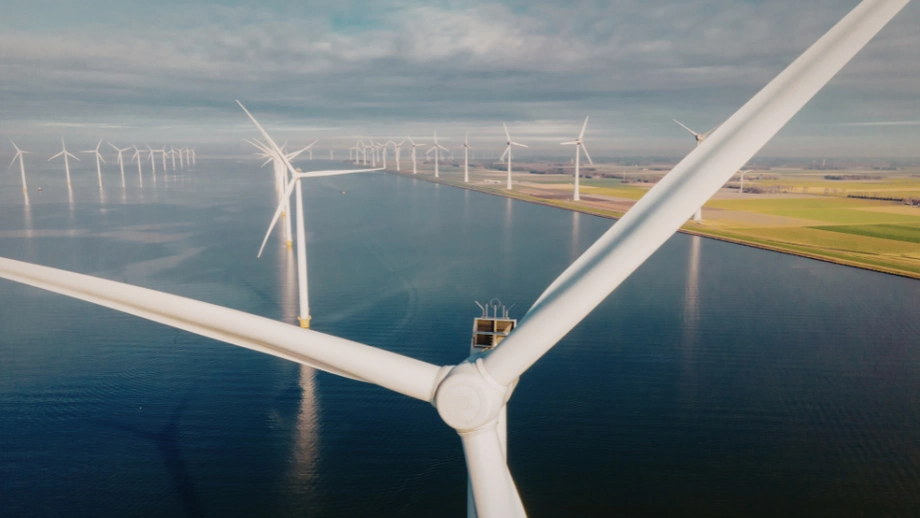
A 3,300 MW auction meets the limits of the power network
The Philippines has set an indicative date of 1 December 2026 for its first auction dedicated to offshore wind, after infrastructure concerns interrupted plans to procure 3,300 megawatts of generating capacity. Bid checks and award procedures are scheduled to run from 2 December 2026 to 30 June 2027, putting renewed attention on whether ports, transmission lines and permits can support projects originally intended to deliver electricity between 2028 and 2030.
Contents
- A 3,300 MW auction meets the limits of the power network
- How the auction timetable changed
- What developers would be bidding to build
- A vast wind resource, with a narrower starting point
- Why a nearby substation is only the beginning
- Ports are part of the electricity timetable
- Financing depends on a buildable sequence
- Data centres bring the same planning problem from the demand side
- Regional exports remain a longer term ambition
- Key Points
The Department of Energy (DOE) suspended the fifth Green Energy Auction, known as GEA-5, in July 2026 to review grid readiness, port facilities, environmental requirements, permitting and supply chain risks. The stakes extend beyond selecting developers: successful bidders need a workable route from building turbines at sea to delivering electricity to customers on land.
The original auction framework already sought to coordinate those steps. Issued in November 2025, it linked developer milestones with government preparations for transmission and ports. The subsequent pause shows how demanding that coordination has become, even before the first projects enter operation.
For households and businesses, the practical issue is whether new generating capacity can reach the places that need it. A wind farm may be ready to produce electricity while the lines needed to carry that power remain unfinished. Developers also face financing and construction decisions that depend on reliable dates for access to shared infrastructure.
Energy Secretary Sharon S. Garin described the ambition when the auction framework was announced, saying it would help developers move beyond preliminary work:
This auction pushes offshore wind from potential to reality. With clear rules, milestones, and dedicated infrastructure planning, developers can now move from early studies to bankable projects,
How the auction timetable changed
The DOE issued the Notice of Auction and original Terms of Reference in November 2025. Formal initiation of GEA-5 followed in March 2026. Those are separate stages in a procurement process that was initially expected to advance during 2025 and has since moved toward awards in 2027.
The revised timetable gives agencies a period to reconcile infrastructure and regulatory requirements before bidding resumes. Several dates are targets, including the auction itself.
- November 2025: The DOE issued the original Notice of Auction and Terms of Reference for 3,300 MW of offshore wind.
- March 2026: GEA-5 was formally initiated.
- July 2026: The process was suspended for a review of infrastructure, permitting, environmental requirements and supply chain risks.
- 24 August 2026: Target date for finalizing and signing a Department Circular setting the policy framework for the revised process, with publication planned by early September.
- 2 September 2026: Scheduled end of coordination and validation work on port, environmental and grid readiness requirements.
- 2 October 2026: Target date for final approval and release of supplemental auction terms following public consultation.
- 1 December 2026: Indicative auction date.
- 2 December 2026 to 30 June 2027: Scheduled period for bid validation, notices of award, document evaluation and certificates of award.
The DOE has also announced supplemental terms covering schedules, documentation and compliance for projects using foundations fixed to the seabed. The announcement describes the changes as preserving the original auction parameters while improving coordination with transmission, regulatory and infrastructure processes.
The announcement of those supplemental terms gives no calendar date, leaving its exact position within the revised consultation schedule unclear. Developers will need the final instructions and authority to resume implementation to organize their submissions.
What developers would be bidding to build
GEA-5 offers up to 3.3 gigawatts, equivalent to 3,300 MW, with a supply delivery period of 20 years. Participation is limited to fixed-bottom offshore wind, in which turbine foundations are secured to the seabed rather than supported by floating platforms.
The technology restriction matters because the country's largest estimated offshore wind resource lies in waters suited to floating systems. The first auction concentrates on a smaller part of that resource, consistent with the infrastructure conditions considered in the original terms.
Green Energy Tariff payments are scheduled to begin when a project is commissioned and registered with the Wholesale Electricity Spot Market, or WESM. Commissioning is the testing and approval process that brings a power plant into service. WESM is the market through which electricity is traded.
The terms also address bid bonds, performance bonds, early or delayed commissioning and lender step-in rights. Bonds provide financial backing for commitments made during bidding and construction. Step-in rights give lenders a contractual route to intervene if a project encounters problems, helping protect the financing behind it.
A vast wind resource, with a narrower starting point
Research referenced by the DOE and the World Bank estimates Philippine technical offshore wind potential at approximately 178 GW: about 18 GW from fixed-bottom installations and 160 GW from floating projects. Technical potential estimates the resource that technology could capture under specified conditions; a commercially viable project also needs affordable construction, financing, permits and a connection to customers.
The proposed 3.3 GW auction amounts to roughly 18% of the estimated 18 GW fixed-bottom resource. Floating wind accounts for about 90% of the combined 178 GW estimate. Those figures explain why a successful first auction would be a substantial opening step while still covering only one part of the country's longer term opportunity.
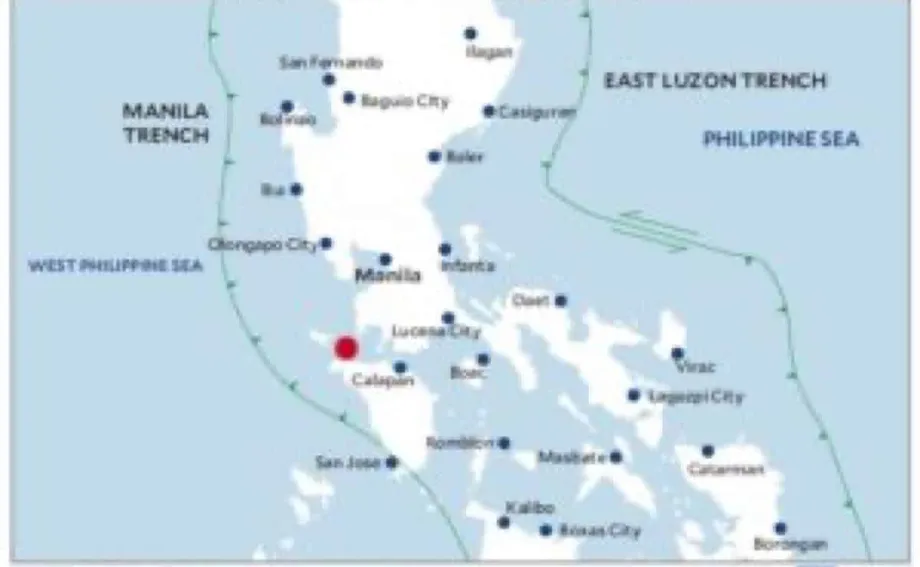
Northern Luzon has some of the strongest prospects. Other areas identified for development include Batangas, the Mindoro Strait, Guimaras, northern Cebu, northern Samar, Surigao and Davao Gulf.
The Global Wind Energy Council estimates an early development pipeline of 67 GW, with possible operating capacity of around 8.5 GW by 2034 and as much as 50 GW by the middle of the century. Turning that pipeline into operating wind farms requires successive decisions on sites, customers, infrastructure and funding.
The national energy targets add urgency. Renewables supply around a quarter of electricity generation, while the government's goals are 35% by 2030 and 50% by 2040. Offshore wind projects delivering during the original 2028 to 2030 window would contribute close to the first of those deadlines.
Why a nearby substation is only the beginning
The National Grid Corporation of the Philippines (NGCP) operates the Luzon, Visayas and Mindanao transmission systems. Together, they include more than 21,000 circuit kilometres of transmission lines, approximately 20,000 towers and around 140 substations.
Luzon accounts for almost three quarters of national electricity demand, compared with roughly 14% in the Visayas. The highest voltage network, operating at 500 kilovolts, is concentrated in Luzon, while 230 kilovolt infrastructure continues to expand in the Visayas and Mindanao.
A developer choosing a coastal site needs to know how much additional electricity the surrounding system can carry. A nearby substation may have an available connection point while a transformer or transmission line farther along the route is already heavily loaded.
Engineers must also examine voltage stability and how the system responds when equipment fails. Reactive power helps maintain voltage, while system strength describes how firmly the network can support stable electrical conditions. Both affect the equipment and controls a large wind farm may need.
Several projects connecting in the same region must be assessed together. Their combined output could overload a route that would comfortably carry one project. Grid studies also consider credible outages, such as the loss of a major line, transformer or generating unit, so electricity can keep flowing when equipment is unavailable.
Ports are part of the electricity timetable
Pambujan Port in Camarines Norte and Santa Clara Port in Batangas have been identified as installation ports for the auction. Offshore turbines require facilities capable of handling large components, assembling equipment and supporting the vessels used during installation.
Garin has warned that the limited number of ports currently available for offshore wind will require expensive expansion. Facilities in Mindoro, Panay and Batangas are also being studied for repurposing to serve the industry.
Speaking at a Net Zero Carbon Alliance conference, the energy secretary described the cost of expanding that capacity:
We will need more [ports] in the future, so that will cost us. Transition is expensive. It's not free,
The auction terms include port access rules, queuing procedures and penalties for delays, as well as guidance for developers considering private facilities. These provisions matter when multiple projects need the same installation space or vessel access during overlapping construction periods.
The DOE's coordination includes NGCP, the National Transmission Corporation, the Philippine Ports Authority and other agencies. Their work covers facility studies, connection agreements and port scheduling. A delay in any one of those activities can force changes elsewhere, including turbine delivery dates and construction contracts.
Financing depends on a buildable sequence
Transmission investment under consideration could exceed PHP1 trillion over the next decade. Projects include additional 500 kilovolt and 230 kilovolt infrastructure, stronger links between islands, grid digitalisation and storage integration.
Land access and approvals can take longer than physical construction. Investors therefore need credible dates for routes, permits and connection equipment, alongside the money to build them.
A 20 year supply arrangement gives a developer a basis for estimating revenue. The financing decision also depends on whether the port, grid connection and environmental approvals will be ready when the wind farm is scheduled to start earning that revenue.
The Global Wind Energy Council has proposed ways to share investment risks, including tariffs adjusted for inflation, government measures addressing political and regulatory uncertainty, and concessional financing from development banks. Each addresses a different part of project costs or revenue uncertainty.
The DOE described its reason for revising the auction process in a statement:
The recalibration is intended to ensure a more transparent, orderly, and implementation-ready auction process,
The central task is to turn that objective into milestones that developers, lenders and infrastructure agencies can use in contracts and construction schedules.
Data centres bring the same planning problem from the demand side
Data centres can concentrate hundreds of megawatts of electricity demand at a single site. Their servers and buildings can often be delivered faster than the transmission infrastructure needed to supply them reliably.
Offshore wind adds large amounts of generation at particular coastal locations. Data centres add large amounts of demand at particular business locations. Planning both together requires attention to the routes electricity must travel and the timing of each development.
A renewable power purchase agreement can help finance a wind farm and support a company's emissions goals. Supplying a facility hour by hour also requires enough transmission capacity, resources to balance changing wind output, and local connection and backup arrangements.
Annual accounting and continuous electricity supply serve different purposes. A facility could buy as much renewable electricity over a year as it consumes, while still relying on other generators during hours when its contracted wind farm produces less power.
Luzon's Special Economic Zones offer a place to coordinate land use, permitting, digital infrastructure and electricity planning. Locating new industrial demand where the network can support it could reduce pressure on congested areas. For developers, checking power availability before buying land would make electricity access part of the site decision from the beginning.
Regional exports remain a longer term ambition
Garin has said offshore wind could eventually support surplus electricity exports and attract companies to manufacture components in the Philippines. She has also said the country is not yet ready to export offshore wind power, with domestic infrastructure and policy work still required.
The DOE has received export proposals, including from Singapore. Garin has pointed to the need for legislation and policies, alongside geopolitical complications, before those proposals can advance.
The ASEAN Power Grid aims to expand electricity trading between countries and connect renewable resources with distant demand centres. One existing example is the Lao PDR-Thailand-Malaysia-Singapore Power Integration Project, which began in 2022 and enabled Singapore to import about 100 MW of hydropower from Laos through Thailand and Malaysia.
For the Philippines, the immediate decisions concern domestic delivery: completing auction rules, preparing ports and establishing how new wind farms will connect to the grid. Export plans would add further requirements for international connections and trading arrangements.
Garin summed up the domestic preparation needed when discussing the country's offshore wind ambitions:
We have to make sure that the grid, infrastructure, ports and communities are ready as well,
Key Points
- GEA-5 seeks up to 3,300 MW of fixed-bottom offshore wind capacity, originally intended for delivery between 2028 and 2030.
- The indicative auction date is 1 December 2026, with validation and award procedures scheduled through 30 June 2027.
- The July 2026 suspension allowed a review of grid readiness, ports, permits, environmental requirements and supply chain risks.
- Pambujan and Santa Clara have been identified as installation ports, with other facilities being studied.
- The Philippines has an estimated 178 GW of technical offshore wind potential, including 18 GW suited to fixed-bottom technology.
- Transmission capacity and coordinated construction schedules will determine how quickly auction awards become electricity delivered to customers.