Understanding South Korea Market Turmoil
South Korea financial authorities are moving to impose stricter controls on high-risk single-stock leveraged exchange-traded funds after many retail investors suffered steep losses in a sharp market correction. The products, introduced in late May, allowed investors to bet on individual companies such as Samsung Electronics and SK Hynix with twice the daily return. Retail investors quickly poured 14 trillion won into these instruments while foreign investors added only about 2 trillion won.
- Understanding South Korea Market Turmoil
- How Single-Stock Leveraged ETFs Work
- Scale of Retail Investor Losses
- Government Apologies and Political Pressure
- Regulatory Measures Already in Place
- Proposals for Emergency Regulatory Powers
- Effects Beyond Retail Traders
- Broader Lessons on Leverage and Market Structure
- Key Points
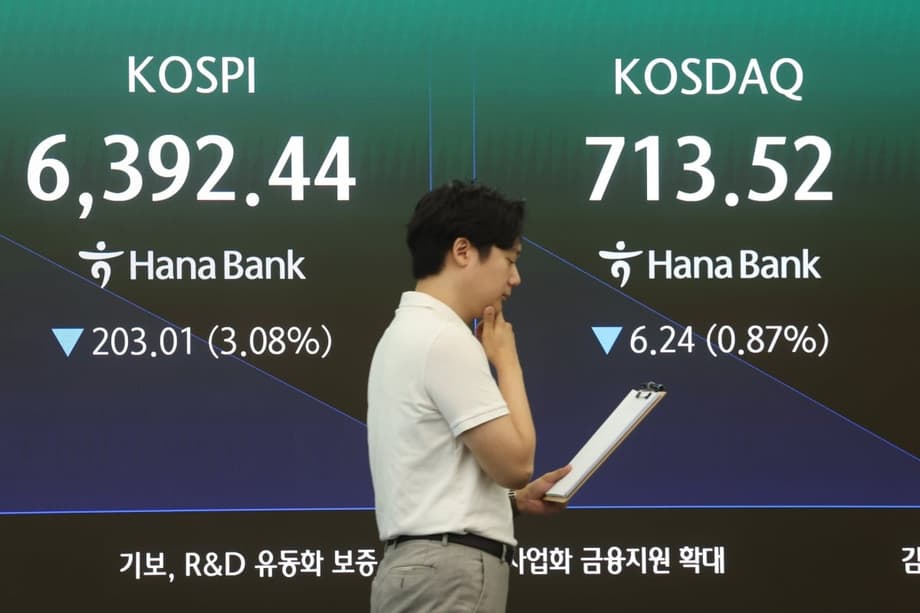
The Kospi index later fell nearly 35 percent in a month as chip stocks retreated from record highs reached in June. Products designed to deliver twice the daily move in SK Hynix shares dropped more than 80 percent from their June 23 peak. The equivalent Samsung Electronics product fell almost 75 percent from its June 3 high.
Finance Minister Koo Yun-cheol apologized in a parliamentary session after lawmakers criticized the rapid rollout of the products. Financial Services Commission Chairman Lee Eog-weon told the National Assembly that regulators are considering restricting access to professional investors only and lowering the leverage multiple from two times because it amplifies volatility.
How Single-Stock Leveraged ETFs Work
Unlike conventional ETFs that track diversified baskets of shares, these products use derivatives to magnify exposure to one company share price. They aim to deliver twice the daily return of the underlying stock. Because the leverage resets each day, returns over longer periods can differ sharply from a simple multiple of the stock performance due to compounding effects during volatile periods.
When a stock rises 30 percent and then falls 23.1 percent back to its starting price, a regular share returns to its original value. A two-times leveraged version falls 46.2 percent on the decline and ends well below the starting level. This daily reset mechanism explains why many holders lost far more than expected once the rally reversed.
Scale of Retail Investor Losses
Retail investors who bought near the June peaks faced margin calls and forced liquidations that added selling pressure. Estimates put total retail losses on single-stock leveraged ETFs at up to 56 trillion won. One investor reportedly lost more than 2.1 billion won on a 5 billion won position in an SK Hynix product. Settlement deposits held by investors dropped by 21.21 trillion won in just over a month, signaling reduced capacity for further purchases.
Broader market effects included multiple circuit breakers and the triggering of sidecar mechanisms that halted program trading. The Kospi fell as much as 12.6 percent intraday on one session before closing down 6 percent.
Government Apologies and Political Pressure
Deputy Prime Minister Koo Yun-cheol accepted responsibility during a parliamentary hearing. Financial Services Commission Chairman Lee Eog-weon expressed regret for increased market volatility caused by the products. Opposition and ruling party lawmakers questioned whether the launch occurred under external pressure and whether investor protection measures were properly reviewed before listing.
Since the tracking multiple of two times is too large, lowering it would likely have an effect in terms of easing volatility.
Lee Eog-weon made those remarks while discussing possible legislative changes. Presidential policy chief Kim Yong-beom defended the original decision, noting that retail investors trade actively in many derivatives and that the two chipmakers represent a large share of the market. Critics rejected the explanation and called for accountability.
Regulatory Measures Already in Place
Authorities raised the minimum cash deposit for trading the products from 10 million won to 30 million won and increased the minimum trading unit from one share to 20 shares. Both changes took effect simultaneously on July 31. Individual investors now face a proposed 20 percent cap on leveraged holdings relative to their total portfolio. Additional requirements include longer mandatory education programs and simulated trading exercises before participation.
Trading volume in the affected products fell 75.5 percent on the first day the new deposit rules applied. Their share of total Kospi trading volume dropped from an average of 33.8 percent in July to 6.4 percent.
Proposals for Emergency Regulatory Powers
Regulators are drafting amendments that would allow authorities to bypass beneficiary meetings and directly reduce leverage multiples from two times to 1.5 times or even one times during extreme volatility. The change draws on Hong Kong flexible leverage framework but grants regulators proactive intervention rights rather than relying on fund manager discretion. Officials are also examining a variable leverage structure that asset managers could adjust between one and two times depending on market conditions.
Market participants have urged clear legal definitions of emergency triggers, notification procedures, and exit options for existing investors to maintain predictability. Analysts expect continued high volatility until the measures are implemented in mid-August.
Effects Beyond Retail Traders
The downturn has affected financial institutions as well. OK Savings Bank, the country second-largest savings bank, reported losses tied to holdings in the same leveraged products. Some retail investors have shifted activity to overseas markets, with net purchases of United States stocks reaching 4.67 billion dollars in July, the largest monthly inflow since January. The Direxion Daily Semiconductor Bull 3X Shares product alone attracted 3.77 billion dollars in net buying from Korean investors.
Those overseas positions also declined, with the value of Korean retail holdings in United States stocks falling 33.7 billion dollars between end-May and end-July despite net inflows.
Broader Lessons on Leverage and Market Structure
The episode illustrates how daily-reset leveraged products combined with margin borrowing can accelerate both rallies and declines. Forced selling from margin calls added downward pressure once prices began to fall. The heavy weighting of Samsung Electronics and SK Hynix in the Kospi, together accounting for nearly half the index market capitalization, concentrated risk in one sector and amplified the correction when sentiment shifted.
Longer-term discussions have returned to the Korea Discount valuation gap and the need for corporate governance improvements and greater industrial diversification to reduce single-industry exposure.
Key Points
- Single-stock leveraged ETFs tracking Samsung Electronics and SK Hynix were launched in late May and attracted 14 trillion won in retail purchases.
- Many products lost 75 to 80 percent of value after the Kospi fell nearly 35 percent in one month.
- Finance Minister Koo Yun-cheol apologized in parliament for the rollout without sufficient risk assessment.
- Regulators raised minimum deposits to 30 million won, increased trading units to 20 shares, and proposed a 20 percent portfolio cap.
- Amendments under consideration would let authorities reduce leverage multiples in emergencies without beneficiary approval.
- Retail investors have increased purchases of United States leveraged ETFs as domestic restrictions tighten.
- Daily reset mechanics and margin calls magnified losses beyond simple two-times exposure during the sell-off.