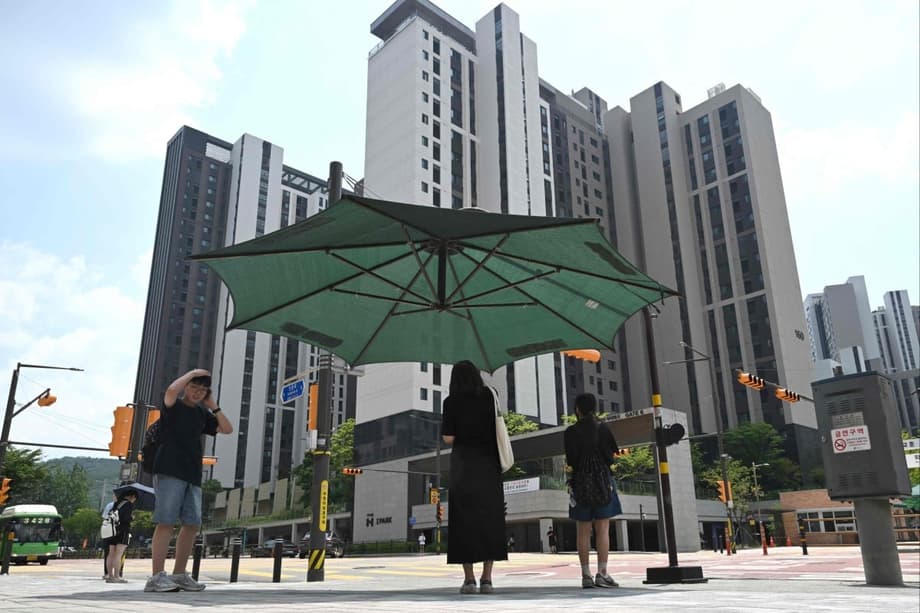
Record Temperatures Shatter Historical Benchmarks
South Korea faces an unprecedented heatwave that has pushed temperatures to levels unseen in more than a century of records. The southeastern city of Yangsan reached 42.5 degrees Celsius on Sunday, marking the highest temperature in 122 years of observations by the Korea Meteorological Administration. Other locations such as Goryeong hit 41.2 degrees Celsius while one Seoul district climbed to 39 degrees Celsius. Forecasters link the extreme conditions to overlapping high-pressure systems combined with the foehn effect that warms air descending mountain ranges.
- Record Temperatures Shatter Historical Benchmarks
- President Lee Jae Myung Orders National Response
- Seoul Issues Highest Alert Level
- Vulnerable Communities Face Acute Hardship
- Regional Heatwave Extends Across East Asia
- Power Systems and Infrastructure Under Strain
- Climate Patterns Shift Summer Norms
- Key Points
The Korea Meteorological Administration issued its first-ever severe heatwave warning for all of Seoul on Tuesday after expanding alerts from southern and western districts. The alert triggers when perceived temperatures exceed 38 degrees Celsius or actual highs surpass 39 degrees Celsius. Residents received advice to halt outdoor activities including farming, sports and construction work.
President Lee Jae Myung Orders National Response
President Lee Jae Myung addressed a cabinet meeting on Tuesday and directed authorities to treat the situation as a national disaster. He instructed officials to protect vulnerable groups, inspect power grids amid surging air-conditioning demand and redesign the disaster response framework. Lee noted that abnormal weather patterns make prolonged extreme conditions more probable in coming periods.
The Korea Disease Control and Prevention Agency reported 19 heat-related deaths, with 13 victims aged 80 or older. Since May 15 at least 2,025 people nationwide have received treatment for heat-related illnesses. Two elderly men died on Sunday while working outdoors, one in a greenhouse near Seoul and another in Busan.
Seoul Issues Highest Alert Level
Authorities expanded the highest-level warning across the entire capital on Tuesday morning. The measure requires immediate suspension of non-essential outdoor work. City officials held emergency meetings and deployed nurses to check on 63,000 at-risk residents including elderly people living alone and those with chronic illnesses. A fleet of 200 trucks sprays water along nearly 2,000 kilometers of roads up to six times daily while mist systems operate continuously.
Two professional baseball games scheduled in Seoul and Gwangju were cancelled due to safety concerns. Officials in North Gyeongsang province use drones equipped with loudspeakers and thermal cameras to monitor popular outdoor sites and issue warnings.
Vulnerable Communities Face Acute Hardship
Residents in jjokbang villages, single-room housing without air conditioning, describe conditions they have never experienced. Cho Sang-yeon, who has lived nearly 20 years in western Seoul’s Yeongdeungpo district, said the current heat exceeds anything felt previously. Some residents moved to temporary government shelters with cooling while firefighters spray streets and monitor homeless individuals.
President Lee emphasized enforcement of workers’ rights to pause operations during extreme heat and called for stricter oversight of outdoor and enclosed workplaces. Support measures target elderly residents living alone and people in cramped housing.
Regional Heatwave Extends Across East Asia
The crisis extends beyond South Korea. In Japan nearly 18,600 people required hospital treatment for heatstroke between July 20 and 26, with 45 arriving deceased. Three lions at Tokyo’s Tama Zoological Park died from suspected heatstroke despite countermeasures. A zoo spokeswoman noted that high humidity distinguishes Japanese summers from drier African conditions. North Korea maintained nationwide heat advisories while water parks in Pyongyang attracted crowds.
Scientists attribute increased frequency and intensity of heatwaves to human-driven climate change. The United Nations weather agency warned of a strengthening El Nino that will likely raise global temperatures and alter rainfall patterns.
Power Systems and Infrastructure Under Strain
Authorities monitor electricity grids as air-conditioning demand reaches new peaks. President Lee ordered inspections to prevent outages that could endanger residents during peak heat hours. The number of days annually when temperatures reach at least 33 degrees Celsius has more than doubled in the past five years compared with the 1970s.
Climate Patterns Shift Summer Norms
The Korea Meteorological Administration attributes the prolonged heat to an earlier and stronger North Pacific high-pressure system along with warmer sea surface temperatures. These factors sustain humidity and produce more frequent tropical nights. Heatwaves now arrive earlier and last longer than in previous decades.
Typhoon Dolphin, approaching from the east, may either increase humidity or bring temporary relief depending on its track. Forecasters expect the storm to weaken before landfall as a category one or two system.
Key Points
- President Lee Jae Myung declared the heatwave a national disaster and ordered overhaul of crisis response systems.
- Yangsan recorded 42.5 degrees Celsius, the highest temperature in 122 years of observations.
- 19 people died from heat-related causes, with 13 aged 80 or older, and over 2,000 treated since May.
- Seoul received its first-ever severe heat alert covering the entire capital.
- Three lions died from suspected heatstroke at a Tokyo zoo amid the regional heatwave.
- Climate change and El Nino contribute to more frequent and intense extreme weather events.