The Rise of Thrifty Indulgence
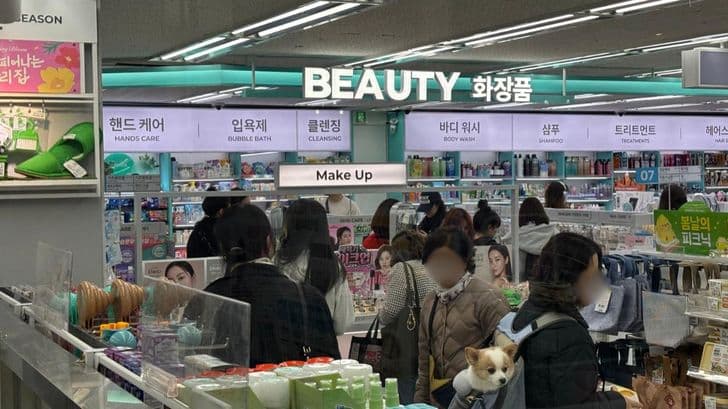
On a Wednesday evening in Sinchon, western Seoul, the aisles of a Daiso store overflow with college students clutching shopping baskets. Among them stands Song Seung-min, a 26-year-old university student, carefully examining a display of color cosmetics. “There is something fun about shopping at Daiso,” she explains, selecting a lip balm priced at roughly $2. “It makes me feel rich because I can buy all kinds of things without actually spending much.”
Her sentiment captures a profound shift in South Korean consumer behavior. As inflation persists following a 5.1 percent surge in the consumer price index in 2022, young Koreans in their 20s and 30s have abandoned the austerity of “no-spend challenges” and “beggar rooms” for a new philosophy economists call “small indulgences.” Rather than cutting consumption entirely, this demographic seeks strategic satisfaction through low-cost purchases that deliver disproportionate joy.
The transformation represents a fundamental evolution from the pandemic-era mindset. During 2022, online communities buzzed with aggressive saving campaigns where young people shared expenses and encouraged one another to spend nothing. Song recalls those days with clarity. “Back in 2022, my friends and I used to share our spending with one another and encourage each other to spend less,” she notes. The prevailing wisdom then suggested that financial survival required monastic restraint.
Yet contemporary data reveals a different picture. A December report from 20sLab, based on a survey of 1,200 respondents aged 15 to 55, found that 76 percent of Generation Z consumers prioritize affordable prices, while 87.6 percent simultaneously demand strong product performance. This dual requirement suggests young shoppers refuse to compromise on quality even as they tighten budgets. Last year’s 2.1 percent inflation increase has only reinforced this selective approach, creating a market where utility and economy must coexist.
Record Sales and Strategic Expansion
Asung Daiso Co., the nation’s leading fixed-price household goods retailer, has capitalized on this behavioral pivot with remarkable success. According to regulatory filings with the Financial Supervisory Service, the company achieved record-breaking performance in 2025 despite economic headwinds. Annual sales reached 4.54 trillion won ($3.1 billion), representing a 14.3 percent increase from the previous year. Operating profit climbed even higher, surging 19.2 percent to 442.4 billion won.
The growth trajectory proves particularly striking when viewed longitudinally. Since 2022, when sales stood at 2.94 trillion won, Asung Daiso has expanded its revenue by over 50 percent while nearly doubling operating profits. The company now operates approximately 1,600 stores nationwide, having successfully transformed from a simple household goods outlet into a comprehensive lifestyle platform.
Daiso’s expansion into high-margin categories explains much of this financial success. The retailer has aggressively developed its cosmetics division through strategic partnerships with industry giants Amorepacific Corp and LG H&H Co., converting its extensive store network into a premier platform for ultra-low-priced beauty products. Where once the chain offered basic household necessities, it now stocks sophisticated skincare and makeup lines that rival dedicated beauty retailers.
The fashion segment has undergone similar expansion. From roughly 100 items in 2022, Daiso’s apparel lineup has exploded to over 700 products, with the company introducing 600 new fashion items monthly to capture trend-focused younger customers. This constant product rotation creates a discovery atmosphere that encourages frequent visits.
The Dupe Economy and Miniature Beauty
Digital engagement metrics confirm the physical expansion’s success. According to Wiseapp-Retail data, the Daiso mobile app reached 5.16 million monthly active users in February 2025, a 42 percent year-on-year increase representing the platform’s highest usage since launch. The 2025 OpenSurvey report showed Daiso ranking fifth among major shopping channels, climbing four positions from the previous year.
The cosmetics category drives particularly explosive growth. OpenSurvey’s 2025 Beauty Trend Report indicates the share of consumers using Daiso as a beauty purchasing channel jumped 9.2 percentage points year-over-year. This surge connects to the rising “dupe” culture, where consumers seek lower-priced alternatives that closely mimic expensive brand-name products.
Consider the Son & Park Arti Spread Color Balm available for 3,000 won ($2), offering functionality comparable to Chanel’s Lip and Cheek Balm at a fraction of the cost. Choi Yoo-jin, a 24-year-old student shopping at the Sinchon location, represents the typical convert. “Now I even find myself looking forward to seeing what kind of dupe product Daiso will come out with next for well-known brand items,” she says, having replaced her former department store brands with Daiso eyeliner and contouring products.
The miniature cosmetics trend sweeping K-beauty complements Daiso’s strategy. As inflation pressures consumers to sample before committing to full-sized purchases, brands like Banila have introduced 14-milliliter foundation portions priced at 16,000 won, down from 34,000 won for standard sizes. Lilybyred offers 2.5-gram lip tints for approximately 8,000 won, reduced from 14,000 won. On platforms like Ably Corporation, searches for “mini shadow” rose 440 percent between October periods, while Zigzag saw “mini lipstick” searches spike 817 percent.
Retail as Recreation
Beyond specific products, Daiso has redefined itself as a recreational destination. With over 30,000 product varieties estimated across stores, the chain offers an experience more akin to exploration than errands. An OpenSurvey study of 1,069 recent visitors found 29.1 percent entered stores simply to browse or pass time, while 89.2 percent acknowledged habitually checking specific sections even without purchase intentions.
Jung Yoo-ra, a 25-year-old college student, describes the phenomenon. “The stores make it easy and enjoyable for customers to try out products, so people naturally end up staying longer,” she observes. “There is such a wide variety of cosmetics that you almost always end up buying one or two. That kind of small shopping is part of the fun.”
Professor Kim Woo-hyuk of the University of Incheon’s consumer science department analyzes this behavior as representative of evolved self-directed consumption. “For young people, this is partly an expansion of a self-directed culture of consumption that seeks both enjoyment and utility within the limits of self-control,” he explains. “Rather than merely reducing expenditure, they apply increasingly strict standards to judge whether a purchase is justified and how much utility it delivers.”
The Tourist Revolution
The demographic shift extends beyond domestic consumers. Foreign tourists have fundamentally altered their Korean shopping patterns, abandoning luxury duty-free outlets for value retailers. According to the Korea Duty-Free Shop Association, tax-free consumption per foreign visitor collapsed from 25.55 million won in 2021 to merely 1.43 million won last year, as the era of Chinese bundle merchants and bulk purchasing ended.
Conversely, Daiso’s foreign sales skyrocketed 300 percent during the pandemic year of 2022, then grew another 130 percent last year. At the Myeongdong headquarters and Myeongdong Station locations, more than half of customers now constitute foreign visitors. Grace, a 16-year-old American tourist visiting from New York, illustrates the trend. “I got to know Olive Young through TikTok and Instagram in the United States,” she says while filling her basket with Korean body washes. “When I actually came here, I liked it because it was much cheaper than in the United States.”
Olive Young has experienced parallel foreign growth, with tourist sales exploding 1,710 percent in 2022 and rising 660 percent last year. This “Ol-Da-Mu” triumvirate, comprising Olive Young, Daiso, and fashion retailer Musinsa, now represents essential Korean tourism experiences promoted across social media platforms, replacing traditional department store and duty-free shop itineraries.
Competitive Pressures and Regulatory Scrutiny
The value retail boom has intensified domestic competition while attracting regulatory scrutiny. Olive Young, traditionally dominant in K-beauty retail, faces squeezing pressure from Daiso’s offline expansion and Coupang’s e-commerce “Rocket Delivery” service. The Fair Trade Commission recently launched investigations into both Olive Young and Asung Daiso regarding potential violations of the Act on Fair Transactions in Large Retail Business, examining whether their market power disadvantages suppliers.
Professor Kim Joo-deok of Sungshin Women’s University notes the market saturation. “Olive Young had a dominant position in Korea in terms of its offline market presence, but Daiso’s emergence as a competitor by selling budget-oriented cosmetic products put Olive Young in a tough position,” he observes. This pressure has driven Olive Young toward international expansion, establishing a U.S. subsidiary in Los Angeles while facing tariff uncertainties under the Trump administration.
Meanwhile, fashion retailer Musinsa Standard has pursued aggressive co-location strategies, opening 23 shop-in-shop stores nationwide near Uniqlo locations to capture the same inflation-conscious demographic. The convergence of these retailers signals a permanent restructuring of Korean retail, where value positioning supersedes prestige branding.
Asung Daiso has responded to growth by strengthening logistics systems and store networks, ensuring stable supply chains for its high-volume, low-margin model. The company plans continued customer-centric management focusing on affordable quality.
The Bottom Line
- Asung Daiso reported record 2025 sales of 4.54 trillion won ($3.1 billion), up 14.3 percent year-on-year, driven by inflation-conscious young consumers seeking “small indulgences”
- Young Koreans have shifted from pandemic-era “no-spend challenges” to value-seeking consumption that prioritizes affordable prices alongside product quality
- The cosmetics category leads growth through “dupe” products and strategic partnerships with major beauty conglomerates, with Daiso climbing four spots to rank fifth among major shopping channels
- Foreign tourists increasingly choose Daiso and Olive Young over traditional duty-free shops, with Daiso’s foreign sales growing 130 percent last year following a 300 percent surge in 2022
- Mobile app engagement has reached 5.16 million monthly active users, a 42 percent increase reflecting digital expansion alongside physical store growth to approximately 1,600 locations
- Regulatory investigations by the Fair Trade Commission into distribution practices signal the growing market power of value retailers within South Korea’s transformed consumer landscape