A Ban on Basic Hygiene
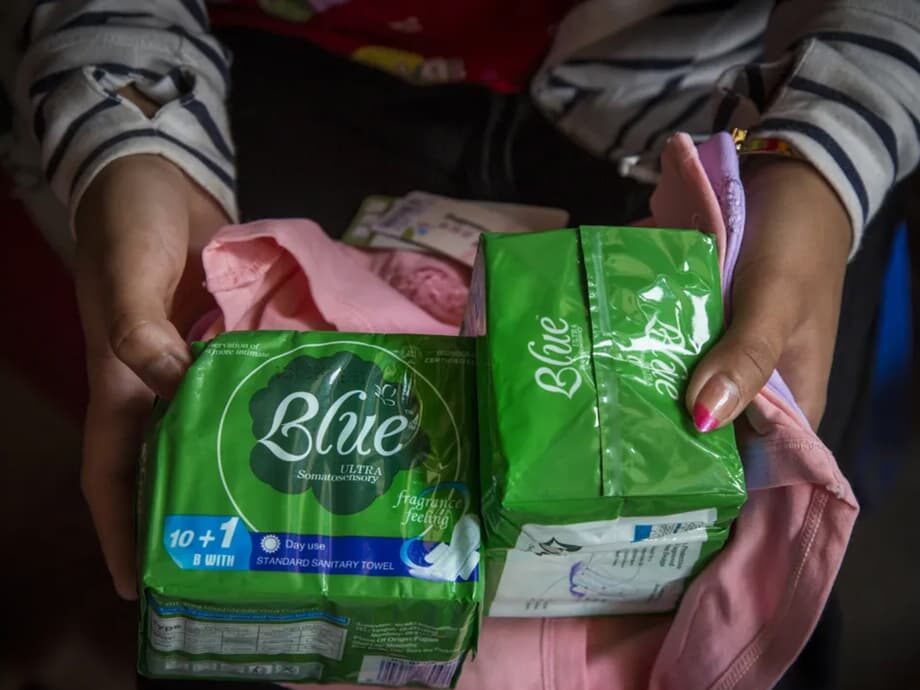
Myanmar’s military regime has expanded a sweeping ban on the distribution and transportation of menstrual products across conflict-affected regions, claiming these essential items are being diverted to treat wounded resistance fighters. The restriction, which began in August without any formal announcement from authorities, represents one of the most unusual tactics in the ongoing campaign of the military against opposition forces. Thinzar Shunlei Yi, director at Sisters2Sisters, a women’s rights collective supporting fighters, explained that officials allege sanitary pads serve dual purposes for the People’s Defence Force. The military claims these products are used for medical reasons and as support for feet and boots to absorb sweat and blood, according to Thinzar Shunlei Yi. The blockade specifically targets the bridge connecting Sagaing with Mandalay, the second-largest city of the nation, where transporting pads is reportedly prohibited entirely. Activists warn that the actual scope of the ban likely exceeds current reports due to deep cultural taboos surrounding menstruation in Myanmar society.
- A Ban on Basic Hygiene
- The Four Cuts Strategy
- Medical Claims Face Scientific Scrutiny
- Public Health Emergency in Displacement Camps
- Economic Barriers and Black Market Surge
- Cultural Stigma Conceals the Crisis
- Grassroots Resistance Meets Military Obstruction
- Gender-Based Violence as Military Tactic
- What to Know
The Four Cuts Strategy
The sanitary product restrictions form part of what the military calls the four cuts strategy, a systematic effort to sever opposition forces from food, funds, information, and essential supplies. This approach has intensified since the military seized power in February 2021, ousting the democratically elected government and plunging the Southeast Asian nation into civil war. Since that coup, artillery attacks, village burnings, and arbitrary arrests have become routine across the country. The restrictions on menstrual products began in August specifically in areas controlled by opposition forces, including parts of Sagaing region and Chin, Kachin, and northern Shan states. Transportation of sanitary pads, baby diapers, mosquito nets, and oxygen cylinders now reportedly requires approval letters from the regional administration of the junta, creating bureaucratic barriers that effectively halt distribution. The four cuts approach aims to isolate ethnic armed groups and the People’s Defence Force by eliminating access to basic necessities in contested territories.
Since January 2025, restrictions on medicine access and transportation have increased sharply. The policy affects not only menstrual products but also baby diapers, which authorities suspect the resistance of using as gauze for wound treatment. This multi-item blockade represents a calculated effort to create humanitarian shortages in territories where the military has lost control to opposition forces.
Medical Claims Face Scientific Scrutiny
Healthcare professionals and aid workers have categorically rejected the justification offered by the military for the ban, noting that sanitary products are medically unsuitable for treating combat injuries. Meredith Bunn, founder of the medical aid charity Skills for Humanity, explained that anyone with combat medicine experience would recognize the inadequacy of such materials.
A sanitary pad wouldn’t stay in place, wouldn’t soak enough blood and wouldn’t keep the area [clean].
Bunn characterized the policy as the product of completely uneducated, misogynistic fools within the military. Medical experts note that proper wound care requires sterile dressings designed to maintain pressure and prevent infection, standards that consumer hygiene products cannot meet in trauma situations. The absorbent materials in sanitary pads are designed for menstrual flow rather than the rapid bleeding associated with gunshot wounds or lacerations, and they lack the adhesive properties necessary to secure them during movement in combat conditions. Humanitarian monitoring organizations confirm that baby diapers have also been banned under the same rationale, with authorities suspecting the People’s Defence Force of using them as gauze for wound treatment.
Public Health Emergency in Displacement Camps
The ban has triggered a severe public health crisis among the most vulnerable populations of Myanmar, particularly the more than 3.5 million people displaced since the 2021 coup. With the healthcare system largely collapsed and medical attention scarce, women and girls are being forced to adopt dangerous alternatives. Henriette Ceyrac, who founded the period education organization Pan Ka Lay before it was forced to close, reported that women are resorting to rags, leaves, or newspaper.
It can cause urinary tract infections [UTIs], reproductive tract infections; just a lot of discomfort and pain.
These infections are particularly dangerous in displacement camps where access to antibiotics and clean water is limited. Thinzar Shunlei Yi noted that Sisters2Sisters regularly receives requests for antibiotics to treat UTIs resulting from unhygienic menstrual management. The physical discomfort has driven some women to remain indoors during menstruation rather than participate in daily activities or political organizing, a restriction that aid workers argue serves the broader goals of the regime in suppressing dissent. In a country where the health system has collapsed entirely in many regions, untreated infections can lead to severe complications including kidney damage and infertility.
Economic Barriers and Black Market Surge
Financial pressures have compounded the physical health risks, as the blockade has driven prices for menstrual products to unaffordable levels. On the hidden black market, prices have tripled from 3,000 kyat per pack to 9,000 kyat, exceeding the minimum daily wage of Myanmar of 7,800 kyat. For female-headed households already facing economic devastation, with the World Bank projecting a 2.5 percent economic contraction due to recent earthquakes and ongoing conflict, these costs are prohibitive. The termination of international aid programs has created a $259 million funding gap, eliminating crucial support for women-led organizations that previously provided gender-based violence prevention, education, and healthcare services. This funding loss has further strained local capacity to respond to the menstrual health crisis. Women are now forced to choose between purchasing food for their families or managing their menstrual health safely.
With the banking system collapsed in many areas and humanitarian aid blocked, women cannot access the resources needed to maintain basic hygiene. The economic warfare compounds the biological reality of menstruation, creating a crisis of period poverty that affects millions.
Cultural Stigma Conceals the Crisis
The deeply entrenched cultural taboos of Myanmar surrounding menstruation have worsened the impact of the ban while simultaneously obscuring its full extent from international attention. Thinzar Shunlei Yi suggested the restrictions are likely more widespread than reported because women are reluctant to discuss menstrual issues publicly. Because of the taboo around talking about menstruation, many cases go unreported, she noted. Henriette Ceyrac emphasized that the entire process of menstruation is considered shameful in the society of Myanmar, with women encouraged to hide any evidence of their periods. This stigma extends to alternative menstrual products, which remain rare in the country. It is frowned upon as a woman to seek information and to be knowledgable about these things, Ceyrac explained. Menstrual cups and tampons are largely unavailable, and cultural barriers prevent open discussion of these options, leaving disposable pads as the only culturally acceptable solution for most women. The combination of military restrictions and social stigma creates a double barrier that effectively silences women suffering from period poverty.
Grassroots Resistance Meets Military Obstruction
Local organizations are attempting to fill the gap left by international funding cuts and military restrictions, though they face significant operational barriers. Grassroots groups including Sisters2Sisters continue fundraising and delivering gender-specific aid, including sanitary pads and medical supplies, to women in affected areas. However, military authorities recently blocked these volunteers from distributing aid in Pale and Yin Mar Pin townships within the Sagaing Region, precisely where opposition control is strongest. Organizations are attempting to distribute reusable pads as an alternative, but this solution presents its own challenges in displacement camps where clean water for washing remains scarce.
A lack of menstrual equipment and areas to wash them properly can cause infections, irritation, UTIs and worse, which is why, until it became absolutely necessary, disposable [menstrual products] were preferable.
Local groups have formally raised the issue with the United Nations, describing the restriction of such a basic commodity as a clear human rights violation. The blockade represents a deliberate targeting of the biological needs of women as a military tactic.
Gender-Based Violence as Military Tactic
Activists and human rights observers argue the sanitary pad ban constitutes deliberate gender-based violence designed to achieve military objectives beyond simple supply denial. Henriette Ceyrac stated the restrictions serve to further immobilize women. It makes sense actually that [the military] wants to restrict women’s movement even more. It’s basically gender-based violence, she said. Bunn believes the tactic specifically targets female fighters within the resistance while simultaneously controlling civilian women and victimizing those in displacement camps. The discomfort and health risks force women to remain indoors during menstruation, effectively removing them from political activities and public life. This restriction comes amid a broader context of violence against women in Myanmar, where the military has systematically targeted defenders of the rights of women. Households headed by women face disproportionate financial impacts from the conflict, with economic scarcity affecting these households more severely than those headed by men. The policy exploits biological functions to punish and control, representing a weaponization of menstruation in modern warfare.
What to Know
- The military regime of Myanmar has banned the transportation and distribution of menstrual products in opposition-controlled areas, claiming rebels use them for medical treatment and boot padding.
- The ban operates as part of the four cuts strategy to deprive insurgents of supplies, with specific restrictions on the bridge connecting Sagaing and Mandalay.
- Medical experts dismiss the claims of the military, noting sanitary pads are medically unsuitable for treating gunshot wounds or serious injuries.
- Women are resorting to unsafe alternatives like rags and leaves, causing increased urinary tract and reproductive infections in a collapsed healthcare system.
- Black market prices have tripled to 9,000 kyat per pack, exceeding the minimum daily wage of 7,800 kyat.
- More than 3.5 million people have been displaced since the 2021 military coup, with women in displacement camps facing acute period poverty.
- Grassroots organizations like Sisters2Sisters are being blocked from delivering aid, while international funding cuts have eliminated millions in support for women-led services.
- Local groups have appealed to the United Nations, classifying the restriction as a human rights violation and gender-based violence intended to restrict the mobility and political participation of women.