The Execution and Immediate Fallout
Singapore carried out the capital sentence of Omar bin Yacob Bamadhaj on April 16, 2026, hanging the 46-year-old Singaporean for importing 1,009.1 grams of cannabis across the Woodlands Checkpoint from Malaysia in July 2018. The execution proceeded despite urgent pleas from international human rights organizations, European diplomatic missions, and the defendant’s own family, who highlighted the recent death of his disabled son and the precedent of clemency granted in similar cases just months earlier.
The Central Narcotics Bureau confirmed the execution in a statement issued the same day, asserting that Omar had received full due process under the law and was represented by legal counsel throughout his trial and appeal. The bureau emphasized that capital punishment in Singapore applies only to the most serious crimes, specifically the importation or trafficking of significant drug quantities that cause severe harm to individuals, families, and wider society.
International observers viewed the execution as part of a troubling acceleration in Singapore’s use of the death penalty. Since January 1, 2026, authorities have executed seven individuals, all for drug-related offenses, with Omar marking the eighth such case. The 2025 total of fifteen executions for drug crimes represented an increase of seven from the previous year, prompting concerns that the city-state is intensifying its application of capital punishment even as neighboring jurisdictions move toward reform.
The Crime and Legal Framework
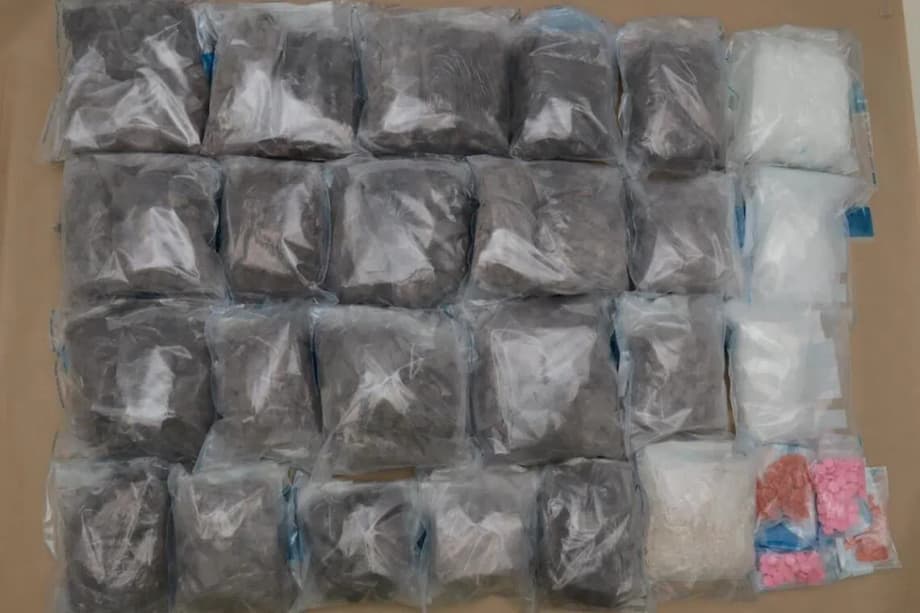
Omar’s case began on July 12, 2018, when he drove from Malaysia into Singapore through the Woodlands Checkpoint. During a routine inspection, an auxiliary police officer discovered a bag belonging to Omar containing three bundles wrapped in aluminum foil, cling wrap, and newspaper. Analysis by the Health Sciences Authority confirmed the packages contained not less than 1,009.1 grams of cannabis, a quantity that authorities calculated could supply approximately 144 drug abusers for one week.
The amount proved legally fatal. Under Singapore’s Misuse of Drugs Act 1973, the importation of more than 500 grams of cannabis triggers a mandatory death penalty. Judges possess no sentencing discretion once the prosecution proves the quantity threshold and the defendant’s knowledge of the illicit nature of the substance. This strict liability approach to drug trafficking has long placed Singapore among the jurisdictions with the most severe narcotics policies globally.
At his trial, which concluded with a conviction on February 24, 2021, Omar maintained that he did not know the true nature of the bundles found in his vehicle. He claimed that acquaintances in Malaysia had planted the drugs without his knowledge. However, the High Court identified multiple material inconsistencies in his testimony. Several officers present during the recording of his statements provided mutually corroborative accounts that were supported by closed-circuit television footage, leading the court to conclude that Omar knew the contents of the packages and had intentionally imported them.
A Family’s Unbearable Loss
Behind the legal proceedings lay a family tragedy that compounded the cruelty of the sentence. At the time of his arrest, Omar had been residing in Germany with his wife, Alexandra Maria Piel, a German national, and their two children. The family had relocated to Germany to access specialized medical care for their son Naqeeb, who suffered from cerebral palsy and required intensive support. Born with partial blindness and deafness, Naqeeb was wheelchair-bound and needed constant medical attention that the family believed they could not adequately secure in Singapore.
Between 2016 and his arrest in 2018, Omar returned to Singapore only twice: first for his mother’s funeral, and then in July 2018 to observe the holy month of Ramadan with his extended family. His wife and children remained in Germany, and due to financial constraints and Naqeeb’s intensive care requirements, they were unable to visit Omar during his nearly eight years of incarceration. The family endured years of separation, sustained only by telephone calls that became regular only after intervention by the German embassy during the COVID-19 pandemic.
The emotional toll intensified when Naqeeb died in November 2025 at the age of eleven. The family was still mourning this loss when they received notification from the Singapore Prison Service on April 2, 2026, that Omar’s execution would proceed in two weeks. Alexandra Maria Piel penned an urgent letter to President Tharman Shanmugaratnam on April 12, appealing for clemency and referencing the case of Tristan Tan Yi Rui, whose death sentence for methamphetamine trafficking was commuted to life imprisonment in August 2025. In her plea, she wrote that the president’s previous act of compassion was seen globally as a sign of a justice system capable of recognizing human circumstances and redemption. She begged for her nine-year-old daughter Amal to have the opportunity to reconnect with her father rather than experience the irreversible pain of never knowing him.
Claims of Coercion and Court Findings
Omar’s defense strategy relied heavily on allegations of police misconduct and his own lack of knowledge regarding the packages. During trial, he testified that officers had threatened him with physical violence and execution to extract a confession. Specifically, he claimed one officer threatened to slap him if he did not admit ownership of the bundles, while another allegedly threatened to throw a pen at him and promised that both he and his father would be hanged if he refused to cooperate. His father, who was present in the car during the border crossing, was never charged with any offense.
The High Court rejected these allegations as unreliable. Judges found that Omar’s accounts contained material inconsistencies and were contradicted by objective evidence. The officers present during the interrogation provided consistent testimony that was corroborated by video footage, undermining Omar’s claims of coercion. The court concluded that Omar had identified the bundles as cannabis to multiple officers before the packages were even opened, and that he had accepted the smuggling arrangement because he was desperate for money.
Following his conviction and the mandatory death sentence imposed on February 24, 2021, Omar appealed to the Court of Appeal. On October 12, 2021, the appellate court upheld the lower court’s decision, finding no basis to interfere with the factual determinations regarding Omar’s knowledge and intent. After this dismissal, Omar filed four separate post-appeal applications, all of which were dismissed or resolved. On April 15, 2024, the Court of Appeal summarily dismissed his final application to review the earlier decision, noting that his allegations of threats had been fully examined at trial and appeal, and that he had presented no new or sufficient material to warrant reconsideration.
Despite the legal doctrine that allows for sentencing discretion when a defendant acts merely as a courier and provides substantive assistance to investigations, Omar could not satisfy both conditions. The court accepted that his role was limited to transporting the drugs, but the prosecution did not issue a certificate confirming he had substantively assisted authorities in disrupting trafficking networks. Without this procedural document, the judge possessed no legal alternative to the mandatory death penalty.
International Condemnation
The execution drew swift condemnation from human rights organizations and diplomatic missions worldwide. In a joint statement issued on April 15, Amnesty International, Human Rights Watch, the Capital Punishment Justice Project, and the Anti-Death Penalty Asia Network called on Singapore to immediately halt the scheduled hanging. Rachel Chhoa-Howard, a Southeast Asia researcher at Amnesty International, described the death penalty as the ultimate cruel, inhumane, and degrading punishment. She stated that Singapore’s continued use of capital punishment for drug-related offenses violates international human rights law and standards, placing the city-state increasingly out of step with global trends.
The death penalty is the ultimate cruel, inhumane, and degrading punishment.
Karen Gomez-Dumpit, convenor at the Anti-Death Penalty Asia Network, emphasized the family’s suffering. She noted that Omar and his family had already endured unimaginable pain since his incarceration in 2018, and that executing him would only compound that grief while leaving his daughter without the chance to truly know her father.
Omar and his family have already endured unimaginable suffering since his incarceration in 2018. Executing him now would only compound that pain and leave his daughter without ever truly knowing her father.
The Delegation of the European Union, together with diplomatic missions from EU member states, Norway, Switzerland, and the United Kingdom, issued a joint statement calling for the execution to be halted. They reiterated their absolute opposition to capital punishment in all circumstances, arguing that it violates the inalienable right to life and the prohibition of cruel, inhuman or degrading punishment. The diplomatic group noted that international human rights law restricts the death penalty to the most serious crimes involving intentional killing, a threshold that drug-related offenses do not meet. They also pointed to the absence of conclusive evidence that capital punishment effectively deters drug trafficking more than other punishments, and warned of the irreversible nature of execution in cases of potential miscarriage of justice.
Jacinta Smith, chair of the Capital Punishment Justice Project, accused the Singaporean government of showing total disregard for the right to life. She contrasted Singapore’s approach with steps taken by neighboring Asian countries to reduce reliance on capital punishment. Bryony Lau, deputy Asia director at Human Rights Watch, called on concerned governments to urgently pressure Singapore to commute all death sentences for drug-related offenses as a first step toward full abolition.
Singapore’s Strict Drug Policy
Singaporean authorities have consistently defended their narcotics policies as necessary to protect public safety and deter organized crime. The Central Narcotics Bureau maintains that capital punishment serves as a critical deterrent against the trafficking of significant drug quantities that destroy lives and communities. According to a Ministry of Home Affairs survey conducted in 2024, more than eighty percent of Singaporeans believe that the death penalty is effective in deterring serious crimes such as drug trafficking, suggesting strong domestic support for the policy despite international criticism.
The government routinely rejects external pressure regarding its criminal justice system, characterizing such interventions as disrespectful to Singapore’s sovereignty and legal traditions. When British business figure Richard Branson criticized the 2023 execution of Tangaraju Suppiah for cannabis trafficking, the Ministry of Home Affairs responded forcefully, dismissing his comments as showing disrespect for Singapore’s institutions and accusing him of ignorance regarding local conditions.
Singapore’s legal framework provides limited avenues for mercy. While the President possesses constitutional clemency powers, such interventions are rare and typically follow Cabinet recommendations. The August 2025 commutation of Tristan Tan Yi Rui’s sentence for methamphetamine trafficking offered a glimmer of hope to Omar’s family, but the precedent did not extend to his case. The government has not explained why clemency was granted in one case but denied in another, though legal observers note that each clemency decision involves confidential assessments of the specific facts and circumstances.
An Outlier in the Region
Singapore’s aggressive application of the death penalty for drug offenses contrasts sharply with evolving policies across Southeast Asia. Malaysia, which also once imposed mandatory death sentences for drug trafficking, passed legislation in April 2023 abolishing the mandatory death penalty for twelve offenses, including narcotics crimes. While Malaysian judges retain the option to impose capital punishment, they may now alternatively sentence defendants to life imprisonment, which carries a requirement of corporal punishment under the new law.
Thailand has moved further, decriminalizing cannabis for medical and personal use in recent years, creating a legal cannabis economy that would have been unthinkable a decade ago. Cambodia and the Philippines have abolished capital punishment entirely. These regional shifts leave Singapore increasingly isolated as a jurisdiction that not only retains the death penalty for drug offenses but appears to be accelerating its use, with execution numbers rising year over year.
Human rights advocates argue that Singapore’s policy stands in violation of international standards that reserve capital punishment for the most serious crimes, typically defined as intentional killing. United Nations experts, including the High Commissioner for Human Rights, have consistently maintained that drug-related offenses do not meet this threshold. The mandatory nature of Singapore’s drug sentencing, which removes judicial discretion and treats couriers identically to kingpins, has drawn particular criticism as a mechanism that fails to account for individual culpability or mitigating circumstances.
Omar’s execution marks another chapter in Singapore’s uncompromising approach to narcotics enforcement. For his wife in Germany and his nine-year-old daughter, the legal process has ended in permanent separation. For Singapore’s government, the hanging represents the fulfillment of a legal mandate designed to protect society from the harms of drug abuse. As global trends shift toward decriminalization and abolition, Singapore appears determined to maintain its position as a jurisdiction where the importation of slightly more than one kilogram of cannabis carries the ultimate price.
The Essentials
- Omar bin Yacob Bamadhaj, 46, was executed by hanging on April 16, 2026, for importing 1,009.1 grams of cannabis from Malaysia in July 2018.
- The quantity exceeded Singapore’s 500-gram threshold for mandatory death penalty under the Misuse of Drugs Act 1973.
- His wife, a German national, had appealed for clemency citing the recent death of their disabled son and a precedent where President Tharman Shanmugaratnam commuted a similar sentence in August 2025.
- International human rights groups and EU diplomatic missions condemned the execution as a violation of human rights standards.
- Singapore has executed eight people for drug-related offenses since January 2026, continuing an upward trend in capital punishment applications.
- Neighboring countries including Malaysia have abolished mandatory death penalties for drug offenses, while Thailand has decriminalized cannabis, leaving Singapore increasingly isolated in the region.