Record Arrivals Defy Geopolitical Headwinds
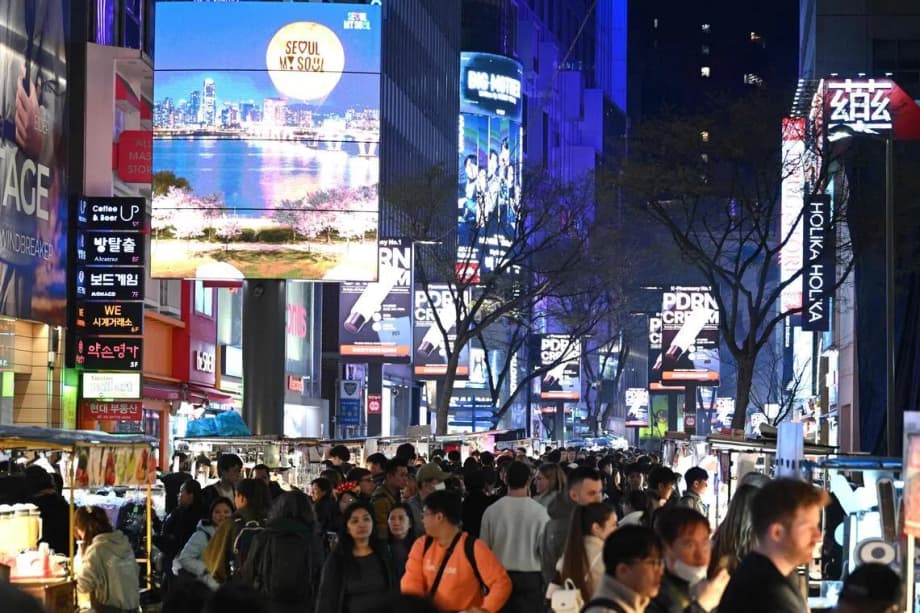
South Korea welcomed 4.76 million foreign tourists during the first quarter of 2026, marking a 23 per cent increase from the previous year and establishing a new benchmark for the period. The Ministry of Culture, Sports and Tourism announced the figures on April 16, highlighting that the growth occurred despite escalating tensions in the Middle East that emerged during March.
The month of March alone generated particular excitement, drawing 2.06 million inbound visitors. This represents a 27 per cent jump from the 1.61 million recorded in March 2025, setting a new monthly record that officials directly attribute to the return of BTS, the K-pop supergroup whose comeback concert on March 21 transformed Seoul’s Gwanghwamun Square into a global gathering point.
The achievement signals South Korea’s expanding influence as a cultural tourism destination, with government officials viewing the numbers as validation of long-term strategies to promote Korean culture globally. Visitor satisfaction scores remained robust at 90.8 points, while foreign credit card spending climbed 23 per cent to reach 3.21 trillion won ($2.18 billion), underscoring the economic weight of the tourism revival.
The strong opening quarter positions the nation to meet ambitious targets set earlier this year, when President Lee Jae Myung’s administration revised the 2026 goal upward to 23 million visitors. This represents a 21.4 per cent increase from the 18.94 million arrivals recorded in 2025, reflecting confidence that cultural exports can sustain momentum even amid global uncertainty.
The Billion-Dollar BTS Effect
The catalyst for this unprecedented surge extends beyond traditional tourism drivers. BTS, which paused group activities in 2022 to complete South Korea’s mandatory military service, returned with their fifth studio album “ARIRANG” in March 2026. The release debuted at number one on the Billboard 200 chart for two consecutive weeks, a first for any K-pop act.
The group’s free comeback concert at Gwanghwamun on March 21 drew nearly 300,000 spectators, with Netflix streaming the event live to 190 countries. The technical infrastructure supporting this spectacle showcased South Korea’s advanced capabilities, with SK Telecom deploying AI-driven network systems and Netflix utilizing triple redundancy encoding to ensure seamless global delivery.
Financial data reveals the direct economic impact of this cultural moment. Hana Card tracked spending patterns of 30,000 foreign nationals who purchased tickets for BTS concerts, finding they spent approximately 55.5 billion won ($38 million) in South Korea between January 1 and April 12. Each visitor spent an average of 1.85 million won, far exceeding typical tourist expenditure levels.
Asian Markets Lead Diversification Push
Chinese visitors dominated the arrivals landscape, with 1.45 million tourists crossing the border in the first quarter, marking a 29 per cent year over year increase. This rebound signals renewed travel appetite from South Korea’s largest source market, despite previous fluctuations in bilateral tourism flows.
Japanese travelers followed with 940,000 arrivals, up 20.2 per cent from 2025, while Taiwan posted the fastest growth rate among major markets at 37.7 per cent, reaching 540,000 visitors. These numbers reflect deep cultural connections within East Asia, where Korean pop music, television dramas, and cuisine have established devoted followings.
Long haul markets contributed to the diversification of South Korea’s tourism base, with visitors from the United States and Europe totaling 690,000, a 17.1 per cent increase. American and European travelers typically stay longer and spend more per day than regional visitors, making their growth strategically valuable for revenue targets.
Regional Destinations Capture Larger Share
Tourism patterns showed encouraging decentralization away from Seoul-centric travel. Arrivals through regional airports excluding Incheon and Gimpo surged 49.7 per cent, while the proportion of visitors exploring areas outside the capital rose to 34.5 per cent, up from 31.3 per cent in 2025.
The cruise sector demonstrated particular vitality, with 338 ship calls recorded at major ports including Jeju, Busan, and Incheon. This represents a 52.9 per cent increase from the previous year, attributed to government investments in port infrastructure and destination content development.
Policy Reforms Streamline Entry
The government has implemented substantial visa and immigration reforms to sustain this momentum. In March, authorities expanded multiple-entry visa eligibility, including five year and ten year permits, to nationals from 12 countries including China, Vietnam, and the Philippines.
Automated immigration clearance expanded from 18 to 42 countries, reducing wait times at entry points. Starting April 1, expedited screening for international conference participants was broadened to include up to two accompanying persons per delegate.
Kang Jung-won, head of the Tourism Policy Office, outlined the strategic vision while acknowledging risks.
We will continue to implement strategies outlined in the national tourism initiative to strengthen competitiveness.
He noted potential challenges including rising airfare driven by fuel cost increases and uncertainty in global travel sentiment.
Technology Powers the Cultural Showcase
The BTS comeback highlighted South Korea’s technical infrastructure as much as its cultural exports. The March 21 Gwanghwamun concert utilized advanced crowd management systems, with mobile ticketing linked to device identifiers preventing scalping, and 31 metal detection gates processing attendees. Police deployed drone countering vehicles and explosive detection units throughout the historic district.
Telecommunications carriers mounted full scale network defenses for the event. SK Telecom deployed its proprietary AI system “A.One” to manage crowd density across three venue zones, while KT applied “W-SDN” traffic management solutions. LG Uplus utilized autonomous network technology to predict traffic surges, installing temporary relay equipment at more than ten locations.
Navigation platforms adapted to the influx, with Naver Map reconfiguring the concert zone into indoor style navigation and Kakao Map providing ultra precise bus location data across 420 Seoul routes to help commuters navigate detours.
Global Tour Extends Economic Impact
The momentum generated by March’s events continues through BTS’s “ARIRANG” world tour, which launched April 9 at Goyang Stadium near Seoul. The tour includes 82 performances across 34 cities in 23 countries, setting a record for the most dates by a K-pop artist.
Opening concerts in Goyang sold out immediately, with fans arriving from Australia, Pakistan, Mexico, Russia, and Brazil despite heavy rain. The circular stage design accommodates over 40,000 spectators per show, with analysts predicting total tour revenues could reach 2.7 trillion won ($1.81 billion) excluding ancillary fan spending.
Fan dedication illustrates the cultural phenomenon’s economic weight. Casey Murrihy, a 44-year-old fan from Australia, traveled specifically for the Goyang opening.
I am absolutely elated that they are finally coming back. It’s been a long wait.
Kim Eunhee, a South Korean attendee, credited the concert with providing motivation during her cancer treatment.
Even during my hardest times last year while fighting it, this was the one thing I kept waiting for.
The Bottom Line
- South Korea recorded 4.76 million foreign tourist arrivals in Q1 2026, up 23 per cent year over year
- March set a monthly record with 2.06 million visitors, coinciding with BTS’s comeback concert
- Foreign credit card spending reached 3.21 trillion won, while BTS concert attendees spent 55.5 billion won separately
- Chinese tourists led source markets with 1.45 million arrivals, followed by Japan with 940,000
- Regional airport arrivals surged 49.7 per cent as visitors explored beyond Seoul
- Cruise tourism grew 52.9 per cent with 338 ship calls at major ports
- Government expanded visa access and automated immigration to 42 countries
- BTS launched an 82-date world tour expected to generate 2.7 trillion won in ticket sales