The Social Media Post That Shattered Six Decades of Quiet Ties
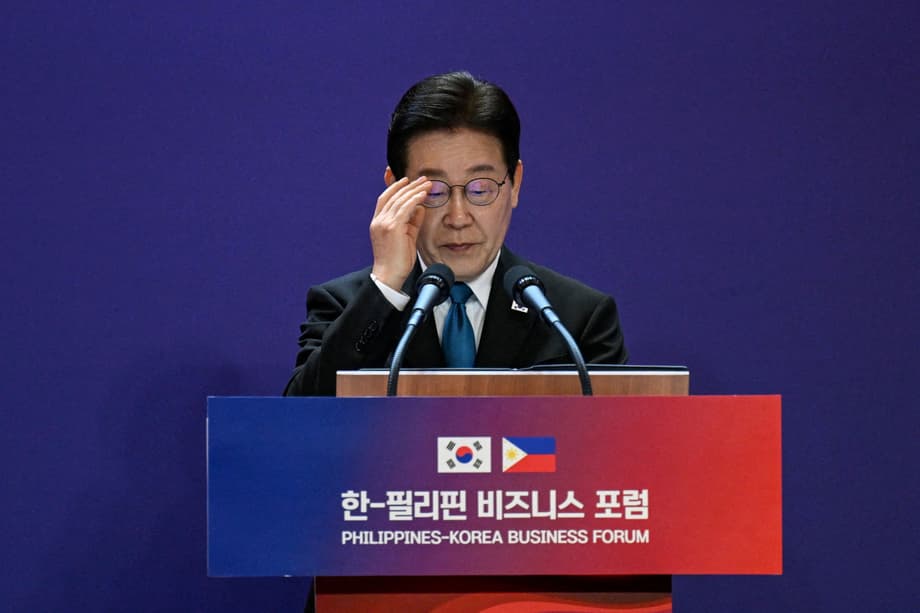
South Korean President Lee Jae Myung triggered an unprecedented diplomatic confrontation with Israel on Friday when he shared graphic video footage on social media depicting Israeli soldiers handling Palestinian bodies in the occupied West Bank. The footage, originally recorded in September 2024 during a military operation in Qabatiya near Jenin, shows soldiers pushing apparently lifeless bodies off a building rooftop. Lee’s accompanying commentary drew immediate international attention not merely for sharing the disturbing imagery, but for explicitly comparing the incident to the Holocaust and the forced sexual slavery of Korean women under Japanese colonial rule.
- The Social Media Post That Shattered Six Decades of Quiet Ties
- The Video and the Historical Equivalence
- Israel’s Fury and Accusations of Disinformation
- Lee’s Defense and Refusal to Retreat
- Seoul’s Attempt at Damage Control
- The Hidden Crisis: Energy Security and the Strait of Hormuz
- Historical Context: From Embassy Videos to Corporate Complicity
- Domestic Political Divides
- The Broader Implications for East Asian Diplomacy
- At a Glance
The post arrived at a particularly sensitive moment, just one day before Israel began observing Holocaust Remembrance Day. Within hours, the Israeli Foreign Ministry issued a blistering public condemnation, accusing the South Korean leader of trivializing Jewish suffering and spreading misinformation. The dispute marks a rare public rupture between two nations that have maintained diplomatic relations for over 60 years, and it exposes underlying tensions regarding human rights accountability, energy security, and the growing polarization of global opinion regarding the Israeli-Palestinian conflict.
The Video and the Historical Equivalence
The footage at the center of the controversy first emerged in September 2024, when residents of Qabatiya filmed Israeli soldiers operating in the occupied West Bank town. The video captures soldiers pushing bodies from a rooftop, with one soldier appearing to use his foot to force a body over the edge. The Israel Defense Forces (IDF) confirmed at the time that the incident occurred during a counterterrorism operation in which four militants were killed, stating that the footage depicted a serious incident that did not align with IDF values.
International humanitarian law requires military forces to treat enemy dead with dignity and return bodies to families. A Palestinian politician described the treatment shown in the video as barbaric, while the White House called the footage deeply disturbing and demanded an explanation from Israeli authorities. The IDF launched an investigation, though details regarding disciplinary actions or outcomes were never publicly disclosed.
When Lee shared the video on Friday, he initially presented it alongside a caption claiming the footage showed current events. He wrote that he needed to verify whether the depiction of soldiers torturing and pushing a Palestinian off a roof was accurate, and if so, what measures had been taken. His most contentious statement equated such wartime killings with the Holocaust and the comfort women system, in which thousands of Korean women were forced into sexual slavery by Japanese forces between 1910 and 1945.
Israel’s Fury and Accusations of Disinformation
The Israeli Foreign Ministry responded with unusual speed and severity on Saturday, publishing a statement on the social media platform X that condemned Lee’s remarks as unacceptable. The ministry specifically objected to what it characterized as the trivialization of the massacre of Jews, particularly coming on the eve of Holocaust Remembrance Day, when Israel commemorates the six million Jews murdered by Nazi Germany.
The ministry issued a formal condemnation on the social media platform X.
The remarks by the President of Korea, Lee Jae Myung, including the trivialization of the massacre of Jews on the eve of Holocaust Remembrance Day in Israel, are unacceptable and warrant strong condemnation.
Israeli officials accused Lee of sourcing material from a fake account notorious for spreading anti-Israeli disinformation. The account in question, identified in subsequent reports as belonging to a user describing themselves as an unapologetic Muslim Palestinian, had presented the 2024 footage as a live current event. The ministry noted that the incident had been thoroughly investigated and addressed two years prior, though it provided no specifics regarding findings or disciplinary measures against the soldiers involved.
The Foreign Ministry’s statement carried a pointed tone rarely seen in diplomatic communications between friendly nations. Officials questioned why Lee had chosen to dig up a story from 2024 and why he had not spoken about recent Iranian and Hezbollah attacks against Israeli citizens.
Mr. President, it is always better to check before posting.
Officials added a pointed advisory directly addressing the president.
Lee’s Defense and Refusal to Retreat
Rather than deleting the post or offering a full retraction, Lee issued a clarification that same Friday evening. He acknowledged that the video depicted an incident from September 2024 that had been condemned by the United States and investigated by Israeli authorities. However, he maintained that the treatment of human remains shown in the footage constituted a violation of international law, regardless of when it occurred.
Lee’s follow-up statement on Saturday struck an even more defiant tone. In a pointed response on social media, Lee challenged Israel to reflect on international criticism.
It is disappointing that you do not even once reflect on the criticisms from people around the world who are suffering and struggling due to relentless anti-human rights and anti-international law actions. When I am in pain, others feel that pain just as deeply.
By Sunday, Lee had escalated his rhetoric further, issuing a final message that remained unanswered by Israeli officials.
The sovereignty of every nation and universal human rights must be respected, and aggressive war must be rejected. Respect must be earned through respect.
This final message remained unanswered by Israeli officials as of Monday, leaving the diplomatic standoff unresolved.
Seoul’s Attempt at Damage Control
As the confrontation threatened to spiral into a lasting rift, South Korea’s Foreign Ministry intervened on Saturday afternoon in an apparent attempt to lower the temperature. In a carefully worded statement, the ministry expressed regret that the Israeli government had misunderstood the intent of the president’s remarks. Officials reframed Lee’s comments as an expression of his convictions regarding universal human rights rather than an opinion on any specific issue or conflict.
The ministry’s statement sought to reaffirm South Korea’s traditional diplomatic positioning, stressing that Seoul remains steadfast in its opposition to all forms of violence and anti-humanitarian acts, including terrorism. The statement concluded by reiterating profound condolences to the victims of the Holocaust and affirming deep empathy for the suffering endured by the Jewish people.
This attempt at clarification highlighted the delicate position South Korea occupies as a key ally of the United States, Israel’s most significant international backer, while simultaneously attempting to maintain credibility as a voice for human rights in international forums. The ministry’s intervention failed to fully mollify Israeli officials or satisfy Lee’s domestic political opponents, leaving Seoul navigating treacherous diplomatic waters.
The Hidden Crisis: Energy Security and the Strait of Hormuz
Behind the public quarrel over human rights and historical comparisons, analysts suggest a more pressing strategic calculation may be driving Lee’s sudden willingness to confront Israel. South Korea currently faces an acute energy security crisis, with approximately 26 South Korean tankers stranded near the Strait of Hormuz, according to security analyst Nam Sung-wook, former head of the South Korean Institute for National Security Strategy.
The Strait of Hormuz serves as the conduit for roughly 70 percent of South Korea’s imported crude oil and up to 30 percent of its natural gas. Any prolonged disruption threatens to paralyze the world’s tenth largest economy almost immediately. The timing of Lee’s controversial social media activity coincided precisely with his dispatch of a special envoy to Iran on April 10, the same day he established a dedicated Middle East peace representative position.
Dr. Kobby Barda, a senior researcher at the Jewish People Policy Institute, suggests the real story begins in Tehran and the Gulf rather than Jerusalem. South Korea maintains unresolved financial disputes with Iran over billions of dollars in frozen funds, and Seoul desperately needs Iranian cooperation to ensure the free flow of oil shipments. By publicly criticizing Israel while simultaneously exploring humanitarian assistance channels to Iran, Lee may be attempting to gain favorable positioning with Tehran without explicitly aligning against Washington.
Professor Jhee Byong-kuen of Chosun University offers another interpretation, suggesting Lee was indirectly signaling to the Trump administration that South Korea will not be dragged into a war it does not want. This reading positions the diplomatic spat as a strategic message regarding South Korean sovereignty rather than merely a human rights protest.
Historical Context: From Embassy Videos to Corporate Complicity
This is not the first time social media has strained relations between Seoul and Jerusalem. In December 2023, the Israeli Embassy in Korea published a dramatized video titled Imagine if this happened to you, which recast the October 7 Hamas attack within a Korean geopolitical context. The clip, released on Boxing Day, imagined a scenario occurring on Christmas morning and aimed to raise awareness and gather support for Israel. The video generated mixed reception, with many Korean viewers arguing the embassy had taken things too far in attempting to advance the Israeli agenda.
Beyond diplomatic messaging, South Korean corporate interests have faced scrutiny regarding their involvement in West Bank activities. A March 2025 investigation by Amnesty International Korea documented extensive use of HD Hyundai heavy machinery in the demolition of Palestinian-owned structures in the occupied territory. Between September 2019 and February 2025, researchers verified 59 demolitions using Hyundai equipment, resulting in the forced displacement of approximately 250 Palestinians.
Testimonies collected by Amnesty and the Israeli human rights organization B’Tselem describe how Hyundai excavators destroyed homes in less than 20 minutes, leaving residents like plumber Yaaqoub Barqan to watch their lives reduced to rubble while family members required psychiatric treatment for the trauma. While Hyundai denies direct involvement, shipping records confirm at least 32 shipments of heavy machinery to Israeli distributors between 2021 and 2023, complicating South Korea’s claim to neutrality regarding West Bank affairs.
Domestic Political Divides
The diplomatic controversy has exacerbated existing political divisions within South Korea. The conservative People Power Party accused Lee of showing off over a conflict thousands of kilometers away while ignoring human rights violations in North Korea. They characterized the tension with Israel as a diplomatic disaster and questioned the president’s priorities.
Lee’s ruling Democratic Party defended the statements, pointing to South Korea’s recent co-sponsorship of a United Nations Human Rights Council resolution regarding North Korea as evidence that the president’s commitment to human rights principles remains consistent across contexts. They framed the criticism as a necessary stand against international law violations, regardless of the diplomatic cost.
Public opinion in South Korea appears increasingly skeptical of Israel. A June 2025 survey by the Pew Research Center found that 60 percent of South Korean adults view Israel unfavorably, suggesting Lee’s stance may reflect shifting domestic sentiment as much as strategic calculation. Last year, a group of Christian Zionists in South Korea opened the country’s first Holocaust museum, a project driven by what organizers described as growing extremism in the country during the Gaza war.
The Broader Implications for East Asian Diplomacy
The confrontation represents a significant departure from the typically quiet diplomacy maintained by East Asian nations regarding the Israeli-Palestinian conflict. While European countries have been outspoken in their criticism of Israeli military actions, leaders in Asia have traditionally avoided public condemnation to maintain trade relationships and avoid entanglement in Middle Eastern disputes.
Lee’s willingness to break this silence suggests either a genuine evolution in South Korean human rights advocacy or a calculated realignment of foreign policy priorities. If the Hormuz tanker crisis resolves through negotiations with Iran, Lee may prove to have successfully used moral rhetoric for strategic gain. If the crisis deepens, however, Seoul may find itself isolated between an offended Israel, a demanding Washington, and an unpredictable Tehran.
The incident also raises questions about the role of social media in modern diplomacy. A single post comparing historical atrocities can now trigger immediate international crises, bypassing traditional diplomatic channels and forcing foreign ministries into reactive damage control. As the line between personal expression and state policy blurs in the digital age, the South Korea-Israel spat may serve as a cautionary tale for leaders worldwide.
At a Glance
- South Korean President Lee Jae Myung shared 2024 footage showing Israeli soldiers pushing bodies off a West Bank building, comparing the incident to the Holocaust and comfort women.
- Israel’s Foreign Ministry condemned the remarks as unacceptable trivialization of Jewish suffering, accusing Lee of spreading disinformation from a fake account.
- Lee refused to apologize, doubling down on criticism of Israel’s human rights record while acknowledging the video’s 2024 date.
- South Korea’s Foreign Ministry attempted to de-escalate by framing Lee’s comments as universal human rights advocacy rather than specific criticism of Israel.
- The dispute coincides with a strategic crisis for South Korea, with 26 tankers stranded near the Strait of Hormuz threatening the nation’s energy security.
- Analysts suggest Lee’s rhetoric may aim to improve relations with Iran or signal to Washington that Seoul will not be dragged into Middle East conflicts.
- The confrontation marks a rare public breach between two nations with 60 years of diplomatic relations, complicated by South Korean corporate machinery use in West Bank demolitions.