An Unusual Assignment Goes Viral
When students enrolled in Engineering Mathematics at Chungbuk National University opened their course syllabus this semester, they encountered an assignment that seemed wildly out of place among differential equations and linear algebra. Professor Kang Dong-woo instructed them to leave their textbooks behind, venture into the warming April air, and photograph cherry blossoms. The assignment notice, which spread rapidly across social media platforms including Instagram and Threads, collected more than 20,000 likes within days as netizens shared and commented on the unorthodox approach to higher education.
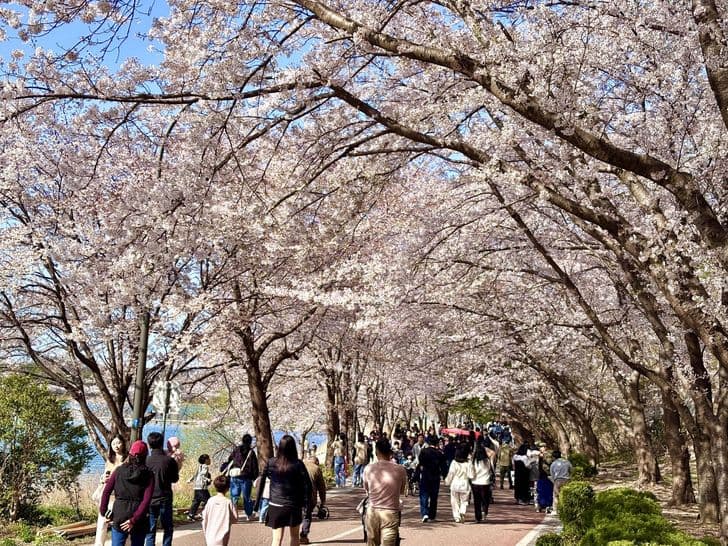
The instructions were disarmingly simple yet specific. Students were to visit well-known cherry blossom viewing spots in Cheongju or their residential areas during the April blooming season, capture photographs, and submit them for course credit. The assignment explicitly forbade students from simply stepping outside their homes or onto campus to snap quick pictures of convenient trees. Instead, it demanded they seek out destinations renowned for their floral displays, ensuring the experience would constitute a genuine excursion rather than a mere checkbox exercise.
The viral post originated from the Department of Engineering Chemistry, where Kang has taught for years. As screenshots circulated through online communities, commenters praised the professor for introducing romance and humanity into a field typically associated with rigid technical precision. The notice explained the assignment aimed to nourish the souls of engineering students who had become emotionally worn down, suggesting they should enjoy the warmth of spring for at least one day instead of remaining buried in study materials.
The Professor Behind the Lens
Kang Dong-woo stepped forward to claim authorship of the viral assignment on April 3, posting on Instagram to confirm he was the professor behind the unusual coursework. His explanation revealed deep concern for the mental and emotional state of modern university students. He wrote that his heart ached when observing young people who appeared so weighed down by worries about employment, certification requirements, and uncertain futures that they no longer resembled the lively, upbeat students they once were.
Kang wrote on Instagram to explain his motivation in candid terms:
My heart ached seeing young students worn down by job anxiety, the pressure to build their résumés and the broader uncertainty surrounding their future. They looked so different from the lively and upbeat students they used to be, and that is why I came up with the assignment.
In a subsequent interview with Yonhap News Agency, Kang elaborated on the pedagogical philosophy driving the assignment. He noted that from their very first year at university, engineering students often lock themselves in libraries to build their résumés, neglecting to enjoy their youth. He viewed the early twenties as the prime of life, a period that should not be sacrificed entirely to academic and professional preparation. The cherry blossom assignment served as a forced intervention, compelling students to step outside and engage with the natural world during one of the most beautiful seasons in South Korea.
In his interview with Yonhap, he further explained:
From the very first year at university, students are so busy building their resumes in the library that they neglect to enjoy themselves. Frankly, the early twenties are the prime of one’s youth, so I assigned this task to force them to go outside and enjoy it.
Beyond the Classroom Walls
The assignment arrives at a critical moment for South Korean higher education, where students in science, technology, engineering, and mathematics fields face intense pressure to secure employment in a competitive job market. Engineering students particularly endure grueling schedules that combine heavy course loads with demands for certifications, internships, and research experience that will distinguish their résumés. This relentless focus on professional development often begins immediately upon university enrollment, leaving little room for the traditional college experiences of socialization, self-discovery, or simple leisure.
Kang’s approach addresses what he describes as the parched and withered sensibilities of engineering students, a poetic characterization that acknowledges how technical education can sometimes neglect the human spirit. By requiring documentation of cherry blossom viewing, he forces a pause in the frantic rhythm of academic life. The assignment operates on the understanding that mental health and emotional resilience are as crucial to long-term success as mathematical proficiency or laboratory skills.
The professor’s methodology reflects growing recognition within educational circles that holistic development requires balance. Students who spend their entire university careers fixated on grades and credentials may enter the workforce with impressive technical capabilities but diminished capacity for creativity, emotional intelligence, or stress management. The cherry blossom assignment represents a small but significant rebellion against the utilitarian approach to education that treats university primarily as job preparation rather than a period of personal growth.
Cultural Roots of Spring Viewing
The assignment draws upon deep cultural traditions surrounding cherry blossom viewing, known as hanami in Japanese and beotkkot yeohaeng in Korean contexts. In South Korea, the blooming of cherry trees marks the arrival of spring with brief but spectacular displays of delicate pink and white flowers that transform urban landscapes and mountain slopes. The phenomenon carries symbolic weight as a metaphor for the transient nature of beauty and life itself, a concept that resonates deeply in East Asian philosophical traditions.
The city of Jinhae hosts the largest cherry blossom festival in South Korea, featuring more than 340,000 cherry trees that create canopies of flowers along streets, streams, and mountainsides. During peak bloom, which typically occurs in early April, millions of visitors travel to witness the spectacle, enduring long lines and crowded conditions to stand beneath the flowering branches. The experience offers a temporary escape from urban routines, allowing observers to witness wind stirring through petals in what witnesses often describe as magical atmospheres.
By requiring students to visit well-known viewing locations, Kang ensures they participate in this shared cultural experience rather than simply documenting the nearest flowering tree. The assignment connects young people with a seasonal tradition that predates modern academic pressures, reminding them that they are part of a continuum of humans who have paused to appreciate natural beauty for centuries. The act of photographing the blossoms becomes a form of active meditation, requiring students to compose shots, adjust perspectives, and truly observe their surroundings rather than passively consuming the scenery.
The cultural significance extends beyond simple tourism. Cherry blossom season represents a designated time for renewal and reflection in Korean society. Companies, schools, and families often organize outings specifically to view the flowers, recognizing the psychological benefits of engaging with natural cycles. Kang’s assignment formalizes this cultural practice within academic structure, legitimizing the pursuit of beauty and emotional restoration as valid educational activities.
Strict Guidelines for a Loose Goal
Despite the romantic nature of the assignment, Kang established rigid parameters that reveal his pedagogical intent. Students must submit photographs that include EXIF metadata confirming the date and location of capture, ensuring they actually traveled to designated viewing spots during the blooming season rather than recycling old photos or shooting convenient campus trees. This technical requirement prevents corner-cutting while simultaneously teaching students about digital photography documentation.
The prohibition against photographing campus cherry trees or neighborhood specimens serves a specific psychological purpose. By mandating visits to famous destinations such as the cherry blossom spots in Cheongju or other renowned locations, the professor forces students to undertake journeys that require planning, time commitment, and physical presence in spaces dedicated to spring beauty. The journey itself becomes part of the educational experience, as students must navigate public transportation, crowds, and unfamiliar areas to complete the assignment.
Submissions may feature either solo compositions or group photographs, allowing flexibility for different personality types and social preferences. Students submit their images via email, creating a digital archive of spring moments that Kang has collected over six years of teaching the course. The requirement to step away from familiar surroundings ensures that students cannot complete the task without genuinely interrupting their regular study routines.
These constraints address a common pitfall of creative assignments in technical fields, where students might otherwise minimize the effort invested in seemingly peripheral activities. By treating the cherry blossom viewing with the same rigor as laboratory reports or mathematical problem sets, Kang signals that emotional and aesthetic experiences warrant serious attention and proper documentation. The strictures paradoxically create space for freedom, as students who must travel to specific locations often find themselves spending hours wandering beneath the flowering trees rather than simply snapping a quick photo and returning to their desks.
Six Years of Consistency
What began as an experimental intervention in 2021 has evolved into a cherished tradition within Kang’s Engineering Mathematics courses. For six consecutive years, spanning the social restrictions of the pandemic and into the current era, the professor has issued the same springtime directive. This consistency demonstrates a sustained commitment to student wellbeing that transcends temporary educational trends or easy viral moments.
The professor tracks completion rates with the same attention he devotes to examination scores. Over the six-year period, he reports that every single student has completed the assignment, a 100 percent participation rate that suggests the task resonates with participants even if they initially view it with skepticism. Some students, burdened by the immediate pressures of midterm examinations or certification deadlines, might logically resist taking time away from their studies to photograph flowers. Yet none have ultimately declined the opportunity to engage with the assignment.
Kang has indicated that he views the public attention generated by the viral posts as motivation to continue refining his approach to education. He expressed gratitude for the supportive comments while acknowledging that the recognition places additional responsibility on him to serve as both a competent technical instructor and a mentor who genuinely cares for his students’ emotional welfare. The assignment has become a defining characteristic of his teaching identity, marking him as an educator willing to challenge the conventions of engineering pedagogy to preserve the humanity of his students.
He hopes the concept extends beyond his classroom, suggesting that everyone should take moments to enjoy spring during commutes or walks, filling their days with happy memories regardless of their academic or professional status. This universal message has contributed to the widespread appeal of his story, as working adults recognize their own lost opportunities to pause and appreciate seasonal beauty amid career pressures.
Key Points
- Professor Kang Dong-woo at Chungbuk National University assigns cherry blossom photography in his Engineering Mathematics course to combat student stress and anxiety
- The six-year tradition, started in 2021, requires students to visit famous viewing spots with GPS metadata rather than taking convenient campus photos
- The assignment went viral on Instagram and Threads, collecting over 20,000 likes and widespread praise from netizens who called him a true mentor
- Every student has completed the assignment since its inception, maintaining a 100 percent participation rate over six consecutive years
- The professor designed the task to force engineering students away from library studying and resume building to experience the prime of their youth
- Kang hopes the concept encourages broader appreciation of seasonal beauty and emotional wellbeing beyond academic settings