From Quantity to Quality: A New Export Era
China’s export machine is undergoing a profound transformation. In 2025, the nation’s total exports reached 26.99 trillion yuan ($3.90 trillion), marking a 6.1 percent year-on-year increase that signals something deeper than raw numbers. This growth represents a decisive shift from volume-driven manufacturing to quality-led innovation, as Chinese companies increasingly compete on technology, sustainability, and cultural resonance rather than price alone.
The outline of the 15th Five-Year Plan (2026-2030) explicitly calls for enhancing both quality and performance in foreign trade, accelerating China’s transformation into a strong trading nation. Recent data from Goldman Sachs reinforces this structural change, showing that Chinese companies now derive approximately 16 percent of their revenue from overseas operations, up from 14 percent in 2018. While this remains below the 50 percent average for developed-market firms, the trajectory points toward a fundamental rebalancing of the global economic order.
What distinguishes this new wave of Chinese products is a tripartite foundation: robust green infrastructure, cutting-edge technological innovation, and rich cultural storytelling. From air conditioners that operate in 68-degree Celsius desert heat to robots performing acrobatic feats, and from ceramic Christmas trees that blend Eastern craftsmanship with Western holiday traditions to breakthrough pharmaceuticals commanding premium prices, Chinese manufacturers are demonstrating that “Made in China” has evolved into “Created in China.”
Cooling the Desert: Green Technology Goes Global
In the scorching climates of the Middle East, where temperatures regularly exceed 50 degrees Celsius and sandstorms pose constant threats to machinery, traditional air conditioning systems often fail within months. Zhuhai Gree Electric Appliances has engineered a solution that not only survives these conditions but transforms them into energy assets.
The company’s “desert air conditioners” operate reliably at 68 degrees Celsius, a feat that required seven years of research and development to solve fundamental compressor technology challenges. Building on this foundation, Gree developed the Zero Carbon Source Photovoltaic Storage Air Conditioning Smart Energy System, commonly called the PV-Storage-Air System. This integrated solution generates electricity through rooftop solar panels while cooling buildings, stores excess power for nighttime use, and can feed energy back into the grid.
Nearly 10,000 sets of this system now operate across the Middle East, cutting carbon emissions by approximately 110,000 tons annually. Dong Mingzhu, chairwoman of Gree Electric Appliances, explains the philosophy driving this innovation: “Pain points create demand, and demand breeds business opportunities.” She emphasizes that true innovation solves real problems rather than chasing short-term trends. “There are no shortcuts in technological innovation,” she notes. “Only ‘slow R&D’ can build solid capabilities.”
The economic impact for clients is substantial. A garment factory in Saudi Arabia previously spent 80,000 yuan monthly on electricity for traditional cooling. After installing Gree’s system, monthly costs dropped to 20,000 yuan while annual carbon emissions fell by 2,000 tons. This represents more than cost savings; it embodies a new model of sustainable industrial development that aligns with global climate goals.
Gree’s own brand accounts for nearly 70 percent of its export sales, a significant departure from the original equipment manufacturing (OEM) model that historically defined China’s export sector. Dong attributes this success to uncompromising quality standards and technological leadership. “OEM manufacturing involves processing according to others’ standards, while independent brands define their own technologies and set their own standards,” she observes. “Once a new standard becomes a consensus, it can break down prejudices and replace old rules.”
Robots With Agility: The Rise of Embodied Intelligence
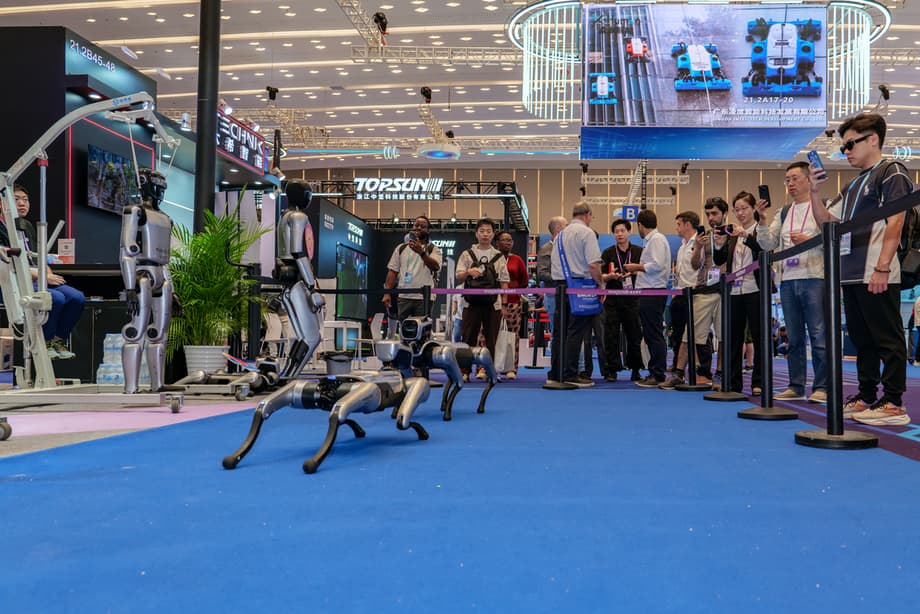
While Gree conquers extreme environments with heavy industry expertise, Magiclab Robotics Technology represents China’s emergence in the frontier of embodied artificial intelligence. The Wuxi-based startup has captured global attention with humanoid robots capable of performing complex maneuvers including high-speed rotations, aerial jumps, and delicate tasks like scooping noodles or controlling water flow with precision.
Magiclab’s co-founder Gu Shitao offers a clear-eyed assessment of the robotics industry’s current hype cycle. “Short-term buzz relies on luck; long-term success relies on strength,” he states. “Popularity should be built on product quality, not hype.” The company’s journey illustrates this principle. Beginning with basic joint development in 2021, Magiclab released its first humanoid robot in 2023 and has since completed five generations of product iteration.
The technical challenges behind seemingly simple movements like the “Thomas Flare” are substantial. For a robot to execute support, leg swing, aerial rotation, and re-support sequences requires seamless center-of-gravity shifts within milliseconds. This demands sophisticated motion control algorithms and high-precision joint modules. Magiclab’s team, where research and development personnel comprise 80 percent of staff, has moved from following global leaders to establishing technological moats in specific domains.
Unlike many companies that pursue domestic consolidation before international expansion, Magiclab adopted a “born global” strategy from day one. By 2025, the company had established sales and after-sales support teams across 27 countries and regions. This proximity to customers allows rapid response to genuine market needs. In overseas factories, Magiclab’s industrial quadruped robots handle nighttime inspections and equipment testing in confined spaces. For warehousing and logistics, the company has developed mobile operation robots that collaborate with human workers.
The company’s success reflects broader ecosystem support. Located in Liangxi district, Wuxi, Magiclab benefited from local government funds specifically targeting early-stage, small-scale, hard-tech investments. The district injected over 100 million yuan through an “investment instead of recruitment” approach, demonstrating how regional industrial policy can nurture patient capital for long-term innovation.
Cultural Alchemy: Traditional Crafts in Modern Markets
If Gree and Magiclab represent technological prowess, Fujian Dehua Xinliang Ceramics Co. illustrates how cultural heritage can drive commercial success. For 14 years, this company has focused exclusively on ceramic Christmas trees, developing over 4,000 designs for different overseas festivals and exporting more than 50 million pieces.
General manager Lin Liangbi discovered this niche by asking fundamental questions: “What does Dehua have? What does the market want?” Dehua porcelain firing techniques, recognized as national intangible cultural heritage since 2006, provided the foundation. But rather than competing in the crowded market for cups and plates, Lin spotted an opportunity while watching television coverage of foreign holidays. The illuminated Christmas trees inspired him to combine ceramic craftsmanship with LED technology, creating desktop decorations that carry 15 to 20 percent higher profit margins than traditional ceramic products.
“Tradition is not a shackle on development, but fertile ground for innovation,” Lin explains. The company invests over 20 percent of annual profits in research and development, recently collaborating with a Foshan glaze factory to develop a snow-effect glaze that maintains ceramic texture while creating visual depth. This innovation has been patented and is already undergoing overseas testing.
The success of these ceramic trees lies in emotional resonance rather than mere functionality. By incorporating elements like turkeys and pumpkins for Thanksgiving designs, the products become vehicles for ritual and cultural participation. “Products are carriers of culture,” Lin notes. “Selling ceramic trees is not just selling merchandise. It is selling a sense of ritual.”
This cultural approach requires rigorous quality control. After losing over $20,000 to frost damage on early shipments to ultra-cold climates, Xinliang collaborated with suppliers to reformulate porcelain clay and glaze compositions. Their products now withstand temperatures from minus 35 degrees to 60 degrees Celsius, demonstrating that traditional craftsmanship enhanced by modern technology can meet exacting global standards.
Broadening the Horizon: From EVs to Pharmaceuticals
The transformation extends across multiple sectors. In electric vehicles, Chinese brands have moved beyond the “attack from below” price strategy toward quality competition. BYD, CATL, and other manufacturers now partner with global automakers including Ford and Mercedes, supplying battery technologies that command premium positioning. This represents a significant evolution from the early 2000s, when Chinese consumer electronics brands fought to overcome negative stereotypes associated with low-cost manufacturing.
The pharmaceutical sector reveals similar patterns. In the first quarter of 2026 alone, Chinese innovative drugs generated outbound business development deals exceeding $3.3 billion in upfront payments, with total deal values approaching $57 billion. Average upfront payments reached $184 million, marking a 187 percent increase compared with 2022 levels. These figures indicate that multinational pharmaceutical companies now view Chinese innovations as “high-value, high-certainty” choices rather than low-cost alternatives.
Cultural products are achieving unprecedented global penetration. “Black Myth: Wukong,” a video game rooted in Chinese mythology, sold 25 million copies globally, with 7.5 million sales outside China. The collectible toy Labubu, created by Pop Mart, has developed a global fandom including celebrities like Rihanna and Blackpink’s Lisa, demonstrating that Chinese cultural products can compete on emotional appeal rather than price.
Fashion brands such as Juzui, Pronounce, and Sandriver have appeared at New York, Milan, and Paris Fashion Weeks, integrating intangible cultural heritage like Inner Mongolian hand-felt and Tibetan pulu weaving with contemporary design. As one creative director observed, “Chinese designers’ works naturally carry Chinese elements. Expressing the viewpoints of Chinese creators is a manifestation of self-confidence.”
Protecting Ideas: The IP Evolution
This shift toward innovation and cultural creation necessitates robust intellectual property protection, an area where China has undergone significant transformation. After decades of counterfeiting accusations, Chinese companies now operate as IP proprietors defending their creations globally. Pop Mart’s aggressive legal action against counterfeit “Lafufu” dolls, which infiltrated major retail chains including 7-Eleven in the United States, demonstrates this new posture.
The Chinese government has responded with coordinated crackdowns, seizing nearly 2 million counterfeit toys in recent factory raids and customs inspections. This enforcement aligns with Beijing’s strategic view of IP as essential to technological self-reliance and innovation ecosystems. In 2023, China submitted 47.2 percent of global patent applications, surpassing both the United States and Japan.
However, challenges persist. Chinese coffee brands expanding overseas, including Luckin Coffee and Cotti Coffee, face warnings that success requires moving beyond low-price strategies toward building brand experience and quality recognition. As analysts note, “In mature Western markets, buyers also value brand image, quality and experience over prices alone.”
Home appliance manufacturer Midea illustrates the service ecosystem approach, unveiling a professional service platform at the 2026 Milan climate technology exhibition. The system encompasses installation incentives, technical training centers, and intelligent follow-up support across 21 countries, demonstrating how Chinese companies are building relationship infrastructure alongside physical products.
Key Points
- China’s exports reached 26.99 trillion yuan in 2025, driven by quality improvements rather than volume expansion alone.
- Gree Electric’s PV-Storage-Air System demonstrates how Chinese companies solve extreme environment challenges while advancing green technology.
- Magiclab Robotics exemplifies the “born global” approach, expanding to 27 countries while maintaining 80 percent R&D staffing ratios.
- Dehua ceramics show how traditional craftsmanship combined with cultural research creates high-margin export products.
- Chinese pharmaceutical innovations saw upfront payment deals increase 187 percent since 2022, indicating global trust in quality.
- Intellectual property protection has evolved from foreign criticism to domestic enforcement, with Chinese companies now defending their own creations.
- Goldman Sachs identifies this as a structural shift toward higher-value manufacturing and services, with overseas revenue share growing steadily.