An Unprecedented Supply Crunch
The global artificial intelligence boom has triggered a severe shortage of memory chips that is reshaping the semiconductor industry and forcing South Korea’s largest technology companies to make difficult strategic bets. Samsung Electronics and SK hynix, which together control roughly two-thirds of the global memory chip market, are dramatically increasing investments in their Chinese manufacturing facilities despite escalating geopolitical tensions and tightening United States export controls. The move represents a calculated response to a supply crisis that has sent memory prices soaring and left manufacturers struggling to meet demand from AI data centers while simultaneously starving the smartphone and personal computer markets of essential components.
Industry analysts describe the current situation as the most severe memory shortage in 15 years. Goldman Sachs recently raised its 2026 DRAM supply shortfall estimate to 4.9 percent of total demand, up from an earlier forecast of 3.3 percent, while predicting NAND flash shortages will reach 4.2 percent. The investment bank described the market as facing its tightest conditions since the late 2000s. This supply crisis has emerged because the explosive growth of AI infrastructure has created insatiable demand for high bandwidth memory, the specialized chips that sit alongside graphics processing units in data centers running large language models. HBM chips are stacked vertically in three dimensional configurations to enable the rapid data transfer rates necessary for AI computations, making them far more complex and valuable than conventional memory products.
As manufacturers prioritize these lucrative AI components, production of conventional memory chips used in consumer electronics has collapsed. The shortage spans almost every memory category, from flash chips used in USB drives to advanced DRAM that powers servers. Prices in some segments have more than doubled since February according to market research firm TrendForce, with DRAM contract prices expected to rise 55 to 60 percent in the current quarter. This dual crisis threatens to push device prices higher, delay digital infrastructure projects worth hundreds of billions of dollars, and potentially slow AI based productivity gains just as economies are navigating inflationary pressures and trade tariff uncertainties.
Revitalizing Existing Production Bases
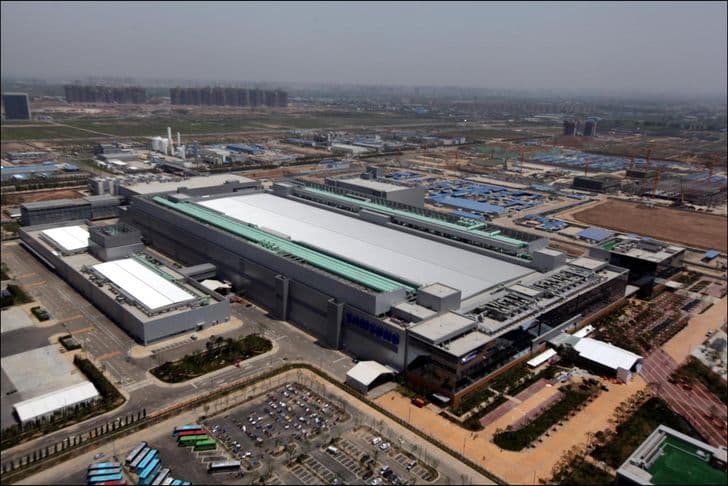
Samsung Electronics invested 465.4 billion won, equivalent to approximately $308.8 million, in its chip fabrication plant in Xi’an, Shaanxi province during 2025, representing a 67.5 percent increase from the previous year according to the company’s annual report filed with South Korea’s Financial Supervisory Service. This facility, Samsung’s only overseas memory chip factory, accounts for roughly 40 percent of the company’s global NAND flash memory output. The investment marks a significant resumption of spending after a four year hiatus between 2020 and 2023, during which the company had largely paused capital expenditures at the site following a 698.4 billion won investment in 2019.
SK hynix has pursued an even more aggressive expansion strategy at its Chinese operations. The company invested 581.1 billion won in its Wuxi, Jiangsu province plant, a 102 percent year on year increase, and poured 440.6 billion won into its Dalian facility in Liaoning province, representing a 52 percent increase from 2024 levels. The Wuxi plant produces more than 30 percent of SK hynix’s total dynamic random access memory output, while the Dalian facility serves as the company’s primary NAND production base. Like Samsung, SK hynix had made no investments in either Chinese facility during 2023 before dramatically increasing spending over the past two years to address the supply crunch.
The decision to expand existing Chinese facilities rather than build new plants elsewhere reflects the practical realities of semiconductor manufacturing. Modern fabrication facilities require three to five years to construct, equip, and bring to full production. Given the immediate nature of the AI driven shortage, optimizing existing infrastructure offers the only viable path to increase supply quickly. Both the Xi’an and Wuxi plants represent massive sunk costs with established supply chains, skilled workforces, and mature manufacturing ecosystems that would take years to replicate elsewhere.
Since building new plants typically takes three to five years, optimizing operations at existing production bases in China enables a much faster supply response,
said Lee Byung-chul, a visiting research fellow at the Sejong Institute and a former Samsung Electronics executive vice president who worked at the company’s China subsidiary for 15 years. He noted that Korean semiconductor firms are compelled to make the most of their existing production bases as United States export controls tighten, though he warned that if rivalry intensifies, companies may face no choice but to explore long term adjustments to their production exposure in China.
Strategic Tensions Between Washington and Beijing
The renewed investment flows into China come at a moment of acute sensitivity in United States-China technology relations. In August 2025, the Biden administration removed the verified end user status that previously allowed Samsung and SK hynix to ship American-made chip equipment to their Chinese plants without restrictions. Under the current regulatory framework, both companies must now seek annual approvals to import United States manufacturing equipment into China, creating uncertainty about their ability to maintain and upgrade production lines in the future.
This policy shift represents the latest evolution in Washington’s strategy to limit China’s access to advanced semiconductor technology. The United States has increasingly employed export controls as a strategic asset to impose costs on adversaries and degrade their technological capabilities, particularly regarding artificial intelligence and military applications. National Security Advisor Jake Sullivan has described advanced logic and memory chips as foundational technologies where the United States must maintain as large a lead as possible, moving away from earlier policies that sought merely to keep a couple of generations ahead.
The political pressure has intensified further with recent statements from United States Commerce Secretary Howard Lutnick, who threatened to impose 100 percent tariffs on foreign memory chipmakers unless they commit to building manufacturing facilities in the United States. Samsung is currently investing $37 billion to construct a foundry cluster in Taylor, Texas, with production scheduled to begin this year, while SK hynix is building a $3.87 billion advanced packaging facility in West Lafayette, Indiana. However, industry analysts widely view the tariff threat as unrealistic given that memory chips are standardized commodity products sold into open markets rather than contract manufactured components, making them highly sensitive to production costs.
Manufacturing in the United States is estimated to cost 20 to 40 percent more than in East Asia due to higher labor expenses, regulatory requirements, and an underdeveloped industrial ecosystem, according to a 2024 report by the Korea International Trade Association. Memory manufacturing specifically faces challenges in the United States because unlike foundry operations where production costs can be negotiated into contract pricing, memory chips are commodities where price competitiveness determines profitability. This explains why even Micron Technology, the sole major American memory maker, maintains core production bases in Japan, Taiwan, and Singapore rather than domestically.
Despite these pressures, China remains a critical market and production base for Korean semiconductor companies. Chinese government officials are actively courting increased investment, with National Development and Reform Commission head Zheng Shanjie meeting Samsung Electronics Executive Chairman Lee Jae-yong in Beijing recently to urge the company to seize opportunities from China’s economic opening and expand investment cooperation. Lee responded by affirming that China remains an important part of Samsung’s global strategy. Both Lee and SK hynix CEO Kwak Noh-jung attended the China Development Forum in Beijing, marking their second consecutive year at the event, signaling continued commitment to the market despite geopolitical headwinds.
The strategic dilemma facing Korean manufacturers stems from the fact that China represents both a massive end market for their products and a critical production hub. Samsung and SK hynix together supply approximately 45 percent of China’s domestic demand for memory chips through their local manufacturing operations. Any disruption to these facilities would reverberate through global supply chains, affecting everything from smartphone production to automotive manufacturing and potentially causing significant economic damage to both Korean companies and Chinese technology ecosystems.
Consumer Markets Feel the Pinch
While AI companies rush to secure supplies of high bandwidth memory, the reallocation of manufacturing capacity has created acute shortages in conventional memory segments. Park Joon Deok, head of DRAM marketing at SK hynix, told analysts that personal computer and mobile customers are experiencing difficulties securing memory supplies as they face direct and indirect effects from supply constraints and strong demand for server related products. The shortages have triggered dramatic price increases, with DDR5 DRAM chip prices jumping 314 percent in the fourth quarter of 2025 compared to the previous year, according to market researcher TrendForce.
The impact is cascading through consumer electronics markets globally. Chinese smartphone manufacturers Xiaomi and Realme have warned that they may need to raise handset prices by 20 to 30 percent by mid 2026 to offset memory cost increases. Francis Wong, Realme India’s chief marketing officer, described the price increases as unprecedented since the advent of smartphones, noting that while manufacturers might save costs on cameras, processors, or batteries, storage costs are unavoidable and must be completely absorbed or passed to consumers. Research firms IDC and Counterpoint now expect global smartphone shipments to shrink by at least 2 percent this year, reversing earlier growth forecasts, while the PC market is projected to contract by 4.9 percent in 2026 after growing 8.1 percent last year.
In Tokyo’s electronics district of Akihabara, retailers have begun limiting purchases of hard disk drives and solid state drives to prevent hoarding, with some stores restricting customers to eight memory products total and reporting that one third of products are sold out. Prices for 32 gigabyte DDR5 memory kits popular with gamers have risen from around 17,000 yen to over 47,000 yen since October, while higher end 128 gigabyte kits have more than doubled to approximately 180,000 yen. The shortages have created a booming secondary market for recycled memory chips pulled from decommissioned data center servers, with one California based reseller reporting monthly sales surging from $500,000 to $800,000 or more as Hong Kong based intermediaries rush to supply Chinese clients.
Samsung itself has not been immune to the squeeze despite benefiting from high semiconductor prices. The company’s mobile business profit slumped 10 percent in the fourth quarter, with co-CEO TM Roh warning of a challenging year ahead and acknowledging that soaring chip prices would inevitably impact device production costs. The company plans to double its deployment of AI enabled Galaxy devices to 800 million units this year, but these ambitious targets face headwinds from the very component shortages its semiconductor division is working to address. Major technology companies including Microsoft, Google, Amazon, and Meta have reportedly asked memory suppliers for open ended orders, offering to purchase as much supply as available regardless of price, while Chinese tech giants Alibaba, ByteDance, and Tencent have dispatched executives to lobby Samsung and SK hynix for increased allocation.
A Fundamental Market Shift
The current crisis represents more than a temporary supply imbalance. It signals a structural transformation in how the technology industry values memory chip manufacturers. In early 2026, the combined market capitalization of Samsung Electronics and SK hynix reached $1.14 trillion, surpassing the combined $1.07 trillion valuation of Chinese internet giants Alibaba and Tencent for the first time. This milestone underscores how the AI investment frenzy has shifted from software applications to hardware infrastructure, elevating memory chips from commodity components to critical strategic assets essential for national competitiveness.
The financial markets have recognized that memory chips have become indispensable to AI development in ways that transcend traditional consumer electronics cycles. High bandwidth memory now serves as the bottleneck determining overall system performance in AI training and inference operations, making suppliers like SK hynix which provides chips to Nvidia and Samsung newly central to the global technology stack. SK hynix reported operating profits that exceeded Samsung’s for the full year 2025 for the first time, driven by high margin HBM and server DDR5 products, while Samsung’s shares climbed 125 percent last year marking their biggest annual gain in 26 years.
Industry experts suggest this supercycle could persist longer than previous semiconductor booms. While earlier upcycles tied to smartphone and PC replacement cycles typically lasted one to two years, analysts at Citigroup and KB Securities project the current shortage could extend through 2027. The duration depends on several factors including the scale of new fab completions such as SK hynix’s Yongin Cluster Phase 1 and Micron’s New York facility, and whether Big Tech companies can successfully monetize their massive AI investments to sustain capital expenditures. The transition from AI training to inference, the emergence of physical AI applications such as autonomous vehicles and robotics, and the development of agentic AI services are all expected to broaden memory demand beyond current HBM centric usage.
However, risks remain that could disrupt the current boom. Google recently announced that its TurboQuant algorithm can reduce memory requirements to as little as one sixth of current levels, potentially threatening long term demand if such efficiency gains become widely adopted. Additionally, if major AI investors such as OpenAI or SoftBank face funding constraints and slow their infrastructure buildouts, the current shortage could reverse quickly. Semiconductor equipment sales are projected to reach $156 billion by 2027 according to SEMI, but manufacturers remain cautious about overbuilding after being burned by the 2018-2019 downturn when aggressive capacity expansion left facilities idle.
For now, Korean manufacturers must navigate the immediate imperative of supplying AI customers while managing the complex geopolitical landscape that threatens their Chinese production bases. The investments in Xi’an and Wuxi represent a necessary bridge to address immediate shortages, but they also highlight the precarious balance these companies must maintain between serving global markets and avoiding entanglement in great power technological competition. As one industry executive noted, everyone is begging for supply, and failing to secure memory allocations could leave companies unable to operate at all, making the China facilities indispensable despite the risks.
The Bottom Line
- Samsung Electronics and SK hynix have increased investments in Chinese chip facilities by 67.5 percent and over 100 percent respectively to address a severe global AI memory shortage that Goldman Sachs calls the worst in 15 years
- The Xi’an and Wuxi plants account for 40 percent of Samsung’s NAND output and over 30 percent of SK hynix’s DRAM production, making them critical to global supply chains despite geopolitical risks
- United States export controls now require annual approvals for equipment shipments to China following the removal of verified end user status in August 2025, while Washington has threatened 100 percent tariffs unless Korean firms expand United States manufacturing
- Memory chip prices have surged over 300 percent in some categories, forcing smartphone and PC manufacturers to raise prices or reduce shipments, with global smartphone volumes expected to decline 2 percent in 2026
- The combined market value of Samsung and SK hynix has surpassed Alibaba and Tencent, reaching $1.14 trillion as AI infrastructure demand reshapes Asian technology markets and elevates memory chips to strategic assets
- Industry analysts project the shortage could persist through 2027, though risks remain from potential AI investment slowdowns or technological advances like Google’s TurboQuant algorithm that could reduce memory requirements