Breaking New Ground in Green Aviation
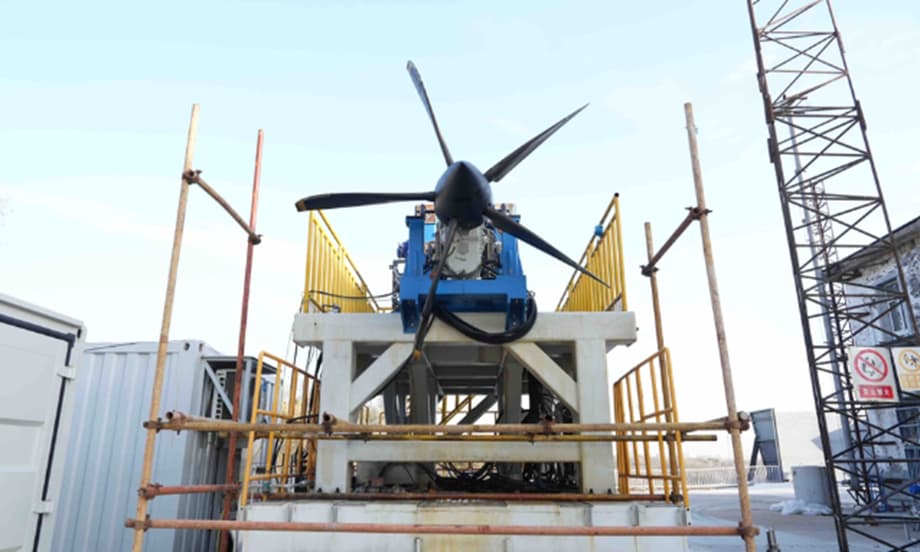
China has achieved a significant breakthrough in sustainable aviation technology with the successful completion of full ground tests for its first megawatt class liquid hydrogen engine. The AEP100 turboprop, developed independently by the Aero Engine Corporation of China (AECC), represents a major stride toward decarbonizing air travel through zero emission propulsion systems that could eventually eliminate carbon emissions from short haul flights. This milestone marks the first time a Chinese liquid hydrogen engine has met full performance standards at the megawatt level, demonstrating that hydrogen powered aviation is transitioning from theoretical concepts to engineered reality with immediate applications for regional aircraft development. The tests, conducted at the AECC Hunan Aviation Powerplant Research Institute in Zhuzhou, Central China’s Hunan province, validated the engine’s ability to operate stably using cryogenic hydrogen fuel under various power settings and operational conditions. Success in this domain positions China alongside other global aerospace powers exploring hydrogen as a viable pathway to reduce the aviation industry’s substantial carbon footprint, while simultaneously establishing domestic capabilities in advanced propulsion technology that could eventually power regional aircraft across medium range routes connecting secondary cities and remote locations without relying on imported fossil fuels.
Inside the AEP100 Test Campaign
The recent test campaign involved a comprehensive series of ignition trials and performance adjustment runs under controlled ground conditions. Engineers monitored the turboprop through multiple power settings, evaluating turbine temperatures, vibration levels, and pressure stability while the engine operated on liquid hydrogen supplied through an integrated feed and control system. All indicators for both the engine and the liquid hydrogen transport system remained within normal parameters throughout the testing sequence, including extended operation at higher power levels. The AEP100 platform, designed for regional aviation applications, achieved stable combustion and demonstrated its ability to handle transient maneuvers such as rapid throttle movements. These dynamic load changes are critical for regional aircraft operating from short runways or in mountainous terrain, where engines must respond quickly to changing power demands. The successful validation of the engine’s performance envelope establishes a technical foundation for moving liquid hydrogen turbine power from experimental stages into practical engineering applications, addressing what had previously been a significant gap in China’s aviation propulsion capabilities and creating new possibilities for future aircraft development programs.
Engineering for Cryogenic Fuel
Adapting a turboprop engine to operate on liquid hydrogen requires substantial engineering modifications beyond those found in conventional kerosene based designs. Hydrogen offers high energy content by mass but presents unique challenges due to its low volumetric density and cryogenic nature, requiring storage at temperatures around minus 253 degrees Celsius. The AEP100 hydrogen variant incorporates a specialized cryogenic storage and feed system that delivers fuel to the engine under tightly controlled pressure and temperature conditions, complete with advanced insulation, reworked fuel lines, and safety systems designed to prevent leaks and manage boil off gas that naturally occurs as the cryogenic liquid warms. Combustion hardware required specific tuning to accommodate hydrogen’s fast flame speed and wide flammability range, while maintaining stable operation and controlling nitrogen oxide emissions that can increase with high temperature hydrogen combustion. The integration of these cryogenic systems with the turboprop’s dynamic operational requirements demanded precise matching between the liquid hydrogen delivery system and rapid engine load changes to prevent flameout or unstable combustion during critical flight phases. Additionally, the airframe integration presents distinct challenges, as hydrogen requires significantly larger onboard tanks than conventional jet fuel for equivalent range, necessitating novel fuselage or wing tank layouts in future aircraft designs that might pair with this powerplant, fundamentally changing how aircraft are configured compared to current kerosene powered regional planes.
Fueling a Trillion Yuan Industrial Chain
Beyond the technical achievement, the successful test catalyzes broader economic implications for China’s energy transition strategy and industrial planning. The development of liquid hydrogen aviation technology is expected to stimulate a comprehensive industrial chain valued at potentially one trillion yuan, spanning green hydrogen production facilities, hydrogen liquefaction plants, cryogenic storage and transport infrastructure, and specialized airport refueling systems necessary for routine commercial operations. This ecosystem aligns with China’s strategic classification of hydrogen as a key industry for reducing national carbon emissions, with applications extending beyond aviation into heavy industry, long distance trucking, and power generation sectors that seek alternatives to fossil fuels. The advancement drives collaborative innovation in high end equipment manufacturing and new materials development, creating economic momentum where breakthroughs in aerospace technology lead growth in strategic emerging industries across multiple sectors. As the world’s leading producer of electrolyzers used for green hydrogen production, China’s progress in hydrogen aviation propulsion strengthens its position in the global clean energy market while potentially attracting increased scrutiny from international competitors seeking to maintain their own market positions in sustainable aviation technology. The government strategies on energy transition increasingly define hydrogen as essential for long term decarbonization, making aviation a visible proving ground for these broader industrial ambitions that connect research laboratories with commercial manufacturing capabilities.
Global Race for Hydrogen Skies
China’s achievement enters an increasingly competitive global landscape where major aerospace manufacturers are racing to develop viable hydrogen propulsion systems for future commercial aircraft. European aviation giant Airbus continues advancing its ZEROe hydrogen fuel cell aircraft concept, while various American and European firms conduct parallel testing of turbofan and turboprop engines running on gaseous or liquid hydrogen blends to determine optimal configurations for different aircraft classes. The Chinese program adds a major new player to this international effort, potentially accelerating overall technology maturation through parallel experimentation across different engineering approaches and fuel system designs. Regional and short haul aircraft segments represent the most likely early candidates for hydrogen adoption, given their shorter routes and lower power requirements compared with long range jets that require massive fuel loads for transcontinental flights. The AEP100, as a megawatt class turboprop, fits precisely into this category, positioning it as a potential competitor to Western offerings in the emerging market for zero emission regional aircraft connecting secondary cities. However, the geopolitical environment, including trade policies and international tensions regarding technology transfer, may influence how quickly these technologies diffuse across global markets and whether strategic partnerships form to enhance hydrogen propulsion development or protective barriers emerge to shield domestic industries from foreign competition in this strategic sector.
Reality Check on Commercial Viability
Despite the technical milestone achieved in ground testing, industry experts caution that liquid hydrogen aviation engines remain in the exploratory stage worldwide, with significant barriers to commercial passenger application persisting across multiple domains. Wang Yanan, editor in chief of Beijing based Aerospace Knowledge magazine, emphasizes that current limitations in equipment lifespan, energy density, storage costs, and safety standards prevent immediate deployment in commercial aviation environments where reliability and economic efficiency are paramount.
Liquid hydrogen aviation engines are currently still in the exploratory stage worldwide. Due to limitations in equipment lifespan, energy density, storage costs and safety, they are unlikely to be applied to commercial passenger aircraft in the short term.
Wang further explains that for new technologies to replace existing aviation engine systems, they must satisfy two core conditions simultaneously: achieving genuine decarbonization while ensuring that cost, performance, safety, and reliability do not fall below current levels established by conventional jet fuel systems. Initial applications are more likely to focus on research programs and specialized aviation fields rather than scheduled passenger services, where margins for error are extremely narrow. The feasibility for emerging low altitude applications, such as urban air mobility or unmanned cargo systems, requires additional demonstration before broad deployment can be considered safe and economically viable. While liquid hydrogen engines offer clear decarbonization potential, the combination of challenges in cost, performance, safety and reliability means they are not yet ready to replace conventional aviation fuels for mainstream commercial use.
From Test Bench to Regional Routes
The development roadmap for the AEP100 hydrogen variant envisions a phased introduction beginning with unmanned aerial logistics platforms and regional aviation services before eventual extension into mainline commercial routes spanning longer distances. This progressive approach allows time for critical infrastructure development, including airport cryogenic storage tanks, new fuel handling procedures, and updated safety protocols necessary for routine liquid hydrogen operations at commercial aviation facilities. The next phases of development will focus on extended endurance runs, detailed reliability assessments, and refinement of engine control software to handle wider operational scenarios before any transition to flight testing or airworthiness certification processes. For travelers and the aviation industry, this ground test represents a distant but concrete step toward potentially quieter, zero emission regional flights connecting medium sized cities within ranges of several hundred to one thousand kilometers, potentially reducing the carbon footprint of short haul air travel significantly. While sustainable aviation fuels offer more immediate emission reductions for existing fleets through drop in replacements, hydrogen technologies like the AEP100 variant represent a potential second wave of transformation that could reshape aircraft design and route planning during the 2030s and 2040s, provided the remaining technical and economic hurdles can be overcome through continued engineering development and substantial infrastructure investment across the aviation ecosystem.
Key Points
- The AEP100 turboprop completed China’s first megawatt class liquid hydrogen engine ground tests meeting full performance standards at AECC facilities in Zhuzhou
- Tests validated stable engine operation under full conditions and normal performance indicators for the liquid hydrogen transport system throughout ignition and adjustment trials
- Liquid hydrogen offers zero emissions but requires cryogenic storage at minus 253 degrees Celsius and specialized engineering to handle its fast flame speed and low volumetric density
- Technology expected to first deploy in unmanned aerial logistics and regional aviation, with potential to support a trillion yuan industrial chain encompassing green hydrogen production and refueling infrastructure
- Experts caution that commercial passenger applications remain distant due to unresolved challenges in storage costs, safety certification, equipment lifespan, and energy density compared to conventional jet fuel
- Global competition intensifies as Airbus and Western manufacturers pursue parallel hydrogen aviation programs, positioning the AEP100 within an emerging market for zero emission regional aircraft