Seven Minutes That Buried a River Valley
On 26 August 2026, a vast slab of rock and glacial ice tore free from the northern flank of Mount Langtang Lirung and plunged more than 1200 vertical metres into the valley below. Seismometers around the world registered the shock as a 5.2 magnitude tremor, though scientists soon understood it was no earthquake. The slide, more than 1100 metres wide, raced downhill at about 150 kilometres per hour with energy greater than the atomic blast at Hiroshima. It dammed the Purepu Tsangpo River in Tibet before the natural dam failed and released a torrent toward Nepal.
- Seven Minutes That Buried a River Valley
- The Human Toll One Month Later
- A Nation Powered Almost Entirely by Water
- Why Ice and Rock Turned Into a Weapon
- An Economy Knocked Off Course
- Warnings Ignored in a Crowded River Basin
- What a Safer Power Future Could Look Like
- Who Pays for a Crisis Nepal Did Not Create
- The Bottom Line
What followed was a rapid onset flood wave unlike ordinary monsoon flooding. Government scientists estimate the surge travelled about 20 km from its source to the Rasuwagadhi border in only seven to eight minutes, at speeds near 188 to 193 kilometres per hour. Witness accounts describe a black wall of water, mud, ice and boulders, in places up to 70 metres high and moving near 180 kilometres per hour, that swallowed riverside towns, a multistorey border building, some 70 bridges and long stretches of highway along the Bhotekoshi and Trishuli rivers. A slow crisis of glacial retreat had turned suddenly fast and violent.
The Human Toll One Month Later
One month after the flood, the National Disaster Risk Reduction and Management Authority, known as NDRRMA, reported at least 1453 people dead in Nepal and 5285 still missing. Rescue teams had pulled 13795 people to safety, while 1113 survivors were housed in 21 holding centres in Rasuwa, Nuwakot and Dhading. About 11000 people received medical treatment. Across the border in Tibet, Chinese media reported 43 dead and more than 500 missing from the same event, a reminder that the disaster ignored national boundaries.
Identification has proved painful. Only 112 of the recovered bodies in Nepal could be handed to families by visual means, as many remains were fragmented by rock and debris. Police collected 1329 DNA samples from bodies and 2060 samples from relatives, uploaded details of 1421 unidentified bodies to the Nepal Police website and asked families, preferably parents, children or siblings, to give blood for matching. With mortuaries overwhelmed, many unidentified remains were buried with care after samples were preserved for future comparison.
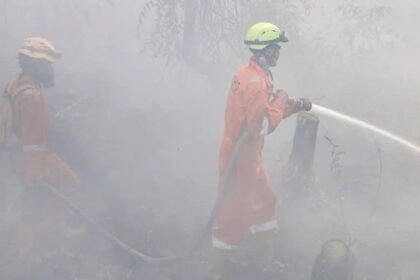
Brig Gen Subas Jung Thapa of the Nepali Army, which leads rescue efforts, said in early September that dozens remained trapped at sites such as Chilime and Upper Trishuli 1. Teams later recovered bodies from those tunnels while continuing to dig for others. Only three men have been found alive in the plants since work began. Sumana Shrestha Amatya, whose husband Sunil worked as a geologist, joined street protests in Kathmandu to demand faster action. She spoke of the scale in simple language:
‘It was like a Himalayan tsunami.’
Arnold Dix, a tunneling expert helping with rescue efforts, said the destruction erased familiar structures:
‘It is like a bomb has gone off. It has removed the power stations from the surface, like they are just not there.’
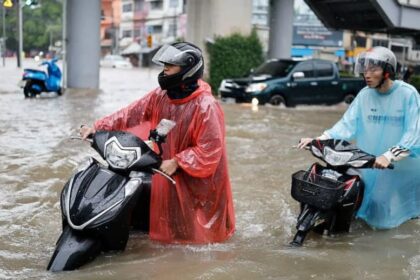
Fresh rain has added misery for survivors. Three days of continuous rainfall blocked the Prithvi Highway at Krishnabhir and Tigraang Khola, restricted traffic to one lane at five other points and left families in temporary shelters in Nuwakot struggling with leaking tents. Relief piled up at Dhunche while helicopters, drones and temporary crossings carried food to cut off villages in Rasuwa.
A Nation Powered Almost Entirely by Water
Nepal draws almost all its electricity from water. Hydropower provides about 97 percent of grid capacity, with 225 plants and more than 3900 MW of installed capacity, enough to power some three million households at once. The achievement followed a dramatic turnaround. In 2010 only about two thirds of Nepalis had access to power and connected homes endured cuts up to 16 hours a day. Action against theft and leakage, steady build out and imports from India in dry months helped deliver near round the clock supply by 2018. Surplus in wet months now earns nearly 200 million dollars a year from exports to India and Bangladesh, a source of pride and revenue.
The flood struck at the heart of that system. Between 12 and 13 projects in the Trishuli basin were buried, damaged or destroyed, forcing more than 430 MW off the grid, equal to about 10 percent of national capacity from a total near 4296 MW. Some inventories that include five projects under construction place affected capacity near 759 MW, with damage valued in the hundreds of billions of rupees, equal to several billion dollars. Operators say they do not yet know if ruined stations can return to operation. Potentially hundreds of labourers, engineers and residents were thought to be trapped inside mud filled tunnels when the water hit.
Rajan Dhakal, spokesperson for the state owned Nepal Electricity Authority which owns six of the damaged facilities, said household supply remains adequate for now but policy must change. He acknowledged the need for change:
‘The time has come for a rethink of our hydropower policy.’
His agency now speaks openly about reservoir based plants that need not sit high in fragile valleys, a sharp shift for a country that built most stations as run of river schemes to seize fast mountain currents with little or no storage.
Why Ice and Rock Turned Into a Weapon
High mountain ice is shrinking in two ways that both threaten power. Year after year, glaciers and snowfields melt toward a drier future, cutting the dry season baseflows that feed drinking water, irrigation and turbines. Studies for Nepal suggest total hydropower potential could fall by 30 percent by the end of the century after a short period of higher melt flows. At the same time, retreat can turn sudden, with collapses, landslides and glacial lake outburst floods that send walls of debris downstream.
The trigger near Langtang Lirung fits that second pattern. The avalanche fell 1200 vertical metres and ran 14 km in about seven minutes before striking border infrastructure. Permafrost, the frozen ground that acts as glue on steep slopes, is thawing as the high Himalaya warms about 50 percent faster than the global average. Meltwater can lubricate cracks while loose rock and ice wait for a final push. Preliminary findings point to a collapsed glacier and its bedrock as the source, though scientists caution it is too soon to draw firm links to warming in this single event. Nepal disaster officials have said more than nine in ten events recorded between 2018 and 2024 were climate related.
The Trishuli basin had already flashed warnings three years in a row. In September 2024 an intense cloudburst over the Trishuli and Bhote Koshi basins flooded Rasuwa, Nuwakot and Dhading. In July 2025 a glacial lake in Gyirong county in Tibet burst and swept down the same stretch, killing at least 11 people, halting trade and closing the border for nearly six months until 1 January this year. Days before the August 2026 flood, researchers warned the corridor was primed for lake bursts, recurring slides and prolonged closures. Similar shocks include the 2021 Uttarakhand flood in India that killed more than 200 people, many of them dam workers, and the 2023 lake burst that travelled nearly 400 km to kill 55 people and obliterate the 1200 MW Teesta 3 dam, built a decade earlier for 1.5 billion dollars. Ecuador endured 14 hour power cuts every day in late 2024 when drought starved its hydro system, while Kenya steadied supply by adding geothermal, wind and solar alongside hydro.
An Economy Knocked Off Course
The Asian Development Bank, known as ADB, trimmed Nepal growth to 4.1 percent for the fiscal year ending in mid July 2027, down from 4.5 percent forecast in July. Its September outlook blamed damage to transport, hydropower and productive assets plus hits to trade, tourism, agriculture and local activity in the first quarter. Reconstruction spending, including on hydropower, will support demand but press public finance. Government estimates put total rebuilding needs at 723.31 billion rupees, about a tenth of yearly output or roughly 4 to 5 billion dollars. The energy minister told parliament that water, irrigation and river control works alone may need about 400 billion rupees.
Inflation is expected to climb to 5.3 percent from 3.1 percent last year as flood damage constrains food and essential goods and lifts logistics costs, with extra pressure from construction demand, expansionary budgets, ample liquidity and higher global fuel prices linked to conflict in West Asia. The fiscal deficit is projected to widen to 4.7 percent of output from 3 percent last year and 3.4 percent forecast before the disaster. Public debt rose to an estimated 44.9 percent of output from 43.7 percent, though debt service eased to 5.9 percent from 6.3 percent and ADB still rates Nepal at low risk of debt distress. Strong remittances had produced a current account surplus near 14 percent of output and reserves above 19 months of imports, but tourism receipts may dip, electricity exports will likely stall and reconstruction imports will narrow the surplus.
Tourism losses reached an estimated 52.67 billion rupees, with 30 billion in direct damage and the rest in induced losses across Rasuwa, Nuwakot and Dhading over six months. The closure of the Prithvi Highway left about 150 tourist buses on the Pokhara to Kathmandu route idle for 18 days. Roads lost about 40 km of pavement and 41 motorable bridges between Rasuwa and Dhading. The army restored the Galchhi to Bidur link at Devighat, with Bailey bridges under way at Betrawati and Syabrubesi and survey work for a new Syabrubesi to Rasuwagadhi road. Private power producers feel a parallel squeeze. Uttam Bhlon Lama of the Independent Power Producers Association of Nepal said insurers paid about 40 million dollars for damage to more than 20 privately owned plants over three years, with premiums now rising to levels that make business unfeasible. Economist Chandra Mani Adhikari said rebuilding could lift demand for cement, steel, food, fuel and transport as after the 2015 earthquake, though that kind of rebound is rarely durable.
Warnings Ignored in a Crowded River Basin
Scrutiny has focused on why so much valuable infrastructure stood in one volatile corridor. Experts count 36 hydropower projects in the Trishuli basin, including the dozen now under mud. The largest, Upper Trishuli 1, was valued near 647 million dollars and drew about 300 million dollars in loans and equity from two arms of the World Bank plus a 60 million dollar loan from ADB. Upper Trishuli 3A drew support from the Export Import Bank of China. Lenders said the design of Upper Trishuli 1 reflected independent studies of flood and landslide risk using glacier, glacial lake and historical evidence available in 2018, with early warning strengthened after the 2024 flood and further risk work after the 2025 flood. They said causes, damage, design performance and warning performance from August 2026 are still being gathered and verified.
Parineeta Dandekar of the advocacy group South Asia Network on Dams, Rivers and People said assessments ignored cumulative danger from clustering so many projects on one river. Geoscientist C P Rajendran warned that what happened in Nepal could recur elsewhere in the Himalaya. Retired diplomat Shyam Saran, former special envoy on climate change, said single project reviews can look safe while a full river assessment tells another story. Austin Lord of the Stimson Center called the Trishuli a very high risk place for dams after floods driven by rain, a lake burst and a glacier collapse in successive years. Himanshu Thakkar, coordinator of the South Asia Network on Dams, Rivers and People, said lenders knew the exposure yet failed to demand strict checks or prepare for a calamity they knew was possible. Independent reviewers who visited in 2024 found no climate resilience assessment, a major gap the bank did not immediately address in public.
Dipak Gyawali, a hydropower engineer with the Nepal Academy of Science and Technology, said blasting for tunnels could not explain the scale:
‘Compared to the tectonic forces at play that caused this event, dynamiting is minuscule. This is almost nothing. It is like scratching your skin.’
He added that developers had not taken seriously the compounded risk of building many structures in one hazard zone. Rajan Dhakal of the Nepal Electricity Authority conceded that even where climate risk studies existed, plant design may not have matched them. Arnold Dix, the tunneling expert, said the stations were built properly for known threats and underground works remain largely intact, but the collapsing glacier presents a new threat that will change future design.
What a Safer Power Future Could Look Like
Kulman Ghising, former energy minister, called the deluge a once in a century event with lessons for siting and design. He urged stronger structures, better warnings and clear evacuation plans:
‘We need to design the plants to be more resilient to the floods and, most importantly, adopt early warning systems as well as robust emergency evacuation measures.’
Officials say one option is a shift toward reservoir based plants that store water and release it on demand from less exposed locations. Such schemes could steady dry season supply and reduce exposure to sudden surges, but they carry large economic and environmental costs, from land use to river ecology and resettlement.
Kushal Gurung, a renewable energy expert who founded WindPower Nepal, said reliance on one source is no longer wise. He called for a new direction:
‘We should not be putting all our eggs in one basket in these dangerous times.’
Vivek Shastry, a researcher at Columbia University Center on Global Energy Policy, said added wind and solar can act as a resilience strategy that limits single point and system wide failures. A German aid study put Nepal solar technical potential at about ten times that of hydro. Puspa Sharma, senior research fellow at the National University of Singapore Institute of South Asian Studies, agreed diversification is needed but only to a limited extent, since hydro gives Nepal a massive edge over neighbours. Research on Ecuador drought in Nature Water reached a similar verdict that a strong build out of solar and wind could fortify grids against future dry shocks.
Pumped storage hydro, known as PSH, may suit a mixed grid. Water is pumped uphill when energy is plentiful and released downhill when needed. One or both reservoirs can sit away from river channels, lowering flood exposure, while recirculating the same water eases pressure during scarcity. Analysts say careful siting away from lake burst paths, strategic planning for wind, solar and storage, and protection for river ecosystems can lower both power and environmental risk.
Who Pays for a Crisis Nepal Did Not Create
The moral argument runs through every debate in Kathmandu. Nepal emits about 0.54 tonnes of carbon dioxide per person, against a global average of 4.67 tonnes, with the United States near 13.83 tonnes, China near 9.24 tonnes and India near 2.19 tonnes. Nepal accounts for about 0.05 percent of yearly world emissions and 0.01 percent of cumulative emissions since industrialisation, yet it shoulders repeated glacier floods, landslides and shifting river flows driven by about 1.2 degrees of warming from burning coal, petrol, diesel and natural gas. Manjeet Dhakal, a member of the national climate delegation, said international support is not optional. He stressed shared duty:
‘We cannot, and should not, be made to respond to these risks alone.’
Nepal has asked the Fund for Responding to Loss and Damage, created at the 2022 climate conference, for 20 million dollars, the top rapid response sum, after filing on 1 September 2026. The sum is tiny beside 4 to 5 billion dollars in rebuilding needs cited by Finance Minister Swarnim Wagle, but Kathmandu calls it a test of credibility. Pledges to the fund total about 820 million dollars, with only a fraction delivered, while 119 countries seek about 2.8 billion dollars, mostly for extreme events plus slow onset harm such as sea level rise. Caps of 5 to 20 million dollars per rapid project mean no payout can rebuild a valley, and no money had been disbursed by mid 2026, with first decisions deferred to December 2026. The United States withdrew support in 2025. Eight of 26 board members sought an emergency meeting on Nepal, though cochairs gave no clear path for fast release. The founding decision says contributions are voluntary and do not admit liability, language vulnerable states accepted to unlock help.
Shisir Khanal, foreign minister, framed the request as justice rather than charity. He set out the claim:
‘Nepal greenhouse gas emissions are virtually negligible. Yet, we are paying the ultimate price for a global crisis we did not create.’
Advocates urge predictable finance under the principle of common but differentiated responsibilities, with larger historic emitters paying more, alongside continuous tracking of glaciers, permafrost, lakes and rivers across Nepal, Tibet and nearby ranges. Watch lists cite 25 transboundary danger lakes in Tibet, 21 high risk lakes inside Nepal, 52 hazardous lakes in Pakistan and 65 in Bhutan. Proposals include satellites, sensors, drones and remote sensing, automated weather and water level gauges above 5000 metres, shared data and cross border warnings, training for schools and operators, evacuation drills and staffed centres in high risk zones. Building rules would differ by terrain, with lake burst and avalanche defence in mountains, slope care and controlled road cutting in hills and flood resistant drainage and zoning in the Terai lowlands.
The Bottom Line
- 26 August 2026 rock and ice collapse near Langtang Lirung sent a flood wave at near 190 kilometres per hour into the Bhotekoshi and Trishuli rivers.
- At least 1453 dead and 5285 missing in Nepal one month on, plus 43 dead and more than 500 missing in Tibet.
- 12 to 13 hydropower projects hit, with more than 430 MW off the grid, about 10 percent of national capacity.
- Total rebuild needs put at 723.31 billion rupees, about a tenth of output, with ADB cutting growth to 4.1 percent and lifting inflation outlook to 5.3 percent.
- Trishuli basin holds 36 projects and suffered major floods in 2024, 2025 and 2026, raising questions over cumulative risk review.
- Upper Trishuli 1, valued near 647 million dollars, and Upper Trishuli 3A among worst hit foreign funded plants.
- Nepal seeks 20 million dollars from the Loss and Damage Fund against 4 to 5 billion dollars in needs, citing minimal emissions.
- Officials and experts urge resilient design, early warning, reservoirs, solar and wind, pumped storage and cross border monitoring.