Authorities trace cabbage shipments after video confirmation
Chinese authorities have opened a nationwide food safety investigation after confirming that a wholesaler in Hebei Province used formaldehyde solution to keep cabbages fresh during loading and transport. Police have taken legal measures against the people involved and the vehicles linked to the shipments, while officials work to identify where the treated vegetables were sent.
- Authorities trace cabbage shipments after video confirmation
- Why formaldehyde is banned in food
- How the suspected treatment worked
- A large crop with international connections
- Consumer anxiety spreads beyond the farms
- A recurring warning for food regulators
- What shoppers can do while checks continue
- Key Points
The case began after an environmental blogger posted video footage showing workers dipping cabbages into a liquid beside trucks in Kangbao County, part of Zhangjiakou in northern Hebei. The video showed containers marked as formaldehyde solution. It also included a claim that the treatment could keep the cabbages fresh for two or three additional days, reducing losses during transport.
Local authorities said they organized officials from agriculture, market regulation and public security agencies to inspect the site. Their preliminary investigation confirmed that the footage was genuine and that a wholesaler had used formaldehyde illegally while preparing vegetables for shipment.
Officials are now tracing the source and destination of the affected cabbage. They have also begun checking whether similar practices occurred during purchasing, transport and sales in the county. The investigation has not established the full volume involved or confirmed whether any of the treated cabbage was exported.
A statement from Kangbao County authorities promised strict action against violations.
Any illegal or non compliant practices discovered will be dealt with strictly in accordance with the law to ensure the safety of the vegetable supply.
China’s State Council Food Safety Commission Office, Ministry of Agriculture and Rural Affairs, and State Administration for Market Regulation have instructed local governments to investigate the case quickly, stop affected products from reaching consumers and conduct special sampling checks on perishable vegetables across the country.
Why formaldehyde is banned in food
Formaldehyde is a colorless chemical with a strong, irritating smell. Its water based solution is commonly called formalin. It is used in industrial processes, disinfection and the preservation of biological tissue, including laboratory specimens. It is not an approved food preservative for cabbage.
China’s Food Safety Law and its law covering the quality and safety of agricultural products require substances used during the packaging, storage and transport of food to meet national safety standards. Formaldehyde is prohibited for use as a freshness treatment or food processing aid.
The International Agency for Research on Cancer, part of the World Health Organization, classifies formaldehyde as a Group 1 carcinogen. This category means there is sufficient evidence that exposure can cause cancer in humans. Research has linked substantial exposure, especially in some workplaces, to cancers including nasopharyngeal cancer and leukemia.
The classification describes the chemical’s ability to cause cancer. It does not mean that every brief or low level contact produces the same risk. The danger depends on factors such as concentration, route of exposure, duration and whether the chemical remains on or enters the food. Authorities have not publicly released residue levels from the cabbage involved, so the precise health risk to consumers cannot yet be calculated.
High concentrations can irritate the eyes, skin and respiratory tract. Swallowing formaldehyde can cause severe injury to the mouth, throat, stomach and other organs. Repeated skin contact may also cause rashes, blisters and nail damage. These risks make the use of the chemical particularly serious for workers handling treated vegetables as well as for people who might eat them.
How the suspected treatment worked
Cabbage is a durable crop, yet long distance transport can still lead to wilting, discoloration and spoilage. Traders face financial losses when produce loses its appearance before reaching a wholesale market. The video suggested that the wholesaler used formaldehyde on the root ends or outer portions of cabbage heads to extend their marketable appearance for a short period.
That extra time may appear commercially useful, especially when large loads are moved between provinces. It does not make the chemical safe for food. The practice can conceal deterioration and give buyers a misleading impression about the condition and age of the vegetables.
Reports circulating after the video described the shipment as being bound for a farmers market in Jiangsu Province, southeast of Hebei. Officials have not confirmed the complete route or said whether the cabbage reached that destination. They are examining distribution records, vehicles and trading sites as part of the traceability work.
Beijing’s Xinfadi market, one of the capital’s main fresh produce centers, said it investigated the origins of its cabbage and found that none of the affected vegetables had entered the market. That statement addresses one major supply point, although it does not settle the wider question of where other shipments may have gone.
Consumers should not assume that all cabbage from Hebei or all Chinese cabbage has been treated. The confirmed case concerns specific traders and shipments. Nationwide inspections are intended to determine whether the practice was isolated or appeared in other parts of the supply chain.
A large crop with international connections
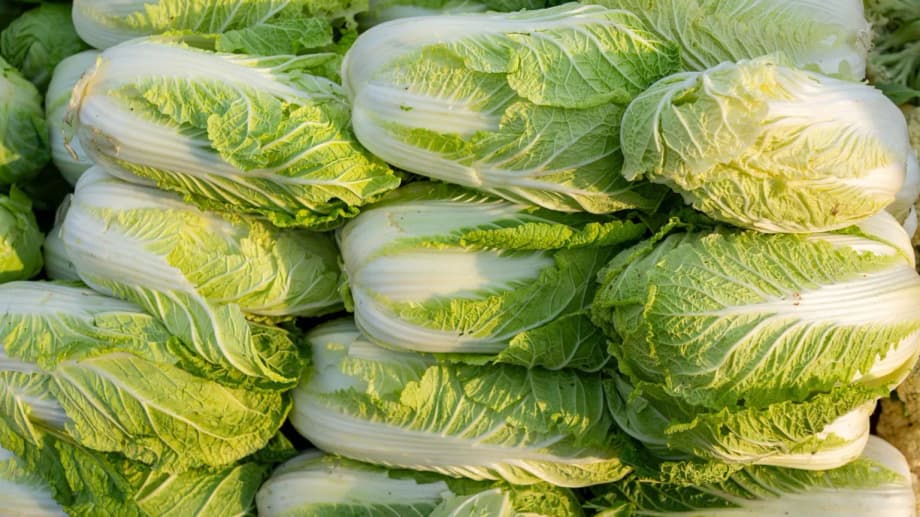
China produces more than 30 million tonnes of cabbage each year, close to half of the estimated global total. The crop is sold domestically and exported to markets across Asia, including Vietnam, South Korea and Russia. That scale means a local violation can quickly become a regional trade and consumer confidence issue, even when the affected volume is small compared with national production.
South Korea has particular exposure because its food service industry relies heavily on imported Chinese vegetables and prepared kimchi. Customs data showed that South Korea imported 20,305 tonnes of Chinese cabbage last year, up sharply from 4,135 tonnes a year earlier. More than 95 percent of imported cabbage, radish and seasonings come from China, while China supplies about 99 percent of South Korea’s imported kimchi.
Kimchi imports reached a record level in the first seven months of the year, according to customs figures cited in regional reporting. Restaurants and institutional kitchens often choose imported kimchi because it costs much less than domestically produced alternatives. That dependence leaves businesses sensitive to any disruption or safety concern involving Chinese cabbage.
South Korea’s Ministry of Food and Drug Safety began collecting and testing relevant products and checking whether the affected cabbage entered the country. Officials also strengthened inspections of Chinese cabbage imports, including repeated formaldehyde testing at packaging sites. No detailed test results had been released in the material available for this report.
Consumer anxiety spreads beyond the farms
News of the confirmed violation has prompted concern among Chinese consumers, who have long watched food safety cases involving illegal additives and careless handling. Online discussion has focused on whether the incident involved one wholesaler or reflected a wider practice that escaped routine inspection.
In South Korea, some restaurant customers have begun checking origin labels and asking whether kimchi was made with imported cabbage. Restaurant owners face a difficult choice between higher priced domestic products and cheaper imports that help them manage labor and food costs. A safety scare can affect demand even before laboratory tests establish whether a particular shipment was contaminated.
Public confidence depends on more than identifying a single offender. Consumers need clear information about which batches were affected, where they were sent, what residue tests found and whether products were removed or destroyed. Uncertainty can lead people to avoid safe products along with unsafe ones, harming farmers and businesses that followed the rules.
Chinese state media condemned the wholesalers’ focus on short term financial gain and said the practice damaged the reputation of local agricultural products. The case also places pressure on local inspectors, traders and market operators to show that traceability systems work before contaminated produce reaches stalls or kitchens.
A recurring warning for food regulators
This is not the first reported use of formaldehyde on vegetables in China. Similar cases involving cabbage were reported in Shandong and Guangzhou in 2012, when authorities destroyed large quantities of treated produce. Those incidents also involved attempts to reduce spoilage during long distance transport.
China has strengthened its food safety rules over the past decade. A revised Food Safety Law took effect in 2015, followed by national programs aimed at setting more consistent standards and a stated zero tolerance approach toward serious violations. The latest case shows that strict rules do not prevent abuse when traders believe the financial reward outweighs the chance of detection or punishment.
Effective enforcement requires regular sampling at several points, from farms and loading areas to transport depots, wholesale markets and restaurants. It also requires reliable records that allow authorities to identify a shipment quickly. Testing can confirm the presence of prohibited chemicals, while inspections of containers, treatment equipment and business records can help establish how the violation occurred.
Authorities have so far ordered the measures most directly needed: securing the vehicles, taking legal action, tracing the cabbage and checking similar vegetable operations nationwide. The strength of the response will be judged by whether officials publish enough information to reassure consumers and whether penalties discourage other traders from using the same shortcut.
What shoppers can do while checks continue
Consumers should follow recalls and official notices rather than rely on unverified claims that all imported cabbage is dangerous. Washing produce under running water is useful for removing dirt and some surface contamination, though it should not be treated as a guarantee against chemicals that may have penetrated damaged leaves or plant tissue.
People who notice an unusual chemical smell, visible treatment residue or damaged packaging should avoid eating the product and report it to the market operator or local food safety agency. Businesses that buy cabbage in bulk should keep supplier records and delivery details so that products can be removed quickly if a shipment is later identified.
Testing remains the key step in determining the actual exposure risk. The presence of formaldehyde on a shipment, the concentration found and the amount transferred to edible portions are separate questions. Until those details are available, the confirmed facts support targeted caution and stronger inspection, rather than a blanket conclusion about China’s entire cabbage supply.
Key Points
- Authorities confirmed that a Hebei wholesaler used formaldehyde solution on cabbage during loading and transport.
- Police took legal measures against the people and vehicles involved.
- Officials are tracing the affected shipments and checking for similar violations nationwide.
- Formaldehyde is prohibited as a food treatment in China and is classified as a Group 1 carcinogen by the IARC.
- Beijing’s Xinfadi market said the affected cabbage did not enter its market.
- South Korea is testing imports amid heavy reliance on Chinese cabbage and kimchi.
- The amount distributed and any overseas destinations had not been confirmed.