A treaty under pressure
The Philippines and the United States are marking 75 years of their mutual defence alliance with new plans for military exercises, maritime cooperation and defence capability development. The anniversary comes as tensions in the South China Sea intensify and as Manila takes a more active role in regional security discussions.
- A treaty under pressure
- What the new defence plans include
- Why the South China Sea matters
- Can Washington remain committed?
- Modernising a 75 year old agreement
- The alliance beyond military power
- Criticism inside the Philippines
- A wider network of partners
- What will determine the alliance’s future?
- The Bottom Line
At a meeting in Quezon City on August 7, Admiral Samuel Paparo, commander of the United States Pacific Command, and General Antonio G. Nafarrete, chief of staff of the Armed Forces of the Philippines, reaffirmed their commitment to the 1951 Mutual Defense Treaty. They also signed an eight star memorandum and approved a plan of activities for 2027.
The schedule is expected to include large military exercises, specialist exchanges, maritime security work, disaster response training and projects to improve the ability of Filipino and American forces to operate together. The announcements present an alliance that is becoming more active. They also expose the central concern surrounding it: whether Washington would accept the risks of defending Manila in a serious confrontation.
The treaty was signed on August 30, 1951, during the early years of the Cold War. It commits both countries to act against an armed attack on either party in the Pacific. The agreement does not automatically dictate the exact military response, which leaves room for political decisions in Washington and Manila during a crisis.
What the new defence plans include
The Mutual Defense Board and Security Engagement Board provide the main framework for coordinating defence cooperation. The Mutual Defense Board was created in 1958, while the Security Engagement Board was established in 2006. Together, they allow officials and military planners to set exercises, training priorities and other forms of cooperation under the treaty.
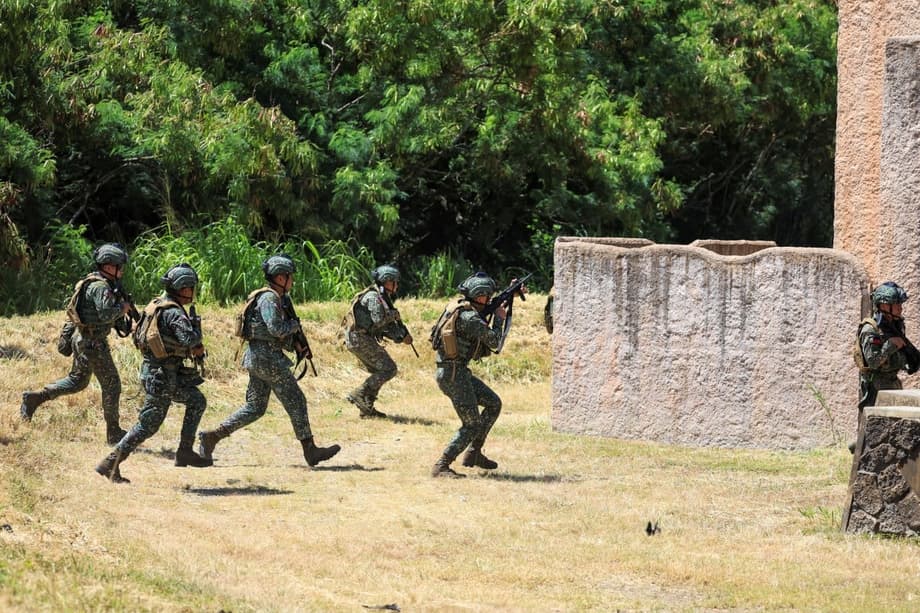
The 2027 plan follows the largest edition of Exercise Balikatan, held from April 20 to May 8, 2026. About 17,000 troops from the Philippines, the United States, Australia, Japan, Canada, France and New Zealand took part. Balikatan, which means shoulder to shoulder in Filipino, has grown from a bilateral exercise into a large multinational event involving land, sea, air, cyber and space activities.
The exercises are intended to prepare forces for several missions. These include defending Philippine territory, monitoring maritime activity, responding to natural disasters and supporting civilian authorities during emergencies. Training across several countries also allows the participants to share communications systems, planning methods and operating procedures.
The United States and the Philippines have also been expanding access to Philippine military locations under the Enhanced Defense Cooperation Agreement. The agreement allows American forces to rotate through selected sites and store equipment, while Philippine authorities retain ownership of the facilities. Washington approved an additional $144 million in 2026 for infrastructure at those sites, according to a joint statement from the two governments.
Why the South China Sea matters
The Philippines has repeatedly accused China of using coast guard and maritime militia vessels to pressure Filipino ships in areas claimed by Manila. Beijing rejects the Philippine position and maintains broad claims over much of the South China Sea. The dispute has produced confrontations around Second Thomas Shoal and other contested features.
The treaty has gained new urgency because the United States has stated that its commitments cover attacks on Philippine armed forces, aircraft and public vessels, including coast guard vessels, anywhere in the Pacific. A joint statement issued after the countries’ Bilateral Strategic Dialogue in February said the treaty applies to the South China Sea.
That clarification is meant to discourage an attack by making the possible cost clear. It also creates a difficult test. A collision, water cannon incident or dangerous manoeuvre may fall below the threshold of an armed attack, while a deliberate strike on a vessel could trigger a far more serious response. The two governments would still need to determine the facts and decide how to act.
The alliance is tied to a wider American effort to keep sea lanes open and preserve freedom of navigation and overflight. The Philippines sits close to important routes linking the South China Sea, the Philippine Sea and the wider Pacific. Its location also places it near Taiwan and the northern approaches to the South China Sea, giving Philippine bases considerable military value.
Can Washington remain committed?
Analysts have questioned whether the United States would maintain its current level of engagement if a confrontation threatened to draw it into a major war with China. The concern is less about the number of exercises than about political will at the moment when a treaty promise carries its greatest cost.
Washington has tried to reassure Manila through repeated statements from senior officials. Secretary of State Marco Rubio said in a message marking Philippine Independence Day that the United States remained committed to its mutual defence obligations. The message also linked the military alliance with economic ties, diplomatic cooperation and relations between the two populations.
The February strategic dialogue produced a wide list of commitments. These included more realistic exercises, faster delivery of defence assistance, increased deployments of missile and unmanned systems, stronger cyber defence and improved Philippine monitoring of illegal maritime activity. The two sides also agreed to hold additional maritime and ministerial talks with Japan.
Those steps show sustained planning rather than a short anniversary campaign. They also make the alliance more visible, which can strengthen deterrence while increasing the chance that American forces, equipment and personnel would be exposed during a regional crisis. A credible defence promise depends on both military capability and a shared belief that leaders will use it when required.
Modernising a 75 year old agreement
Philippine officials have said that any decision to revise the Mutual Defense Treaty belongs to policy makers in Manila and Washington. Retired Admiral Roy Vincent Trinidad, an AFP spokesperson, said the agreement undergoes regular review so it can remain relevant to current conditions.
The treaty was written before modern coast guards, cyber attacks, unmanned aircraft, precision missiles and satellites became central to security planning. It also predates the current South China Sea disputes and the complex network of American agreements with Japan, Australia and other partners.
A revised agreement could define more precisely how the treaty applies to coast guard ships, maritime law enforcement vessels, cyber attacks and attacks on facilities used by American forces. It could also explain consultation procedures, decision making and the role of Philippine authorities during a crisis.
Any update would carry political risks. More detailed language might reassure Manila, yet it could also reduce the flexibility that American policy makers want to retain. A treaty change could be read by Beijing as a sharper military signal, while critics in the Philippines could view it as giving Washington greater influence over national security decisions.
The alliance beyond military power
The relationship now covers far more than exercises. The two governments have tied defence cooperation to economic security, energy supplies, technology, health security and disaster relief. They are developing the Luzon Economic Corridor, which includes a freight rail project connecting Subic and Clark, and are seeking investment in transport, logistics, energy, semiconductors and data infrastructure.
Both sides have also agreed to cooperate on critical minerals and civil nuclear technology. The United States plans to provide $1.5 million through its FIRST program for a small modular reactor control room simulator in the Philippines. The project is designed to support training and safety standards as Manila studies possible nuclear power options.
These economic initiatives have a security purpose. Reliable energy, transport and communications can support civilian growth while also helping the Philippines respond to disasters and maintain military readiness. Supply chains that are less dependent on a single country can also reduce pressure during a crisis.
People to people links remain another foundation of the relationship. Rubio said more than four million Filipino Americans live in the United States, while more than 750,000 Americans live in the Philippines. Those links give the alliance a social base that extends beyond governments and military institutions.
Criticism inside the Philippines
Closer military cooperation has also generated opposition. Progressive groups and some lawmakers have warned that expanded exercises and American access to Philippine facilities could make the country a target in a conflict between Washington and Beijing.
During Balikatan 2026, a United States Tomahawk missile was launched from an airport in Tacloban and struck a designated target area in Laur, Nueva Ecija, according to Philippine reports. Critics said the activity brought live fire and long range strike systems closer to civilian communities. They also objected to temporary no sail zones that affected fishing communities, although government agencies provided food and financial assistance to hundreds of affected fisherfolk.
Defence Secretary Gilberto Teodoro Jr. rejected claims that the exercises placed the country under military control. He said the activities were conducted under civilian authority and in an open manner. Supporters of the alliance argue that training improves the Philippines’ ability to protect its waters and respond to emergencies, while critics say the exercises can pull Manila into a conflict it cannot control.
The disagreement reflects a long standing question about sovereignty. The Philippines wants stronger protection against coercion at sea, yet many Filipinos do not want their territory used for offensive operations against China. The balance depends on clear rules, public oversight and confidence that Philippine interests guide decisions about military activities.
A wider network of partners
The alliance is becoming part of a broader regional network. Japan and Australia have joined military exercises with the Philippines and the United States, while Canada, France and New Zealand participated in Balikatan 2026. These countries have different treaty obligations, yet they share an interest in open sea lanes and the peaceful resolution of disputes.
Officials from the Philippines, the United States, Japan and Australia have held defence meetings, and Manila and Washington plan additional trilateral talks with Tokyo. The Philippines also assumed the chair of ASEAN in 2026, giving it a larger diplomatic role in discussions about maritime security and regional stability.
Multinational cooperation can give Manila more political support and improve coordination during disasters or emergencies. It can also complicate crisis management if several governments become involved in an incident. The alliance therefore requires regular communication, careful signalling and a clear distinction between deterrence activities and preparations for offensive war.
What will determine the alliance’s future?
The next phase will be measured through actions rather than anniversary statements. Manila will watch whether promised funding reaches Philippine forces and coast guard units, whether new equipment arrives on schedule and whether American officials continue to describe the treaty as covering Philippine public vessels in the South China Sea.
Washington will also expect Manila to improve defence planning, invest in infrastructure and make its forces more capable of operating with partners. Philippine leaders must manage that cooperation while responding to public concern about foreign troops, live fire exercises and the risk of escalation.
China’s conduct will remain a major factor. Continued pressure on Philippine vessels could push Manila closer to Washington and its partners. A less confrontational period could give both sides more room to focus on diplomacy and economic cooperation. In either case, the treaty’s value will depend on whether it prevents conflict without encouraging actions that make a conflict more likely.
Seventy five years after it was signed, the Mutual Defense Treaty is more active than at many points in its history. The United States and the Philippines are planning more exercises, building stronger military links and expanding their cooperation into technology, infrastructure and disaster response. The unresolved issue is whether those preparations are matched by a shared political commitment to respond if deterrence fails.
The Bottom Line
- The Philippines and the United States are marking the 75th anniversary of their 1951 Mutual Defense Treaty.
- Military leaders approved a 2027 plan covering exercises, maritime security, capability development and specialist exchanges.
- Balikatan 2026 involved about 17,000 troops from seven countries.
- Washington and Manila have stated that the treaty covers attacks on Philippine armed forces, aircraft and public vessels in the Pacific, including the South China Sea.
- Officials are reviewing whether the treaty remains suited to modern threats, although no upgrade has been approved.
- Critics in the Philippines warn that expanded exercises and American access could increase civilian and national security risks.
- The alliance is also expanding into energy, critical minerals, cyber defence, infrastructure, nuclear technology and disaster response.