Energy shock turns clean technology into a household decision
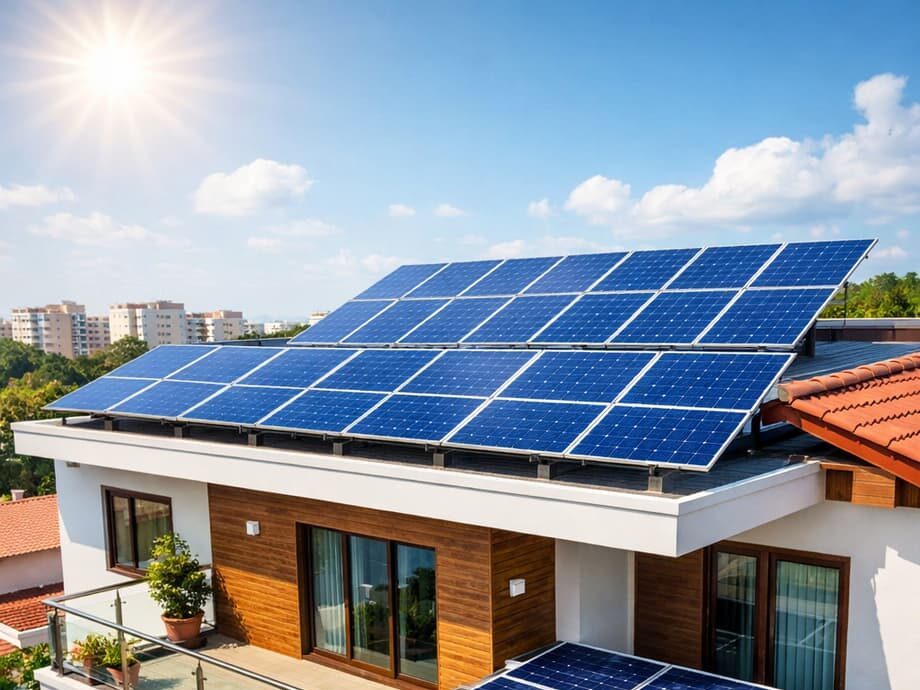
For Joben Ilagan, an electric vehicle became practical when it could be charged by the sun. On bright days, the Ateneo de Manila University assistant professor plugs his family’s BYD eMax 7 into a home charger in Pasig, Metro Manila, using electricity produced by rooftop solar panels.
- Energy shock turns clean technology into a household decision
- Why the Philippines is exposed to Middle East fuel prices
- Rooftop solar sales surge as bills climb
- Electric vehicle sales rise while the car market shrinks
- Chinese brands gain ground despite political tensions
- Cost and infrastructure still limit the transition
- What other countries reveal about energy security
- Can the price shock create lasting change?
- The Bottom Line
The family installed the panels in 2023 after electricity bills rose during the Covid 19 pandemic. They studied electric vehicles for about two years, yet delayed replacing two ageing petrol cars that still worked reliably. The war involving Iran changed that calculation. Rising fuel prices became the trigger for a purchase the family had already been considering.
They paid close to 1.4 million pesos for the electric vehicle, below its list price of 1.498 million pesos. Since several family members work from home, the car can be charged during daylight hours. Joben Ilagan said the electricity used for charging is, for the most part, nearly free.
The experience reflects a broader shift in the Philippines, where a distant conflict has exposed the risk of relying on imported oil and gas. Solar panels, batteries and electric vehicles are moving from niche products toward practical tools for controlling household costs.
Why the Philippines is exposed to Middle East fuel prices
The Philippines imports about 98 percent of its crude oil from the Middle East. The rest comes mainly from Malaysia and Brunei. Disruption around the Strait of Hormuz, a major route for global oil and liquefied natural gas shipments, has therefore placed immediate pressure on fuel, electricity and cooking costs.
The effects have reached households, businesses and public institutions. The government declared a national energy emergency, shifted government offices to a four day work week and asked offices to limit air conditioning. Public transport workers received financial assistance, while airlines considered fuel rationing.
An estimate from the climate group 350.org placed the cost of higher oil and gas prices for Filipino consumers, businesses and public institutions at more than $600 million during the first 60 days of the war. The figure shows why energy security has become a financial concern as well as a foreign policy issue.
Solar power changes the exposure. Panels require a large initial payment, yet sunlight has no market price. Once a system is installed, each kilowatt hour generated at home can reduce purchases from the grid, particularly during the hottest part of the day when air conditioning demand is high.
Rooftop solar sales surge as bills climb
Rooftop solar installations in the Philippines may have nearly doubled in the year to April 2026, according to an analysis by energy research group Ember. Around 600 megawatts of capacity was added, bringing total rooftop installations to roughly 1,300 megawatts.
Chinese export data points to more growth ahead. China shipped more than 3,000 megawatts of solar panels to the Philippines in March and April, making the country China’s second largest solar panel export market in 2026 after the Netherlands. Ember said the large inventory suggests that more systems are likely to be installed in the coming months.
Residential electricity prices in May were 17 percent higher than a year earlier, Ember estimated. That shortened the expected payback period for a home solar system from about four years to 3.1 years. The payback period is the time needed for savings on electricity bills to recover the installation cost.
Families are responding to those numbers. In Cavite province, journalism student Chris Josef de Jesus said his family’s monthly electricity bill rose from between 4,000 and 6,000 pesos to about 10,000 pesos during the height of the crisis. Cooking gas nearly doubled in price, while diesel reached as much as 85 pesos per litre.
The family contacted about 15 installers before buying equipment directly and hiring an electrical engineer. The system cost about 575,000 pesos, below package quotations ranging from 750,000 pesos to one million pesos. The family expects its monthly electricity bill to fall to around 3,600 pesos, creating estimated savings of 6,400 pesos. De Jesus expects the system to repay its cost within three to four years.
New Energy Nexus, which surveyed 20 local solar companies, found a 70 percent increase in weekly installations after the conflict began and a six fold jump in customer inquiries. Inquiries rose from about 115 in February to more than 450 by mid April, according to the survey.
Electric vehicle sales rise while the car market shrinks
The same price pressure is changing decisions on Philippine roads. Electric vehicle sales reached 24,356 units during the first five months of 2026, more than double the 10,431 sold during the same period in 2025, according to the Chamber of Automotive Manufacturers of the Philippines and the Truck Manufacturers Association.
The increase came while total vehicle sales fell from 190,429 units to 167,324. Electrified vehicles therefore grew from about 5.5 percent to 14.6 percent of the market, based on the reported figures.
Andre Douglas Tan, president of dealer ADOT Motors, said monthly sales at two MG and GAC showrooms in Valenzuela rose from two to five vehicles in January to 24 in May and 28 in June. Before the energy shock, staff often had to approach potential buyers online. The showrooms now receive one or two unsolicited walk in customers each day.
Many shoppers are comparing weekly fuel spending with the cost of charging. Rico Severino, founder and president of the Philippine Electric Vehicle Community, said a fully electric car costs less than two pesos per kilometre to operate, compared with roughly five to six pesos for a petrol vehicle.
Severino said the main reason people buy electric vehicles is savings rather than environmental concern. Bob Palanca, managing director of BYD Cars Philippines, said buyers are also assessing the total cost of ownership, including fuel, maintenance and protection from future oil price shocks.
Palanca described the buying process in practical terms. The initial reason for visiting a showroom may be higher fuel prices, he said, while the final decision often depends on the complete ownership experience, including vehicle range, performance and charging access.
Chinese brands gain ground despite political tensions
Many of the electric and hybrid vehicles entering the Philippine market are made by Chinese companies. That has created an unusual consumer trend in a country where distrust of Beijing remains strong because of competing claims in the South China Sea.
Price, battery range and operating costs are causing some customers to reassess earlier views. Tan said buyers who once rejected Chinese brands are now comparing them with established Japanese models. Lower purchase prices and cheaper running costs have made that comparison more attractive during the fuel crisis.
The Ilagan family also researched Chinese manufacturers before choosing BYD. They concluded that the company’s battery systems and vehicle technology had become competitive with those of better known global brands.
The trend fits a wider regional pattern. China exported more than two million electric passenger vehicles between January and May, with almost half shipped in April and May, according to energy market research cited in international analysis. Chinese solar panel exports also rose sharply in March, giving manufacturers a ready supply of equipment as countries sought alternatives to imported fuels.
That dependence creates a new policy challenge. Moving away from Middle Eastern oil can reduce exposure to one kind of geopolitical risk, while reliance on Chinese panels, batteries, vehicles and minerals creates another supply concern. China produces close to 80 percent of the world’s solar panels and controls large parts of the battery and rare earth processing industries.
For the Philippines, the immediate choice is shaped by cost. Domestic production of clean technology could be more expensive and slower to build, while Chinese equipment is available now. The country must balance affordability, supply security and its desire to develop local energy industries.
Cost and infrastructure still limit the transition
Clean energy adoption remains concentrated among households that can afford the initial investment. The Ilagan family spent about 280,000 pesos on its solar system, while electric and hybrid vehicles commonly cost more than 1.4 million pesos. Entry level petrol vehicles can cost less than one million pesos.
Condominium and apartment residents face additional barriers because they may not control parking spaces or have permission to install chargers. Drivers outside major cities also face fewer public charging stations, making long distance travel more difficult.
Solar users face their own limitations. Batteries remain expensive, and selling excess power back to the grid involves technical and administrative requirements. A home system without storage can also provide less protection during a power outage after sunset.
Permits are another concern. Industry representatives say local approval procedures can be slow and confusing, adding cost to projects that could otherwise be installed quickly. The Association of Solar Installers of the Philippines has described the crisis as a major turning point for the young industry.
The Department of Energy’s Renewable Energy Management Bureau has said rooftop solar can be installed quickly because sunlight is widely available across the country. The benefit is greater when systems are paired with batteries, efficient appliances and power networks that can manage electricity flowing in both directions.
Government policy will determine whether the current surge becomes a lasting change or a short response to high prices. Under the Electric Vehicle Industry Development Act, fully electric vehicles are exempt from excise taxes and Metro Manila number coding restrictions. Import tariffs on plug in hybrids have also been suspended.
The government has expanded incentives for renewable energy projects and promoted rooftop solar. Industry groups are calling for simpler permits, more charging stations, financing for middle income buyers and support for local technical workers.
What other countries reveal about energy security
The Philippine experience is part of a wider response across Asia and Europe. Pakistan’s rapid growth in distributed solar has reduced its need for imported oil and gas during the current crisis. The country imported nearly 50 gigawatts of solar panels between 2021 and 2025, with an estimated 35 gigawatts already installed through grid connected and household systems.
China has reduced oil demand through large scale electric vehicle adoption and domestic renewable generation. France and Spain have also faced less pressure in parts of their electricity markets because nuclear power and renewables supply a large share of their power, reducing the need for gas fired generation.
Energy analysts describe the pattern as a security response rather than a climate campaign. Solar, wind and geothermal power use domestic resources and have no fuel bill once the equipment is operating. Electric vehicles replace petrol purchases with electricity, which can increasingly come from local generation.
Jan Rosenow, an Oxford professor of energy and climate policy, has said the Middle East conflict is acting as an accelerator for the transition. He argues that renewable energy and electric vehicles can improve energy security while making economic sense for consumers.
Policy choices matter during the crisis. Broad fuel subsidies can reduce immediate pain, yet they may encourage continued petrol and diesel use and give households less reason to invest in solar or electric vehicles. Targeted assistance for low income families, cheaper public transport and financing for energy efficiency can protect vulnerable groups without locking in higher fossil fuel demand.
The Philippines has already used conservation measures, including shorter government workweeks and limits on office cooling. A longer term response would combine those steps with rooftop solar, battery storage, public transport, vehicle electrification and a stronger electricity grid.
Can the price shock create lasting change?
War related price spikes often fade, yet the equipment bought during a crisis continues operating for years. A solar system installed in 2026 can keep producing electricity after oil prices fall. An electric vehicle purchased during a fuel shortage can keep reducing petrol demand throughout its life.
That gives the current shift a lasting quality. Consumers who learn how much they save through home charging may be less likely to return to petrol vehicles. Businesses that install solar to control electricity costs may expand those systems or add batteries. Installers, mechanics and lenders can build new services around the growing market.
The transition will still require careful planning. More electric vehicles will increase demand on the grid, especially if drivers charge at the same time in the evening. Solar generation is strongest during daylight, so charging cars at midday and adding storage can help match supply with demand.
Access will be the central test. If clean technology remains limited to wealthy households, it will reduce costs for some families while leaving many others exposed to fuel and electricity shocks. Affordable loans, community solar projects, workplace chargers and reliable public transport can spread the benefits more widely.
For now, the Iran war has changed the question Filipino consumers ask. Solar panels and electric vehicles are being considered less as symbols of environmental awareness and more as tools for lowering bills and reducing dependence on unstable fuel markets. That shift in household economics may become one of the conflict’s most durable effects.
The Bottom Line
- Philippine electric vehicle sales more than doubled to 24,356 units in the first five months of 2026.
- Electrified vehicles increased their market share from about 5.5 percent to 14.6 percent.
- Rooftop solar capacity reached roughly 1,300 megawatts after about 600 megawatts was added in one year.
- Residential electricity prices were estimated to be 17 percent higher in May than a year earlier.
- The Philippines imports about 98 percent of its crude oil from the Middle East.
- High initial costs, limited chargers, permits and battery prices continue to restrict wider adoption.
- Government tax incentives and renewable energy programs are supporting the shift toward solar and electric transport.