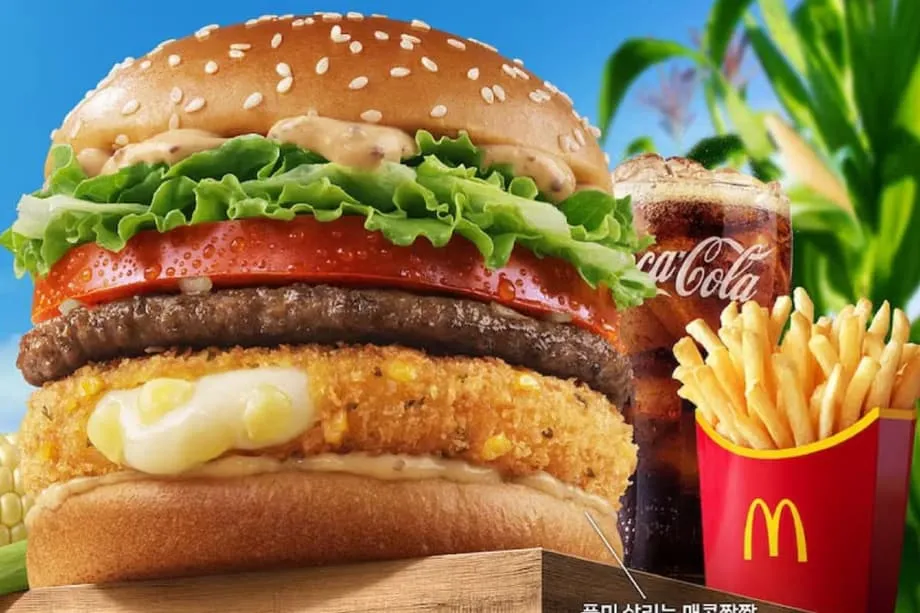
A Million Sales Before an Early Withdrawal
McDonald's Korea stopped nationwide sales of its Chungju corn cheese croquette burger at 8 p.m. on July 30 after multiple customers reported finding small stones in the product. The limited edition burger had sold more than one million units within two weeks of its July 9 launch, making it one of the company's fastest selling seasonal products.
Contents
The burger was scheduled to remain on sale until August 12. Its withdrawal ended that run early, with the company citing customer safety and an internal rule requiring sales to stop once three or more similar quality complaints are confirmed.
As of August 5, the company was working with farms and suppliers to determine how the stone particles entered the corn supply. A company representative said there were no plans to resume sales. Promotional materials for the burger had also been removed from the official website and mobile application.
What Was in the Chungju Burger?
The Chungju corn cheese croquette burger was part of Taste of Korea, a McDonald's campaign that highlights regional ingredients and supports local farmers. Its central ingredient was waxy corn grown in Chungju, in North Chungcheong province.
The burger featured a croquette filled with the corn and mozzarella. A croquette is a filling that is coated and fried; here, that preparation turned the regional corn into a component of a burger. McDonald's positioned the product as a summer snack reinterpreted in burger form.
Roughly 25 tonnes of locally grown corn were used for the product. The scale of that ingredient use made the launch a substantial regional sourcing project as well as a seasonal menu promotion.
Why the Company Stopped Sales
McDonald's Korea follows an internal policy that requires it to stop selling a product once three or more similar quality complaints have been confirmed. The complaints about stones triggered that policy, and company officials said the presence of the particles raised immediate safety concerns.
The company described the withdrawal as a precaution taken to protect customers. A representative explained that customer well being guided the decision, despite the burger's strong sales and the remaining time on its planned promotional schedule.
Foreign objects in prepared food can quickly damage customer trust. Complaint thresholds give a company a point at which it must act: when several customers report the same type of problem and those complaints are confirmed, sales stop while the cause is examined.
In this case, the internal rule brought a successful product's run to an early end. The response followed the broader industry practice of placing customer safety ahead of continued promotion.
From July Launch to Nationwide Halt
The burger's brief sales period combined rapid demand with an abrupt withdrawal. It reached the one million sales mark faster than previous products in the Taste of Korea campaign.
- 2021: McDonald's Korea launched the Taste of Korea series to highlight regional ingredients and support local farmers.
- July 9: Sales of the Chungju corn cheese croquette burger began.
- Within two weeks of launch: Sales exceeded one million units.
- July 30, at 8 p.m.: McDonald's Korea stopped sales nationwide following complaints about stones.
- August 12: The original schedule called for the burger to remain available until this date.
The Chungju burger was the sixth item in the series and was intended to mark the campaign's fifth anniversary. Its initial popularity showed continued consumer interest in burgers made with domestic agricultural products.
Tracing the Stones Through the Corn Supply
McDonald's Korea said it was examining the farms and processing steps involved in supplying the waxy corn. The investigation aims to establish how stone particles became mixed with the ingredient before it reached customers.
The supply chain is the sequence of farms, suppliers and processing steps that brings an ingredient into a finished meal. For this burger, reviewing that sequence means looking at the corn's journey from its regional source through preparation and delivery.
The exact source of the contamination had not been identified as of August 5. Officials had given no deadline for completing the review, indicated no immediate changes to other menu items and announced no decision on whether future Taste of Korea products would use the same sourcing model or receive additional quality checks.
The company's stated focus was preventing a recurrence and restoring consumer confidence. With no plans to restart sales, the immediate task was to understand what went wrong in the corn supply.
A Regional Project With a Wider Reach
Taste of Korea aims to create new sales channels for farmers in different provinces. Earlier products featured garlic from Changnyeong, green onions from Jindo and sweet potatoes from Iksan, among other regional ingredients.
The Chungju burger continued that approach by putting locally grown corn into a product available through a national restaurant chain. Its use of roughly 25 tonnes of corn connected the menu launch to agricultural suppliers, while sales of more than one million burgers demonstrated the level of customer demand.
The early withdrawal left the regional cooperation project with mixed results. The product drew a strong response, yet complaints about stones exposed challenges in bringing local ingredients into production on a large scale.
Garlic Burgers Reach Taiwan
McDonald's Taiwan introduced two burgers using garlic recipes first developed in Korea, giving the Taste of Korea project its first overseas placement. The garlic sauce will be supplied through a Korean partner to support that expansion.
The Taiwan launch extended the reach of the regional ingredient campaign beyond the Korean market. Recipes developed for the Korean menu were being used abroad, with a Korean supplier involved in providing the sauce.
Analysts noted that the earlier garlic burger had generated substantial branding value for its source region over several years. In practical terms, the burger helped associate that region's name with a product customers encountered through McDonald's.
The overseas milestone arrived alongside the quality problem at home. The garlic recipes gained a new market, while the Chungju corn burger's anniversary promotion ended before its scheduled closing date.
What the Withdrawal Means for the Campaign
McDonald's Korea's decision put its complaint policy into practice during a period of strong demand. More than one million sales in two weeks had made the Chungju burger a standout seasonal item, but the confirmed quality complaints took priority over keeping it available.
Local farmers and suppliers remain central to the campaign's purpose and to the current investigation. The review of the corn supply is now the immediate focus, while the company's plans for later regional products have not been announced.
Key Points
- McDonald's Korea stopped nationwide sales of the Chungju corn cheese croquette burger at 8 p.m. on July 30 after complaints about small stones.
- Its internal policy requires sales to stop once three or more similar quality complaints are confirmed.
- The burger launched on July 9, sold more than one million units within two weeks and was originally scheduled to remain available until August 12.
- The sixth Taste of Korea product used roughly 25 tonnes of Chungju corn and marked the campaign's fifth anniversary.
- Farms, suppliers and processing steps are under review, with no plans to resume sales.
- McDonald's Taiwan introduced two garlic burgers using recipes developed in Korea, marking the campaign's first overseas placement.