Employees Had Reached Safety Before Returning
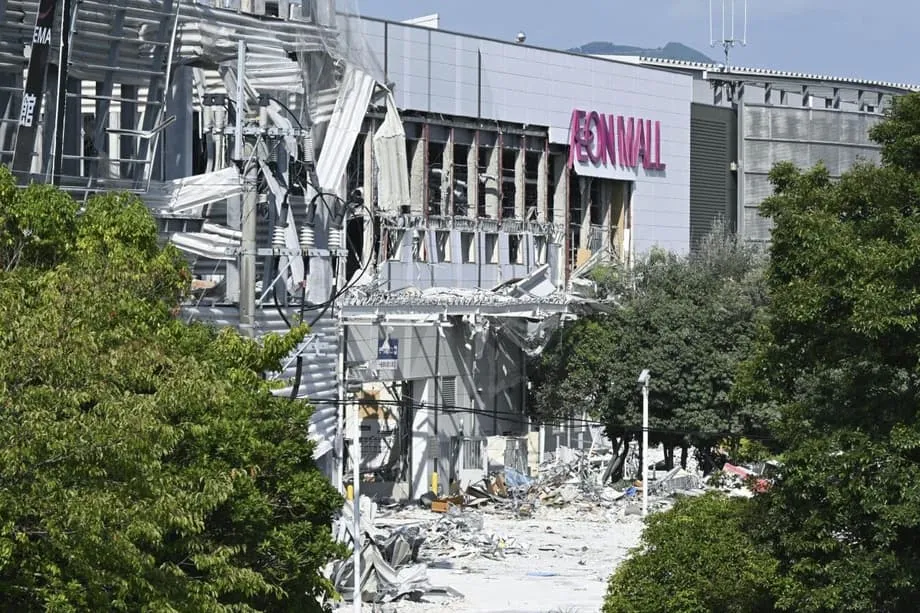
Two female employees who had safely evacuated Aeon Mall Kumamoto after the July 28 earthquake returned to move store takings following a manager's instruction. About 40 minutes after they went back inside, a gas explosion tore through the mall, killing seven people, including both women.
Contents
- Employees Had Reached Safety Before Returning
- A Major Evacuation After Intense Shaking
- A Family Tried to Stop Otake Going Back
- Habita Apologizes as Aeon Explains Its Rules
- What Investigators Are Examining
- From the July 28 Quake to the August 2 Search Closure
- Thousands Remain Displaced Across Kumamoto
- Key Points
The employees worked for Habita, a variety store tenant at the shopping centre in Kashima town, Kumamoto Prefecture. Sales division manager Goji Yuse contacted an off-duty store manager and directed that the pair return, if possible, to move the day's sales proceeds from the second floor to a safe on the first floor.
One of the employees was Kurumi Otake, 22. Relatives said she had met family members outside after evacuating and explained that she needed to return because of the company directive. They urged her not to go back, warning of the danger.
Habita has acknowledged that the instructions were inappropriate and apologized to the family. Authorities are examining whether the direction to return could carry criminal responsibility, including whether a request from a manager had a coercive effect on employees during an emergency.
A Major Evacuation After Intense Shaking
The magnitude 7.1 earthquake struck southwestern Japan at 4:27 p.m. on July 28. Its centre was about 16 kilometres underground. Several areas, including Uki city, recorded an intensity of 7, the maximum on Japan's seismic scale. Magnitude describes the size of an earthquake, while seismic intensity describes the shaking experienced at a particular place.
Aeon Mall Kumamoto held approximately 3,000 customers and between 1,300 and 1,500 workers when the earthquake hit. Most people left within 30 minutes as the mall put its evacuation procedures into effect.
The two Habita employees were among those who reached safety after the shaking stopped. The later instruction concerned securing the store's cash, requiring them to go back into a building they had already evacuated.
Aeon president Yoshida Akio said the mall operator had not authorized reentry. He said staff had been stationed at entrances to enforce the evacuation protocol set out in the company's emergency manual.
A Family Tried to Stop Otake Going Back
Otake's relatives described her as responsible and devoted to her family. Her father had died three years earlier, and her dedication to her family was a central part of how they remembered her.
A male relative recounted that Otake encountered family members outside the mall and told them she had to return because of the company directive. Although relatives tried to dissuade her, she went back because of her strong sense of duty.
Yuse's instruction had been passed through an off-duty store manager and included the condition that the employees return if possible. The inquiry is examining how that wording operated in practice: whether the women understood it as a choice or as a direction they were expected to follow.
The explosion occurred about 40 minutes after the employees reentered. Seven people died at the mall. Search and rescue operations ended on August 2, with no further missing persons reported at the site.
Habita Apologizes as Aeon Explains Its Rules
Habita executives visited Otake's wake on August 2. They gave her family a written account of what had happened and expressed regret over the decision that sent the employees back inside.
Yuse acknowledged that the instructions were inappropriate and said he deeply regretted the decision. Company president Ueno Keishin also attended the wake and conveyed his condolences.
Aeon's position was that its evacuation procedures remained in force and that the mall operator had given no permission to return. Yoshida's explanation places the instruction from Habita alongside the mall's separate arrangements for keeping people outside.
Habita operates 15 stores in the Kyushu region. The company has announced an internal review of its emergency procedures and pledged full cooperation with the ongoing inquiries.
What Investigators Are Examining
Former Tokyo prosecutor Maeda Tsunehiko said the orders could amount to negligent homicide under Japanese law if the risks were foreseeable and a direct causal link could be established. In plain language, those issues concern whether the danger could reasonably have been anticipated and whether the instruction led to the deaths.
Authorities are also examining whether the instructions carried a coercive effect even though they were presented as requests. That means considering whether employees felt compelled to comply because the request came from someone with authority over their work.
The potential criminal case remains under review. The central issues include the risks associated with sending employees back into the mall and the connection between that decision and the fatal explosion.
Public discussion has focused on workplace expectations during emergencies, particularly the difference between a suggestion and a binding directive from an employer. Otake's explanation to her relatives, that she had to return because of the company directive, is part of the account of how she understood the instruction.
From the July 28 Quake to the August 2 Search Closure
The sequence places the initial evacuation, the return to secure cash and the explosion within the same emergency. The search operation and the company's visit to Otake's family followed in the days after the disaster.
- July 28, 4:27 p.m.: A magnitude 7.1 earthquake struck Kumamoto Prefecture, prompting the evacuation of Aeon Mall Kumamoto.
- Within about 30 minutes: Most of the approximately 3,000 customers and 1,300 to 1,500 workers had left the mall.
- After the Habita employees evacuated: Yuse contacted an off-duty store manager with instructions for the pair to return, if possible, and move the day's sales proceeds to a safe.
- About 40 minutes after their return: A gas explosion killed seven people, including both Habita employees.
- August 2: Search and rescue operations ended with no further missing persons reported. Habita executives also attended Otake's wake and presented a written account to her family.
The timing of the explosion is measured from the employees' reentry. The account gives no exact clock time for their return or for the blast.
Thousands Remain Displaced Across Kumamoto
The earthquake death toll reached 38, including the seven people killed at the mall. Other fatalities included a man crushed by debris at another Aeon location and a woman who suffered heatstroke in a shelter vehicle.
More than 9,200 residents remained in evacuation shelters across Kumamoto Prefecture. Tens of thousands of households faced disruptions to utilities, while more than 4,600 buildings had sustained damage.
Officials continued assessing infrastructure safety as regional recovery work proceeded. Habita's review of its emergency procedures and the inquiries into the employees' return to the mall were taking place alongside that wider response.
Key Points
- Two Habita employees died after returning to Aeon Mall Kumamoto to secure cash following the July 28 earthquake.
- Sales division manager Goji Yuse issued the instruction through an off-duty store manager after the women had safely evacuated.
- Kurumi Otake, 22, returned despite relatives urging her to stay outside.
- A gas explosion about 40 minutes after the employees reentered killed seven people.
- Habita acknowledged that the instructions were inappropriate. Aeon said it had not authorized reentry.
- Authorities are examining possible negligent homicide and whether the request had a coercive effect.
- The earthquake death toll reached 38, with more than 9,200 residents still in shelters and more than 4,600 buildings damaged.