A trapped bear exposes gaps in Hachioji's emergency response
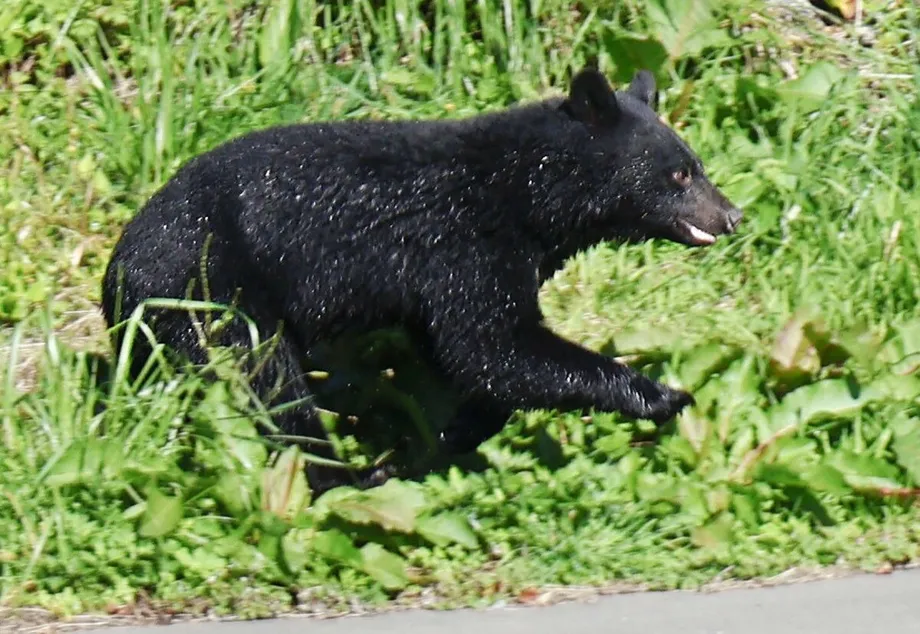
A female Japanese black bear weighing 65 kilograms was shot in farmland in Hachioji, western Tokyo, at 5:29 p.m. on September 28, 2026, more than two hours after a resident first called police. The operation was Tokyo's first use of Japan's emergency shooting system, introduced in September 2025 to let municipalities respond to dangerous animals near places where people live and work.
Contents
- A trapped bear exposes gaps in Hachioji's emergency response
- What happened between the call and the shooting?
- Why did the city's response take so long?
- Residents feared the wire would break
- What the emergency shooting system allows
- Conservation group calls for a release system
- A warning about snares preceded the incident
- Why a 12-centimeter rule is disputed
- Tokyo's bear management proposal adds another deadline
- Key Points
No injuries were reported. The bear, measuring 147 centimeters long, had been caught accidentally in a wire snare intended for wild boar or deer. Homes stood about 100 meters from the site in the mountainous Otsumachi area, several kilometers north of Takao Station.
The shooting has prompted two responses. Hachioji Mayor Kazuo Shiyake announced a review of the city's response manual after officials acknowledged delays. A conservation organization later asked Tokyo Governor Yuriko Koike to restrict snares in bear habitat and build a system for releasing bears caught by accident.
The timing helps explain the concern. A man called the police emergency number at about 3:05 p.m., while Takao Police Station notified the city at about 3:30 p.m. The shooting followed two hours and 24 minutes after the first call, or one hour and 59 minutes after the city received the police notification.
For residents watching a powerful animal struggle against a wire trap, the wait carried an immediate fear: the bear might break free before officials decided how to act. For the city, the incident exposed a situation its existing manual had not expressly addressed.
What happened between the call and the shooting?
Hachioji's response involved police notification, the creation of a municipal headquarters and approval by the mayor. The detailed sequence places most of the elapsed time before that headquarters was established.
- September 28, about 3:05 p.m.: A man called police to report a bear caught in a trap.
- About 3:30 p.m.: Takao Police Station informed Hachioji City.
- 5:03 p.m.: The city established a bear countermeasures headquarters.
- 5:13 p.m.: Mayor Kazuo Shiyake approved the emergency shooting.
- 5:29 p.m.: The bear was shot, with police officers present.
- September 30: Shiyake announced that the city's response manual would be reviewed.
- October 8: The Japan Bear and Forest Society submitted a request to Governor Yuriko Koike seeking changes to trapping and release arrangements.
- October 9: The society explained its objections at an online news conference.
The interval from police notification to the establishment of the city headquarters was 93 minutes. Approval followed 10 minutes later, and the shooting took place another 16 minutes after that. Those figures make the early administrative response a central part of the city's review.
Why did the city's response take so long?
Hachioji identified one reason for the delay: managers in the department responsible for the response were occupied with an ongoing city assembly session. The city's manual also did not explicitly describe the circumstances officials faced that afternoon.
Shiyake said he directed officials to carry out an emergency shooting when he received the report. He also acknowledged that the manual needed examination and revision because it had not clearly anticipated this situation. Until the revision is complete, the city intends to handle emergencies provisionally through the mayor's judgment.
Takayoshi Yamauchi, an associate professor at Iwate University's Faculty of Agriculture, said the response had taken a long time for an emergency. He suggested that an initial delay and caution in an unprecedented situation may have contributed.
The city's explanation puts staff availability and decision procedures at the center of the review. A trapped bear near homes required officials to move from a police report to an operational decision while the responsible managers were handling another municipal duty. No completion date was given for the revised manual.
Residents feared the wire would break
The bear was found beside a vegetable field behind a home. Nearby resident Hiromi Koyama photographed a dark shape moving near a fallen tree and described being frightened by the animal's proximity.
Marks at the scene showed that the bear had gnawed on hard wood. Koyama was especially concerned that the snare might give way. Residents watched as the response continued, worried about what would happen if the animal escaped.
A snare catches an animal by tightening a wire loop around a limb. In this case, the device restrained a bear rather than the wild boar or deer it was intended to catch. That accidental capture created an urgent problem beside land used by people.
Social media users also questioned the delay and raised fears about an injured bear escaping. Those concerns echoed the residents' anxiety, although no escape or human injury was reported. The city said the shooting was intended to prevent harm to people.
What the emergency shooting system allows
Japan introduced the emergency shooting system in September 2025 amid a rise in bear attacks. Under specified conditions, it allows a municipal leader to authorize shooting a dangerous animal in an area used by people.
Hachioji applied that system because the bear was trapped on agricultural land near scattered homes. The mayor approved the operation on public safety grounds. The city said it would improve information sharing with relevant agencies and keep residents informed.
The Environment Ministry counted 81 uses of the system across 14 prefectures during its first year. Much of its use was concentrated in the Hokuriku region of central Japan and the Tohoku region in the northeast. Hachioji brought the system into use in the capital for the first time.
Municipalities have faced shortages of practical expertise and difficulties securing safety during operations. Hachioji's experience shows the concrete tasks behind an emergency authorization: receiving information, assembling responsible officials, judging the danger and arranging a shooting where people may be nearby.
Shiyake also urged people hiking in bear habitat to carry bear bells and take their garbage home. Earlier sightings in Hachioji included one in Motohachioji-machi in April and another near a hiking trail on Mount Takao in August 2026.
Conservation group calls for a release system
The Japan Bear and Forest Society, a conservation organization based in Nishinomiya, Hyogo Prefecture, asked Tokyo to prepare personnel and procedures for returning accidentally trapped bears to the wild. It submitted its request to the metropolitan environment bureau, addressed to Governor Koike, on October 8.
Yuko Murotani, the society's president and a lawyer, argued at the following day's news conference that experienced personnel could have released the Hachioji bear. In English translation, she said:
I think it could have been released if people with extensive experience had been available.
Murotani said release is the basic response when a trap captures an animal outside the species covered by the capture permission. She also said the Hachioji bear had not been identified beforehand as a problem animal.
The city based its decision on the risk to people at the location where the bear was trapped. The society's request focuses on preparing another response before such an incident occurs: securing specialists who can assess and carry out a safe release.
Murotani also acknowledged that capturing bears can be necessary. Her position was that Tokyo should develop choices beyond killing, while retaining the ability to deal with animals that pose a danger.
A warning about snares preceded the incident
The society said its staff had investigated a bear sighting in Hachioji in late May and found snares near the sighting location. Representatives then visited Hachioji City Hall and Tokyo's Tama environment office to ask that snares not be used near bear habitat.
According to the society, Tokyo had authorized the traps, and officials responded that stopping their use would be difficult. Murotani described the September capture as the outcome the organization had feared.
Tokyo records cited in the account list four accidental captures of Japanese black bears since 2012. In 2019, a bear caught in Okutama was killed after a snare caught only its toes. These incidents put the Hachioji case within a longer local concern about traps intended for other wildlife.
A society employee who later visited the Hachioji site also raised a concern about people approaching snares. The employee described nearly stepping into one while walking through an accessible area. The society wants trap placement addressed alongside the treatment of captured animals.
Why a 12-centimeter rule is disputed
An Environment Ministry ordinance sets a maximum loop diameter of 12 centimeters for snares, a restriction intended to reduce accidental captures of bears and other animals. The society argues that the way this rule is applied allows traps large enough to catch bears.
Murotani said ministry guidance accepts a loop whose shortest dimension meets the 12-centimeter standard. An oval can meet that measurement across its narrow side while extending farther in the other direction. The society says this creates more room for a large animal's foot to enter.
The group asked Tokyo to stop authorizing snares where bears appear. Where snares are unavoidable, it wants circular loops with a diameter no greater than 12 centimeters. It also advocates an eventual move to other capture methods, citing injuries that wire snares can cause.
The bear's accidental capture is central to this dispute. A device set to manage deer or wild boar brought officials into contact with a different species, requiring a new decision about human safety and the animal's fate. The society's proposed restrictions seek to reduce the likelihood of that encounter happening in the first place.
Tokyo's bear management proposal adds another deadline
The shooting occurred as Tokyo was considering its first Japanese black bear management plan, covering five years from April 2027. The draft gives an average estimated population of 235 bears and an annual capture guideline of 34.
That annual figure is about 14.5 percent of the draft's estimated population, calculated as 34 divided by 235. Both numbers are important to the debate: the population figure is an estimate, while the capture figure is a management guideline.
The draft also proposes ending a bear hunting ban that has been in place since fiscal 2008. Hunting would resume in April 2027 under the proposal. Public comments on the interim draft were being accepted until October 14, 2026.
The society submitted comments on October 8 questioning whether the population estimate was too high and calling for careful consideration of the capture guideline and the reopening of hunting. Its response links the immediate handling of one trapped bear to decisions about how Tokyo will manage its bear population over several years.
Hachioji's manual review concerns how officials react when a bear presents an immediate problem. Tokyo's draft plan concerns population estimates, capture policy and hunting. Together, they will shape both the response at a field near someone's home and the rules governing bears across the capital's mountain areas.
Key Points
- Hachioji carried out Tokyo's first emergency bear shooting on September 28, 2026, killing an adult female accidentally caught in a snare.
- The shooting occurred at 5:29 p.m., two hours and 24 minutes after the first police call. No injuries were reported.
- The city will review its manual after identifying staff commitments and an unaddressed scenario as problems in the response.
- The Japan Bear and Forest Society has requested restrictions on snares and a system for safely releasing accidentally captured bears.
- Tokyo's draft management plan estimates 235 bears, proposes an annual capture guideline of 34 and would reopen hunting in April 2027.
- The public comment deadline for the interim draft plan was October 14, 2026.