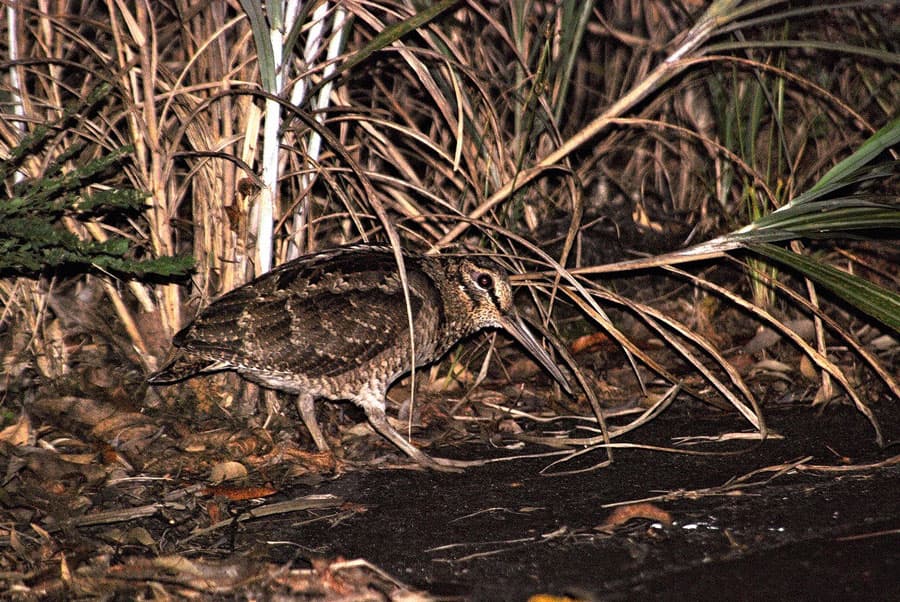
A rare conservation success in Japan
Japan has completed protection and recovery programs for the Amami thrush and Amami woodcock after their populations showed sustained improvement in the Nansei Islands. The Environment Ministry said the decision marks the first time a conservation program established under Japan’s Law on Conservation of Endangered Species of Wild Fauna and Flora has reached completion.
The two birds are native to Kagoshima Prefecture’s Amami island group. The Amami thrush, known as Otoratsugumi in Japanese, lives exclusively on Amami Oshima and is designated a national natural monument. The Amami woodcock, or Amamiyamashigi, is found on Amami Oshima and Tokunoshima.
Both species had declined as forests were cleared and predators placed additional pressure on their populations. Protection measures began in 1999 and focused on improving forest habitat and controlling invasive mongooses. The ministry said those actions helped create conditions in which the birds could recover.
The decision does not end conservation work in the islands. Officials plan to keep tracking the birds and may restart the formal program if their numbers fall or their habitat becomes less secure.
What changed for the Amami thrush and woodcock?
Japan’s revised Red List, released in March, lowered the conservation classification of both birds by one level. Each moved from Threatened II to Near Threatened. The change indicates that their risk of extinction is considered lower than it was when the recovery programs began, although neither species can be treated as fully secure.
Red List categories are assessments of extinction risk. A move from Threatened II to Near Threatened reflects an improvement in the available evidence about a species’ population and habitat. It does not mean that the species has returned to its historic range or that the factors behind its decline have disappeared.
The Amami thrush depends on the forests of Amami Oshima, giving it a very limited distribution. A species with such a narrow range can be vulnerable to a single major event, including severe storms, disease, extensive forest loss or a renewed spread of invasive predators.
The Amami woodcock has a somewhat wider range because it occurs on both Amami Oshima and Tokunoshima. It remains closely tied to the islands’ forest ecosystems, where changes in vegetation, roads, development and predator populations can affect breeding and feeding areas.
Why did the birds become threatened?
Habitat loss was a major cause of the decline. Deforestation reduces the amount of continuous forest available to birds and can divide remaining woodland into smaller areas. Fragmented habitat may provide less food and shelter, while roads and other development can make movement between forest sections more difficult.
Predation added another danger. Mongooses are invasive mammals in the Amami island group and have been targeted by control campaigns. They can prey on native wildlife that evolved without effective defenses against them. Their presence is especially serious on islands, where native species often have small populations and limited places to escape.
When habitat restoration and predator control take place together, the result can be stronger than either measure alone. Forest management gives birds places to nest and feed, while reducing mongooses lowers the chance that eggs, chicks or adult birds will be killed. The ministry linked both actions to the recovery of the Amami thrush and Amami woodcock.
The success also shows why island conservation often requires attention to several pressures at once. Protecting a forest area alone may not be enough if invasive predators remain widespread. Predator control may also have limited value if the birds have lost too much of their habitat.
How does the program fit Japan’s wider conservation record?
The Amami announcement comes as Japan’s latest Red List presents a mixed picture. The assessment of the red crowned crane improved from Threatened II to Near Threatened, removing it from the threatened category. About 1,200 adult cranes are estimated to live in Hokkaido, although the actual number may be higher.
The Japanese crested ibis, known as toki, also received a better assessment. It moved from Threatened IA, the most serious level within the threatened classification, to Threatened IB. At least 500 crested ibises were living in Japan at the end of 2024, including birds released on Sado Island in Niigata Prefecture.
Those gains sit alongside continuing losses. The number of bird species classified as endangered rose by 10 from the previous list to 108. The number of endangered reptiles and amphibians increased by 12 to 96. The ministry has linked many of these declines to forest destruction, invasive species, changes in agricultural land and the loss of wetlands.
The brown shrike was moved from Threatened IB to the more serious Threatened IA category after its breeding range shrank by about 90 percent between the 1910s and the 2000s. The Japanese pond turtle and dunlin also moved from Near Threatened into Threatened II.
This contrast places the Amami birds’ recovery in context. Their improved status is a real conservation gain, while the rising number of species at risk shows that success in one habitat does not remove wider pressure on wildlife across Japan.
Why the Nansei Islands matter
The Nansei Islands form a chain stretching between Kyushu and Taiwan. Their isolation has allowed many plants and animals to evolve in distinct ways. Amami Oshima and Tokunoshima are part of the island ecosystems recognized for their rich native wildlife, including species found nowhere else.
Endemic species are especially valuable indicators of environmental health because their survival depends on a small geographic area. The Amami thrush cannot naturally move to a different country or a distant mainland forest if conditions deteriorate on Amami Oshima. The woodcock has two island populations, yet both remain dependent on the same broad regional environment.
Island forests also support clean water, soil stability and other wildlife. Measures designed for one bird can therefore help a larger community of plants and animals. Mongoose control, for example, may reduce pressure on several native species at the same time, while careful forest management can preserve nesting areas and food sources.
Amami Oshima and Tokunoshima were included in the Amami Oshima, Tokunoshima, northern Okinawa and northern Iriomote natural area that was added to the UNESCO World Heritage List in 2021. That designation recognizes the ecological value of the islands, while legal protection and field management remain necessary to protect individual species.
What does program completion mean?
Completing a recovery program does not mean that officials are withdrawing from the birds’ habitats. It means that the formal plan has achieved the conditions set for ending that particular stage of protection, based on the ministry’s assessment of population recovery.
Monitoring will remain central. Scientists and officials need to track population size, breeding success, distribution and changes in forest conditions. They also need to watch whether mongooses return to areas where control measures reduced their numbers.
Population counts can fluctuate from year to year, especially for species living in difficult terrain. A temporary increase may not indicate long term security, while a short decline may reflect weather or other natural conditions. Repeated surveys help distinguish these patterns from a genuine change in extinction risk.
The ministry has said it may resume the protection program if conditions worsen. That provision gives authorities a way to respond if habitat damage increases, invasive predators spread again or new threats emerge.
A model with limits
The Amami case offers a practical example of conservation based on direct habitat work and control of an invasive predator. It also demonstrates the value of maintaining legal programs long enough to detect gradual population change. The birds have been under the program since 1999, meaning the assessment followed more than two decades of management and observation.
Still, a lower risk category is not a final victory. Near Threatened species can move back into a threatened category if their numbers fall. Climate change may alter forest conditions, while storms and human development can affect small island populations quickly.
Continued cooperation among national agencies, local governments, researchers and island communities will be needed. Residents and visitors also influence the condition of the forests through land use, roads, tourism and the prevention of new invasive species introductions.
The completion of Japan’s first recovery program under the endangered species law is therefore both a milestone and a checkpoint. It records that targeted action helped two distinctive island birds recover, while setting out a continuing duty to watch the habitats that support them.
Key Points
- Japan completed protection programs for the Amami thrush and Amami woodcock.
- The programs began in 1999 and addressed forest loss and invasive mongoose predation.
- The Amami thrush lives only on Amami Oshima.
- The Amami woodcock lives on Amami Oshima and Tokunoshima.
- Both birds moved from Threatened II to Near Threatened on Japan’s revised Red List.
- The Environment Ministry will continue monitoring and can restart the program if conditions deteriorate.
- The recovery is a rare positive development amid a wider increase in endangered bird, reptile and amphibian species in Japan.