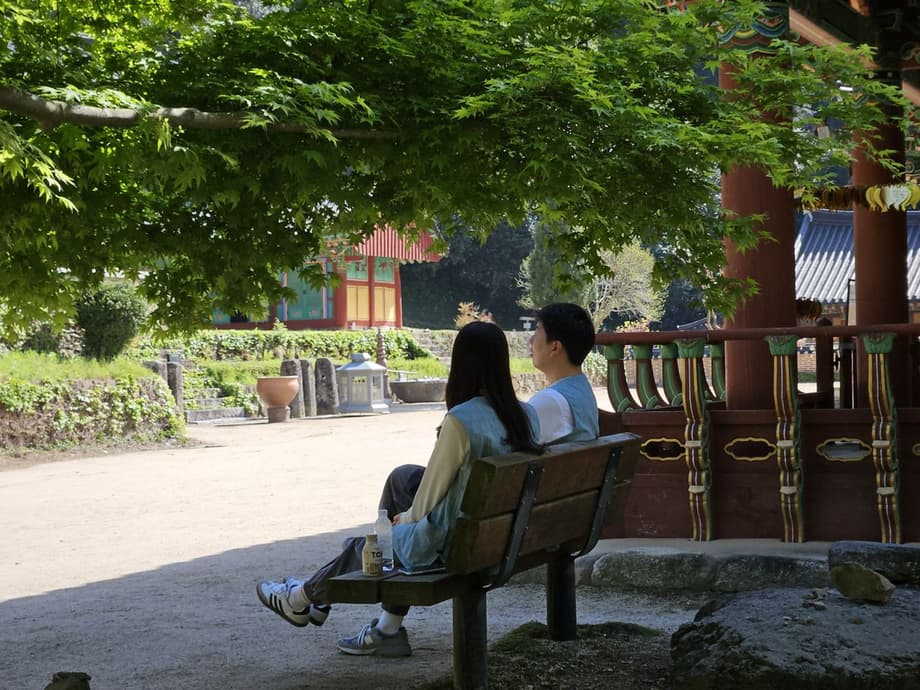
When Temples Replace Coffee Shops
Forget the usual first date over coffee or cocktails. In South Korea, a growing number of young singles are packing overnight bags and heading to Buddhist temples in the hope of finding love. BBC reporter Jake Kwon followed a group of 24 men and women during a 30 hour retreat at Donghwasa, an eighth century temple tucked into the forests of Mount Palgongsan near the city of Daegu. The question hanging over the weekend was simple: could monks really help them find a partner?
The retreat is part of a wider movement. Temples are no longer just places for meditation and prayer; they are now venues for a state backed matchmaking experiment aimed at tackling one of the most pressing social issues in South Korea today. With birth rates at historic lows, the country is trying everything from cash bonuses to subsidised housing, and now Buddhist monks have stepped in to play cupid.
The scene at the opening session is unusual. A monk in burnt orange robes tells the assembled singles that they are on a mission to save their country, by finding a partner and eventually raising a family. The participants giggle and glance at each other, caught between embarrassment and curiosity. It feels more like the start of a reality television series than a religious gathering, but the stakes are real.
These events are drawing extraordinary demand. The Donghwasa retreat alone attracted more than 1,600 applicants for a couple of dozen spots, making it roughly as competitive as a university entrance exam. Participants are screened through questionnaires and selfie videos to confirm they are serious about marriage and children. The programme is open to everyone, regardless of faith, which helps explain why so many secular young people are willing to spend a weekend in a temple.
Why Monks Have Become Matchmakers
The demographic challenge facing South Korea is well documented. In 2023, the total fertility rate, the average number of children a woman is expected to have during her lifetime, fell to a record low of 0.72. That is far below the replacement level of 2.1, the point at which a population replaces itself from one generation to the next without migration. The result is a shrinking workforce, mounting pension pressure, and classrooms that are emptying out faster than hospitals can fill geriatric wards.
The government has spent roughly $250 billion since 2006 on programmes meant to encourage marriage and childbirth. Benefits include extended parental leave, cash bonuses for newborns, and subsidised apartments for newlyweds. Local authorities have also organised matchmaking events since the early 2000s, ranging from woodworking workshops to riverside DJ parties. The return on investment has been modest at best, with births continuing to fall until a slight rebound began in 2024.
For the Jogye Order of Korean Buddhism, the largest Buddhist sect in the country, the crisis is not merely a policy problem. Host Yoo Cheol-ju, who helps run the Donghwasa retreat, frames it in almost military terms. He points to the history of the temple as a camp for monk militias during the Japanese invasions of the 1500s, when Buddhists rallied to defend the nation.
Buddhists have always been the first to take action when our country is in trouble. Low births are a national crisis. We had to do something about it.
That sense of duty has turned monks into some of the most unexpected matchmakers in Asia.
How the Weekend Unfolds
The 30 hour retreat is a carefully choreographed marathon of conversation, activity, and vulnerability. Participants are selected through an application process that includes questionnaires and selfie videos, designed to weed out anyone who is not serious about marriage and children. The Donghwasa event alone drew more than 1,600 applicants for a couple of dozen spots, making it roughly as competitive as a university entrance exam.
Once accepted, the rules of modern dating are suspended. The men and women arrive at the temple complex, where potential suitors rush to help carry luggage to the rooms. The first icebreaker is an introduction round, where one participant, Kwon Seung-oh, hands out French pastries he has baked himself. The gesture earns immediate admiration and sets a playful tone.
Then come the dates. Couples are paired for walks along wooded paths surrounding the temple, giving them a chance to talk privately without the noise of a city cafe. Later, men hand a plastic rose to the woman they would like to invite to lunch. At dinner, the women return the favour, choosing their preferred partner. The format is simple, but it forces participants to be direct in a culture where approaching a stranger in public is rare.
The retreat is not all quiet strolls. There is a talent show, described by one observer as the awkward, clumsy crescendo of the day. One man dances to a hit by the boy band 2PM whose chorus says, I wanna take you to my house. A woman grooves to a brand new pop song, another sings a ballad, and a designer named Ruby charms her table with a halting introduction in Spanish. The energy is part summer camp, part televised dating competition.
Who Are the Participants?
The people who make it through the selection process are not necessarily religious. The retreats are open to everyone, regardless of faith. What they share is a practical problem: they cannot find a suitable partner in everyday life.
Kim Ah-kyung, a 28 year old who uses the Buddhist name Sunhyeji, moved from the Seoul region to an office job in the southeastern provinces. She explains the difficulty of meeting men when her life is limited to commuting between work and home.
There really is no chance to meet men. I only go between work and home. I do not have a hobby. I tried to get one, but they were all one on one activities.
At her office, she adds, most colleagues are much older, narrowing the pool even further.
Kwon Seung-oh, a 30 year old factory worker known as Enyo, faces a different kind of isolation. His workplace, a large dairy factory outside Daegu, is 97% male. He has tried blind dates set up by friends, about ten in total, but found them shallow and unproductive. Like many South Koreans, he is wary of dating apps, which never became as popular as in the West. In 2015, Tinder even rebranded itself in the country as a friend finding app to appeal to users who were uncomfortable meeting strangers online.
Their experiences highlight a deeper shift in South Korean society. People traditionally met partners through school, work, or sogaeting, blind dates arranged by friends or family. As social circles shrink and working hours stretch, those pathways are closing. Young people are going out less, drinking less, and interacting less with strangers. The result is a generation that is both lonely and hesitant about romance.
Does It Actually Work?
By the end of the Donghwasa retreat, eight couples had formed, including two matches between event staff and participants. Out of 24 attendees, that meant 16 people left with a potential partner. The others, while not romantically matched, did not leave empty handed. Enyo, the factory worker, was disappointed but said he would try again if allowed.
If they let me in again, I would be up for another shot.
For him, the weekend was still a confidence builder and a break from a routine that offered almost no chance to meet women.
Other temple retreats have produced similar results. The I am Solo at the Temple programme of the Jogye Order, known in Korean as I am Jeollo, held a two day event at Naksansa Temple in Yangyang, Gangwon Province. Twenty participants were chosen from a record 4,225 applicants, a competition rate of roughly 211 to 1. By the end of the weekend, five pairs left as couples. The programme has even produced a headline success story: one couple who met at a previous Naksansa retreat later married and are now expecting a child.
The popularity of these events is hard to ignore. The Naksansa retreat drew 1,655 men and 2,570 women, reflecting both intense demand and a striking gender imbalance common in South Korean dating events. Ven. Doryun, head of the Social Welfare Foundation of the Jogye Order, said the overwhelming response led the foundation to add an extra event for residents of the Seoul metropolitan area. Choi Sung-hyun, president of the Gangwon Tourism Foundation, expressed hope that the activities would lead to romance.
I hope many couples are formed through this event.
Whether those matches translate into marriages and babies remains uncertain, but the interest alone shows how eager many young Koreans are for a new way to meet people.
From Temples to Demographics: A National Debate
The temple retreats are not happening in a vacuum. They are part of a broader conversation about why South Korea has stopped having children. Some analysts point to soaring housing costs, weak childcare support, and a brutal work culture that leaves little time for family. Others argue that women are simply choosing careers and personal freedom over traditional marriage norms. A combination of economic pressure and changing values has made parenthood feel out of reach for many.
There are small signs of change. In 2024, the fertility rate began to edge upward after years of decline. This year, women are expected to have an average of 1.0 child, up from 0.8 the previous year. Officials have been cautious about taking credit. They attribute part of the rebound to pandemic delayed weddings and births, as well as a large cohort of baby boomer children reaching childbearing age. A survey published in March showed unmarried people were nearly 10% more favourable to marriage and children compared to two years earlier. Some participants at the temple said they had been seeing more social media posts of friends getting married and starting families, which made the idea feel less unusual.
The government, religious orders, and civic groups are throwing a wide range of ideas at the wall. Temple matchmaking is one of the more inventive. It combines the moral authority of religion with the practical need for social connection, while offering a break from the transactional feel of dating apps.
What Do Participants Take Home?
Not everyone leaves the temple with a partner. In fact, the majority of Donghwasa attendees did not form a couple. Yet nearly everyone leaves with something new. Sunhyeji stayed up until 3 a.m. gossiping with other women in her room and left with plans for a group brunch.
I made many friends. We are already planning to get brunch together.
She described the retreat as a fun sleepover that made her feel like a teenager again, unafraid to be spontaneous and make bold choices. The single men agreed; they continued hanging out after the retreat, though they planned to swap temple tea for alcohol and meat.
The emotional takeaway matters because the demographic problem is as much about social isolation as it is about birth rates. If young people feel too tired, too shy, or too disconnected to meet each other, no amount of cash bonuses will produce more babies. The temples are addressing the supply side of romance: creating a safe, structured space where strangers can become friends, and maybe more.
Key Points
- South Korean Buddhist temples are hosting weekend dating retreats to help young singles meet and, eventually, marry and have children.
- The Donghwasa retreat drew more than 1,600 applicants for 24 spots; the Jogye Order’s I am Solo at the Temple programme attracted a record 4,225 applicants for a Naksansa event.
- Eight couples formed at the Donghwasa retreat, while five pairs left the Naksansa event as couples, and one previous match led to marriage and pregnancy.
- The retreats are organised by the Social Welfare Foundation of the Jogye Order and supported by the Ministry of Health and Welfare as part of efforts to address South Korea’s record low fertility rate.
- South Korea’s fertility rate fell to 0.72 in 2023, though it has shown a slight rebound, with projections of around 1.0 child per woman in the current year.
- Participants say the biggest benefit is often new friendships and renewed confidence, even for those who do not find a romantic match.