Japanese Engineers Deploy to Active Combat Zones to Refine Low Cost Air Defense
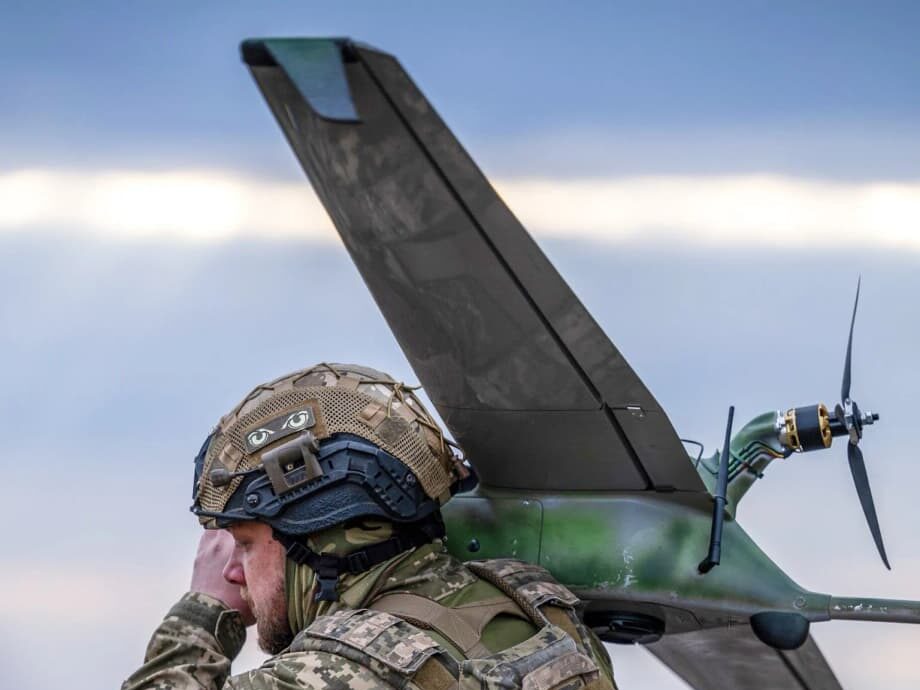
In an unprecedented move blending corporate investment with front line military engineering, Japanese technology firm Terra Drone Corporation has dispatched specialists to war torn Ukraine. These engineers are not observing from safe distances. They are working directly under combat conditions, testing and refining a $2,500 interceptor drone designed to neutralize the cheap, mass produced unmanned aerial vehicles that have transformed modern warfare.
The deployment represents the first public investment by a Japanese company in Ukraine’s defense sector, marking a significant shift in both Tokyo’s economic engagement with Kyiv and the global defense industry’s approach to asymmetric warfare. Terra Drone’s partnership with Ukrainian startup Amazing Drones aims to solve a critical mathematical imbalance that has plagued Western militaries: the cost of shooting down cheap attack drones often exceeds the value of the targets themselves.
The Economics of Asymmetric Warfare
Russia’s full scale invasion of Ukraine has exposed a dangerous vulnerability in traditional air defense systems. Iranian designed Shahed drones, costing an estimated $30,000 to $40,000 each, have rained down on Ukrainian cities and infrastructure. Defending against these threats using conventional methods requires missiles that cost $1 million to $4 million per shot. This economic asymmetry threatens to bankrupt defense budgets while allowing adversaries to maintain pressure through volume.
Toru Tokushige, founder and chief executive of Terra Drone, has made the arithmetic central to his company’s pitch.
Every day in Ukraine, there are multiple drone and missile attacks, three or four times a day, even at night. Initially, air defense relied on expensive missiles. But interceptor drones can cost as little as $2,000 to $3,000. This changes everything.
The calculus has captured attention far beyond Eastern Europe. Gulf states including Saudi Arabia and the United Arab Emirates are actively exploring the Ukrainian designed interceptor as a cost effective alternative to depleting stockpiles of US made missiles. These nations face similar threats from Iranian drone attacks, creating an unexpected market for battlefield tested Ukrainian technology. The Terra A1 interceptor, developed through the partnership, offers a 32 kilometer range, maximum speeds of 300 kilometers per hour, and a 15 minute flight window sufficient to detect and destroy targets in a single sortie.
From Garage Startups to Global Defense Partnerships
The collaboration pairs two radically different corporate cultures. Terra Drone operates from Tokyo with approximately 650 employees and listings on the stock exchange, deriving 60% of its revenue from international industrial drone and traffic management systems. Amazing Drones operates from Kharkiv, a city regularly pounded by Russian missiles, born from volunteer engineers assembling their first units in makeshift workshops.
Maksym Klymenko, chief executive of Amazing Drones, described the evolution candidly.
What began as a volunteer initiative by engineers and soldiers has now evolved into a manufacturing hub dedicated to defending our nation. We thought we would assemble maybe 10 drones, and that would be it. But the situation changed.
Tokushige has personally visited Ukraine eight times, traveling overland from Poland through hours of difficult transit to meet engineers and government officials.
Many Japanese companies say they want to support Ukraine, but often they talk about doing so after the war. However, Ukraine needs support right now. That is why I am here, this is my commitment.
The companies finalized a $10 million strategic investment through Terra Drone’s subsidiary Terra Inspectioneering, combining Japanese manufacturing expertise with Ukrainian combat engineering. The funding structure addresses a critical bottleneck facing Ukrainian defense startups: domestic bank loans carry interest rates near 20%, while Japanese capital operates at roughly 2%, unlocking growth potential previously impossible for cash strapped innovators.
Engineering Under Fire
The Japanese engineers now embedded in Ukraine face conditions no laboratory can replicate. Amazing Drones has built its technical foundation in what engineers describe as the harshest drone operating environment on Earth, where GPS jamming, radio frequency spoofing, and signal denial are daily realities rather than theoretical concerns. A drone that fails under Ukrainian electronic warfare conditions will likely fail anywhere.
The Terra A1 interceptor utilizes electric propulsion to minimize acoustic and heat signatures, enabling stealth approaches to targets cruising at typical Shahed speeds of 200 kilometers per hour. The system prioritizes autonomy, reducing reliance on continuous operator input that can be disrupted by jamming.
The key is not the number of operators, but the intelligence of the drone itself. We cannot respond to Russia by simply increasing manpower. We do not have that capacity. Our only option is to be smarter, to stay one step ahead. That is why autonomy is our main priority.
This front line development cycle creates products hardened by immediate feedback. When Russian forces deploy new countermeasures, Ukrainian engineers adapt within days rather than months. Tokushige noted that his teams are studying Ukrainian methods of decentralized production, where manufacturing occurs across multiple small facilities rather than centralized factories that present easy targets for cruise missiles. If you build a large factory in the traditional way, it becomes a target, he observed. Ukrainian engineers already have practical know how regarding how to decentralize production and operate under constant threat.
A New Model for Democratic Defense
The implications extend far beyond the Ukrainian battlefield. Former CIA Director David Petraeus, who has visited Ukraine ten times since 2022, argues that Western militaries must adopt what he calls a whole new concept of warfare based on Ukrainian innovations.
What’s the real genius is how they’re pulling it all together. We don’t have systems yet that could effectively defend against drone swarms. We need to learn a lot more, much more rapidly than we are.
Petraeus warns that the threat of autonomous drone swarms looms large, requiring defensive capabilities that current Western arsenals lack. The Terra Drone partnership represents precisely the type of rapid adaptation Petraeus advocates. By combining Ukrainian combat expertise with Japanese manufacturing scale, the alliance creates a template for how democratic nations can counter cheap, mass produced threats without bankrupting their defense budgets.
The interceptor drones are specifically designed to counter Group 3 unmanned aerial systems, the classification that includes Shahed type threats increasingly encountered along NATO’s eastern borders. Recent incidents involving Russian origin drones entering Polish, Estonian, Lithuanian, Latvian, and Romanian airspace have triggered NATO intercepts and disrupted civil aviation, demonstrating that the threat is continental rather than regional. As defense contractors work to build integrated air defense networks, the Ukrainian Japanese interceptor offers a kinetic solution to complement detection and tracking systems.
Scaling Production Amidst Scarcity
Ukraine’s defense technology sector has matured rapidly from its improvised origins. The market, valued at $6.8 billion by the Kyiv School of Economics, represents a sixfold increase from pre war levels. President Volodymyr Zelenskyy announced in March that Ukraine possesses the capacity to produce 2,000 interceptor drones daily if funding materializes, a production rate dwarfing Western capabilities.
However, challenges persist. Ukraine currently relies on European suppliers for critical mini jet engines, with companies like Czech based PBS Group ramping up production fivefold yet still struggling to meet demand. The Terra A1 addresses this constraint through electric propulsion, avoiding the supply bottlenecks that threaten other deep strike programs.
The partnership also navigates Japan’s constitutional constraints. Tokyo has pledged approximately $20 billion in assistance to Ukraine, channeled through humanitarian, financial, and reconstruction fields rather than direct military exports, adhering to the country’s war renouncing Constitution. Terra Drone’s investment operates through commercial channels, allowing Japanese technology to reach the battlefield without violating legal restrictions on weapons exports.
Looking forward, both companies envision expanding cooperation into maritime unmanned systems and broader defense applications. Tokushige confirmed that Terra Drone is considering launching production of Ukrainian drone technologies in Japan, potentially creating a transnational supply chain that bridges Asian manufacturing with Eastern European combat innovation.
Key Points
- Japanese firm Terra Drone has deployed engineers to Ukraine’s front line to test the Terra A1 interceptor drone under combat conditions, marking the first public Japanese investment in Ukraine’s defense sector.
- The $2,500 to $3,000 interceptor is designed to destroy Shahed type attack drones costing $30,000 to $40,000, offering a cost effective alternative to $1 million to $4 million air defense missiles.
- Gulf states including Saudi Arabia and the UAE are exploring the technology to counter Iranian drone attacks without depleting expensive US made missile stockpiles.
- The partnership combines Terra Drone’s $10 million investment and manufacturing expertise with Amazing Drones’ front line combat engineering experience from Kharkiv.
- The Terra A1 features a 32 kilometer range, 300 km/h maximum speed, and 15 minute flight time, utilizing electric propulsion to minimize detection signatures and electronic warfare vulnerabilities.
- Engineers are studying Ukrainian decentralized manufacturing methods to maintain production despite missile threats targeting centralized facilities.
- Former CIA Director David Petraeus highlights Ukrainian military innovation as a model for Western forces adapting to drone dominated warfare.