A Historic Encounter Across the Strait
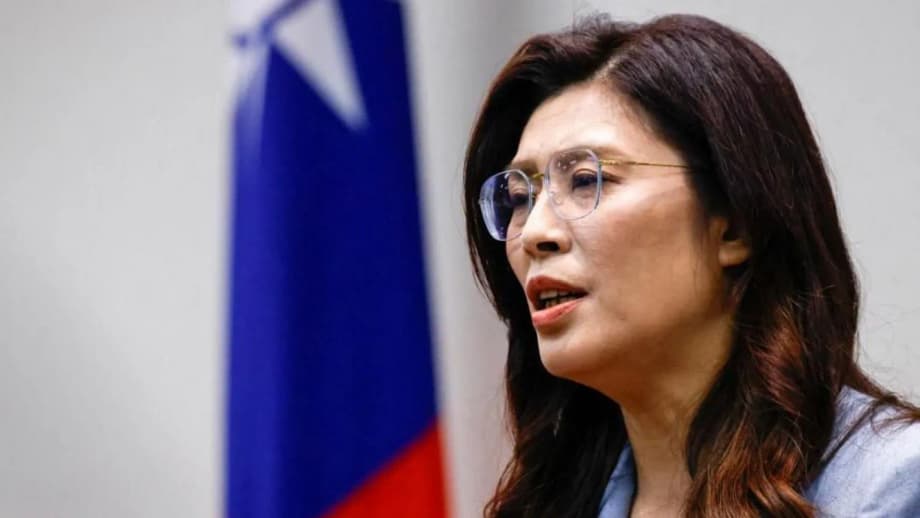
In a highly choreographed display of diplomatic theater, Chinese President Xi Jinping met with Cheng Li-wun, the chairwoman of Taiwan’s opposition Kuomintang (KMT) party, at Beijing’s Great Hall of the People on Friday. The encounter marked the first time a sitting KMT leader has visited mainland China in nearly a decade, breaking a diplomatic freeze that began when Beijing severed high-level communications with Taipei in 2016 following the election of Tsai Ing-wen from the Democratic Progressive Party (DPP).
The meeting carries significant weight as tensions across the Taiwan Strait remain elevated. Cheng, who assumed leadership of the conservative-leaning KMT last year, described her six-day journey through Shanghai, Nanjing, and Beijing as a “peace trip” designed to build bridges. Xi framed the encounter as a reunion between compatriots sharing a common heritage, declaring that “people on both sides of the Taiwan Strait are Chinese” and share an inherent desire for peace and development.
The timing proves particularly delicate. The visit occurred just weeks before Xi is scheduled to meet U.S. President Donald Trump in Beijing, and while Taiwan’s parliament remains deadlocked over a controversial $40 billion special defense budget. These overlapping circumstances have intensified scrutiny of whether Cheng’s outreach represents genuine conflict prevention or strategic positioning that could complicate Taiwan’s security relationships with Washington.
From Opposition Activist to Beijing’s Guest
Cheng’s journey to the Great Hall of the People represents one of the more remarkable political transformations in recent Taiwanese history. Born in 1969, she began her career as a left-wing activist associated with the “Wild Lily” generation, Taiwan’s student movement that helped push the island toward full democracy. In her youth, she denounced the KMT as “the most detestable ruling force” and advocated for Taiwanese independence.
After switching allegiance to the KMT in 2005 following a controversial departure from the DPP, Cheng has steadily moved toward the “deep Blue” faction that advocates closer integration with China. She now describes herself as a “Fighting-Blue” leader, embracing a confrontational stance toward the ruling DPP while cultivating what she calls “civilizational” ties with the mainland.
This ideological evolution has positioned her as a controversial figure within Taiwan’s polarized political landscape. While she claims her shift reflects “seeing through the fraud of the DPP,” critics accuse her of opportunism. Polls suggest limited public confidence in her leadership, yet her willingness to engage with Beijing contrasts sharply with the DPP’s approach under President Lai Ching-te, whom Chinese state media has derisively labeled a “warmonger” and “separatist.”
Shared Rhetoric and Divergent Goals
During their public remarks, both leaders emphasized opposition to Taiwanese independence while promoting a vision of peaceful coexistence under a shared Chinese identity. Xi stressed that “all sons and daughters of China share the same Chinese roots and the same Chinese spirit,” describing this connection as embedded in blood ties and history. He expressed “full confidence” that compatriots on both sides would ultimately “get closer and get together,” calling this an inevitable historical trend.
Through the unremitting efforts of our two parties, we hope the Taiwan Strait will no longer become a potential flashpoint of conflict, nor a chessboard for external powers. Instead, it should become a strait that connects family ties, civilisation and hope.
Cheng echoed these sentiments, praising China’s success in poverty eradication and referencing the “great rejuvenation of the Chinese nation” as a shared aspiration. She explicitly endorsed the “1992 Consensus,” a tacit understanding between the KMT and Beijing acknowledging “one China” while allowing each side to define the term differently. However, her precise formulation has raised eyebrows, as she described the consensus as adherence to “one China” without emphasizing the traditional KMT buffer of “respective interpretations.”
Perhaps most controversially, Cheng suggested institutional arrangements for “war prevention” that analysts interpret as signaling reduced defense spending. According to Wen-ti Sung, a political scientist with the Australian National University’s Taiwan Centre, her remarks implied that “under her leadership, the KMT would not be seeking a defence and deterrence-oriented approach to war prevention,” effectively suggesting Taiwan should slow its military build-up and reduce purchases of U.S. arms.
Geopolitical Calculations and Washington’s Concerns
The meeting’s timing has triggered alarm in Washington and among Taiwan’s security establishment. With President Trump preparing for his May summit with Xi, analysts suggest Beijing seeks to use Cheng’s visit to demonstrate that its preferred Taiwanese partners are “in lockstep” with Beijing on key policies. This positioning could influence Trump’s approach to arms sales and security commitments during his upcoming discussions.
William Yang, North East Asia analyst at the International Crisis Group, notes that Cheng sees an opportunity to present herself as the leader capable of maintaining cross-strait exchange while highlighting President Lai’s inability to resume engagement with Beijing. “Growing scepticism about the U.S. in Taiwan, largely stemming from Trump’s mixed signals on his Taiwan policy, creates space for her argument,” Yang explains.
The visit coincides with a legislative standoff over Taiwan’s defense modernization. The KMT has blocked President Lai’s proposed $40 billion special defense budget, offering instead a $12 billion alternative focused on specific items. Cheng has described the larger package as turning Taiwan into a “powder keg” and has publicly stated that “Taiwan is not an ATM” for American arms purchases. During a recent visit to Taipei, U.S. Senator Jim Banks urged parliament to approve the full package, warning that delays could affect Washington’s willingness to sell weapons to Taiwan.
Concrete Concessions and Continued Pressure
Following Cheng’s departure, Beijing announced ten measures designed to demonstrate goodwill, including the resumption of direct flights between Taiwan and additional mainland cities such as Urumqi, Xi’an, and Harbin. Chinese authorities also promised to permit imports of Taiwanese agricultural products previously banned, including grouper, squid, and tuna, while allowing Taiwanese television dramas and documentaries to broadcast on mainland platforms, provided they meet content guidelines.
Additionally, China pledged to explore establishing a regular communication mechanism between the Communist Party and the KMT, and renewed proposals for infrastructure projects connecting mainland China to Taiwan’s offshore islands of Kinmen and Matsu.
However, these olive branches exist alongside sustained military pressure. China continues daily deployments of fighter jets and naval vessels near Taiwan, conducting live-fire drills in the strait that resemble rehearsals for a potential blockade. Analysts describe this as a “dual-track strategy” combining soft engagement with hard deterrence. James Chen, an assistant professor at Taiwan’s Tamkang University, observes that Beijing maintains pressure on the ruling DPP while engaging the opposition, using military sorties to “serve China’s national security interests and deter closer US intervention.”
Taiwan’s Divided Response
Within Taiwan, Cheng’s visit has generated fierce criticism from the ruling party and concerns among the broader public. The DPP has accused her of being “subservient” to Beijing and warned that her trip would be “completely controlled” by the Communist Party. President Lai Ching-te wrote on Facebook that “compromising with authoritarian regimes only sacrifices sovereignty and democracy; it will not bring freedom, nor will it bring peace.”
The Taiwan Affairs Council, which sets policy toward China, characterized the announced measures as “political transactions” that circumvent Taiwan’s elected government. “All Cross-Strait affairs involving public power must be negotiated by both governments on an equal and dignified basis,” the council stated, emphasizing that party-to-party exchanges cannot substitute for official diplomatic channels.
Public opinion polls reveal deep ambivalence. While most Taiwanese favor maintaining the “status quo” (neither formal independence nor unification), surveys show growing identification as “Taiwanese” rather than “Chinese.” A 2025 National Chengchi University study found that 62 percent of respondents identified as solely Taiwanese, up from 17.6 percent in 1992, while those identifying as “Chinese” fell to just 2.5 percent. Cheng’s explicit identification as Chinese and her civilizational rhetoric appear increasingly out of step with mainstream sentiment, particularly among younger voters.
Even within the KMT, strategic divisions are emerging. Taichung Mayor Lu Shiow-yen, often mentioned as a potential presidential candidate, has emphasized that peace must be built on strength and internal unity, presenting a more balanced approach than Cheng’s Beijing-focused posture. Some KMT candidates in competitive districts have reportedly distanced themselves from the chairwoman’s rhetoric, fearing electoral backlash in upcoming local elections.
Risky Diplomacy or Pragmatic Engagement?
Cheng’s gamble rests on the premise that dialogue reduces conflict risk more effectively than military deterrence. She has positioned herself as a “bridge for peace,” arguing that opposing Taiwan independence and maintaining the 1992 Consensus offers the only viable path to avoid war. “By opposing Taiwan independence, we can avoid war,” she told reporters following her meeting with Xi.
Yet critics argue that Cheng’s approach validates Beijing’s narrative that Taiwan represents an unresolved civil war rather than a sovereign state with its own democratically elected government. By accepting the framing of two party leaders meeting rather than two heads of state, analysts suggest she has become complicit in propagating a historical account that undermines Taiwan’s contemporary sovereignty.
The strategic question remains whether this choreography reduces conflict or normalizes Beijing’s preferred political endpoint under the banner of peace. While Cheng has secured concrete economic concessions and reopened party-to-party channels frozen since 2016, she risks alienating moderate voters and unnerving Taiwan’s primary security partner in Washington. As the island heads toward local elections later this year and a presidential contest in 2028, Cheng’s Beijing visit may ultimately test whether Taiwan’s electorate believes peace requires accommodation with China or strengthened defenses against it.
Key Points
- Cheng Li-wun became the first sitting KMT chair to visit China in a decade, meeting Xi Jinping at the Great Hall of the People in Beijing
- Both leaders emphasized opposition to Taiwanese independence and promoted a shared “Chinese” identity while calling for peaceful cross-strait relations
- China announced resumption of direct flights to additional Taiwanese cities and eased import bans on agricultural products and media content
- The visit occurred weeks before a scheduled Trump-Xi summit and amid a legislative deadlock over Taiwan’s $40 billion defense budget
- Cheng suggested slowing Taiwan’s military build-up and reducing U.S. arms purchases, drawing criticism from Taiwan’s ruling DPP and security analysts
- Domestic polls indicate most Taiwanese identify as “Taiwanese” rather than “Chinese,” raising questions about whether Cheng’s approach aligns with public sentiment
- Analysts describe Beijing’s strategy as “dual-track,” combining diplomatic engagement with the KMT alongside continued military pressure and exercises near Taiwan