Thailand Unveils Emergency Relief as Middle East War Fuels Economic Crisis
Thailand’s Commerce Ministry has launched an ambitious suite of emergency measures designed to shield consumers and farmers from soaring living costs triggered by the escalating war in the Middle East. With global oil prices surging past $100 per barrel and the Strait of Hormuz effectively blockaded, the kingdom is racing to deploy discount schemes, price controls, and agricultural subsidies before economic pain translates into widespread social disruption.
- Thailand Unveils Emergency Relief as Middle East War Fuels Economic Crisis
- From Palm Oil to Pumps: How War Disrupted Daily Life
- The Government’s Multi-Front Response
- Farmers in the Crosshairs: Fertilizer Costs and Green Flag Plus
- Subsidy Strain: The Fiscal Toll of Capping Fuel Prices
- Regional Ripples: Southeast Asia’s Collective Struggle
- Global Supply Chains Under Siege
- At a Glance
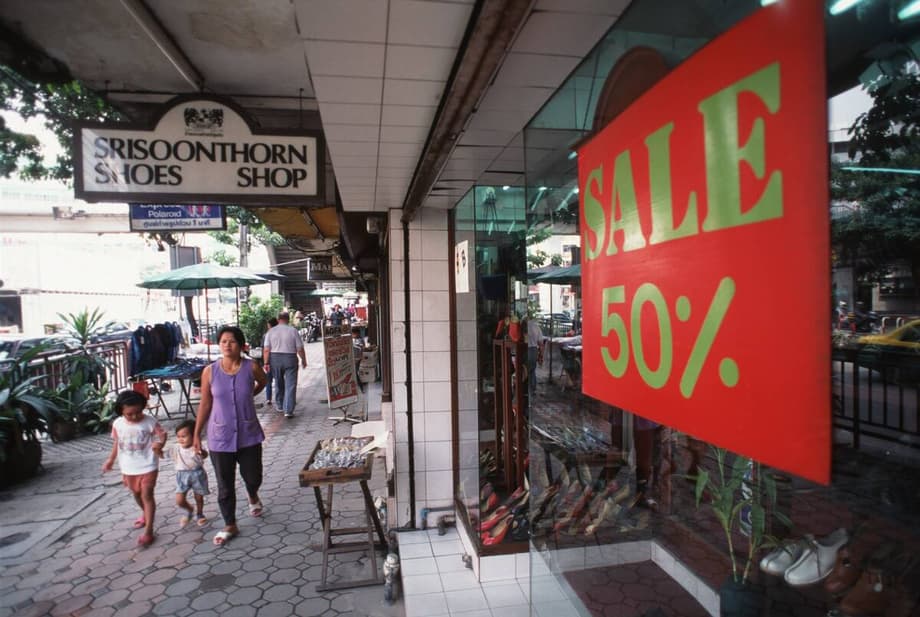
The initiatives, announced by Department of Internal Trade deputy director-general Chanthapat Panjamanond, represent Bangkok’s most aggressive domestic intervention since the conflict began on February 28. The centerpiece is the Thai Help Thai scheme, set to launch April 1, which will deliver discounts of up to 50% on more than 1,000 alternative-brand products through partnerships with major retailers and manufacturers. Simultaneously, the ministry is expanding its Blue Flag low-price program to over 500 locations nationwide while deploying mobile trucks to reach remote communities.
These measures arrive as Thailand grapples with a perfect storm of economic pressures. The US-Israel war with Iran has choked off approximately 20% of global oil shipments by blocking the Strait of Hormuz, the narrow waterway through which roughly 80% of Asian-bound crude and liquefied natural gas normally transits. Dubai crude has reached $158 per barrel, a 122% increase since early March, sending shockwaves through import-dependent Asian economies.
From Palm Oil to Pumps: How War Disrupted Daily Life
The impact on Thai consumers has been immediate and severe. Bottled palm oil prices have jumped 17% to 53 baht ($1.62) per liter, while wholesale bottled water prices climbed from 20 to 25 baht for budget 500-milliliter packs as plastic resin and transport costs spiraled upward. Five major manufacturers, including Unilever, Nestle, and Saha Pathanapibul (maker of Mama instant noodles), have formally warned trade partners to expect price increases from April due to rising raw material and logistics costs.
Fuel markets have experienced particular volatility. Though the government initially capped diesel at 29.94 baht per liter using the state Oil Fuel Fund, the subsidy cost proved staggering, with the fund losing over 1 billion baht ($32 million) daily. Within two weeks, the fund swung from a 2.5 billion baht surplus to a deficit exceeding 12 billion baht. When the ceiling was raised to 33 baht per liter on March 18, panic buying ensued, pushing daily fuel consumption from 67 million liters to 84 million liters, exceeding national production capacity of 77 million liters.
Prime Minister Anutin Charnvirakul publicly apologized for the chaos, acknowledging that government estimates suggesting a short war proved incorrect. The subsidy cost reached 20 billion baht in the first three weeks alone, with daily expenditures hitting 2 billion baht before the government abandoned the cap.
The Government’s Multi-Front Response
Beyond the Thai Help Thai and Blue Flag initiatives, the Commerce Ministry is implementing targeted interventions to stabilize essential goods. The ministry is monitoring 59 controlled items and has secured agreements with nine major producers, including Procter & Gamble, to hold consumer goods prices steady through at least April. For ready-made meals, officials are supplying rice, cooking oil, eggs, and sugar directly from source to food vendors to prevent unreasonable retail price hikes.
The 24-hour hotline 1569 and Line messaging platform @mr.DIT now serve as reporting mechanisms for price gouging, with the ministry moving swiftly on complaints. In one notable case, officials raided a major chemical fertilizer retailer in Ayutthaya following farmer complaints of excessive pricing, summoning the operator for explanation and expanding investigations to examine purchase-cost documentation.
Energy measures include adjusting biodiesel ratios from B5 to B7 and pricing Gasohol E20 at 5 baht per liter below E10 to encourage alternative energy use. The government is also coordinating with the Foreign Ministry to extract stranded Thai vessels carrying raw materials from the Strait of Hormuz while seeking new fertilizer sources to ensure agricultural supply security.
Farmers in the Crosshairs: Fertilizer Costs and Green Flag Plus
Agricultural producers face a dual threat from both fuel costs and fertilizer price inflation. Recognizing this vulnerability, the ministry is launching the Green Flag Plus project to supplement existing support programs. Farmers holding Din Dee cards issued by the Land Development Department, those certified under Good Agricultural Practices standards, or members of community soil and fertilizer management centers will receive an additional 200 baht ($7.80) in benefits plus a 200 baht coupon for organic fertilizer purchases.
Combined with existing assistance, each farmer could receive up to 1,400 baht in total support. The scheme will initially cover 50 provinces, launching in Kamphaeng Phet in late April before nationwide expansion. Authorities aim to distribute one million sacks of subsidized fertilizer while coordinating with 26 manufacturers to sell discounted products directly from factories, with combined volumes exceeding 10 million sacks.
This agricultural focus addresses a critical vulnerability in Thailand’s food security chain. With global supply chains disrupted, ensuring affordable inputs for the kingdom’s farming sector has become a priority to prevent food price inflation from compounding energy costs.
Subsidy Strain: The Fiscal Toll of Capping Fuel Prices
The financial mathematics of Thailand’s crisis response reveals the extraordinary pressure on state resources. According to Wood Mackenzie analysis, eight Asian countries, including Thailand, Indonesia, Vietnam, and India, will require over $80 billion in collective subsidies if oil remains at $100 per barrel for just four months. Thailand’s Oil Fuel Fund, already in deficit, represents just one component of this regional fiscal strain.
Prime Minister Anutin explained that ending the strict price cap does not mean fully floating prices, but rather reducing the subsidy rate from 24 baht per liter to 16 baht to better reflect global conditions and prevent smuggling to neighboring countries where prices are higher. Thailand currently ranks sixth in ASEAN for petrol prices and eighth for diesel, with fuel remaining significantly cheaper than in Malaysia, Vietnam, and Laos.
I apologize to people for the chaos caused by the management of the fuel situation. Now the situation has changed and is unlikely to end soon, so the government has adjusted its measures, focusing on vulnerable groups such as low-income workers, farmers and transport operators.
The government has launched a conservation campaign urging Thailand’s 10 million households to reduce fuel consumption by one liter daily, potentially cutting imports by 10 million liters per day and saving 400 million baht in household expenses while reducing the oil fund burden by 200 million baht daily.
Regional Ripples: Southeast Asia’s Collective Struggle
Thailand’s crisis exists within a broader Asian context where energy import-dependent economies face severe structural vulnerabilities. Before the war, approximately 80% of crude passing through the Strait of Hormuz headed to Asian refineries. Japan and South Korea sourced more than 90% and 70%, respectively, of their oil imports from the Gulf. Even major economies like China and India, despite diversifying to Russian and US sources, still depend on the Middle East for roughly half their crude supplies.
Across the region, governments have deployed unprecedented intervention measures. The Philippines has introduced four-day workweeks for government employees and is rushing legislation to suspend fuel excise taxes. Vietnam has depleted its fuel stabilization fund through six consecutive drawdowns and encouraged work-from-home arrangements. Malaysia spends an estimated RM3.2 billion ($810 million) monthly maintaining subsidized gasoline at RM1.99 per liter while unsubsidized diesel hit record highs.
Sri Lanka has implemented weekly fuel quotas limiting drivers to 15 liters for cars and 5 liters for motorbikes, while Indonesia risks breaching its legal 3% fiscal deficit cap to maintain subsidies through the Eid al-Fitr holiday period. Singapore faces particular exposure, generating 92.2% of its electricity from natural gas, with Qatar (disrupted by the war) supplying 14.6% of those imports.
Global Supply Chains Under Siege
Beyond oil and gas, the Hormuz blockade threatens critical supply chains for technology and healthcare. Qatar’s closure of major liquefied natural gas and helium plants has disrupted the global helium supply, raising concerns for Taiwan’s semiconductor sector and South Korea’s chip manufacturing, both of which rely on helium for cooling and cleaning chips during production. Unlike oil, helium cannot be quickly produced, forming over billions of years in specific natural gas fields.
Thailand’s Commerce Ministry is specifically monitoring cargo transport to rescue stranded vessels carrying raw materials, while the fishing industry nears standstill due to diesel price surges. Tourism, which contributes significantly to Thailand’s economy, has suffered a 9% year-on-year drop in arrivals, prompting luxury hotels to offer discounts up to 70% to attract domestic tourists as international travelers cancel trips.
The crisis has also exposed pharmaceutical vulnerabilities, with medical supply chains facing 80% drops in air cargo through Gulf airports and shipping reroutes around the Cape of Good Hope adding 14 days and $750,000 in fuel costs per voyage. These disruptions threaten everything from generic medicines to cancer treatments across Asian healthcare systems.
At a Glance
- Thailand launches Thai Help Thai and Blue Flag schemes April 1, offering up to 50% discounts on 1,000 products at over 500 locations nationwide
- Oil Fund deficit exceeded 12 billion baht after spending 20 billion baht in three weeks to cap fuel prices; caps subsequently raised to prevent smuggling
- Farmers to receive up to 1,400 baht in combined assistance through Green Flag Plus project, targeting one million sacks of discounted fertilizer
- Global crude prices surged 122% since March, with Dubai crude reaching $158 per barrel following Strait of Hormuz blockade
- Prime Minister Anutin Charnvirakul apologized for fuel mismanagement after panic buying caused shortages in northern provinces
- Asia collectively faces over $80 billion in fuel subsidies if oil remains at $100 per barrel for four months, according to Wood Mackenzie analysis
- Tourism arrivals dropped 9% year-on-year, with luxury hotels cutting prices up to 70% to attract domestic guests