A Unusual Sports Complex Draws International Attention
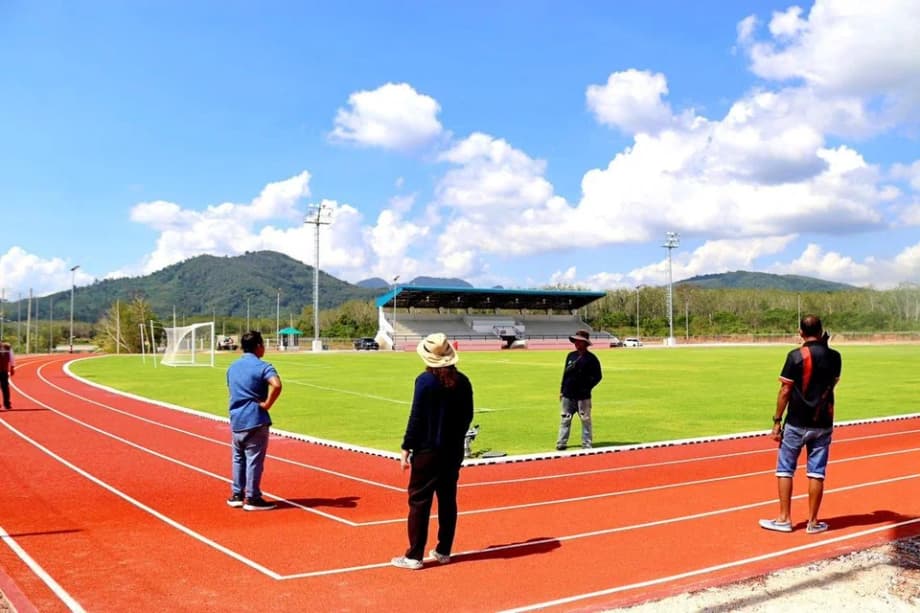
A newly constructed sports complex in southern Thailand has become the subject of international scrutiny and ridicule after officials unveiled a running track featuring sharp right angle corners instead of the standard curved design found at athletic facilities worldwide. The Padang Besar Municipality Stadium in Songkhla province, built at a cost of approximately 30 million baht (S$1.22 million), has sparked intense debate about urban planning, public spending, and basic safety standards in sports infrastructure.
- A Unusual Sports Complex Draws International Attention
- The Engineering Behind Standard Track Design
- Official Explanations and Justifications
- Social Media Mockery and Public Outrage
- Anti-Corruption Investigation Launched
- Safety Concerns and Practical Implications
- Broader Questions About Infrastructure Planning
- The Bottom Line
The controversy began when images of the completed facility first appeared on the Facebook page of the Padang Besar municipality office on December 24. What was intended to be a proud announcement of a new public asset quickly transformed into a public relations nightmare as the peculiar track design circulated across social media platforms. The running track surrounds a standard football field but mirrors its rectangular shape with sharp 90 degree turns at each corner, creating what many experts describe as a potentially hazardous configuration for anyone attempting to run at speed.
The stark contrast between this facility and conventional stadium designs has drawn comparisons to architectural oddities and prompted serious questions about the planning process behind the project. While the football pitch itself reportedly meets international standards, the accompanying running track has become the focal point of criticism from athletes, safety experts, and concerned citizens alike.
The Engineering Behind Standard Track Design
To understand why this particular design has raised so many eyebrows, it is essential to comprehend the engineering principles that govern standard running track construction. Athletic tracks worldwide feature oval shapes with banked curves for specific physiological and mechanical reasons. When runners move at speed, centripetal force is required to navigate turns smoothly. Sharp right angle corners force runners to decelerate dramatically, breaking their momentum and increasing the physical stress on joints, particularly knees and ankles.
The physics of running dictates that maintaining momentum through curved turns requires less energy expenditure than stopping and restarting motion. Standard track designs use radii that allow athletes to maintain their pace while shifting their body angle slightly. The centrifugal force generated by running around a curve is countered by banking the track surface, which helps runners maintain their speed without excessive lateral pressure on their lower bodies.
Orthopedic experts have long understood that the repetitive impact of running places significant stress on the musculoskeletal system. The human body is designed to move most efficiently in forward motion with gradual directional changes. Abrupt 90 degree turns force runners to place uneven pressure on their joints, potentially leading to overuse injuries, tendon strain, and increased risk of falls. This is particularly concerning in a public facility where users may have varying levels of fitness and athletic experience.
Official Explanations and Justifications
In response to the mounting criticism, local officials have offered explanations for the unusual design. Dech-it Khaothong, a former Member of Parliament for Songkhla and former deputy interior minister who was involved in securing funding for the project, stated publicly that the track was never intended for competitive athletics. According to Dech-it, the space limitations of the site made it impossible to construct both a regulation football pitch and a standard oval running track. The decision was made to prioritize the football field, with the walking path added as a supplementary feature in the remaining space.
The track was never intended for athletic purposes but only as an exercise path for walking.
Dech-it explained in statements to local media that the track was essentially a bonus feature. He noted that the football pitch meets international standards, emphasizing that the primary objective of providing a quality playing field had been achieved. This explanation has done little to quell public skepticism. Critics argue that if space was indeed so limited that a proper track could not be accommodated, the resources allocated to constructing a substandard one might have been better used elsewhere. The fact that the facility was built with public funds raises questions about accountability in the planning and approval process.
Dech-it noted that the project has not yet been formally handed over to municipal authorities and could theoretically be modified, though no commitment to such changes has been made. The rationale behind prioritizing the football pitch stems from the municipality’s need for its own sports venue. Previously, local organizations had to rent private facilities for events, which often led to scheduling conflicts and increased costs. The new stadium was intended to provide a dedicated public space for sporting activities in the region, which is located near the Malaysian border and serves a growing community.
Social Media Mockery and Public Outrage
As images of the unusual track spread across social media platforms, the internet responded with a mixture of amusement and genuine concern. Reddit users posted comments questioning whether the photos were part of an April Fool’s prank, while Facebook users shared jokes about the potential for injuries and the apparent lack of common sense in the design process.
Is today April 1st?
Quipped one Reddit user in response to photos of the facility. Others took a more serious tone, highlighting the potential physical dangers of such a design. Social media commenters noted that attempting to run around sharp corners at speed would place extreme stress on runners’ knees and ankles, potentially causing injuries that could end athletic careers.
In case this 90 degree turn concept catches on, we will need to start practising sharp turns. My knees may not cope.
Remarked another user. While some commenters found humor in the situation, making puns about cutting corners, others expressed frustration about what they perceived as wasteful spending of public funds. The facility’s construction cost represents a significant investment for a municipality. The revelation that nearly 7 million baht was allocated specifically for the track construction has particularly angered taxpayers who question the value and utility of such a feature.
Anti-Corruption Investigation Launched
The growing public outcry has prompted official action beyond simple explanations from local authorities. On January 14, the National Anti-Corruption Commission announced that it had launched an investigation into the project. The probe will examine various aspects of the construction process, including contract bidding, budget allocation, and adherence to proper planning procedures.
Ram Wasuthanapinyo, director of the NACC’s Songkhla office, emphasized that the investigation extends beyond the unusual appearance of the stadium. The commission is evaluating whether the project delivered appropriate value for the nearly 35 million baht of public funds invested. The review will assess whether the planning process was transparent at every stage and whether the public will receive maximum benefit from the completed facility.
This inspection was not just about the unusual appearance of the stadium. We also focused on the value for money of the nearly 35 million baht of public funds, ensuring that the public would receive maximum benefit and that the project was transparent at every stage.
Of particular interest to investigators are concerns about maintenance and drainage systems at the complex. Critics have questioned whether the unusual track design might create additional maintenance challenges or water accumulation issues that could further strain municipal budgets. The construction contract itself is being reviewed to determine whether proper procedures were followed and whether any corners were cut during the approval and building process. This investigation reflects broader concerns in Thailand about infrastructure planning and accountability at the municipal level.
Safety Concerns and Practical Implications
Beyond the questions of fiscal responsibility, serious safety concerns have been raised by athletics professionals and medical experts. The biomechanics of running dictates that human bodies are not designed to make sharp 90 degree turns at speed. When a runner approaches a right angle corner, they must either slow dramatically or risk injury from the sudden change in direction.
The most immediate risk involves the increased likelihood of slips and falls. The coefficient of friction between running shoes and track surfaces is designed for forward motion and gradual turns. Sharp corners create lateral forces that can exceed the traction available, causing runners to lose their footing. This risk is exacerbated during wet conditions when the track surface becomes more slippery.
Medical professionals have also highlighted the potential for chronic injuries from repeated use of such a facility. The uneven stress placed on knees, ankles, and hips when navigating sharp corners can lead to overuse injuries, tendonitis, and stress fractures. For elderly users or those with pre-existing joint conditions, the track design presents particular hazards that might discourage exercise rather than promote it.
Even for walking, as officials claim was the intended use, the sharp corners present unnecessary challenges. Walking paths are typically designed with gentle curves for both aesthetic and practical reasons. Right angle turns require walkers to slow their pace and shift their weight awkwardly, which diminishes the cardiovascular benefits of continuous walking exercise.
Broader Questions About Infrastructure Planning
The controversy surrounding the Padang Besar stadium raises important questions about urban planning and public infrastructure development. The case highlights what can happen when projects proceed without adequate consultation with relevant experts, particularly in specialized fields like sports facility design.
Standard practices in sports architecture involve extensive consultation with athletic associations, safety experts, and potential users during the planning phase. This process helps ensure that facilities meet the needs of the community while adhering to established safety and performance standards. The absence of such consultation appears evident in this case, where basic principles of track design seem to have been overlooked entirely.
The situation also illustrates the challenges municipalities face when working with limited budgets and space constraints. Urban density often forces difficult trade-offs in facility design. When compromises are necessary, they should be made transparently during the planning process rather than emerging as surprises after construction is complete. Looking forward, the Padang Besar case may serve as a cautionary tale for other municipalities embarking on public infrastructure projects.
The importance of engaging technical experts, conducting feasibility studies, and maintaining transparency throughout the planning and construction process cannot be overstated. As communities increasingly demand accountability for how public funds are spent, projects like this one face greater scrutiny than ever before. The case has reignited debates around the need for stricter planning protocols, public consultation, and transparent budgeting in regional infrastructure projects across Thailand.
The Bottom Line
- A new 30 million baht sports complex in Padang Besar, Songkhla, features a running track with sharp right angle corners instead of standard curves.
- Officials claim the track was designed only for walking, not athletic competition, because of space constraints after prioritizing the football pitch.
- The unusual design has sparked international attention and mockery on social media, with users questioning both safety and common sense.
- The National Anti-Corruption Commission has launched an investigation into the project’s planning, budgeting, and construction processes.
- Technical experts warn that right angle corners pose significant injury risks for runners and even present challenges for walkers.
- The football pitch reportedly meets international standards, but critics question the value of including a non-functional track at substantial cost.
- The project has not yet been officially handed over to municipal authorities, leaving open the possibility of future modifications.