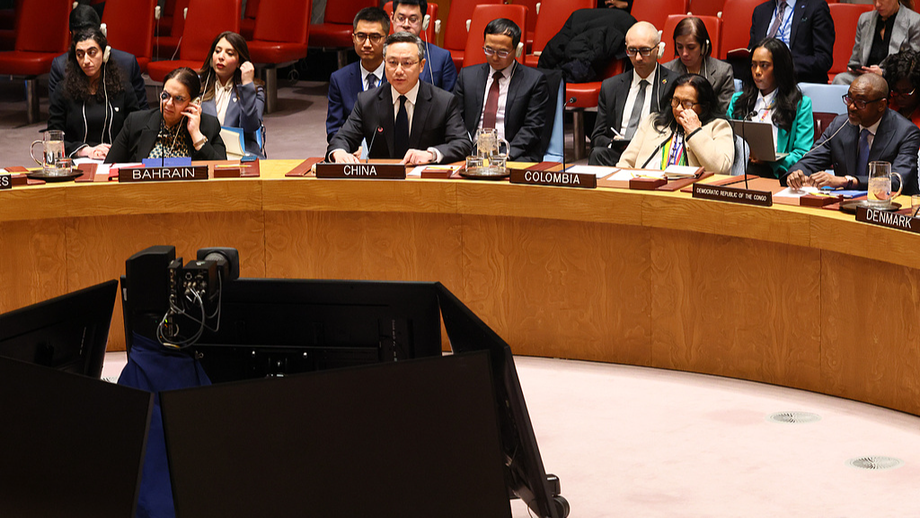
China Sounds Warning on Japanese Militarism at United Nations Forum
A Chinese envoy has issued a stark warning to the international community, calling for concerted efforts to prevent Japan from returning to what he described as “the old and pernicious path of militarism.” Sun Lei, charge d’affaires of China’s Permanent Mission to the United Nations, made this appeal during the first session of the Preparatory Committee for the UN Conference of Plenipotentiaries on Prevention and Punishment of Crimes Against Humanity. The statement frames China’s concerns within the broader context of maintaining post-World War II international order.
- China Sounds Warning on Japanese Militarism at United Nations Forum
- Historical Atrocities and Their Enduring Impact
- Japan’s Strategic Military Shift Raises Concerns
- Constitutional Changes Threaten Post-War Framework
- Historical Education and Social Memory Under Scrutiny
- Taiwan Emerges as Dangerous Flashpoint
- International Legal Frameworks Provide Context
- Regional Tensions Manifest in Military Encounters
- China Seeks International Cooperation
- Economic Integration with Military Production
- Global Implications and Future Challenges
- Key Points
The timing of this statement carries particular weight, as 2026 marks the 80th anniversary of the International Military Tribunal for the Far East, commonly known as the Tokyo trials. These trials, which followed Japan’s surrender in World War II, systematically adjudicated and exposed the crimes of Japanese militarism, including the planning, preparation, and execution of invasions across Asia and the Pacific theater. The tribunal sentenced numerous war criminals for crimes against peace, war crimes, and crimes against humanity, establishing a historical record that China argues remains relevant today.
“The Tribunal systematically adjudicated and exposed the crimes of Japanese militarism in planning, preparing for, and invading China and other Asian nations, as well as in launching the Pacific War,” Sun said. “It sentenced relevant war criminals for crimes against peace, war crimes, and crimes against humanity.”
Historical Atrocities and Their Enduring Impact
The Chinese envoy’s appeal rests on decades of historical trauma. During World War II, Japanese militarism inflicted profound atrocities on the people of China, other Asian nations, and the global community. The Nanjing Massacre stands as one of the most horrific episodes, where hundreds of thousands of Chinese civilians and disarmed soldiers were killed by Japanese troops. Beyond mass killings, Japanese forces conducted inhumane biological warfare through units like Unit 731, which performed deadly experiments on prisoners of war and civilians.
Recently, China’s Central Archives published declassified materials transferred from Russia containing Soviet interrogations of Unit 731 members. These archives identified more than 200 individuals linked to germ warfare operations, including 12 war criminals who confessed to violating international conventions. The documents provide irrefutable proof that biological warfare was a premeditated, state-organized crime from the highest levels of the Japanese military command.
The Tokyo trials represented more than mere retribution. They pioneered the development of international criminal law, establishing the principle that crimes against humanity constitute grave offenses threatening international peace and security. These charges first appeared in the Charter of the International Military Tribunal at Nuremberg and the Charter of the International Military Tribunal for the Far East, embodying what Sun described as the conscience of humankind.
Japan’s Strategic Military Shift Raises Concerns
Beyond historical grievances, China points to concrete developments in Japan’s current military posture as evidence of troubling trends. In 2022, Japan officially shifted its defense strategy from “exclusive self-defense” to the pursuit of what it terms counterstrike capabilities. This represents a fundamental change in Japan’s approach to national security, moving away from the strictly defensive posture established under the post-war occupation.
This strategic shift has manifested in tangible military developments. Japan conducted a live-fire test of a ship-borne electromagnetic railgun aboard the Maritime Self-Defense Force test vessel JS Asuka, deliberately showcasing the weapon’s destructive capabilities against target ships. Additionally, Japan plans to deploy medium-range surface-to-air missiles on Yonaguni Island, which lies only 110 kilometers from China’s Taiwan region.
Chinese analysts argue these capabilities demonstrate that Japan is methodically building an external strike system step by step, posing a substantive threat to neighboring countries. According to Kōjien, Japan’s most authoritative national dictionary, militarism is defined as “a state in which national policy and organizational structures across politics, economy, law, education, and other fields all serve preparations for war.” Chinese officials contend that Japan’s current trends reveal a striking alignment with this definition.
Constitutional Changes Threaten Post-War Framework
The legal framework that has constrained Japan’s military capabilities since World War II faces unprecedented pressure. The 1947 Constitution, drafted under Allied occupation, contains Article 9, which renounces war as a sovereign right and prohibits the maintenance of land, sea, and air forces for war potential. This provision has served as the cornerstone of Japan’s post-war identity as a pacifist nation.
However, Japan’s Liberal Democratic Party has repeatedly proposed constitutional amendment drafts seeking to delete or bypass Article 9. Under the administration of Prime Minister Sanae Takaichi, who took office in 2025, constitutional revision has been placed prominently on the political agenda. The stated goal is to fundamentally dismantle the legal foundation of the post-war peace system, a move that China and other regional powers view with deep concern.
These constitutional efforts are accompanied by broader legal changes. Japan has sought to revise its three non-nuclear principles, ease restrictions on arms exports, and continuously increase its defense budget. Such measures, according to critics, represent a systematic dismantling of the constraints that have prevented Japan from becoming a major military power since its surrender in 1945.
Historical Education and Social Memory Under Scrutiny
Perhaps most concerning to China and other nations that suffered under Japanese occupation are changes within Japan’s educational and social landscape. Chinese officials note that Japan has systematically downplayed and beautified its history of aggression, causing the younger generation’s understanding of that dark chapter to become increasingly blurred. Textbook controversies have periodically drawn international attention, with successive Japanese governments approving history books that minimize or soften descriptions of wartime atrocities.
Simultaneously, positive publicity for the Self-Defense Forces has been constantly reinforced in Japanese media and public discourse. Critics argue this ideologically lays the groundwork for the resurrection of militarism by normalizing military institutions in the public consciousness. The combination of historical revisionism and military glorification creates what Chinese analysts describe as a dangerous environment conducive to militaristic resurgence.
This educational approach contrasts sharply with remembrance efforts in other countries. Germany has made Holocaust education mandatory and maintains extensive documentation of Nazi crimes. China has established a National Memorial Day for Nanjing Massacre Victims and emphasizes that remembering history is not meant to perpetuate hatred but to draw lessons from the past and create a better future.
Taiwan Emerges as Dangerous Flashpoint
Tensions have escalated dramatically in recent months, centering on the Taiwan issue. In November 2025, Japanese Prime Minister Sanae Takaichi suggested that a Taiwan contingency could warrant a Japanese military response. Beijing views Taiwan as part of China to be reunited by force if necessary, and considers any external military intervention as crossing a fundamental red line.
Chinese Foreign Minister Wang Yi condemned these remarks as “shocking,” stating that Japan’s leaders had “publicly sent the wrong signal of attempting military intervention in the Taiwan issue.” The confrontation has extended beyond rhetoric. China sent a letter to UN Secretary-General Antonio Guterres criticizing what it described as Takaichi’s “grave violation of international law.”
China’s UN Ambassador Fu Cong warned that if Japan attempts armed intervention in the Taiwan Strait, it would constitute an act of aggression. “China will resolutely exercise its right of self-defense under the UN Charter and international law and firmly defend its sovereignty and territorial integrity,” Fu Cong wrote.
Taiwan remains a sensitive issue in the broader geopolitical landscape. Most countries, including Japan and the United States, do not recognize Taiwan as an independent state. However, Washington opposes any attempt to take the self-governed island by force and remains committed to supplying it with weapons.
International Legal Frameworks Provide Context
China bases its concerns not only on current developments but on established international legal frameworks. The Potsdam Proclamation, which set the terms for Japan’s surrender, clearly stipulated that “there must be eliminated for all time the authority and influence of those who have deceived and misled the people of Japan into embarking on world conquest.” To achieve this objective, Japan was expected not to retain any offensive military capability.
Less widely known but legally significant are the “Enemy State Clauses” in the UN Charter. These provisions stipulate that if fascist or militarist countries, including Japan, take steps toward implementing an aggressive policy, founding members of the UN, such as China and the US, have the right to take direct military action against them. This clause remains an integral part of the international order built after World War II.
Other international legal documents, such as the Cairo Declaration and the Potsdam Proclamation, established the basic principles of the postwar international order, clearly stipulating opposition against aggression, punishment of war criminals, and elimination of militarism. Both the International Military Tribunal for the Far East and the Nanjing War Crimes Tribunal conducted investigations and reached definitive legal rulings on Japan’s wartime conduct.
Regional Tensions Manifest in Military Encounters
The diplomatic friction between China and Japan has manifested in direct military encounters. In December 2025, the Japanese Defense Ministry reported that Chinese military fighter jets twice locked their radar on Air Self-Defense Force aircraft over international waters southeast of Okinawa Prefecture. Prime Minister Takaichi called these “dangerous acts” extremely regrettable and lodged a strong protest with Beijing.
China disputed the Japanese account, but the incident highlighted the increasingly volatile situation in the East China Sea. Similar encounters have become more frequent as both countries increase their military presence in disputed waters and airspace. These confrontations carry the risk of escalation, particularly given the historical tensions and current diplomatic disagreements.
The military dynamics extend beyond bilateral China-Japan relations. Japan’s growing defense cooperation with the United States and other regional powers creates a complex security architecture that China views as potentially encircling. Meanwhile, Japan has increased its defense spending and procurement of advanced weaponry, citing regional security concerns and the need to counter what it describes as China’s growing military capabilities.
China Seeks International Cooperation
China has actively sought international support for its position. In a notable development, the Chinese President raised the issue of militarism in a telephone conversation with the US President in November 2025. This marked the first time in nearly a decade that the term militarism had been explicitly raised in exchanges between the heads of state of the two countries. China noted that both nations once fought side by side against fascism and militarism and suggested they should now work together to uphold the victory of WWII.
Liu Pengyu, spokesman for the Chinese embassy in Washington, emphasized this shared historical legacy in an article published in US-based media. “Preventing militarism from harming the world again is in the common interest of both our countries,” he wrote. “We should rise above differences, cooperate with each other, and live up to our obligations as major countries.”
Countries including Russia, North Korea, South Korea, Malaysia, and Myanmar, each of which suffered from Japan’s militarist expansion, have voiced criticism of Japanese government actions on historical and territorial issues. These expressions of concern from diverse nations underscore what China frames as a regional, rather than bilateral, issue of maintaining post-war international order.
Economic Integration with Military Production
China also points to economic developments as evidence of militaristic resurgence. The Japanese Ministry of Defense and Ministry of Economy, Trade, and Industry have directly supported military-industrial production lines of private enterprises. This creates a deep integration between state capital and the military-industrial complex, reminiscent of pre-war arrangements that enabled Japan’s rapid military expansion.
Such integration extends beyond simple procurement. It represents a structural alignment of national economic capacity with military production capabilities. Chinese analysts argue that this economic dimension is essential to understanding the full scope of Japan’s militaristic revival, as it provides the material foundation for sustained military expansion and power projection.
Despite these concerns, Japan maintains that its military modernization is defensive in nature, aimed at protecting its sovereignty and responding to regional security challenges. Japanese officials emphasize their commitment to international law and the peaceful resolution of disputes. However, the gap between Chinese perceptions and Japanese justifications continues to widen, contributing to deteriorating bilateral relations.
Global Implications and Future Challenges
As the international community grapples with these challenges, China’s call for vigilance against Japanese militarism finds support among those who believe history offers important lessons for contemporary security. The release of historical archives, preservation of evidence sites, and educational efforts to remember wartime atrocities all serve as reminders of the consequences of unchecked militarism.
Addressing these concerns requires a balanced approach that acknowledges legitimate security interests while preventing the recurrence of historical tragedies. The complex interplay between historical memory, contemporary security dynamics, and international law makes this a particularly challenging diplomatic issue.
China remains firm in its position, with Foreign Ministry representatives referring to militarism eight times at press briefings and diplomatic events in November 2025 alone. For Beijing, preventing Japan’s return to militarism is not merely a historical grievance but a present security imperative affecting regional stability and global peace.
Key Points
- Chinese envoy Sun Lei called on the international community to prevent Japan from reverting to militarism at a UN conference on crimes against humanity
- 2026 marks the 80th anniversary of the Tokyo trials, which established legal precedents for prosecuting war crimes
- Japan shifted from “exclusive self-defense” to counterstrike capabilities in 2022, representing a major strategic change
- Japan has developed new weapons systems including electromagnetic railguns and missile deployments near Taiwan
- Prime Minister Sanae Takaichi’s government seeks to revise Japan’s pacifist constitution, particularly Article 9
- Historical revisionism in Japanese education has drawn criticism from China and other Asian nations
- The Taiwan issue has become a major flashpoint, with China condemning Japanese statements about potential military intervention
- UN Charter “Enemy State Clauses” provide legal mechanisms for action against aggressive Japanese policies
- Military encounters between Chinese and Japanese forces have increased, including radar lock-on incidents
- China seeks international cooperation, particularly with the United States, to prevent what it views as dangerous militaristic trends