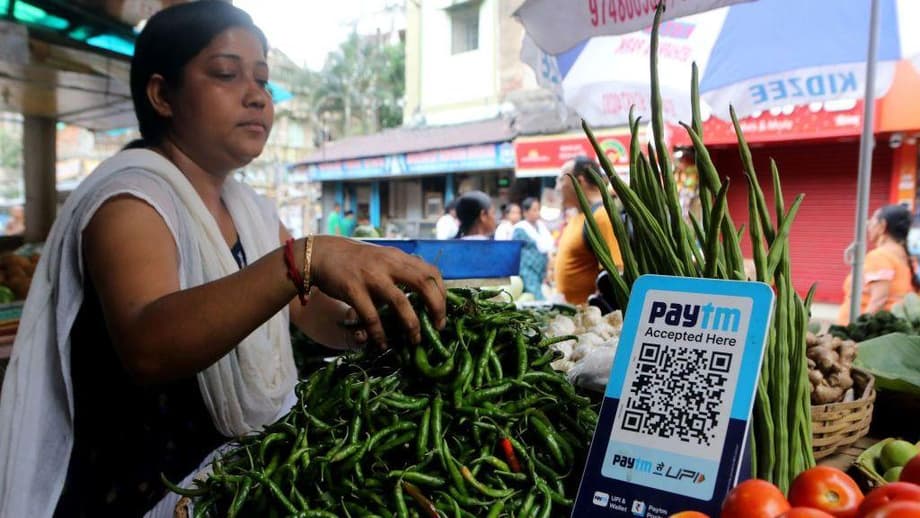
A new cost for some UPI payments
India is introducing a Merchant Discount Rate on selected payments made through the Unified Payments Interface, the instant payment network used by hundreds of millions of people. From 15 October 2026, businesses will pay a fee of 0.4% when customers use UPI to make specified merchant payments above 2,000 rupees, or about $21.
- A new cost for some UPI payments
- Which payments will remain free?
- Why introduce MDR after years of free UPI?
- Why retailers fear a return to cash
- Fuel retailers seek a special exemption
- Investment platforms warn of a different problem
- Government says customers will not bear the fee
- Opposition parties question who will pay
- What the transaction data shows
- What happens next?
- The Bottom Line
The charge will be capped at 300 rupees per transaction. At the standard rate, a payment of 2,000 rupees would generate a fee of about 8 rupees, while a 10,000 rupee payment would cost the merchant 40 rupees. The full 300 rupee cap applies to transactions of 75,000 rupees or more.
Customers will not be charged directly, and businesses are not permitted to add the MDR to the bill. The fee will instead be divided among banks, payment service providers, merchant acquiring companies and the National Payments Corporation of India, which operates UPI.
The policy marks a major change for a system that has been promoted for years as free, instant and accessible. It has also opened a wider debate over who should pay for the infrastructure behind India’s digital payments boom.
Which payments will remain free?
The new rule does not apply to every UPI transaction. Person to person transfers will remain free regardless of the amount sent. Merchant payments of up to 2,000 rupees will also remain free, as will payments covered by the zero MDR framework for small merchants.
QR code payments made to small merchants in rural and semi urban areas will not attract the charge. NPCI defines small merchants under the new framework as businesses receiving up to 1 lakh rupees a month through UPI QR codes, according to industry reporting.
The government says roughly 96% of person to merchant transactions will remain unaffected. That figure includes payments below the threshold and transactions made by merchants protected by the zero fee arrangements.
Some sectors will face a fixed fee rather than the 0.4% rate. Payments above 2,000 rupees for fuel, railways, telecom services, insurance and agricultural inputs will attract a flat 5 rupee charge. Capital market transactions are reported to have a much lower rate of 0.02%, reflecting the high value of many payments in that category.
Why introduce MDR after years of free UPI?
UPI was launched in 2016 and quickly became a central part of daily commerce in India. Customers can pay by scanning a QR code or selecting a contact in a mobile app, with the money moving almost instantly between bank accounts.
The network has supported payments at street stalls, taxis, supermarkets, hospitals and online businesses. It has also helped bring more transactions into the formal economy, where payments are easier to record and reconcile than cash sales.
Until now, banks, technology companies and the government have carried much of the cost of maintaining and expanding the network. The government has also used public funds to support incentives that encouraged banks and payment companies to keep small UPI payments free.
Officials say the new MDR will help make the network financially sustainable. The Finance Ministry has described the charge as a payment for processing services, rather than a tax collected by the government. The funds are expected to support investment in payment infrastructure, reliability, innovation and cyber security.
The UPI Steering Committee fixed the rate at 40 basis points, or 0.4%. Industry estimates suggest the charge could generate as much as 16,000 crore rupees in annual revenue for participants in the payments network, although the actual amount will depend on transaction volumes and exemptions.
Why retailers fear a return to cash
Retail groups say the financial burden could be heavier than the headline rate suggests, particularly for businesses that operate on narrow margins. A merchant selling a high value item may have to pay the fee even when the sale itself produces little profit.
Kumar Rajagopalan, chief executive of the Retailers Association of India, said the policy could weaken years of progress in digital payment adoption.
During the festive season, a large share of transactions crosses the 2,000 rupees mark, and the moment a fee attaches itself to digital payment, cash becomes the path of least resistance.
Retailers are especially concerned about the timing. The charge is scheduled to begin shortly before Diwali, one of India’s busiest shopping periods. Clothing, electronics, jewellery and household purchases often exceed the new threshold, creating a large number of transactions on which merchants would pay MDR.
Some traders say they may ask customers to pay in cash for larger purchases. Others could limit UPI acceptance or adjust prices indirectly, even though the formal rules prohibit them from passing the charge on as a separate fee.
The risk is greater for smaller businesses with limited access to credit and little room to absorb new expenses. Cash also avoids payment processing costs, although it creates its own risks, including handling expenses, theft and weaker transaction records.
Fuel retailers seek a special exemption
Petrol pump dealers have made one of the strongest sectoral objections. The All India Petroleum Dealers Association has asked the Union Finance Minister to remove MDR from all UPI payments at fuel outlets, regardless of transaction size.
Fuel dealers say their earnings are based on fixed margins per litre rather than a percentage of the total sale. A customer paying for a larger volume therefore increases the value of the transaction without giving the dealer a proportionate increase in profit.
The association says dealer commissions have not been revised since October 2017, while electricity, wages and compliance costs have risen. Even a flat 5 rupee charge could become a substantial recurring expense at outlets that process thousands of digital payments each day. A 0.4% fee would be more costly still.
Dealers have requested either a complete exemption or a specific exemption for fuel payments above 2,000 rupees. They argue that customers receive the same fuel whether they pay in cash, by card or through UPI, so the payment method should not reduce the dealer’s fixed margin.
Investment platforms warn of a different problem
Online brokers, mutual fund platforms and investment advisers say the rules may create unusual costs because money transferred to an investment account does not always produce an immediate sale or fee earning activity.
For example, an investor may transfer 1 lakh rupees to a brokerage account and leave the money unused. If the brokerage must pay 0.02% or another applicable MDR on that transfer, it incurs a cost without receiving a commission from a trade.
Zerodha founder Nithin Kamath has argued that transfers to a customer’s own brokerage account resemble person to person payments rather than ordinary merchant purchases. He has also pointed to regulatory rules requiring brokers to return unused client funds at regular intervals. Customers may then send the money back through UPI, creating repeated costs without new business.
CapitalMind founder Deepak Shenoy has warned that percentage based fees could be especially difficult for low cost mutual funds. A fund with a very small annual expense ratio could pay more in payment charges than it earns from a short term investment funded through UPI.
Industry representatives have suggested a smaller percentage with a low cap, or a fixed charge of 2 rupees or less for investment transactions. They say such a model would protect low margin products while still giving payment providers some income.
Government says customers will not bear the fee
The Finance Ministry has stressed that UPI remains free for consumers. It says the MDR will apply to a limited portion of merchant transactions and that businesses are not allowed to pass the charge on directly.
The ministry has also rejected claims that the decision was driven by foreign pressure. In an official statement, it said India’s UPI policy is being set independently to build a sustainable, inclusive and affordable digital payments network.
Supporters of the policy say the current arrangement hides the true cost of UPI. When public money covers payment incentives, taxpayers fund a service used heavily by large companies as well as small shops. A market linked payment model, they argue, would place more of the cost on businesses that gain the most from digital transactions.
Bipin Preet Singh, chief executive of MobiKwik, has said that shifting from public subsidies to a pricing model could reduce the burden on taxpayers while linking payment costs to businesses that benefit from the network.
When government funds the subsidies paid for UPI, that amount comes from taxpayers’ pocket. Moving to a market linked pricing mechanism removes this tax burden and directly links the cost to large businesses which benefit from UPI.
Opposition parties question who will pay
Political criticism has focused on the gap between the formal rule and its likely effect in the marketplace. Congress leader Rahul Gandhi has argued that merchants may eventually recover the cost through higher prices, even if customers are not charged a separate UPI fee.
Gandhi has also pointed out that high value transactions make up a small share of the total number of payments while representing a much larger share of the money moving through UPI. His argument is that a narrow group of transactions could still affect prices across important sectors.
The government disputes that interpretation and says the charge applies to merchants, not ordinary users. It has also said the policy was considered years ago and will not be withdrawn.
The debate has therefore moved beyond the technical question of MDR. It now concerns whether digital payment infrastructure should be treated as a public service, a commercial network or a combination of both.
What the transaction data shows
UPI’s scale explains why even a small fee has drawn such strong attention. In August, the network processed a record 24.51 billion transactions worth 29.82 trillion rupees, according to NPCI data.
Most of those payments are small and will remain free. The financial value of larger merchant payments, however, is considerable. A small percentage charge on a large transaction can quickly exceed the cost of traditional payment arrangements, especially for businesses that previously negotiated flat fees.
The new system may also change behaviour in ways that are difficult to measure. Customers could split purchases into smaller payments to stay below the threshold, merchants could encourage bank transfers or cash, and investment platforms could shift users toward net banking or recurring payment mandates.
Payment providers argue that reliable networks, fraud monitoring and cyber security require constant spending. Retailers counter that wider digital adoption has already produced benefits for banks, platforms and the government, while small businesses are being asked to fund the next stage of expansion.
What happens next?
The first test will come when the fee begins during the festive shopping period. Fuel stations, retailers, investment platforms and other affected businesses will have to decide whether to absorb the expense, alter payment practices or seek exemptions.
Industry groups are expected to press for separate rules based on business margins and the purpose of a payment. A flat charge may suit fuel and insurance, while investment platforms may seek a lower cap. The government’s promise that customers will not be charged directly will also depend on enforcement and on whether businesses raise prices in other ways.
UPI is unlikely to lose its central role in Indian payments because most everyday transactions will remain free. The new MDR could still influence how businesses handle larger purchases and how the network is funded. Its success will depend on whether the fee generates enough revenue to support the system without encouraging merchants or customers to return to cash.
The Bottom Line
- A 0.4% MDR will apply from 15 October 2026 to specified UPI merchant payments above 2,000 rupees.
- The fee is capped at 300 rupees per transaction and will be paid by businesses, not directly by customers.
- Person to person transfers and most small merchant payments will remain free.
- Fuel, railways, telecom, insurance and agricultural input payments above the threshold will generally face a flat 5 rupee fee.
- Retailers and petrol pump dealers fear that the cost will reduce margins and encourage cash payments.
- Brokers and investment platforms say MDR may create costs when customers transfer money without making trades.
- The government says the revenue will support UPI operations, infrastructure, innovation and cyber security.