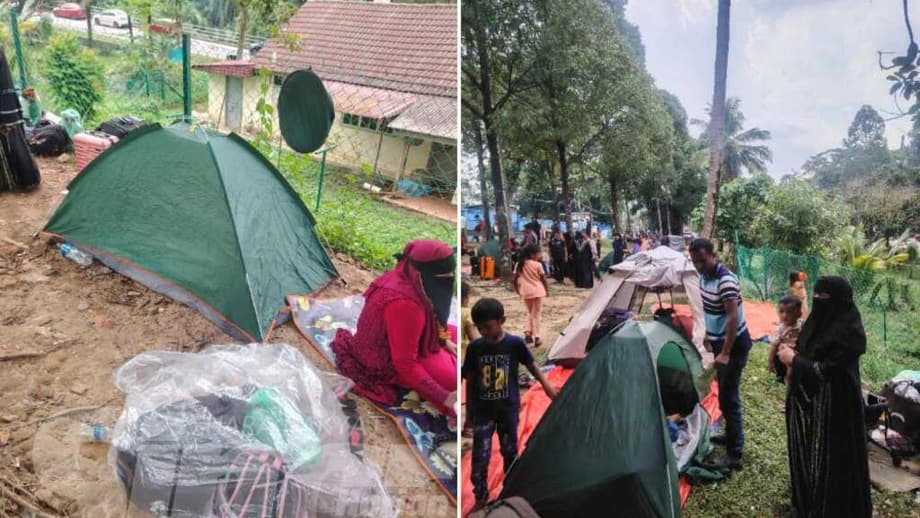
A refuge under growing pressure
Malaysia has long been a destination for Rohingya Muslims escaping persecution in Myanmar. That sense of safety is now weakening as online hate, false claims and public intimidation spread across the country.
- A refuge under growing pressure
- How misinformation became a national campaign
- From online hostility to forced eviction
- Children are paying the price
- A legal gap leaves refugees exposed
- Why return to Myanmar is dangerous
- Government response faces scrutiny
- A regional problem with digital consequences
- What to Know
About 126,000 Rohingya were registered with the United Nations refugee agency in Malaysia at the end of February 2026. They form the largest refugee community among roughly 215,600 refugees and asylum seekers registered in the country. Many more remain unregistered.
The latest campaign began in late April, according to rights advocates, and has continued for months. Social media posts accused Rohingya refugees of demanding land, special rights and control over Malaysian communities. A petition calling for their removal attracted hundreds of thousands of signatures before it was placed under review.
The campaign has moved beyond online arguments. Refugees have been forced from homes, children have been harassed on their way to school, and aid groups have faced threats. The episode shows how digital abuse can become a direct security risk for displaced people.
How misinformation became a national campaign
False accounts and fabricated posters helped spread the claim that Rohingya leaders wanted areas of Malaysia reserved for their community. Other posts portrayed refugees as criminals, economic burdens or people seeking to take over local land and jobs. Hashtags such as #SaveMalaysiaFromRohingya gave the campaign a common label and helped hostile content reach wider audiences.
Article 19 worker Maryam, whose name has been changed for safety, said her organisation reported harmful material to Meta. She said the platform’s moderation and complaint systems were too slow to respond to content that could cause immediate harm.
Rights groups say criticism of migration policy is legitimate, yet collective blame and calls for expulsion cross into incitement. Malaysia’s Human Rights Commission, known as SUHAKAM, has warned that abusive comments and hateful narratives are creating a dangerous process of dehumanisation.
Government figures also challenge some of the most repeated claims. Police data cited by rights advocates recorded 89 Rohingya individuals involved in criminal cases between 2024 and June 2026, representing 0.02 percent of criminal cases during that period. The Health Ministry has also said refugees pay foreigner rates for treatment at public facilities and do not receive subsidised healthcare in the way many social media posts claim.
From online hostility to forced eviction
On July 27, more than 100 Rohingya refugees were driven from a settlement in Kuala Muda, Penang. Local reports said the Rohingya population in the fishing village had grown from 108 people in 2018 to about 400 in 2026. Some residents cited competition for fishing work and pressure on local resources.
Refugee families were taken by bus to Kuala Lumpur, where they gathered outside the UN refugee agency’s office seeking protection and advice about resettlement. Police detained more than 100 people, including women and children, while checking their documents. Officials later confirmed that most or all of those detained held valid UN documentation, and the group was released into the care of civil society organisations.
The incident exposed the narrow choices available to people who have nowhere safe to go. The families were first removed from their homes, then treated as a public order issue when they sought help from the organisation responsible for refugee registration and resettlement.
Malaysia’s police said the area outside the agency’s office was a sensitive location that could not serve as a temporary settlement. Rights organisations responded that families evicted from their homes should have received protection rather than detention.
Children are paying the price
At least nine community schools for refugees temporarily closed amid threats and harassment. The exact number is difficult to establish because many schools operate informally and lack official recognition.
Amira, an education NGO founder who also asked to remain anonymous, said children had been chased and abused while travelling to class. Some incidents were filmed and shared online, adding to fear among parents, teachers and volunteer groups.
Ahmad, a Rohingya teacher in Kuala Lumpur, said two schools where he teaches closed for two weeks and one remained shut for a month. Classes have resumed, although staff advise students not to wear uniforms in public so they attract less attention.
The disruption carries long term costs. Many Rohingya children were denied education in Myanmar, and refugee schools in Malaysia are often their only route to basic learning. Interruptions can leave children more isolated and reduce their chances of finding safe work as adults.
Teachers also say Malaysians often assume that every refugee from Myanmar is Rohingya. Malaysia hosts people from several Myanmar communities, including Chin, Karen, Bamar and Rakhine groups. Treating all of them as one group makes it harder to identify real concerns and gives false claims greater reach.
A legal gap leaves refugees exposed
Malaysia is not a party to the 1951 Refugee Convention or its 1967 protocol. The country does not formally recognise refugee status in domestic law, meaning people registered by the UN agency can still be treated as irregular migrants under immigration rules.
Rohingya refugees cannot legally work and have no general right to attend government schools. Many survive through informal jobs where they can face wage theft, exploitation and arrest. Their UN cards may show that they need international protection, yet those cards do not provide the same statutory safeguards as a national identity document.
The government introduced a national registration programme called the Dokumen Pendaftaran Pelarian in 2026. Supporters describe it as a way to improve information about refugees and manage the population. Rights groups have called for strong safeguards because personal and biometric data could be misused for detention or forced return.
The government also temporarily suspended new UN refugee registration while it reorganised its own system. Advocates warn that undocumented asylum seekers could be arrested before they have a chance to explain their claims or seek protection.
Why return to Myanmar is dangerous
On July 23, Malaysia’s deputy foreign minister told Parliament that 5,000 Myanmar nationals held in immigration detention could be sent back. Prime Minister Anwar Ibrahim later said Myanmar had agreed to receive 5,000 Rohingya asylum seekers.
The proposal triggered alarm among refugee organisations. Rohingya were stripped of citizenship under Myanmar’s 1982 Citizenship Law and have faced decades of restrictions, violence and displacement. A military campaign in 2017 forced about 700,000 Rohingya to flee to Bangladesh after villages were burned and civilians were killed or attacked.
Myanmar remains affected by armed conflict, including fighting involving the military and ethnic armed groups. The International Court of Justice is considering allegations that Myanmar committed genocide against the Rohingya. Sending people back without reliable protection would risk violating the international rule against returning refugees to places where they face persecution, torture or serious harm.
The Myanmar Ethnic Rohingya Human Rights Organization Malaysia said the community could not trust Myanmar authorities to guarantee safety. The group warned that returnees could be forced into military service or used as human shields.
Malaysia later softened its position. Communications Minister Fahmi Fadzil said on August 5 that refugees would not be deported if screening showed they faced persecution or a threat to their lives. The foreign and home ministries were still reviewing the plan, leaving the 5,000 detainees in an uncertain position.
Government response faces scrutiny
Foreign Minister Mohamad Hasan said the UN refugee agency’s presence had made Malaysia a magnet for refugees and suggested the government could reconsider its role if more resettlement places were not arranged.
Resettlement, however, depends on other countries accepting refugees. The UN agency cannot simply transfer every registered person to a third country. Places are limited, and many refugees wait years for a decision.
Rights organisations have urged the government to condemn hate campaigns, investigate threats, protect schools and separate refugee screening from immigration punishment. They also want an end to indefinite detention, access to courts and safe legal routes for people to work and study.
Human Rights Watch said Malaysia should not return Rohingya refugees who remain targets of military violence in Myanmar. Fortify Rights warned that online threats can quickly become physical attacks and called for firm action against incitement.
Malaysia has presented itself as a defender of persecuted Muslims, including Palestinians. Refugee advocates say that reputation is weakened when Rohingya people, also overwhelmingly Muslim, are treated as a security problem rather than as survivors of persecution.
A regional problem with digital consequences
Southeast Asia has no binding regional asylum system. Countries often manage refugees through temporary measures, detention and informal arrangements. That leaves displaced people dependent on political decisions that can change quickly when public anger rises.
The Malaysian case also shows that physical escape is no longer enough to guarantee safety. Online campaigns cross borders instantly, repeat old propaganda and can influence public policy. Algorithms often spread emotional or shocking claims faster than factual corrections.
Technology companies have the ability to identify coordinated manipulation, remove threats and explain how moderation decisions are made. Civil society groups also want better digital literacy so users can recognise fabricated images, false statistics and accounts pretending to speak for refugee communities.
Protecting refugees therefore requires more than shelter and document checks. It requires action against threats that make schools unsafe, prevent people from seeking help and encourage attacks on entire ethnic groups.
What to Know
- Malaysia hosts about 126,000 UN registered Rohingya refugees.
- More than 100 Rohingya were detained after seeking help in Kuala Lumpur following an eviction in Penang.
- At least nine refugee schools temporarily closed because of harassment and security fears.
- Malaysia is not a party to the 1951 Refugee Convention and does not formally recognise refugee status.
- A plan to return 5,000 Myanmar nationals was later made conditional on safety checks.
- Rights groups say online hate and false claims are contributing to real world discrimination.