A major redesign of the US undersea strike force
The US Navy plans to designate 19 Virginia class attack submarines as guided missile submarines, creating a new generation of stealthy platforms for long range conventional strikes. The boats will receive the Virginia Payload Module, an 84 foot hull section containing four large launch tubes.
- A major redesign of the US undersea strike force
- Why the Ohio submarines are difficult to replace
- Why the Navy is choosing smaller, distributed firepower
- How the submarines fit a Taiwan conflict
- Hypersonic weapons add a new mission
- China is expanding its own undersea and missile forces
- A temporary reduction in strike capacity
- What the new force will and will not provide
- The Bottom Line
Each tube can carry seven Tomahawk cruise missiles, adding 28 weapons to the 12 launch cells found on earlier Virginia submarines. A VPM equipped submarine can therefore carry as many as 40 Tomahawks, while also supporting future weapons such as hypersonic missiles and other large payloads.
The first Virginia guided missile submarine is scheduled to enter service in 2029. Deliveries of the 19 planned boats, including 10 Block V and nine planned Block VI submarines, are expected to continue through 2038.
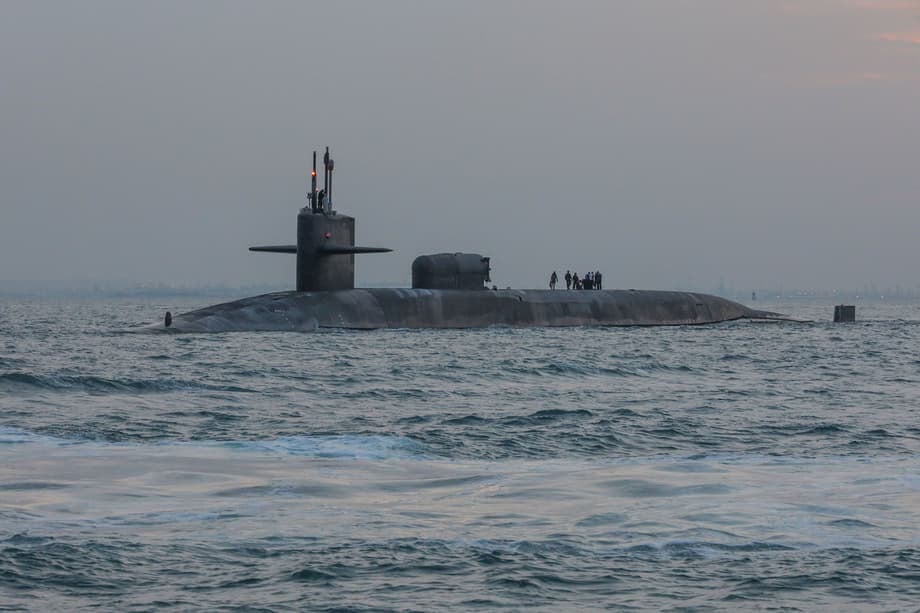
The decision comes as the Navy begins retiring its four Ohio class guided missile submarines. Those vessels remain the largest conventional missile platforms in the American fleet, with each able to carry up to 154 Tomahawks. Their retirement will create a period in which the Navy has fewer underwater launch cells, even as US planners prepare for a possible conflict in the Indo Pacific.
Why the Ohio submarines are difficult to replace
The four Ohio class guided missile submarines were converted from ballistic missile submarines in the early 2000s. Their original nuclear deterrent mission ended after changes in the US and Russian strategic arms posture, allowing the Navy to turn the boats into powerful conventional strike platforms.
An Ohio class submarine can launch a large salvo while remaining submerged and difficult to detect. The boats also have space for special operations forces, underwater vehicles, intelligence missions and command functions. Their large size gives them exceptional endurance and the ability to carry more than four times the missile load of a VPM equipped Virginia.
The USS Georgia began its deactivation process recently. The USS Ohio, USS Michigan and USS Florida are scheduled to follow over the next several years. The four boats together represent up to 616 Tomahawk launch positions, although some missile tubes can be assigned to special operations equipment.
Keeping the Ohio boats in service would preserve concentrated firepower, yet their hulls and reactors date from the 1980s. Maintenance costs are rising, and extending their service would compete for shipyard capacity with the Columbia class ballistic missile submarine program and future attack submarine projects.
Why the Navy is choosing smaller, distributed firepower
The Virginia plan is not a one for one replacement. One VPM equipped Virginia carries about 26 percent of the missile load of an Ohio class guided missile submarine. Four Virginias would be needed to match the missile capacity of one Ohio boat, before accounting for patrol schedules, maintenance and crew availability.
The Ohio submarines operate with two rotating crews, allowing a boat to spend more time at sea. Virginia submarines generally use one crew. That difference reduces the number of days a Virginia can remain deployed, although the newer class requires fewer personnel and provides improved sensors, automation and stealth.
Distributing missiles among more submarines also creates advantages. An adversary must locate and track more platforms instead of concentrating its search on a few very large boats. A Virginia can conduct attack missions, intelligence collection, mine warfare, anti submarine operations and support for special forces while carrying its missile load.
Vice Adm. Rob Gaucher, the Navy officer responsible for submarine programs, said the added capacity would give commanders more ways to apply strike power. The Navy views the new boats as part of a wider effort to place weapons across many platforms rather than depend on a small number of highly concentrated launch systems.
These VPM equipped SSGNs will ensure the Navy continues to dominate the undersea domain for decades to come. By integrating this additional payload capacity, we will have the ability to surge strike power to assure our allies, deter aggression and outmatch any adversary.
How the submarines fit a Taiwan conflict
The planned force reflects the geography of a possible war involving Taiwan. The first island chain runs from Japan through Taiwan and the Philippines. It is a region where China can deploy land based missiles, aircraft, sensors and naval forces to make surface operations dangerous.
Submarines can operate close to this chain without presenting the same visible target as a surface ship or aircraft. From concealed positions, they could launch missiles against radar sites, command centers, air bases, ports and missile units supporting a Chinese campaign.
RUSI analyst Sidharth Kaushal said submarines are among the few US capabilities able to remain near or inside the first island chain with a reasonable chance of survival. He also pointed to the value of launching fast, maneuverable weapons from locations closer to their targets.
They expand the number of platforms that can bring the fight deep into an enemy territory, and opponents will have to contend with more assets they have to track.
That approach could help the United States weaken China missile defenses before moving surface ships and aircraft closer to the battlespace. The purpose would be to disrupt the sensors and command networks that guide Chinese attacks, creating more room for carriers, destroyers and aircraft to operate.
Hypersonic weapons add a new mission
The VPM was designed to carry more than Tomahawk missiles. The large tubes can support future weapons, including the Conventional Prompt Strike system, which uses a hypersonic glide vehicle.
Hypersonic weapons travel at speeds above Mach 5 and can maneuver during flight. Their combination of speed and changing flight paths makes them harder to track and intercept than many conventional ballistic or cruise missiles. Launching such weapons from a submarine near contested waters would shorten warning time for an opposing command.
King College professor Alessio Patalano described the planned system as a major improvement in the submarines strike role. The Navy has been testing hypersonic technology, though the schedule, final weapon design and operational deployment numbers remain subject to development and budget decisions.
The shift also gives the Virginia class a role beyond the traditional attack submarine mission. The boats will still hunt enemy submarines and surface ships, collect intelligence and support special operations. Their larger payload section adds a heavier strike function without creating an entirely separate submarine design.
China is expanding its own undersea and missile forces
The American decision is shaped by rapid Chinese military growth. A recent assessment by the International Institute for Strategic Studies found that China launched more nuclear powered submarines than the United States between 2021 and 2025, 10 compared with seven. Chinese production also exceeded US output in total tonnage during that period.
China has expanded its stockpile of land based missiles as well. A 2024 Pentagon estimate said the Chinese Rocket Force increased its missile inventory by about 50 percent over four years. These weapons are intended to attack ports, airfields, supply sites and other facilities that could support US forces defending Taiwan.
China has also displayed hypersonic weapons and uncrewed underwater vehicles. Such underwater drones could search for submarines, monitor sea lanes or complicate American efforts to approach the Chinese coast undetected.
Some analysts still judge the US submarine force to hold a strong advantage in acoustic stealth, reliability and long distance operations. China operates six nuclear ballistic missile submarines and six nuclear attack submarines, alongside a larger fleet of diesel electric boats. Its growing numbers do not automatically translate into equal skill at finding and tracking American submarines.
The contest will depend on training, sensors, underwater communications, patrol experience and the ability to maintain boats far from home ports. China has improved quickly, yet American attack submarines retain decades of operational experience and continue to work closely with Japan, Australia and other regional partners.
A temporary reduction in strike capacity
The transition will leave the Navy with less concentrated underwater firepower before the Virginia SSGNs arrive. The Submarine Industrial Base Council has estimated that retiring the Ohio boats could reduce undersea strike capacity by as much as 60 percent during the gap.
The Navy will still operate Virginia submarines without the VPM, around 20 older Los Angeles class boats and three specialized Seawolf class submarines. These vessels can carry conventional submarine launched missiles, although none can match the Ohio class missile volume.
The United States is also losing launch capacity as Ticonderoga class cruisers retire. The combined reduction from those cruisers and the Ohio boats could remove more than 2,000 missile launch cells from the fleet by the early 2030s, depending on retirement schedules and how launch positions are counted.
Shipbuilding delays add pressure. US yards are producing Virginia submarines more slowly than the Navy target of two boats per year, while the Columbia program requires the same skilled workers, suppliers and industrial facilities. Shortages of welders, electricians, nuclear technicians and other specialists have affected delivery schedules.
What the new force will and will not provide
The Virginia SSGNs will provide more platforms, newer technology and a wider range of missions. Their smaller size may allow commanders to spread submarines across several areas, making the force harder to locate and giving allies more options for coordinated operations.
They will not replace the Ohio boats missile surge capacity in the near term. A single Virginia cannot deliver the same opening salvo, support as many special operations personnel or remain on patrol with the same two crew system. A larger number of boats will be required to produce comparable firepower.
The Navy is therefore making a trade. It is accepting less magazine depth per submarine in exchange for newer hulls, better survivability and a more distributed force. That choice supports long term modernization, yet it leaves a temporary weakness at a time when China is building missiles, ships and submarines at high speed.
Adm. Daryl Caudle, the chief of naval operations, said the Virginia SSGNs would build on the Ohio boats record by combining stealth with greater adaptability and sustained combat power. The statement reflects the Navy view that undersea access remains one of the strongest American advantages in a heavily defended Pacific theater.
The next generation of Virginia class SSGNs builds on that legacy with greater survivability, adaptability and sustained combat power.
The Bottom Line
- The Navy plans 19 Virginia class guided missile submarines with the Virginia Payload Module.
- Each VPM adds 28 missile positions, raising capacity to as many as 40 Tomahawks.
- The first new submarine is expected to enter service in 2029, with deliveries continuing through 2038.
- Each retiring Ohio class SSGN can carry up to 154 Tomahawks.
- The transition will reduce concentrated strike capacity before the new boats arrive.
- Virginia submarines will support Tomahawks, hypersonic weapons, intelligence missions and special operations.
- The program is designed to spread US firepower across more stealthy platforms as China expands its missile and naval forces.