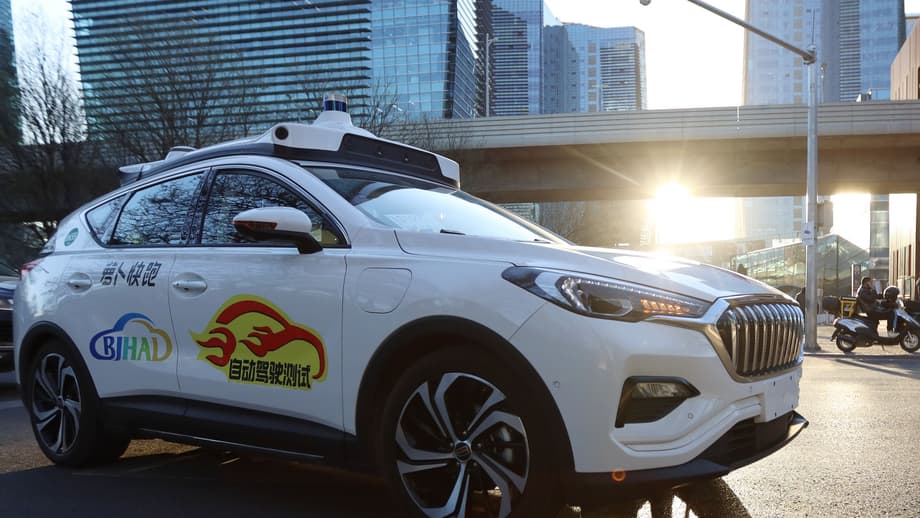
Europe becomes a new testing ground for Chinese autonomous taxis
Chinese autonomous driving companies are moving deeper into Europe through partnerships with local mobility firms, vehicle makers and transport operators. Their plans range from supervised road trials to public robotaxi services expected to begin in 2027, subject to regulatory approval.
- Europe becomes a new testing ground for Chinese autonomous taxis
- WeRide targets Denmark with an electric fleet
- Zagreb has already opened its service to passengers
- London and Luxembourg are the next major tests
- Why local partnerships are central to the strategy
- European roads will require new technical training
- Competition extends beyond Chinese companies
- Regulation will decide how fast services grow
- What to Know
WeRide, Baidu’s Apollo Go and Pony.ai are among the leading companies seeking a place in Europe’s emerging autonomous mobility market. The projects give Chinese firms access to new roads, traffic patterns and customers, while European partners contribute local operating knowledge, regulatory experience and established ride hailing networks.
The expansion is taking place as European governments work toward more consistent rules for automated vehicles. Eighteen European Union member states signed a declaration in June supporting large scale, cross border test areas for autonomous vehicles in public transport, freight and logistics. The plan calls for shared approval principles and coordinated permits, which could make it easier to test vehicles across national borders.
Robotaxis use cameras, radar, lidar and software to identify roads, vehicles, pedestrians and traffic signs. Level 4 autonomy means a vehicle can drive without a human driver in approved areas and under defined conditions. It does not mean the vehicle can operate anywhere in every kind of weather or road situation.
WeRide targets Denmark with an electric fleet
WeRide said on Aug. 3 that it had formed a strategic partnership with Danish shared electric mobility provider GreenMobility. The companies aim to launch a public robotaxi service in Denmark during the first half of 2027, provided they receive the required approvals.
Denmark will be WeRide’s first Nordic market and its sixth European market. The planned service will use the GXR, an EU compliant Level 4 electric vehicle based on Farizon’s SuperVAN platform. The vehicle uses more than 20 sensors, including lidar, high resolution cameras and a high precision navigation system.
GreenMobility will contribute experience from operating an electric shared car fleet and managing millions of trips in Denmark. WeRide will provide the autonomous driving system and vehicles. Testing and deployment are planned in cooperation with the Danish Road Directorate and Danish Transport Authority.
GreenMobility Group chief executive Kasper Gjedsted said the partnership would bring the company’s experience in shared vehicle operations into autonomous mobility. WeRide founder and chief executive Tony Han described the project as a model that could be repeated in other international markets.
The Danish launch is still a plan, rather than a commercial service. WeRide has announced projects in several European countries, though commercial operations have yet to begin in most of those markets.
Zagreb has already opened its service to passengers
Pony.ai has taken the most advanced commercial step so far in Europe. In April, it began a robotaxi service in Zagreb with Croatian mobility company Verne and Uber. The service is available through Verne’s app, while integration with Uber’s app is planned for a later stage.
Pony.ai supplies the autonomous driving technology, Verne owns the fleet and manages daily operations, and Uber provides access to its global ride hailing platform. Early vehicles carried trained operators while the service gathered operational experience and completed its initial rollout.
The companies describe Zagreb as Europe’s first commercial robotaxi service open to the public. They plan to expand the fleet to thousands of vehicles over the next several years and use the Croatian capital as a base for wider European activity.
Pony.ai chief executive James Peng said the partnership with Verne moved quickly because the two companies were flexible and closely matched in their approach. He said the company was updating software daily during the early deployment and had seen strong use from local residents.
Our model learns by itself so it adapts quickly to European driving styles and infrastructure, Peng said.
He pointed to roundabouts as one example of a road feature that is more common in Europe than in China. Narrow streets, historic city layouts and different driving customs also require the vehicles to learn from local conditions.
London and Luxembourg are the next major tests
Baidu’s Apollo Go and Freenow, the European mobility platform owned by Lyft, began testing sixth generation RT6 autonomous vehicles in London on July 28. The first trials are taking place in Brent, an area that combines urban and suburban roads. Safety operators are currently inside the vehicles.
The partners plan to offer rides to the public in 2027, subject to approval. London is likely to be one of the most demanding European markets because of its dense traffic, winding streets, narrow roads and left hand driving. The city also has extensive bus and rail services, which may reduce the number of trips available to robotaxis.
Baidu is pursuing other European projects. In Switzerland, Apollo Go plans to test RT6 electric vehicles with public transport operator PostBus. Initial mapping trips are expected to use safety drivers and carry no passengers. A public facing service called AmiGo is planned for the first quarter of 2027, with the steering wheels intended to be removed once the vehicles are approved for fully driverless operation.
Pony.ai is preparing another project in Luxembourg with ride hailing company Bolt and automaker Stellantis. Pony.ai will provide the autonomous driving system, Bolt will manage the customer platform and Stellantis will supply a midsize van designed to support Level 4 driving, along with engineering and manufacturing expertise.
Luxembourg is intended to serve as Pony.ai’s European operating and testing center. The country’s position within the EU could help the companies develop procedures that can later be used in other markets.
Why local partnerships are central to the strategy
Autonomous driving companies cannot enter a new country by shipping vehicles and activating software. They need approval from transport authorities, local maps and driving data, insurance arrangements, maintenance facilities, charging access and systems for handling passengers and incidents.
European partners also understand local road rules and customer habits. A ride hailing company knows how to manage bookings and payments, while a fleet operator can handle cleaning, repairs and vehicle recharging. Automakers can adapt the vehicle to local safety standards and provide production capacity.
These partnerships also help address public concerns about foreign technology. Chinese companies face questions about data storage, cybersecurity and the use of cameras and sensors in public spaces. Autonomous vehicles can collect detailed information about roads, buildings and people, making data governance a central part of market approval.
European privacy rules, including the General Data Protection Regulation, require companies to control how personal information is collected and processed. Regulators may also require incident reports, system records and access to selected operating data. Companies must balance transparency with the need to protect commercial systems and passenger privacy.
Peng said Pony.ai shares operational and incident information with regulators where required, while governments should decide what information becomes public. He also said the company must respect local rules and customs before it can become a trusted operator.
European roads will require new technical training
Chinese companies have gained experience in dense cities and complex traffic environments at home. That experience can help, although it cannot replace local testing. European roads differ in lane markings, signs, roundabouts, weather, parking patterns and the mix of cars, bicycles, pedestrians and public transport.
Ron Zheng, a senior partner at consulting firm Roland Berger and head of its automotive practice in Asia, said companies must adapt their algorithms with local data. He said European traffic rules, road signs and mixed traffic conditions differ sharply from those in China.
London presents another technical issue because vehicles drive on the opposite side of the road from most Chinese cities. Historic European centers can contain narrow lanes and irregular street patterns. A vehicle that performs well on broad, carefully mapped roads may need further training before it can manage those conditions safely.
Companies are also learning how to operate without relying heavily on special infrastructure. Pony.ai says its vehicles make decisions onboard and can continue operating when signals are temporarily unavailable. That approach could make deployment less expensive, although local maps and reliable communications remain useful for monitoring and fleet management.
Competition extends beyond Chinese companies
Chinese firms are entering a market that also attracts American and European competitors. Waymo, owned by Alphabet, plans London trials with a small fleet and hopes to accept public riders after receiving government approval. UK company Wayve is preparing autonomous ride trials with Uber, while Volkswagen is developing the autonomous ID. Buzz AD for robotaxi and shuttle projects in Europe and the United States.
Europe’s own automakers have deep experience in vehicle production, safety certification and supply chains. Chinese technology companies have built large autonomous fleets in China and often develop software through rapid, repeated testing. The current projects combine these different strengths rather than relying on a single company to control every part of the service.
Robotaxis may also compete with robobuses. Analysts have said automated buses can be easier to deploy on fixed routes, especially for short trips between train stations, transit hubs and residential areas. WeRide has conducted robobus trials in Belgium, France, Spain and Switzerland.
Forecasts differ widely, reflecting the uncertainty around regulation and public acceptance. One Boston Consulting Group analysis estimated that about 120,000 robotaxis could operate in European cities by 2035. BloombergNEF has forecast about 17,000 vehicles in Europe by 2030, with the United Kingdom and Germany accounting for much of that number.
Regulation will decide how fast services grow
European countries are gradually allowing more public road testing, although national approval systems remain different. A common framework could reduce duplication, yet each country will still need to address liability, insurance, vehicle certification, safety monitoring and data protection.
Authorities must also decide how a driverless vehicle should respond after a crash, how remote support teams may intervene and who is responsible when software or hardware fails. Public services may begin with restricted areas, limited hours and safety operators before moving toward wider driverless operation.
The political debate goes beyond transport. European governments want investment and cleaner mobility, while also seeking control over sensitive data and critical technology. Chinese companies may provide mature and competitively priced systems, though European partners and regulators will need safeguards against excessive dependence on any foreign supplier.
For the companies involved, public trust will be earned through routine experiences rather than launch announcements. Passengers will judge whether vehicles are safe, comfortable, available and affordable. Regulators will judge performance through recorded trips, close calls, technical failures and responses to unusual situations.
What to Know
- WeRide and GreenMobility plan a Danish robotaxi service for the first half of 2027, pending approval.
- Pony.ai, Verne and Uber have opened a public robotaxi service in Zagreb.
- Baidu’s Apollo Go is testing in London and preparing trials with PostBus in Switzerland.
- Pony.ai, Bolt and Stellantis are developing a Level 4 pilot centered in Luxembourg.
- Local partners are needed for permits, fleet operations, data compliance and customer access.
- European rules, road layouts and public trust will determine the speed of expansion.