Three prisons hit by fresh violence
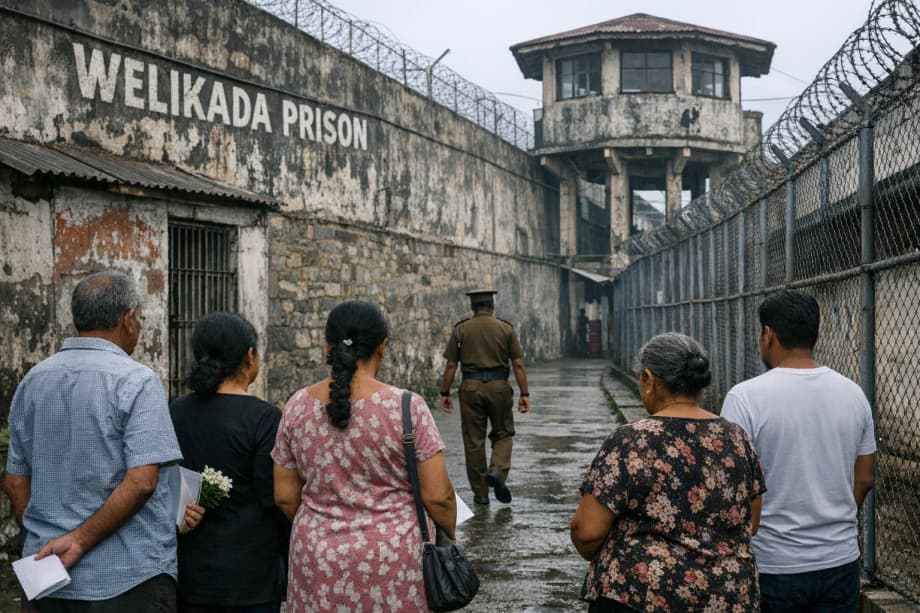
Fresh unrest has spread through Sri Lanka’s prison system, leaving at least three inmates dead and more than 20 people injured across three facilities, according to authorities. The incidents began at New Magazine Prison in Borella, part of the Welikada complex near Colombo, before spreading to Kuruwita Prison in Ratnapura and the Pallansena correctional centre near Negombo.
- Three prisons hit by fresh violence
- What happened at Negombo?
- Why are officials focusing on drugs and organized crime?
- A prison system operating far beyond capacity
- Why so many people are held before trial
- A history of deadly prison violence
- Questions over force and accountability
- What the government must address
- Key Points
Police, prison officers, the Special Task Force and military personnel were deployed after inmates attempted to break out of wards, seized control of parts of facilities and staged rooftop protests. Officials said order had been restored at the affected sites, although several injured people remained in hospital, some in serious condition.
The latest violence follows a far deadlier riot at Negombo Prison earlier in July. Conflicting official and media accounts put the death toll from that incident between 26 and 29, including prison officers, with more than 100 people injured. The separate outbreaks have turned prison safety into a major political and human rights issue for the government of President Anura Kumara Dissanayake.
At New Magazine Prison, Public Security Minister Ananda Wijeyapala told Parliament that about 40 inmates escaped from a ward and caused disorder. One inmate died and 10 others were wounded before security forces regained control. At Kuruwita, two inmates were reported dead and 13 injured. At Pallansena, about 30 inmates remained on a roof and refused orders to return to their cells.
What happened at Negombo?
The Negombo violence began on July 5 after clashes between groups of remand prisoners and convicted inmates. Remand prisoners are people held while awaiting trial. In Sri Lanka, they make up roughly two thirds to three quarters of the prison population, depending on the data source.
Authorities said the first confrontation was linked to allegations that an inmate had informed officials about drug trafficking inside the prison. The clash later intensified when prisoners attacked officers and tried to reach the main gate. Some inmates reportedly seized firearms from guards, turning a dispute between rival groups into a wider armed confrontation.
Gunfire was heard around the prison, and hospitals treated inmates and officers with gunshot wounds, cuts and severe bruising. Women in an adjoining section climbed onto a roof to protest conditions and demand medical care. Relatives gathered outside the prison seeking information about people inside, while security forces used police units, commandos, soldiers, drones and aircraft to monitor the facility.
Justice Minister Harshana Nanayakkara said seven prison officials and 19 inmates had died in the main clashes. Other reports counted additional deaths from the first day’s fighting, producing a total of at least 26 and, in some accounts, 29. A three member committee led by a retired Supreme Court judge was appointed to investigate.
Why are officials focusing on drugs and organized crime?
Government statements have identified drug trafficking and underworld activity as immediate causes of the violence. Officials say rival networks inside prisons have access to drugs, mobile phones and weapons, allowing criminal groups to continue operating behind bars.
Minister Wijeyapala has also described the coordinated outbreaks at several facilities as a possible planned conspiracy. He said intelligence information and early investigations suggested that the unrest may have been deliberately created rather than caused only by overcrowding.
That claim has not been independently established. Prison rights advocates have questioned whether a single explanation can account for unrest at multiple facilities. They have also warned that blaming inmates and criminal groups must not be used to avoid scrutiny of prison management, security failures or the use of lethal force.
In an earlier statement, Sudesh Nandimal Silva, convener of the Prisoners’ Rights Protection Committee, said members of his organization had received death threats. He questioned whether the unrest was being deliberately encouraged.
We wonder if there is some nefarious activity behind the ongoing unrest in the prisons. Overcrowding has increased; it is not a problem that arises from overcrowding. We have doubts whether it is something that is being deliberately created.
A prison system operating far beyond capacity
Whatever the immediate trigger, Sri Lanka’s prisons have been under severe pressure for years. Official capacity figures vary, with estimates ranging from about 10,500 to 13,200 places. The actual prison population has been reported at between 39,000 and 42,000, meaning that the system is holding several times more people than it was designed to accommodate.
Negombo Prison, built for about 900 inmates, was reported to hold close to 2,400. Such overcrowding forces prisoners to sleep in shifts or in cramped spaces, reduces access to toilets and medical care, and makes it difficult to separate rival groups. It also leaves staff unable to supervise large sections of a facility safely.
Prison rights groups have reported deaths in custody, poor sanitation, shortages of medicine and allegations of torture. The Committee for Protecting Rights of Prisoners said Sri Lanka recorded 184 prison deaths in 2024 and seven custodial deaths in the first part of 2026. Those figures require official verification, yet they reflect the wider concern over health and safety behind bars.
Overcrowding also creates conditions in which disease can spread rapidly. During the Negombo unrest, women prisoners reportedly protested over a dengue outbreak and lack of treatment for infected inmates. Medical concerns can quickly become security crises when prisoners believe that authorities are ignoring them.
Why so many people are held before trial
The central pressure point is Sri Lanka’s remand system. Many suspects remain in custody for months or years because of delayed hearings, bail restrictions, limited legal support or an inability to pay bail. Drug possession cases account for a large share of detainees, while people accused of minor offenses can also remain in prison alongside serious criminals.
Keeping unconvicted people in crowded facilities creates two problems. It violates the basic principle that a person is presumed innocent until proven guilty, and it places people awaiting trial in close contact with established criminal networks. The failure to separate remand prisoners from convicted inmates can also make violence more likely.
The justice ministry has proposed a house arrest law that would allow some remand prisoners to remain at home under electronic monitoring. Officials have also discussed expanding prison capacity, using alternative sentences and speeding up bail decisions. These measures could reduce pressure if courts have the staff and technology needed to apply them fairly.
House arrest alone will not solve shortages of prison staff, weak health services, contraband networks or allegations of abuse. Any plan would also need safeguards so that electronic monitoring does not become another form of detention imposed without prompt judicial review.
A history of deadly prison violence
The latest riots are part of a long record of violence in Sri Lanka’s prisons. In 1983, during the anti Tamil violence known as Black July, Tamil detainees were killed inside Welikada Prison. Human rights groups and historical investigations have continued to question the role of prison authorities and the lack of accountability that followed.
In 2012, a security operation at Welikada triggered another deadly confrontation. At least 27 prisoners were killed after the Special Task Force searched for weapons, drugs and mobile phones. Later court proceedings found that at least some inmates had been taken out and killed, deepening concerns about unlawful executions and official impunity.
In 2020, 11 inmates died at Mahara Prison during unrest linked to fear of COVID 19 outbreaks. Prisoners had demanded testing, medical care and protection from infection. Guards opened fire as the disturbance grew, prompting calls from rights groups for an independent investigation.
These episodes have followed a repeated pattern. Violence erupts, security forces are called in, inquiries are announced, and promises of reform are made. The failure to resolve the causes allows the next crisis to build under similar conditions.
Questions over force and accountability
The government says officers used the minimum force necessary to prevent escapes and protect staff. Officials have also said that inmates attacked prison personnel and damaged security equipment, including scanners and cameras.
Rights groups have questioned whether the response was proportionate, especially after hospitals reported gunshot injuries. They have called for independent access to prisoners, protection for witnesses and public release of casualty, transfer and medical records. Reports that some transferred inmates may have been held in secret isolation have added to concern.
Investigators will need to establish who started each confrontation, how weapons entered the facilities, whether guards lost control of firearms, and whether force was used after the immediate danger had passed. The inquiries must examine deaths among inmates and staff alike. A process seen as protecting officials will do little to rebuild trust among prisoners’ families.
Communication has also become a crisis issue. Relatives outside Negombo and other prisons said they struggled to learn whether loved ones were alive, injured or transferred. Authorities should create verification desks, publish hospital lists and provide timely information about prisoner movements without compromising security.
What the government must address
Immediate security operations may contain the current outbreaks, yet lasting reform requires action across the criminal justice system. The first task is to reduce the remand population through faster hearings, legal aid, realistic bail decisions and alternatives for nonviolent offenders.
Prison authorities also need better staffing, reliable medical services, safe buildings and stronger systems to prevent drugs and weapons from entering. Convicted prisoners, remand detainees, young people and vulnerable inmates should be separated wherever possible. Drug dependence should be treated through health and rehabilitation programs rather than managed only through punishment.
Independent oversight is needed to inspect prisons, receive complaints and investigate deaths in custody. Parliamentary scrutiny and court supervision can help ensure that commissions of inquiry produce evidence and prosecutions rather than short term political relief.
The crisis carries costs beyond prison walls. Rebuilding damaged facilities and deploying police and military units consumes public funds. Repeated violence can also damage confidence in Sri Lanka’s institutions, discourage tourism and investment, and deepen distrust after the country’s recent economic and political upheaval.
Key Points
- Fresh unrest at Welikada, Kuruwita and Pallansena left three inmates dead and more than 20 injured.
- Authorities deployed police, the Special Task Force and military personnel to contain attempted breakouts and protests.
- A separate Negombo riot earlier in July killed at least 26 people, including prison officers, and injured more than 100.
- Officials cite drug trafficking and organized crime, while rights advocates also point to overcrowding and weak prison management.
- Sri Lanka’s prisons hold roughly four times their intended population in some estimates.
- The government plans a house arrest law, but wider reforms are needed to reduce remand detention and improve accountability.