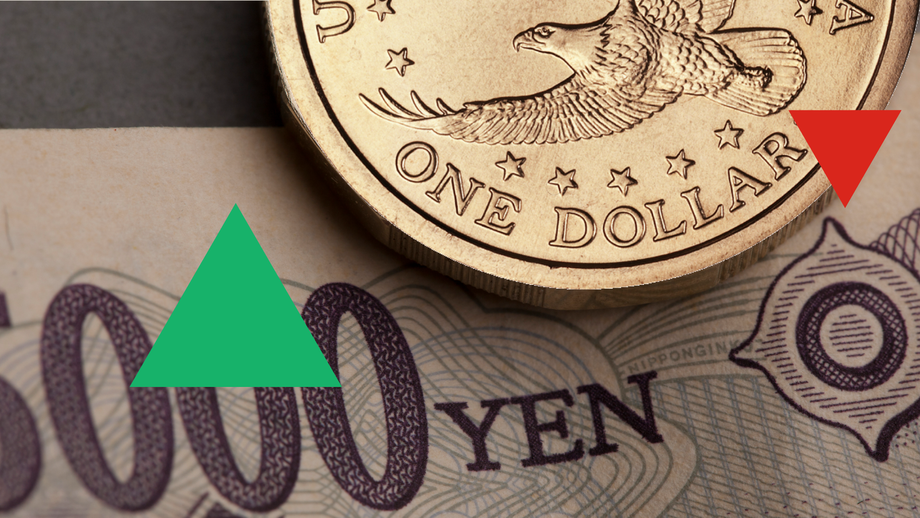
A rare alliance moves the yen
The United States and Japan have joined forces to support the yen after the Japanese currency fell to a fresh 40 year low against the dollar. The operation marks the first joint yen buying action since 1998 and the first coordinated currency intervention between Washington and Tokyo since the G7 acted after Japan’s 2011 earthquake.
Japan’s Ministry of Finance said the intervention was designed to counter excessive volatility and disorderly movements in the yen. Treasury Secretary Scott Bessent confirmed U.S. participation and said Washington would consider taking part in further action. President Donald Trump described the move as help for an ally and a measure intended to support the global economy.
The yen rose more than 1% after the announcement, reaching about 155.20 per dollar, after trading near 164 the previous month. The initial market reaction showed the power of a coordinated announcement. Investors now have to consider the possibility that Washington and Tokyo could act together again if the yen resumes its decline.
Japan may have sold almost $59 billion in U.S. dollars to buy yen during an intervention in New York markets before the joint action was confirmed. The size of the American contribution has not been disclosed. A note photographed near Bessent reportedly referred to a possible purchase of $5 billion to $10 billion in Japanese currency.
Why did the yen fall so far?
The yen’s weakness has been driven largely by the wide gap between Japanese and U.S. interest rates. Japan’s central bank has raised its policy rate to 1%, the highest level in decades, yet borrowing costs remain far below the Federal Reserve’s benchmark range of 3.50% to 3.75%.
That difference encourages investors to borrow in yen, where financing is relatively cheap, and invest in assets denominated in currencies with higher returns. This strategy is known as a carry trade. When the yen falls, the trade can become more profitable for investors who borrow the Japanese currency.
Japan also faces domestic pressures that make a weak currency politically difficult. A cheaper yen raises the cost of imported fuel, food and industrial materials. Japan relies heavily on energy imports priced in dollars, so every fall in the yen can increase household expenses and add to inflation.
Other forces include Japan’s shrinking working age population, weak productivity growth and uncertainty over fiscal policy. The Bank of Japan has tried to move away from years of very low interest rates, though policymakers remain concerned that faster tightening could weaken consumer demand.
How was the operation different?
Japan has intervened in foreign exchange markets before, usually by selling dollars and buying yen. Such unilateral operations can briefly change prices, yet traders often return to the same positions when the underlying interest rate gap remains intact.
This episode was different because the U.S. Treasury publicly backed Japan and took part in the operation. Analysts also said the authorities used the euro yen cross rather than relying only on direct dollar yen transactions. That approach may have reduced pressure on the U.S. Treasury market, where large sales of dollar assets could push bond yields higher.
Japan can obtain dollars through a Federal Reserve repurchase facility, a lending arrangement that supplies temporary dollar liquidity. Using that facility may allow Tokyo to raise funds without selling large quantities of U.S. government bonds. Bessent called the facility an important backstop and said its size could be increased in coming months.
Monex Group expert director Jesper Koll described the action as a major deterrent to traders betting against the yen. He said Japan’s Ministry of Finance and the U.S. Treasury had used their public balance sheets together to influence market behavior.
“When increasingly scarce national assets are spent in unison on the same target by two major sovereigns, markets will have to listen,” Koll said.
What does Washington gain?
The U.S. decision reflects more than support for an important Asian ally. A very weak yen can reduce the effect of American tariffs by making Japanese exports cheaper in dollar terms. Washington also has an interest in preventing turmoil in Japanese government bonds from spreading to U.S. Treasury markets.
Japan is one of the world’s biggest holders of U.S. government debt. In a traditional intervention, Tokyo may sell Treasurys to obtain dollars before using those dollars to buy yen. A large sale could push U.S. bond prices lower and yields higher, increasing borrowing costs for the American government and businesses.
Joint action may reduce that risk while calming investors who fear disorder in the currency and bond markets. It also gives Washington a way to influence exchange rate conditions without relying solely on pressure for Japan to raise interest rates.
Some analysts see a wider political calculation. The Trump administration previously supported Argentina’s peso through a $20 billion currency swap involving the Treasury’s Exchange Stabilization Fund, along with purchases of pesos in the open market. Michael Gayed of Tactical Rotation Management said the same Treasury and the same stabilization fund showed how foreign currency operations could serve as tools of statecraft.
Cornell University professor Eswar Prasad described the yen action as more defensive, though he said it showed that currency policy was becoming closely linked to geopolitics.
“Currency market intervention has clearly taken on a geopolitical tinge,” Prasad said.
Will intervention create a lasting recovery?
Intervention can change expectations quickly, especially when two major governments promise to act again. The threat itself may discourage hedge funds and other investors from building large short yen positions. Short selling involves borrowing or selling an asset in the expectation that its price will fall. If the price rises instead, traders must buy it back at a loss.
Japan’s currency officials have said they will not hesitate to conduct further coordinated intervention. The two governments held months of discussions before the operation, including repeated conversations between Finance Minister Satsuki Katayama and Bessent. Japan’s top currency diplomat Atsushi Mimura said the joint action was the culmination of the two countries’ alliance.
Market strategists still doubt that intervention alone can reverse the yen’s long decline. Tsuyoshi Ueno of the NLI Research Institute said a joint announcement would have a larger immediate effect than a Japanese operation by itself, while the forces driving yen weakness had not changed.
The most lasting support would probably come from a smaller interest rate gap. Markets are watching the Bank of Japan for signs of another increase, possibly at its September meeting. Bessent has repeatedly supported faster Japanese rate rises, putting public pressure on the central bank to address the currency’s weakness and imported inflation.
A higher Japanese rate could make the yen more attractive, though it could also weigh on an economy where consumers and companies have grown accustomed to low borrowing costs. That tension limits how far the Bank of Japan can move without causing fresh economic damage.
Why carry trades are now under review
The intervention has changed the risk calculation for the global carry trade. Billy Leung, an investment strategist at Global X ETFs, said investors may become more cautious about holding large short yen positions if coordinated intervention is now viewed as a real threat.
“It changes the calculus for funding trades specifically,” Leung said.
If traders reduce their use of the yen as a funding currency, they may shift toward the euro or other currencies. That could affect exchange rates well beyond Japan. It could also force investors to sell assets purchased with borrowed yen, including shares, bonds and emerging market currencies.
The carry trade can appear stable while the yen remains weak. A sudden rise in the yen, however, increases the cost of repaying yen loans. Traders may then close positions at the same time, causing sharp falls in markets that had benefited from cheap Japanese financing.
Masahiko Loo, a senior fixed income strategist at State Street Investment, said traders must now price government reactions alongside inflation, growth and interest rate data.
“The biggest shift is that traders now have a new variable to price: policy reaction functions, not just macro fundamentals,” Loo said.
Could bond markets feel the pressure?
The currency operation comes as Japanese and American bond markets face their own strains. Japanese government bond yields have risen from extremely low levels as the Bank of Japan begins to normalize policy. Higher yields may encourage Japanese investors to keep more money at home instead of buying foreign bonds.
That matters in the United States because Japanese institutions have long been major buyers of Treasury securities. If they reduce those purchases, or sell existing holdings, U.S. borrowing costs could rise. The concern is especially strong at the longer end of the Treasury market, where yields influence mortgages, corporate loans and government financing.
Using euro yen transactions and Federal Reserve liquidity tools may limit the need for large Treasury sales. The choices made during the operation therefore carried a message about both currencies and the condition of global bond markets.
Some market commentators argue that Washington’s participation showed concern about financial stability in the United States as much as concern about Japan. A sharp rise in Treasury yields could increase funding costs for companies and unsettle equity markets already exposed to heavy borrowing, including the fast growing data center industry.
Geopolitics becomes part of currency pricing
Foreign exchange markets traditionally focus on interest rates, inflation, trade balances and economic growth. Those factors still drive the yen’s direction, yet the intervention adds a new question: how will governments respond when market movements threaten domestic or international stability?
The public nature of the U.S. support makes the signal harder for traders to ignore. Washington and Tokyo have shown that exchange rates are part of their broader economic relationship, rather than a matter left entirely to central banks and private markets.
The arrangement also places the Bank of Japan under greater scrutiny. If intervention only slows yen selling, investors may demand a clearer monetary policy response. If the central bank raises rates quickly, markets will assess whether the move is driven by domestic conditions or by pressure linked to the currency.
For Japan, the immediate goal is to slow imported inflation and reduce pressure on households. For the United States, the goal includes limiting bond market disruption, protecting trade policy objectives and maintaining stability among a key ally. Those interests overlap for now, creating a powerful signal to currency traders.
The Bottom Line
- The United States and Japan conducted their first joint yen buying operation since 1998.
- The yen had fallen to a 40 year low near 164 per dollar before the action.
- Japan may have spent almost $59 billion in a related intervention, while the U.S. contribution remains undisclosed.
- Both governments say they are ready to intervene again if disorderly market movements return.
- The operation may discourage short yen trades and alter the global carry trade.
- Lasting yen strength will likely require narrower U.S. Japan interest rate differences and further Bank of Japan action.