Manila Advances Legal Claim at United Nations
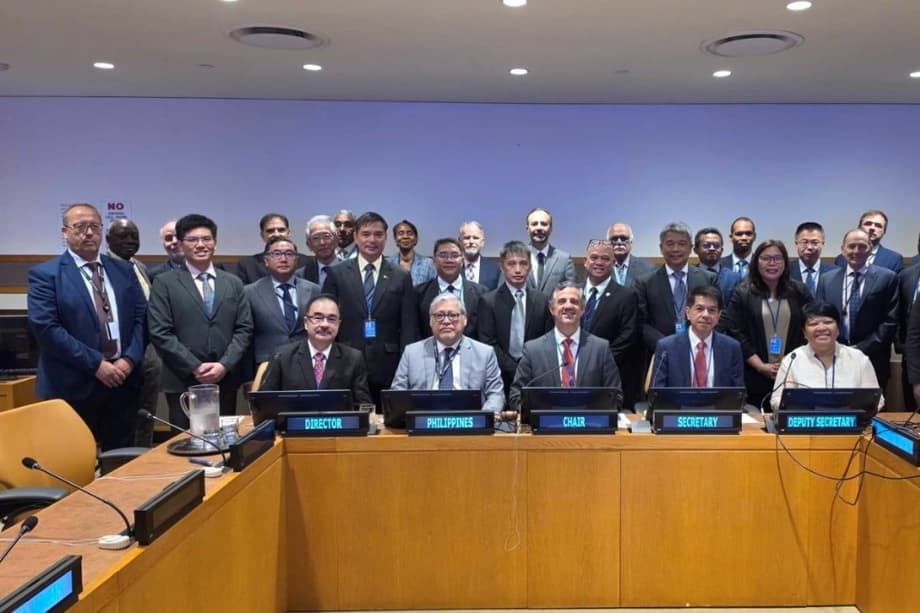
The Philippines has formally presented a partial submission to the United Nations Commission on the Limits of the Continental Shelf seeking recognition of its extended continental shelf in the South China Sea. The move, delivered on July 28, focuses on seabed and subsoil rights beyond the standard 200 nautical mile exclusive economic zone off western Palawan. Officials describe it as the outcome of fifteen years of surveys and a step to secure resources for future generations under the United Nations Convention on the Law of the Sea.
Assistant Secretary Rogelio Villanueva Jr stated that the filing demonstrates commitment to the United Nations Charter and the 1982 convention. The Department of Foreign Affairs added that the action supports a rules based order to sustain livelihoods, foster trade, and protect marine biodiversity while uniting coastal states.
Understanding Continental Shelf Rights
Article 76 of the convention allows coastal states to claim an extended continental shelf up to 350 nautical miles in some cases. These claims cover only the seabed and subsoil, not the water column or surface sovereignty. The commission reviews scientific and technical data before issuing recommendations. Overlaps with neighboring claims require separate boundary talks.
Philippine officials note the submission remains without prejudice to ongoing sovereignty disputes or future negotiations. The area includes deeper seabed around Pagasa Island and overlaps zones held by several other nations.
Beijing Issues Sharp Rebuttal
China responded by accusing Manila of flagrantly infringing on its sovereignty and jurisdiction. Beijing urged the commission not to consider the filing and rejected any attempt to reference the 2016 arbitration ruling that invalidated its nine dash line claims. Malaysia also lodged objections citing overlapping maritime entitlements.
Chinese statements described the move as a pretext to hype the arbitral award, which Beijing continues to call illegal. Similar protests have followed extended shelf submissions by Vietnam and Malaysia in past years.
Complications for Code of Conduct Negotiations
The Philippines currently chairs the Association of Southeast Asian Nations and has prioritized progress on a code of conduct with China. Analysts note that the new legal filing adds complexity to efforts aimed at reaching consensus this year. Foreign ministers expressed hope during recent meetings that talks could conclude by December, though incidents at sea continue to strain relations.
The code is intended to manage behavior and reduce risks of conflict in the busy waterway. Philippine officials maintain that the seabed submission aligns with broader goals of stability through international law.
Escalating Incidents at Sea
Recent weeks have seen repeated confrontations involving coast guard vessels near Scarborough Shoal and Second Thomas Shoal. Reports include water cannon use, blocking maneuvers, and injuries to personnel. China has conducted military drills near the shoal and released new rules for a nature reserve in the area.
Philippine President Ferdinand Marcos Jr reaffirmed in his state of the nation address that the country will uphold the 2016 ruling and will not yield in defense of its rights. Joint exercises with the United States and Japan have also drawn criticism from Beijing.
International Reactions and Support
The United States has reiterated its stance against coercion and support for freedom of navigation. Admiral Samuel Paparo warned that no nation should dominate the Indo Pacific and stressed deterrence through strength rather than confrontation. ASEAN members continue to call for peaceful resolution in line with international law.
Philippine representatives at the United Nations described the submission as a way to reinvigorate adherence to established maritime processes. They expressed readiness to discuss overlaps with neighbors through established channels.
Key Points
- The Philippines submitted an extended continental shelf claim to the UN commission on July 28 covering areas off Palawan.
- China rejected the filing and urged the commission not to review it.
- The action coincides with Philippine leadership of ASEAN code of conduct talks targeted for conclusion this year.
- Overlapping claims involve multiple nations and require separate boundary discussions.
- Tensions remain high with repeated vessel incidents reported in disputed zones.