Japan prepares a temporary seat of government outside Tokyo
Japan has passed legislation allowing the government to designate one or more regions as a temporary second capital if Tokyo is disabled by a major disaster or another national emergency. The measure is intended to keep the prime minister’s office, parliament, ministries and other essential institutions operating if the capital becomes inaccessible.
- Japan prepares a temporary seat of government outside Tokyo
- Why Tokyo needs an emergency alternative
- What the new law requires
- Osaka leads the political debate
- Regional governments enter the race
- Decentralization comes with a large price tag
- A difficult victory for Prime Minister Takaichi
- What happens next
- Key Points
The law does not move Japan’s capital from Tokyo, nor does it require ministries or companies to relocate immediately. Instead, it creates a legal framework for selecting a prefecture with the population, economy, infrastructure and administrative capacity needed to host key government functions when required.
Prime Minister Sanae Takaichi will oversee the selection process. A government headquarters is expected to be created, with a minister assigned to manage the initiative. The law calls for a designation within about one year after it takes effect.
The measure was approved at the end of an extended Diet session after weeks of political conflict. It passed the opposition controlled House of Councillors by a margin of two votes, highlighting the difficulty Takaichi may face in advancing other coalition policies.
Why Tokyo needs an emergency alternative
Japan is among the world’s most earthquake prone countries, and Tokyo sits in a region exposed to major seismic risk. Government estimates put the chance of a magnitude 7 class earthquake striking the Tokyo metropolitan area at roughly 70 percent within the next 30 years.
A quake of that scale could damage roads, railways, power networks, communications systems and government buildings across a wide area. It could also disrupt banks, financial markets and corporate headquarters, since so much of Japan’s political and economic activity is concentrated in the capital.
Tokyo accounts for about one fifth of Japan’s economic output, contains more than half of the country’s listed companies and is home to around 30 percent of the national population. A disaster that interrupts its main functions could therefore become a national crisis rather than a local emergency.
Officials have also cited typhoons and other events as possible triggers for the system. The purpose is to allow central institutions to continue making decisions, distributing resources and coordinating rescue and recovery work even if Tokyo cannot function for days or weeks.
The plan reflects the idea of government continuity. In practical terms, a designated region would need prepared offices, secure communications, transport links, accommodation and procedures for receiving officials. It would also need agreements between prefectural and city governments so that authority could be transferred quickly during a crisis.
What the new law requires
The legislation leaves the final choice to the prime minister, who will select from prefectures that submit nominations. A candidate must have a lower chance of suffering severe damage from the same disaster that affects the Tokyo area. It must also possess enough population, economic strength and public administration capacity to support national functions.
The law allows more than one region to receive the designation. This provision could create several backup centers rather than placing every emergency function in a single city. A spread of locations may reduce the risk that one disaster would disable the entire replacement system.
Candidate areas are expected to show that they can coordinate government work through either special administrative wards or formal agreements between a prefectural government and a major city. The system is still incomplete. The government must decide which ministries or agencies would operate outside Tokyo, how officials would be moved, how records would be protected and how authority would be transferred during an emergency.
The designated regions could receive tax benefits, regulatory changes and public investment in government buildings, transport and other infrastructure. Supporters argue that these measures would improve emergency readiness while giving regional economies new sources of growth.
Osaka leads the political debate
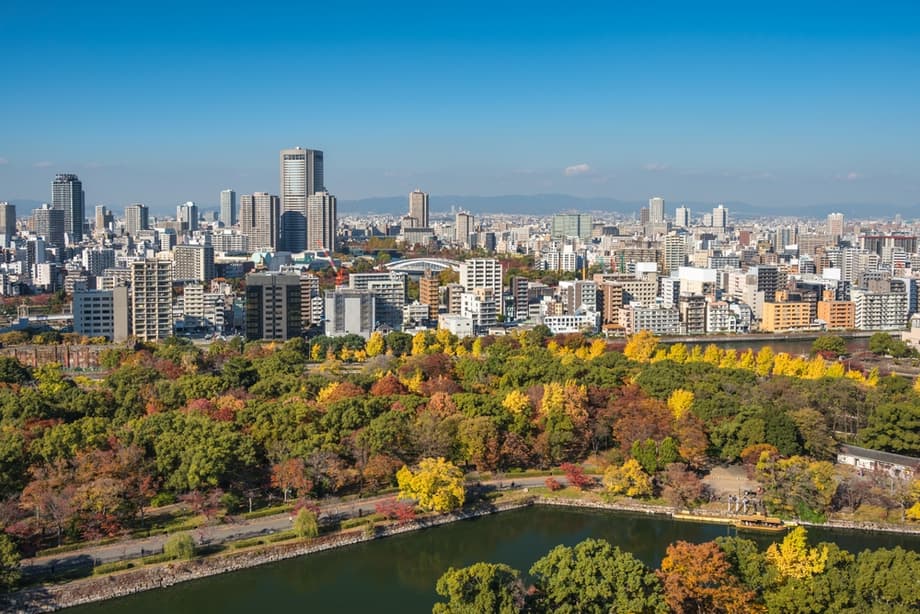
Osaka is the most politically prominent contender because the Japan Innovation Party, known in Japan as Ishin, is based there. The party has promoted the idea of a second capital for years. Its founder, former Osaka governor Toru Hashimoto, began advocating the proposal around 2010.
The second capital bill was included in the coalition agreement reached by Takaichi’s Liberal Democratic Party and Ishin. The agreement helped bring Ishin into government after the LDP ended its long partnership with Komeito. Passing the bill was one of the main commitments that secured Ishin’s support for Takaichi’s administration.
Osaka’s bid is linked to the party’s separate Osaka Metropolis Plan. The proposal would abolish Osaka City and replace it with several special wards, creating an administrative structure modeled partly on Tokyo. Supporters say this would reduce overlap between city and prefectural authorities. Voters rejected the plan in referendums in 2015 and 2020, each time by a narrow margin.
Osaka Governor Hirofumi Yoshimura, who also leads Ishin, said after the bill passed that more than one area should be designated. He argued that several core regions could support Japan’s growth. He is seeking another referendum on the Osaka plan next spring, and the new law may give that campaign fresh momentum.
More than one area should be designated as a second capital. Such core areas will drive Japan’s growth.
Opposition parties say the law was designed to reward Ishin rather than address civil protection needs. They point to the close relationship between the coalition agreement and the legislation, as well as the lack of a detailed cost estimate. Critics fear that Osaka could receive a disproportionate share of public money, tax relief and infrastructure projects.
Regional governments enter the race
The law does not name Osaka as the future backup capital. That has encouraged other regions to compete for the designation, with local leaders presenting their own combinations of infrastructure, economic capacity and disaster resilience.
- Fukuoka: The prefectural government is preparing a joint bid with Fukuoka and Kitakyushu. Governor Seitaro Hattori said the region would work with municipalities and the local business community as one Fukuoka team.
- Aichi: Governor Hideaki Omura said Aichi and Nagoya already have the functions needed to serve as a second capital. Aichi is home to major manufacturing industries, including Toyota’s headquarters and supply networks.
- Hokkaido: Governor Naomichi Suzuki said officials were holding talks with Sapporo and would begin concrete discussions after enactment of the law. Sapporo’s distance from Tokyo could help it avoid some shared disaster risks.
- Miyagi: Governor Yoshihiro Murai said the prefecture would apply if it could meet the legal requirements.
- Hiroshima and other areas: Local governments have also shown interest, while Fukuoka, Sapporo, Nagoya and other major cities consider how to build formal bids.
The competition may turn the selection into a contest over national investment as much as emergency planning. A designation could bring new public offices, better transport connections, data systems and private sector investment. It could also raise the profile of a region in national politics.
Fukuoka’s proposal illustrates the kind of regional cooperation the law may encourage. The prefecture is considering an agreement linking its government with Fukuoka and Kitakyushu, rather than relying on one city alone. Aichi is presenting the existing strength of Nagoya’s institutions and industrial base. Hokkaido is stressing geographic separation from the capital area.
Decentralization comes with a large price tag
Supporters present the project as both a safety measure and a way to reduce Tokyo’s dominance. The capital’s concentration of people, companies and public institutions has long been criticized for drawing talent and investment away from other parts of Japan. Giving several regions stronger national roles could spread economic activity and create additional centers of decision making.
The government has yet to publish a full estimate of the cost. Building offices for ministries, expanding secure communications and improving transport could require substantial spending. Tax incentives and regulatory changes would also reduce public revenue or shift rules in favor of selected areas.
Critics question whether the benefits would justify that expense, particularly as Japan faces rising social security costs, a shrinking population and pressure on household budgets. They also warn that the term second capital could create unrealistic expectations if the selected region receives a symbolic title but few actual government functions.
Tokyo Governor Yuriko Koike has supported stronger disaster backup arrangements, while rejecting the idea that the capital’s concentration itself is the central problem. Tokyo has invested in emergency facilities, including a disaster preparedness center in Tachikawa, in the western part of the metropolitan area. The national plan will therefore need to work alongside Tokyo’s own response system rather than replace it.
Another concern is the risk of concentrating emergency facilities in a new location. A successful plan would require several layers of backup, including remote data centers, alternative communications routes and arrangements for officials to work from different parts of the country.
A difficult victory for Prime Minister Takaichi
The bill’s passage gave Takaichi a political success, yet the parliamentary process exposed divisions inside and outside the ruling bloc. Opposition lawmakers boycotted proceedings during the dispute, and the government extended the Diet session by eight days. The final vote came only after procedural concessions.
The LDP and Ishin control the more powerful House of Representatives, where the ruling coalition won a large majority in February. The opposition controls the upper chamber, however, making negotiations necessary for legislation to pass. The two vote margin on the second capital bill shows that the coalition cannot assume smooth approval of every proposal.
The government prioritized the second capital bill after setting aside a separate plan to reduce the number of proportional representation seats in the lower house. Takaichi later said she would continue working to fulfill the coalition agreement and that trust between the LDP and Ishin would remain firm.
I will press ahead toward the realization of the ruling coalition agreement.
The same parliamentary session also approved changes to the law governing constitutional amendment referendums. The revision is viewed as groundwork for the LDP’s long standing goal of revising Japan’s pacifist Constitution, which took effect in 1947. That broader agenda has added to political tensions surrounding the government.
What happens next
The next stage will involve setting detailed standards for applications and assessing the competing regions. The prime minister’s headquarters will have to compare disaster exposure, government facilities, transport capacity, population, economic scale and administrative arrangements.
A designation alone will not make a city ready to run the country. The government will need plans covering the movement of parliament, cabinet offices, courts, records, communications and financial operations. It will also need exercises that test whether national authorities can shift work rapidly while Tokyo is damaged or cut off.
The choice may be politically difficult if several regions meet the formal requirements. Selecting Osaka could satisfy Ishin but renew accusations of favoritism. Selecting multiple regions could spread resources and reduce that criticism, though it would make coordination more complex. A transparent process with published criteria and cost estimates will be central to public confidence.
Japan’s new law marks the start of that process, rather than the creation of a functioning second seat of government. Tokyo remains the capital, while Osaka and rival regions compete for a role that could bring both emergency responsibility and long term economic influence.
Key Points
- Japan’s parliament passed a law allowing one or more regions to serve as temporary backup centers for national government.
- Tokyo remains the country’s main capital and will not be replaced.
- The system is designed for major earthquakes, typhoons and other emergencies that could disable Tokyo.
- The government estimates a roughly 70 percent chance of a magnitude 7 class quake in the Tokyo area within 30 years.
- Osaka, Fukuoka, Aichi, Hokkaido, Miyagi and other regions have shown interest.
- Prime Minister Sanae Takaichi is expected to oversee a selection within about one year.
- The bill strengthened Takaichi’s coalition with the Osaka based Japan Innovation Party but passed the upper house by only two votes.