Tajikistan records a sharp rise in transit freight
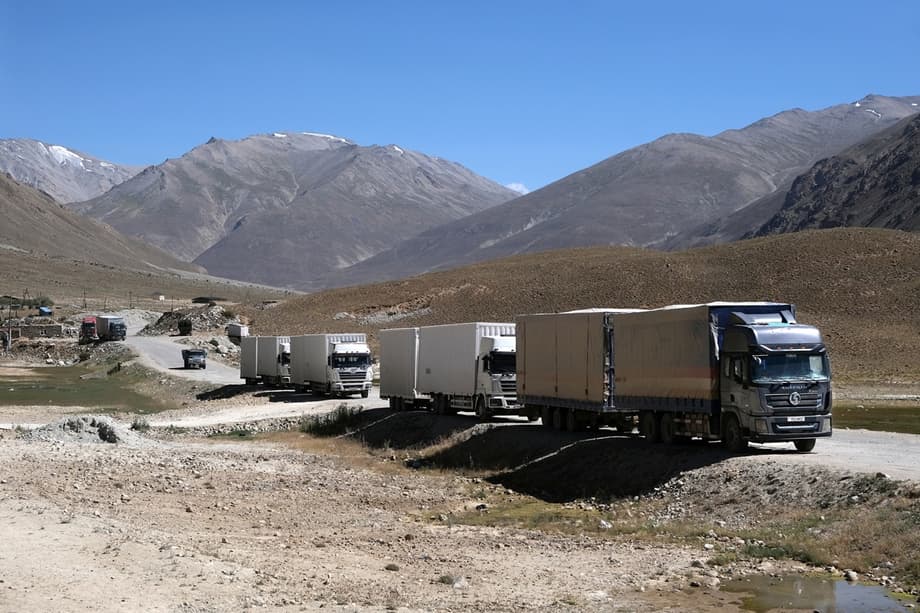
Freight moving through Tajikistan increased by 74 percent during the first six months of the year, giving the Central Asian country fresh evidence that it can play a larger role in regional trade. The Ministry of Transport reported that transit freight reached about 32,700 tonnes, an increase of 13,900 tonnes compared with the same period a year earlier.
- Tajikistan records a sharp rise in transit freight
- Why the increase matters for a landlocked country
- Roads are only one part of the transport system
- What will Tajikistan digitise?
- South Korean cooperation supports the programme
- How electronic procedures can affect carriers
- Development partners and banks are part of the effort
- What must happen for growth to continue?
- Key Points
The figures are modest when compared with the volumes handled by major Eurasian transport hubs, yet the growth is significant for a mountainous country that is still building the roads, warehouses, customs services and digital systems required to support international logistics. Officials in Dushanbe say the rise shows that carriers are beginning to recognise Tajikistan as a transit route.
Transport Minister Azim Ibrokhim presented the figures at a press conference in Dushanbe. He said the government wants to turn the recent increase into a broader change in the way goods move across the country.
This is a sign that Tajikistan is being recognised as a transit country, and we are doing our utmost to accelerate this process, Ibrokhim said.
The minister linked the growth to a wider programme covering roads, logistics facilities, carrier services and electronic administration. The programme reflects a basic reality of modern freight transport: a route must be reliable at every stage, from the physical condition of a road to the speed at which a driver receives a permit or clears a shipment.
Why the increase matters for a landlocked country
Tajikistan has no coastline and depends on road links and regional connections to reach foreign markets. Its terrain, dominated by mountains, makes transport infrastructure expensive to build and maintain. Roads must cross difficult landscapes, while weather and seasonal conditions can affect travel times and operating costs.
For freight companies, a transit route is judged by more than distance. Carriers also consider border procedures, fuel access, road safety, storage facilities, payment systems, insurance, cargo tracking and the availability of services when a vehicle is delayed. A route that is shorter on a map can become less attractive if paperwork is slow or if trucks have nowhere to load, unload or store goods.
The reported increase suggests that demand for passage through Tajikistan is rising, although the available figures do not identify the goods, origins or destinations behind the growth. The increase could include a mix of commercial shipments serving domestic markets and cargo moving between neighbouring countries. More detailed data will be needed to show which corridors and industries are driving the change.
For the government, higher transit volumes can generate income from permits, road use, logistics services and related business activity. They can also support jobs in warehousing, vehicle maintenance, customs brokerage and freight management. The benefits depend on whether the country can keep improving capacity while maintaining predictable rules for carriers.
Roads are only one part of the transport system
Ibrokhim said Tajikistan must continue building and rebuilding roads, yet he also pointed to weaknesses beyond the road network. The country has warehouses and cold storage facilities, but the minister acknowledged that it does not yet have a single integrated logistics centre.
A logistics centre brings several services together in one location. It may include cargo storage, customs processing, vehicle services, freight consolidation, refrigeration and digital tracking. Such facilities help companies combine smaller shipments, move perishable goods safely and reduce the time trucks spend waiting at separate sites.
The absence of an integrated centre can make freight handling more expensive. Cargo may have to pass through several warehouses, while paperwork and inspections are managed by different offices. This can create delays and make it harder for carriers to know when a shipment will arrive at its destination.
The ministry plans to increase efforts in this area. A successful facility would need suitable roads and land, stable electricity, communications infrastructure, trained staff and clear operating rules. It would also need to connect with border points and transport companies, rather than operate as an isolated warehouse complex.
Road improvements and logistics construction are likely to develop together. Better roads can attract more cargo, while stronger storage and distribution services can make those roads more useful to international carriers. The government is seeking support from development partners, including the World Bank, the Asian Development Bank and the European Bank for Reconstruction and Development.
What will Tajikistan digitise?
The Ministry of Transport has created a digitalisation programme with 34 modules designed to cover the transport sector. The planned systems will apply to freight and passenger transport, permits, passes, waybills, equipment inspections and the accounting of transport services.
In practical terms, the programme is intended to replace or reduce paper based procedures with electronic applications, records and approvals. A carrier could eventually submit a request, receive a permit, track an application and keep transport documents through connected online services rather than visiting several offices.
The first phase includes 42 types of public services. These services are expected to simplify permit applications, transport requests and the management of freight and passenger operations. The ministry has also linked its electronic system with the Tax Commission’s One Stop Shop and the Agency for Innovation and Digital Technologies.
The Transport Sector Digitalisation Centre operates a call centre at 8808. It handles questions about freight and passenger transport, permits and season tickets. A central contact point can be useful for drivers and companies that need help with procedures, particularly when services are being introduced in stages.
The ministry’s strategic plan sets a target of issuing 100 percent of transport documents electronically by 2030. Reaching that goal will require reliable internet access, compatible databases, secure identity checks and staff who can manage both electronic and exceptional paper procedures during the transition.
South Korean cooperation supports the programme
Funding for the 34 modules has been allocated through a contract with Samsung, according to Ibrokhim. The Centre for the Digitalisation of the Transport Sector is also working with South Korea’s Ministry of Transport.
Officials said 11 modules have been completed, nine are under development and 14 are in the design stage. The figures add up to the full 34 module programme, showing that the project is being managed as a sequence of connected services rather than as one single application.
Samsung’s role, as described by the minister, relates to financing the modules. The cooperation with South Korea’s transport authorities provides a government to government element to the work. The available information does not specify the contract value, technical architecture or delivery timetable for each module.
Digital transport systems can produce benefits when agencies share information. A permit application can be checked against tax records, vehicle registration details and inspection results. Electronic waybills can help officials compare declared cargo with transport records, while digital payment options can reduce visits to government offices.
The systems also create new responsibilities. Government agencies must protect commercial information and personal data, maintain service availability and prevent unauthorised changes to records. Transport companies and individual drivers will need access to devices, connectivity and support in order to use the new services effectively.
How electronic procedures can affect carriers
For a haulier, time spent waiting for documents is a business cost. A delayed permit can leave a truck idle, disrupt delivery schedules and create extra expenses for fuel, accommodation and labour. When several border or transport agencies require separate documents, the cost of delay can increase quickly.
Tajikistan’s digitalisation plan aims to shorten these delays by moving applications and approvals into connected systems. Faster document processing could make the country more attractive to companies choosing between regional routes. Electronic records may also make it easier to monitor cargo and confirm where a shipment is in the transport process.
Digital accounting can help the ministry measure freight activity more accurately. Better records may show which roads carry the most cargo, where delays occur and which services need more staff or investment. That information can guide road maintenance and the location of future storage facilities.
Electronic systems do not solve every transport problem. A digital permit cannot repair a damaged road, create a cold store or remove a border queue caused by limited inspection capacity. The value of the programme will depend on whether online services are connected to improvements on the ground.
Companies will also need confidence that electronic documents are accepted by all relevant authorities. If a driver must print a digital permit or repeat the same information at another office, the reduction in bureaucracy will be limited. Coordination between transport, tax, customs and technology agencies will therefore be central to the programme.
Development partners and banks are part of the effort
The ministry says all banks operating in Tajikistan are cooperating with the government on the transport reforms. Bank participation can support electronic payments, fee collection and other services needed by carriers and public agencies.
International development institutions are also involved. The World Bank, Asian Development Bank and European Bank for Reconstruction and Development are listed among the ministry’s key development partners. Their work may cover infrastructure, institutional capacity, digital services or transport finance, although the information released by the ministry does not assign specific projects to each institution.
Transport investment can have a wider effect on the domestic economy. Better connections can help farmers reach markets, allow businesses to receive imported inputs more reliably and support trade between cities and border areas. Cold storage is especially relevant for food shipments, since temperature controlled facilities can reduce spoilage during long journeys.
At the same time, transit growth can place pressure on roads and communities along transport corridors. Heavy vehicles increase maintenance needs, while busy routes require stronger road safety measures and enforcement. Planning will need to account for the effect of rising freight volumes on local traffic and the environment.
What must happen for growth to continue?
The first six months of growth provide a strong signal, yet sustained transit activity will require consistent performance. International carriers usually build routes around reliability. They need to know that permits will be issued within a predictable period, roads will remain usable, payments will work and cargo can be tracked when problems arise.
Tajikistan’s planned reforms address several of these needs. Road construction can improve travel conditions. A logistics centre can expand storage and cargo handling. Digital services can reduce administrative delays and give companies clearer information.
The country will also need to train officials, transport operators and drivers to use the new systems. A programme of 34 modules can be technically complete while remaining difficult to use if instructions are unclear or if services are unavailable outside major cities. Support through the call centre and local administrative offices may help bridge that gap.
Performance measures could show whether the reforms are producing practical results. Useful indicators include permit processing times, border waiting times, the number of electronic documents issued, cargo volume by corridor, road condition ratings and the frequency of service interruptions.
The government’s 2030 target gives the digital programme a clear deadline. The freight increase gives it a commercial reason to move quickly. If physical infrastructure and electronic administration advance together, Tajikistan may be able to turn a recent rise in traffic into a more stable role in Central Asian trade.
Key Points
- Transit freight through Tajikistan rose 74 percent in the first six months of the year.
- Reported freight volume reached about 32,700 tonnes, up 13,900 tonnes from the same period a year earlier.
- The Ministry of Transport says roads, logistics facilities and digital services must develop together.
- Tajikistan has warehouses and cold stores but no single integrated logistics centre.
- A 34 module digitalisation programme covers permits, waybills, inspections, freight, passenger transport and accounting.
- Eleven modules are complete, nine are under development and 14 are being designed.
- The first phase includes 42 electronic public services, with a target of fully electronic transport documents by 2030.
- Samsung, South Korea’s Ministry of Transport and international development institutions are supporting the programme.