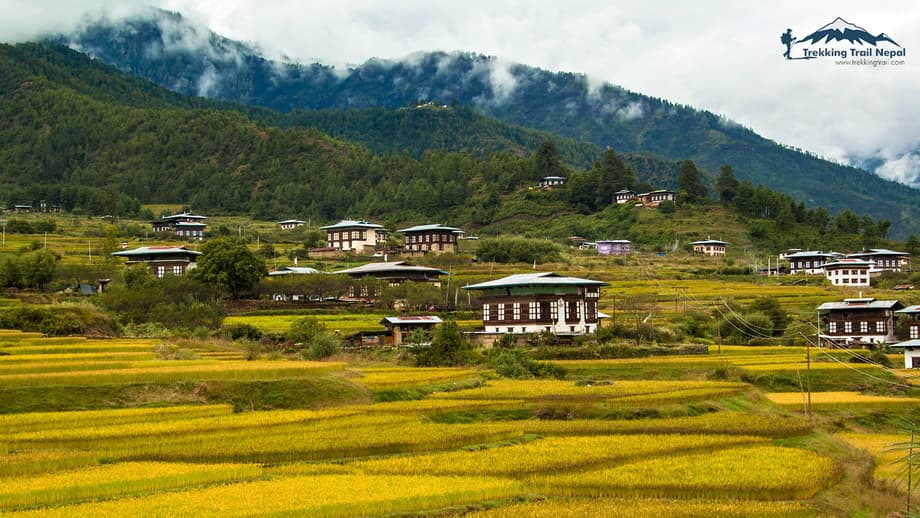
Dry terraces signal a wider farming crisis
By mid July, farmers in Khagochen village under Kana Gewog in Dagana would usually have finished transplanting rice. This year, prolonged dry conditions have left many terraces uncultivated. Some fields remain planted with maize while farmers wait for rain to restore water supplies.
- Dry terraces signal a wider farming crisis
- Why timing matters for rice farmers
- Traditional irrigation systems are under pressure
- What El Niño could mean for Bhutan
- Officials turn forecasts into farm advice
- Emergency measures target water and crop losses
- A successful irrigation project shows what is possible
- Why adaptation must reach the farm terrace
- Rice production affects more than individual farms
- The Bottom Line
The delayed monsoon has disrupted the paddy calendar in several parts of Bhutan. Farmers who have already prepared seedlings face uncertainty over whether they can transplant them in time, while those who complete the work still fear that weak irrigation flows and high temperatures could dry out young plants.
The disruption comes as Bhutan prepares for possible effects from a Super El Niño, a strong warming of the tropical Pacific Ocean that can alter weather patterns far beyond the region. El Niño can weaken or delay the South Asian monsoon, the main source of rain for farming, reservoirs and rivers across the Himalayas and the plains.
For Bhutanese farmers, the immediate problem is practical. Paddy fields need reliable water during transplantation and the first stages of growth. A late start leaves less time for plants to mature before harvest and exposes crops to further heat, pests and disease.
Why timing matters for rice farmers
Rice is usually transplanted after seedlings are raised in a nursery and the fields are softened and levelled with water. The young plants then need a steady supply of moisture while their roots become established. If the soil dries soon after transplantation, seedlings can wilt or die, forcing farmers to replant or abandon part of their land.
Farmer Tashi from Dagana said summer weather had become difficult to read. He described conditions as inconsistent compared with previous years, particularly in lower elevation areas that rely heavily on irrigation sources.
Before presenting Tashi’s remarks, the farmer explained that the normal planting schedule had already passed in many low lying areas. He warned that rising temperatures could damage seedlings even if farmers manage to transplant them late.
Daily weather conditions this summer have not been consistent like in the past. By this time, farmers at the lowest elevations dependent on the water supply would have completed paddy transplantation.
Another farmer, Tika Ram Dahal, said delayed transplantation could reduce the crop’s growing period. Rice planted late may produce fewer tillers, the stems that carry grain, and may face stress during later stages when water or temperatures become less favourable.
Water shortages also raise the cost of cultivation. Farmers may need to rent pumps, buy fuel, repair channels or pay for labour to move water from rivers and streams. For households with limited cash, those expenses can make planting uneconomic even when land is available.
Traditional irrigation systems are under pressure
Many Bhutanese farms depend on traditional open channels that carry water from springs, streams and rivers to terraces. These systems can work well when water sources are full, yet they become unreliable during extended dry periods. Water may seep into the ground before reaching fields, channels can be damaged by landslides or floods, and several communities may compete for the same shrinking source.
Farmers in Khagochen are now seeing the combined effect of delayed rainfall and declining irrigation supplies. The problem is larger than a single missed planting date. When water becomes uncertain, farmers may choose maize or other crops, leave terraces fallow, or reduce the area planted with rice.
Recent production figures from Punakha show how water stress can affect one of Bhutan’s major rice growing districts. Punakha harvested 7,761 metric tonnes of irrigated paddy in 2023, 299 tonnes less than the previous year. The district accounted for about 19 percent of national irrigated paddy production, followed by Paro with 17 percent and Wangdue with 11 percent.
Agriculture officials in Punakha linked the decline mainly to water shortages. Some farmers could not transplant on time, while others left fields uncultivated. Seedlings dried out, and farmers near riverbanks used pumps to keep parts of their land supplied.
What El Niño could mean for Bhutan
El Niño is part of a natural climate cycle that begins in the Pacific but affects atmospheric circulation around the world. During a strong event, changes in wind and ocean temperatures can influence the timing and strength of monsoon rainfall. The result is not identical in every place, yet South Asian farming regions often face a higher risk of delayed rain, dry spells and unusual heat.
Forecasts do not determine the weather in every valley, and a dry seasonal outlook does not mean rain will stop completely. Rainfall may arrive in short, intense bursts after weeks without moisture. That pattern creates a double threat for mountain communities. Crops can suffer from drought, while sudden downpours can trigger flash floods, erosion and landslides.
Regional climate assessments have warned that Bhutan and other Hindu Kush Himalayan countries may face below average rainfall and above average temperatures during some monsoon seasons. The region stretches across eight countries and supplies water to nearly two billion people. Its farming communities depend on a short wet season, making changes in rainfall timing especially damaging.
Short term forecasts are useful because farmers can adjust planting, irrigation and crop protection measures. Seasonal forecasts are less precise at the village level, so they work best when combined with local observations, field visits and advice about specific crops.
Officials turn forecasts into farm advice
The Department of Agriculture, under the Ministry of Agriculture and Livestock, says it is monitoring conditions and supporting farmers through weather based agricultural advisories. These advisories are prepared with technical support from the National Center for Hydrology and Meteorology.
Tshering Pem of the Department of Agriculture said the advice is meant to help farmers make decisions rather than simply receive weather updates. She cited guidance supported by the Food and Agriculture Organization and the World Meteorological Organization, which regard agricultural weather services as a useful way to reduce climate related risks.
Before quoting Pem, the department said advisories should connect a forecast with a practical action in the field. That could mean changing a sowing date, protecting soil moisture or selecting a crop suited to limited water.
Agrometeorological advisories are designed to go beyond information sharing by helping farmers translate weather signals into timely and practical decisions in the field.
Field officers are advising farmers to adjust sowing and harvesting dates, use irrigation more efficiently, pump water from rivers and streams where feasible, and apply mulch to reduce evaporation. They are also recommending crop varieties that need less water and closer monitoring for pests and diseases, which can spread when plants face heat or moisture stress.
The ministry has sent written advisories to districts and local governments for distribution through gewogs and villages. Agriculture officers and extension workers are visiting communities to compare forecast information with actual field conditions.
Reaching remote farmers remains difficult. Some communities have limited phone coverage, while written notices may arrive after a planting decision has already been made. Research published in the Bhutanese Journal of Agriculture has also found that awareness of weather information does not always lead to its use in farm planning.
Emergency measures target water and crop losses
The Department of Agriculture is keeping stocks of fertiliser and plant protection chemicals for emergency needs. It is also mobilising portable water pumps to support irrigation where equipment and water sources make pumping possible.
Farmers facing severe water shortages are being encouraged to consider alternative crops. The department says it can arrange seeds for less water intensive crops when farmers are willing to switch. Such a move may protect some household income, although it can also affect food preferences, markets and the supply of rice for local consumption.
The ministry has instructed districts to report rainfall, irrigation water availability, crop conditions and pest and disease outbreaks regularly. Paddy growing districts must report critical events such as prolonged dry spells, flash floods and severe pest outbreaks without delay.
A national committee on Super El Niño preparedness includes the Prime Minister, the Home Affairs Minister, the Cabinet Secretary and secretaries from relevant ministries. The Department of Local Governance and Disaster Management serves as its secretariat. A technical task force within the agriculture ministry brings together officials responsible for farming, livestock, markets, trade and food agencies.
These arrangements are designed to link weather monitoring with decisions about farm support, food supplies and local response. Their value will depend on how quickly information and equipment reach villages, especially when several districts face water stress at the same time.
A successful irrigation project shows what is possible
Bhutan has already demonstrated how reliable infrastructure can revive farmland that water shortages forced out of production. In Phangyul and Kazhi gewogs, a 38 kilometre pressured piped irrigation system has restored access to water for farming and household use.
The scheme was built by the Ministry of Agriculture and Livestock through a climate resilience project supported by the United Nations Development Programme and financed by the Green Climate Fund. It cost about US$6.08 million, including US$4.44 million from the Green Climate Fund and US$1.6 million in government financing.
The project serves 285 households and 2,458 people and is expected to irrigate 1,241 acres of agricultural land. More than 1,000 acres in Phangyul and Kazhi had remained fallow for years, causing an estimated average annual economic loss of Nu. 64 million.
Sumcho Pem, a farmer from Phangyul Goenpa, had not transplanted paddy for about 20 years before the new system arrived. She said nearly 80 percent of her more than 10 acres had remained unused because of water scarcity.
The piped system is designed to reduce water loss between the source and distribution points and withstand severe weather. It taps 70 percent of the source flow while preserving 30 percent as environmental flow during lean periods, in line with Bhutan’s water regulations.
The project also brought former residents back to the village. Kinzang, who had left for about 16 years, said the arrival of irrigation water helped make returning possible. The experience shows that irrigation investment can support food production, household income and rural communities at the same time.
Why adaptation must reach the farm terrace
Replacing open channels with piped systems can reduce leakage, yet new infrastructure requires careful planning. Water sources must be protected, maintenance responsibilities must be agreed with communities, and projects must preserve enough flow for ecosystems and downstream users.
Solar powered pumps, drip irrigation and sprinklers can help farmers use water more carefully. Drip systems deliver small amounts of water near plant roots, while sprinklers spread water across fields. These technologies may be difficult for small farms to afford without public support, training and reliable maintenance services.
Crop insurance is another tool being promoted through the National Crop and Livestock Insurance Scheme. Insurance cannot replace a harvest, yet it can help households recover from losses and avoid selling livestock or leaving land unused after a bad season.
Advisories also need to be judged by results. Counting the number of notices issued does not show whether farmers planted at a safer time, lost fewer seedlings or harvested more grain. The Department of Agriculture says a broad assessment of advisory performance is still under way, although monitoring systems have been established.
Local experience from neighbouring Nepal shows why these measures matter. In several Nepalese farming areas, delayed monsoon rain, heat and weak irrigation left fields cracked and seedlings withered. Some farmers paid for boreholes or diesel pumps, while others left land fallow. These cases also show that a late burst of rain may not fully repair damage caused by missed planting windows.
Rice production affects more than individual farms
A fall in paddy production would affect household food supplies, farm income and the cost of rice. Bhutan already relies on a mix of domestic production and imports, so a weaker harvest can increase pressure on markets if regional supplies are also affected by drought or export restrictions.
Farmers may face the sharpest losses because they pay for seed, labour, fertiliser and irrigation before knowing whether the weather will support a harvest. A failed crop can also encourage rural workers to seek income elsewhere, leaving fewer people available to maintain terraces and irrigation channels.
The current dry spell is therefore a test of Bhutan’s ability to connect forecasts, local government, infrastructure and household support. Immediate action can protect seedlings this season, while long term irrigation improvements can reduce exposure to the next dry period.
The Bottom Line
- Dry conditions and delayed monsoon rain have postponed paddy transplantation in parts of Bhutan.
- Farmers in Dagana fear that late planting and unreliable irrigation will reduce yields.
- Punakha’s irrigated paddy harvest fell by 299 metric tonnes in 2023, with water shortages cited as the main cause.
- Officials are using weather advisories, pumps, alternative crop seeds and emergency farm supplies.
- Bhutan is expanding piped irrigation, solar pumps, drip systems, sprinklers and crop insurance.
- A piped irrigation project in Phangyul and Kazhi has revived 1,241 acres of farmland and serves 285 households.
- Strong preparedness must account for both dry spells and sudden heavy rainfall during the same monsoon season.