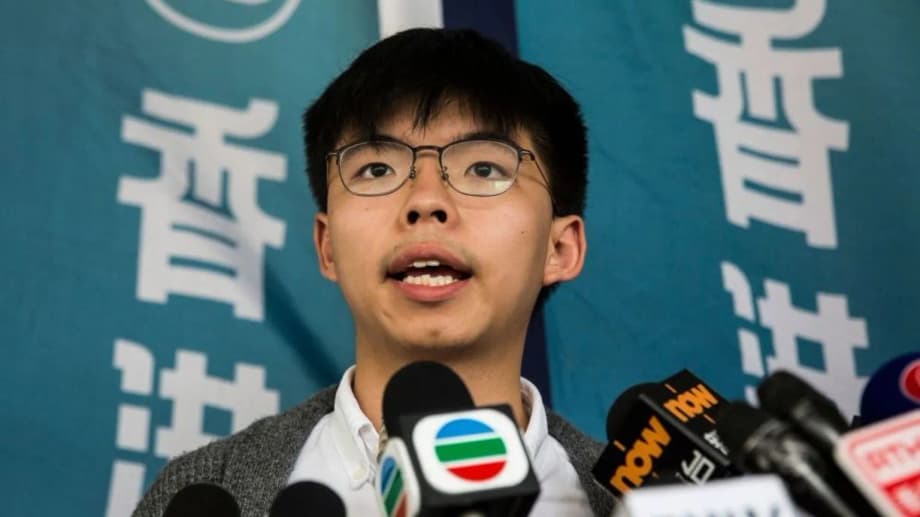
Hong Kong activist faces possible life sentence
Joshua Wong, one of Hong Kong’s best known pro democracy activists, has pleaded guilty to a charge of colluding with foreign entities under the city’s National Security Law. The offense carries a maximum sentence of life in prison.
- Hong Kong activist faces possible life sentence
- What prosecutors say Wong did
- Why the National Security Law matters
- From the Umbrella Movement to prison
- A second security case while Wong is in prison
- Supporters call for a lenient sentence
- What the case says about Hong Kong’s political climate
- The wider cost to opposition politics
- The Bottom Line
The 29 year old campaigner is already serving four years and eight months after being convicted of subversion, another offense under the same law, in late 2024. A court heard the latest case on Tuesday and said sentencing would take place at a later date. His existing sentence is due to end early next year.
The case adds a new legal threat to a figure who became internationally known during Hong Kong’s mass democracy protests. It also shows how actions taken by activists outside Hong Kong, including appeals for foreign sanctions, can be treated as national security offenses under the law imposed by Beijing in 2020.
About 40 supporters, including activists and close friends, attended the hearing. Wong appeared in a dark blue shirt and dark rimmed glasses. He did not dispute the allegations and was seen smiling and nodding when people in the public gallery called out to him.
What prosecutors say Wong did
The charge relates to conduct between July and late November 2020, the year China introduced Hong Kong’s National Security Law. Prosecutors accuse Wong of working with other campaigners, including former activist and lawmaker Nathan Law, to ask foreign governments and organizations to impose sanctions or other restrictions on Beijing.
The court heard that Wong and Law took part in international lobbying on numerous occasions. Their activities included visits to the United States, Germany and Italy, where they sought support for action against Chinese and Hong Kong officials.
Prosecutors also referred to the Hong Kong Human Rights and Democracy Act, a United States law that came into force in November 2019 during Donald Trump’s first administration. The law requires the US government to consider sanctions against mainland Chinese and Hong Kong officials judged responsible for human rights abuses in Hong Kong.
The prosecution said Wong continued to seek international support even after Demosistō, the pro democracy party he helped establish, was dissolved. Prosecutors argued that he had maintained his political position and continued working to encourage foreign pressure on China.
Wong’s guilty plea means the court will focus on sentencing rather than holding a full trial on the allegations. The maximum penalty is life imprisonment, although the final punishment will depend on the court’s assessment of the conduct and other factors in the case.
Why the National Security Law matters
China imposed the National Security Law on Hong Kong in June 2020 after months of large protests in 2019. The law created offenses covering secession, subversion, terrorism and collusion with foreign powers. It also permits cases involving some national security offenses to be tried without a jury and allows certain cases to be transferred to mainland China.
Supporters of the law, including Beijing and Hong Kong authorities, say it restored order after a period of unrest and protected national security. They reject claims that it has destroyed Hong Kong’s autonomy and argue that political rights must operate within the limits of national sovereignty.
Critics say the law has sharply narrowed space for opposition parties, independent campaigning and public protest. Since its introduction, prominent politicians, campaigners, journalists and civil society figures have been arrested, jailed, placed under restrictions or pushed into exile.
Collusion with foreign entities is a broad category under the law. It can include requesting sanctions, provoking hatred toward the central or Hong Kong governments, or providing sensitive information to foreign institutions. The law has made contact with overseas governments particularly risky for activists who once treated international advocacy as a normal part of political work.
From the Umbrella Movement to prison
Wong first gained international attention during the Umbrella Movement in 2014, when students and other demonstrators occupied major roads to demand a more open system for choosing Hong Kong’s chief executive. He was a teenager at the time and became a prominent face of the campaign.
He later helped found Demosistō in April 2016 with other young activists, including Nathan Law. The group called for greater democracy and argued that Hong Kong residents should have a stronger say over the city’s political future. Wong and Law also ran in that year’s Legislative Council elections.
Demosistō was dissolved in June 2020, shortly after the security law took effect. Wong nevertheless continued to support international lobbying and public criticism of Beijing’s policies, according to prosecutors.
Wong was among the leading figures connected to the huge pro democracy demonstrations that swept Hong Kong in 2019. The protests began over a proposed extradition bill and grew into a wider movement demanding democratic reforms, an investigation into police conduct and the resignation of Hong Kong’s leader at the time.
The demonstrations brought millions onto the streets at their height, while clashes between protesters and police caused serious disruption. The movement ended after the security law was enacted and authorities began using it against many of its leading organizers.
A second security case while Wong is in prison
Wong’s latest case has drawn attention because he is already serving a lengthy prison term. His earlier conviction for subversion was connected to an unofficial primary election organized by opposition groups in 2020. Authorities said the election was part of a plan to obtain a legislative majority and use it to force the government to accept political demands.
The prosecution of that case relied on the National Security Law’s subversion provisions. Wong and other defendants were accused of conspiring to undermine the government, although supporters described the primary as an attempt to coordinate candidates before a scheduled election.
Receiving another charge while already behind bars has deepened concern among Wong’s supporters. Activist Louis Lee said those close to Wong were disheartened that another security case had been brought during his existing sentence.
Lee said Wong had continued to find ways to use his time in prison, including learning to play the guitar and exercising. He also said he hoped other people could learn from Wong’s determination.
Supporters call for a lenient sentence
At the hearing, supporters called out to Wong from the public gallery. The court heard one group member shout words of encouragement as the defendant responded with a smile and a nod.
Tsang Kin shing, a former member of the now dissolved League of Social Democrats, said he hoped the court would impose a lenient sentence. Tsang pointed to Wong’s time in custody, saying the activist had spent more than 2,000 days in prison.
"Hang in there, Joshua!"
The brief exchange reflected the limited form of public support still possible for Hong Kong opposition figures. Large demonstrations and political organizations that once gave the movement a public platform have largely disappeared, while many activists now live abroad or face criminal charges at home.
Wong’s guilty plea also means that his case will move directly toward sentencing. The court has not announced a date for that hearing or indicated what punishment it may impose.
What the case says about Hong Kong’s political climate
The prosecution of foreign lobbying under the security law illustrates the broad reach of Hong Kong’s post 2020 legal system. Before the law was introduced, activists frequently traveled overseas, met foreign lawmakers and asked governments to speak out over Hong Kong’s political rights. Those same activities can now be presented in court as evidence of cooperation with outside forces.
The case also places Hong Kong’s international advocacy dispute at the center of a legal proceeding. Wong’s supporters view sanctions and diplomatic pressure as peaceful tools for defending civil liberties. Chinese and Hong Kong authorities view such requests as attempts to involve foreign governments in China’s internal affairs.
The disagreement has affected relations between Hong Kong and Western governments. The United States, Britain, the European Union and other governments have criticized the security law and imposed sanctions or visa restrictions on selected officials. Beijing has condemned those measures as interference and has responded with its own sanctions in some cases.
For activists, the risks extend beyond public protest. Fundraising, communication with overseas groups, travel and policy advocacy can all receive closer scrutiny when authorities believe they are connected to foreign pressure. Wong’s case is therefore tied to a wider contest over how far Hong Kong can maintain a separate political identity within China’s national legal and political framework.
The wider cost to opposition politics
Hong Kong retains separate courts, its own currency and a different commercial system from mainland China. The city’s constitutional framework also promises a high degree of autonomy under the principle known as one country, two systems. Beijing says that arrangement remains in place, while critics argue that political autonomy has been greatly reduced.
Since the security law was introduced, opposition lawmakers have been removed or disqualified, political groups have closed and independent organizations have faced pressure. Electoral rules were also changed to ensure that candidates deemed loyal to Beijing dominate the legislature.
Wong’s earlier activism made him a symbol of Hong Kong’s youth movement. His prosecution now shows the personal cost faced by activists who continued to campaign after the political system changed. The possible life sentence is the most severe punishment allowed under the foreign collusion provision, although the court will decide the actual sentence after considering the case.
Wong’s supporters are expected to continue monitoring the proceedings, while many former colleagues remain overseas. His case has become another major test of how Hong Kong authorities apply the security law to international political activity.
The Bottom Line
- Joshua Wong pleaded guilty to colluding with foreign entities under Hong Kong’s National Security Law.
- The charge carries a maximum sentence of life in prison.
- Prosecutors linked the case to lobbying for sanctions and other foreign pressure on Beijing in 2020.
- Wong is already serving four years and eight months for subversion under the same law.
- The court has not yet announced the date or terms of his sentence.
- Supporters say the case reflects the shrinking space for opposition politics and international activism in Hong Kong.